What the XPeng AeroHT Flying Car Actually Is
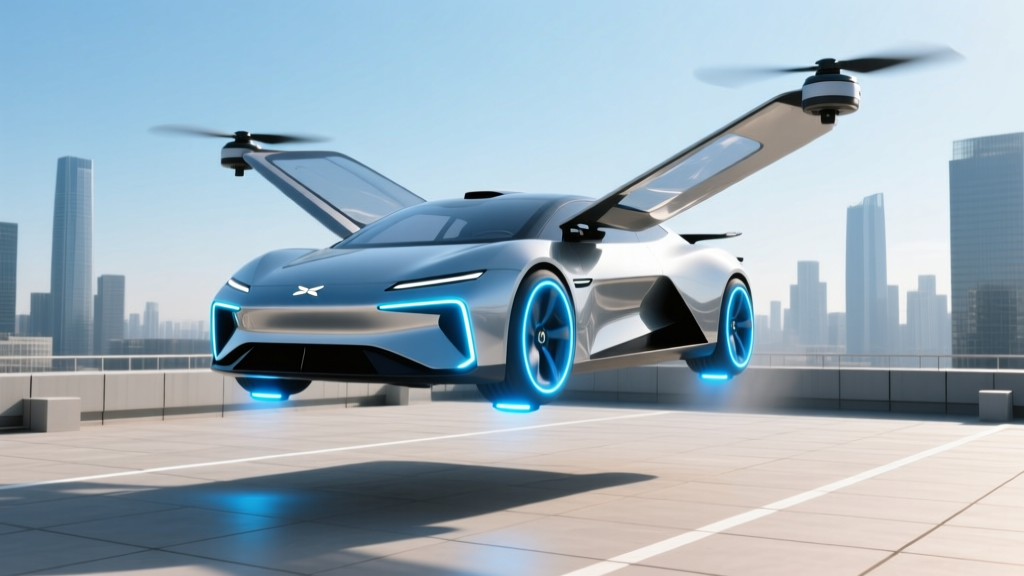
The XPeng AeroHT flying car — officially branded the Land Aircraft Carrier — is not a single vehicle you drive into the sky. It is a two-part system: a six-wheeled, all-electric "mothership" van that carries a foldable electric vertical takeoff and landing (eVTOL) aircraft in its cargo bay. The ground vehicle handles daily driving; the aircraft module deploys from the rear for short aerial hops. XPeng AeroHT, the aviation subsidiary of Chinese EV maker XPeng, began accepting reservations in late 2024 and targets initial deliveries in China by 2026, with no confirmed U.S. launch timeline as of this writing.
This distinction matters. If you searched for "XPeng AeroHT flying car" expecting a drive-and-fly machine, you are looking at something closer to an electric RV towing an ultralight aircraft — except the aircraft fits inside the van. Below, we dissect every announced spec, translate them into owner-relevant terms, and flag what remains unconfirmed for any market outside China.
Ground Vehicle: Announced Specs at a Glance
| Specification | Announced / Estimated Figure |
|---|---|
| Drivetrain | Tri-axle (6 wheels), AWD, rear-wheel steering |
| Powertrain | All-electric (extended-range variant also announced) |
| Battery Capacity | Not officially disclosed; estimated >100 kWh (NMC chemistry likely given weight/size) |
| EPA-Equivalent Range | ~310 miles (500 km) CLTC; no EPA rating yet |
| DC Fast Charging | 800V architecture; peak rate unconfirmed (est. 250–350 kW) |
| 0-60 mph | Not disclosed; heavy vehicle, likely 6–8 sec |
| Length / Width / Height | ~5,500 mm / ~2,100 mm / ~2,000 mm (216.5" / 82.7" / 78.7") |
| Passenger Capacity | 4–5 (ground vehicle cabin) |
| Cargo Bay | Houses folded eVTOL module; usable cargo space TBD with aircraft stowed |
| Base Price (China) | ¥2,000,000 (~$275,000 USD at current exchange) |
| U.S. MSRP | Not announced; no U.S. launch confirmed |
| Federal EV Tax Credit (§30D) | Not eligible — not sold in U.S., exceeds MSRP cap, battery sourcing unknown |
Range Reality: CLTC vs. What You Would Actually See
Announced CLTC range: ~310 miles (500 km)
Estimated EPA-equivalent: ~230–260 miles (CLTC cycles are roughly 20–30% more optimistic than EPA)
Real-world highway expectation: ~180–220 miles at 70 mph, given the vehicle's estimated 6,000+ lb curb weight and boxy aerodynamics
Cold-weather impact: Expect 25–35% range reduction at 20°F, bringing highway range potentially below 150 miles
The 500 km (310-mile) range figure XPeng AeroHT has cited uses China's CLTC testing standard, which is notoriously generous compared to the U.S. EPA cycle. For comparison, vehicles that achieve 310 miles on CLTC typically land between 230 and 260 miles on EPA testing. The Land Aircraft Carrier's massive footprint, six-wheel rolling resistance, and van-like drag coefficient will further compress real-world range, especially at highway speeds where aerodynamic drag dominates energy consumption.
If you plan to use this vehicle for airport runs or long-distance travel to airfields, budget for charging stops every 150–180 miles in mixed driving. That is a meaningful limitation for a vehicle positioned as a mobility platform for pilots.
Charging: 800V Architecture, But Details Are Thin
| Charging Level | Power / Rate | Estimated Time / Range Added |
|---|---|---|
| Level 1 (120V household) | ~1.4 kW | ~3–4 miles per hour |
| Level 2 (240V home) | ~11–19 kW (est.) | ~25–45 miles per hour |
| DC Fast Charge | Est. 250–350 kW peak (800V) | 10–80% in ~20–25 min (est.) |
XPeng AeroHT has confirmed the mothership uses an 800-volt electrical architecture, the same platform philosophy used in the XPeng G9 and other XPeng production EVs. On that sedan, 800V enables peak DC charging rates above 300 kW. However, the Land Aircraft Carrier's battery pack size has not been officially disclosed, and peak charge rate depends on pack capacity and thermal management.
For context on how charging curves work: a 350 kW peak rate is typically sustained only between 10% and 40% state of charge. Above 80%, charging tapers dramatically — often to under 50 kW — to protect battery cells. If you regularly need a full charge for long trips to remote airfields, plan for 35–45 minutes total at a DC fast charger, not the 20-minute headline figure.
Home charging on a Level 2 circuit (240V, 48-amp) would add roughly 30–40 miles of range per hour, meaning an overnight charge from 20% to 80% would take approximately 6–8 hours. Given the likely large battery, a 60-amp dedicated circuit with a hardwired charger is the practical minimum for daily use. Consult a licensed electrician for panel capacity assessment — a vehicle this size may require a 200-amp service panel upgrade.
The eVTOL Aircraft Module: What Flies and What Doesn't
The aircraft component is a single-occupant eVTOL with foldable arms and a coaxial rotor system. It stows inside the mothership's rear cargo bay and deploys via an automated unfolding mechanism. Key announced specs for the aircraft module:
- Occupants: 1 (pilot only)
- Flight time: Approximately 15–20 minutes per charge (announced)
- Range: ~18–25 miles per flight (announced)
- Max altitude: Subject to local aviation authority regulation (typically under 400 ft AGL in uncontrolled airspace)
- Charging: The mothership vehicle can recharge the aircraft module from its own battery pack
- Pilot requirements: Will require a sport pilot license or equivalent; FAA/CAAC certification pathways still being defined
The flight module's 15–20 minute endurance is the most sobering number in the entire system. That is enough for a short scenic flight, an aerial survey of a property, or a point-to-point hop over traffic congestion — but not for meaningful transportation between cities. The mothership's ability to recharge the aircraft in the field is genuinely useful, but each recharge cycle draws from the ground vehicle's own battery, further reducing its driving range.
Pricing, Tax Credits, and the Cost Question
| Item | Amount |
|---|---|
| China Pre-Order Price | ~¥2,000,000 (~$275,000 USD) |
| U.S. MSRP | Not announced |
| Federal §30D Tax Credit | Not eligible — fails MSRP cap ($80,000 for vans/SUVs), no U.S. sales, battery sourcing unknown |
| State/Local Incentives | N/A (not sold in U.S.) |
| Estimated Insurance (if U.S. available) | Very high — aviation + auto liability, specialty underwriting required |
Even if XPeng AeroHT eventually brings the Land Aircraft Carrier to the United States, it would not qualify for the IRS §30D federal EV tax credit. The credit imposes an MSRP cap of $80,000 for SUVs, vans, and pickup trucks (source: IRS §30D guidelines). At an estimated $275,000+, this vehicle exceeds that cap by a factor of three. Additionally, the credit requires battery components and critical minerals to meet North American sourcing thresholds that a Chinese-manufactured product would not satisfy under current rules.
For U.S. buyers, this is a cash-purchase proposition at a price point that competes with luxury SUVs and light aircraft simultaneously. The total cost of ownership should factor in aircraft maintenance, pilot training (typically $8,000–$15,000 for a sport pilot certificate), hangar or storage costs, aviation insurance, and the ground vehicle's own maintenance and charging costs.
Tech, Driver Assists, and Standout Features
XPeng has not released a full feature sheet for the Land Aircraft Carrier's cabin, but based on the XPeng production EV lineup and prototype demonstrations, expect the following:
- Infotainment: Large central touchscreen (likely 14.9" or larger, consistent with XPeng's Xmart OS platform)
- Driver Assistance: XPeng's XNGP system — an SAE Level 2 driver-assist suite with adaptive cruise control, lane-centering, and automated lane changes. The driver must remain engaged at all times.
- Aircraft Integration: Cabin controls for aircraft deployment, battery status monitoring for the eVTOL module, and flight planning interface
- Rear-Wheel Steering: The tri-axle design includes rear-wheel steering to improve maneuverability despite the 216-inch length
- Over-the-Air Updates: Expected for both vehicle and aircraft systems
XPeng's XNGP driver-assist system is an SAE Level 2 feature. It can control steering, acceleration, and braking under certain conditions, but the driver must keep hands on or near the wheel and monitor the road at all times. This is not self-driving. Only Level 4 systems (like Waymo's robotaxi service) operate without a human driver.
Pros, Cons, and Who This Is For
✅ Pros
- Genuinely novel concept — no other production vehicle integrates a personal aircraft
- 800V architecture enables fast DC charging
- Mothership can recharge the aircraft module in the field
- Tri-axle AWD provides traction and stability
- XPeng's proven EV platform technology underneath
❌ Cons
- $275,000+ price with no U.S. availability confirmed
- Aircraft module: 1 occupant, ~20 min flight time, ~25 mi range
- No EPA certification, NHTSA crash testing, or FAA type certificate yet
- Massive footprint (216" long, 82" wide) — challenging for urban parking and standard garages
- Real-world EV range likely 180–220 mi highway due to weight and aero
- Pilot license required to use the aircraft half of the system
- No federal tax credit eligibility
Who Should Consider It
The XPeng AeroHT flying car targets a narrow buyer profile: licensed pilots or aspiring sport pilots in China who want a single integrated solution for ground transport and recreational flying. It is not a commuter vehicle, a family hauler, or a practical daily driver. In the U.S., even if it arrives, buyers at this price point have alternatives like a Rivian R1T or Tesla Cybertruck paired with a separate light aircraft — often at lower total cost and with established service networks.
Competitive Landscape: What Else Exists?
There is no direct competitor that pairs a ground EV with an integrated eVTOL. However, the concept overlaps with several adjacent products:
- Alef Aeronautics Model A: A drive-and-fly vehicle (no separate mothership), but still in prototype with no production timeline and an estimated $300,000 price
- SAMSON Sky Switchblade: A three-wheeled flying motorcycle, also ~$300,000, requires both driver's and pilot's licenses
- Joby Aviation / Archer Aviation: eVTOL air taxi services (Level 4, no personal ownership) — ride-hailing model, not a consumer product
- Traditional approach: A luxury electric SUV (BMW iX, Mercedes EQS SUV) plus a separately owned light aircraft — more flexibility, established infrastructure
Frequently Asked Questions
What is the real-world range of the XPeng AeroHT flying car?
The announced CLTC range is ~310 miles (500 km) for the ground vehicle. Since there is no EPA rating, the realistic U.S. highway range is estimated at 180–220 miles, with cold weather potentially dropping it below 150 miles. The CLTC test cycle is 20–30% more optimistic than EPA testing.
How fast does it charge at home and on DC fast chargers?
XPeng has confirmed an 800V architecture. Estimated DC fast charging peaks at 250–350 kW, with a 10–80% charge in roughly 20–25 minutes. Home Level 2 charging at 240V would add approximately 30–40 miles of range per hour, requiring 6–8 hours for a substantial charge from low state of charge.
How much does the XPeng AeroHT flying car cost?
The announced China price is approximately ¥2,000,000 (roughly $275,000 USD). No U.S. pricing has been announced, and the vehicle is not currently available for purchase in the United States.
Does it qualify for the federal EV tax credit?
No. Even if sold in the U.S., the vehicle would not qualify for the IRS §30D Clean Vehicle Credit. It far exceeds the $80,000 MSRP cap for vans/SUVs, and its Chinese-manufactured battery would not meet the critical-mineral and component sourcing requirements under current law. Always verify current rules at irs.gov.
Can I actually fly it without a pilot's license?
No. The eVTOL aircraft module will require a sport pilot license or equivalent certification. In the U.S., this means meeting FAA requirements for light-sport aircraft operation, including a minimum of 20 hours of flight training. Regulatory frameworks for personal eVTOL operation are still being developed by the FAA.
Is the XPeng AeroHT flying car worth buying vs. competitors?
For U.S. buyers, it is not currently an option. For Chinese buyers with pilot credentials and a specific use case (recreational flying with integrated ground transport), it is a unique product with no direct rival. However, the 20-minute flight endurance, single-occupant aircraft, and ~$275,000 price make it a niche lifestyle product rather than a practical transportation solution. A conventional luxury EV plus a separately owned aircraft offers more flexibility at a comparable or lower total cost.
When will it be available in the United States?
XPeng AeroHT has not announced a U.S. launch date. The company is prioritizing the Chinese market for initial deliveries expected in 2026. U.S. availability would require NHTSA compliance for the ground vehicle, FAA type certification for the aircraft, and establishment of a service and support network — a multi-year process at minimum.