Quick Answer: Is the Xiaomi YU7 Electric SUV Available in the US?
As of mid-2026, the Xiaomi YU7 electric SUV is on sale in China but has no confirmed US launch date or pricing. Xiaomi has not announced any plans to sell vehicles in the United States, meaning American buyers cannot currently purchase, import, or qualify the YU7 for the federal §30D EV tax credit. If you're researching the YU7 as a potential future import or comparing it against US-available electric SUVs like the Tesla Model Y, Hyundai Ioniq 5, or Ford Mustang Mach-E, this guide breaks down every confirmed spec, real-world range expectation, and ownership cost so you can benchmark it against what you can actually buy today.
Xiaomi YU7 Confirmed Specs at a Glance
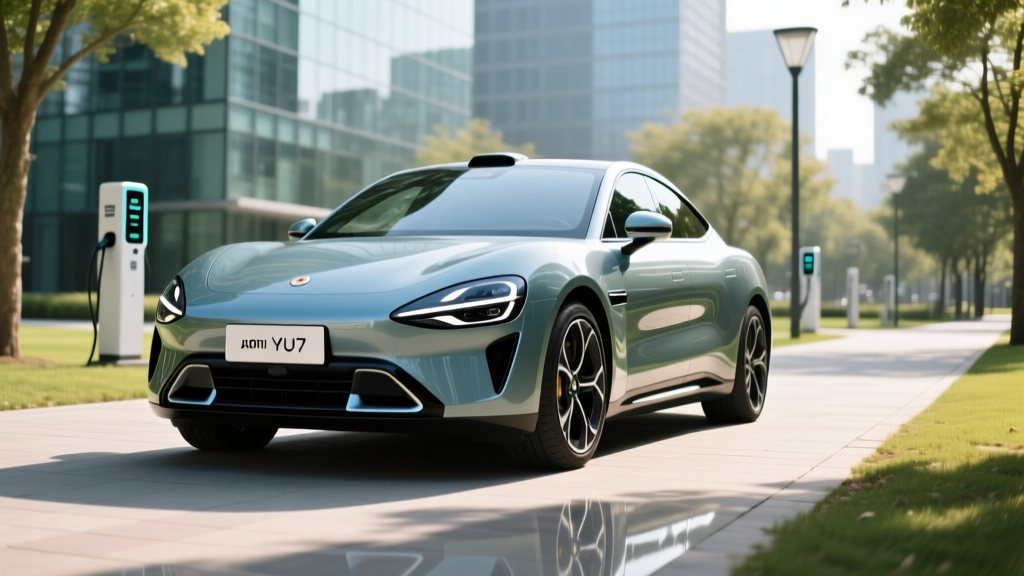
Xiaomi officially unveiled the YU7 in late 2024 and began deliveries in China in mid-2025. The vehicle rides on Xiaomi's self-developed Modena platform and slots above the SU7 sedan as a mid-size performance SUV competing directly with the Tesla Model Y and NIO EL6 in the Chinese market. Here are the confirmed specifications from Xiaomi's official disclosures and Chinese regulatory filings:
| Specification | YU7 Standard Range | YU7 Long Range (AWD) |
|---|---|---|
| Battery Capacity (usable) | ~96 kWh (CATL LFP) | ~101 kWh (CATL NMC) |
| CLTC Range | ~835 km (519 mi) | ~760 km (472 mi) |
| Estimated EPA-Equivalent Range | ~380–410 mi | ~340–370 mi |
| Powertrain | RWD single motor | Dual motor AWD |
| Peak Output | ~320 hp (235 kW) | ~690 hp (508 kW) |
| 0–100 km/h (0–62 mph) | ~5.9 sec | ~3.2 sec |
| Max DC Fast Charge Rate | ~220 kW (peak) | ~290 kW (peak) |
| 10–80% DC Charge Time (est.) | ~28 min | ~21 min |
| Onboard AC Charger | 11 kW (3-phase) | 11 kW (3-phase) |
| Charging Port (China) | GB/T | GB/T |
| Length / Wheelbase | 4,999 mm / 3,000 mm | |
| Cargo Volume (est.) | ~650 L rear + ~100 L frunk | |
Real-World Range Reality Check
China's CLTC testing cycle is significantly more generous than the US EPA cycle — typically overstating range by 20–30% compared to EPA estimates. The YU7 Standard Range's 519-mile CLTC figure likely translates to roughly 380–410 miles EPA-equivalent in mixed driving. Expect ~320–350 miles at sustained highway speeds (70+ mph) and further reduction of 15–25% in freezing temperatures, consistent with LFP chemistry behavior. The AWD Long Range variant should deliver approximately 340–370 miles EPA-equivalent, dropping to ~280–310 miles on the highway in cold weather.
How the YU7 Stacks Up Against US-Available Electric SUVs
Since the YU7 isn't buyable in America, the practical question is how it compares to electric SUVs you can actually order. The table below benchmarks the YU7's announced specs against three popular US-market alternatives at similar price points (adjusted for approximate US dollar equivalence):
| Metric | Xiaomi YU7 LR AWD (China) | Tesla Model Y LR AWD | Hyundai Ioniq 5 LR AWD | Ford Mustang Mach-E ER AWD |
|---|---|---|---|---|
| Battery (usable kWh) | ~101 (NMC) | 75 (NMC) | 77.4 (NMC) | 88 (NMC) |
| EPA Range | ~340–370 (est.) | 320 mi | 290 mi | 312 mi |
| Peak DC Charge (kW) | ~290 | 250 | 240 | 150 |
| 10–80% DC Time | ~21 min | ~25 min | ~18 min | ~45 min |
| 0–60 mph | ~3.0 sec | 4.8 sec | 5.0 sec | 5.1 sec |
| Horsepower | ~690 | 384 | 320 | 346 |
| Starting Price (USD equiv.) | ~$42,000–$48,000 | $47,740 | $51,185 | $48,995 |
| Federal Tax Credit (§30D) | Not eligible | Up to $7,500 | Up to $7,500 | Up to $7,500 |
The YU7's raw numbers — particularly its battery size, charge speed, and power output — are competitive or class-leading. However, the lack of US availability, NACS/CCS charging compatibility, service infrastructure, and federal tax credit eligibility make direct comparison academic for American buyers.
Charging Architecture and What It Means for Non-Chinese Markets
The YU7 uses China's GB/T charging standard, which is incompatible with North America's NACS (Tesla's connector, now adopted by most automakers) and Europe's CCS2 without adapters. Xiaomi has equipped the YU7 with an 800-volt-class electrical architecture, enabling the impressive 290 kW peak DC charge rate on the AWD variant. In practice, this means:
- 10–80% in approximately 21 minutes at a compatible ultra-fast charger (350 kW+ capable station)
- Charge curve taper: Expect peak rates only between ~10–45% SoC, with a steep taper above 80% — a full 10–90% charge will take closer to 35–40 minutes
- Level 2 home charging at 11 kW (3-phase) adds roughly 40–45 miles of range per hour, meaning a full overnight charge from 20% takes about 8–9 hours
If Xiaomi ever launches in the US, the vehicle would require a NACS port redesign and re-homologation for American safety standards (NHTSA compliance). This represents a significant engineering and regulatory investment that has not been announced.
Estimated Ownership Costs — If It Were Available in the US
To help benchmark the YU7 against SUVs you can buy today, here's a modeled 5-year total cost of ownership (TCO) assuming a hypothetical $45,000 US launch price, 15,000 miles/year, and $0.14/kWh average home electricity rate. We compare against a Tesla Model Y Long Range and a Toyota RAV4 Hybrid as a gas/hybrid baseline:
| Cost Category (5 Years) | Xiaomi YU7 (Hypothetical US) | Tesla Model Y LR AWD | Toyota RAV4 Hybrid AWD |
|---|---|---|---|
| Purchase Price (MSRP) | $45,000 | $47,740 | $36,425 |
| Federal Tax Credit (§30D) | $0 (not eligible) | –$7,500 | $0 |
| Effective Purchase Price | $45,000 | $40,240 | $36,425 |
| Fuel/Energy (75,000 mi) | $3,150 (home charging) | $3,150 (home charging) | $6,250 ($3.50/gal, 39 MPG) |
| Maintenance | ~$1,200 | ~$1,200 | ~$2,800 |
| Insurance (est. avg/yr × 5) | ~$11,000 | ~$10,500 | ~$7,500 |
| Depreciation (est. 50%) | ~$22,500 | ~$18,000 | ~$12,750 |
| 5-Year TCO | ~$82,850 | ~$73,090 | ~$65,725 |
Key takeaways: The YU7 would carry a significant TCO disadvantage without §30D tax credit eligibility. The IRS requires vehicles to meet battery component sourcing and critical mineral requirements under current §30D rules, and Chinese-manufactured EVs with CATL batteries do not qualify. Even with competitive energy and maintenance costs, the lack of a credit, higher projected insurance premiums for an unproven brand, and steeper depreciation (no US service network) push the hypothetical TCO well above established competitors.
Common Misconceptions About the Xiaomi YU7
| Myth | Fact |
|---|---|
| "The YU7 gets 519 miles of range — more than any US EV." | That's the CLTC figure. EPA-equivalent range is approximately 380–410 miles (Standard Range RWD). Impressive, but not 519 miles in real-world US driving. |
| "I can gray-market import one to the US." | NHTSA restricts importation of non-conforming vehicles. The YU7 does not meet FMVSS standards, and the 25-year import exemption applies only to vehicles manufactured before 2001. Personal import is effectively not an option. |
| "Xiaomi will launch in the US soon — they're a tech giant." | Xiaomi has focused auto sales on China with early expansion into select European and Southeast Asian markets. No US entry timeline has been announced. Geopolitical tariffs on Chinese EVs (currently 100% under Section 301) make a US launch economically unviable in the near term. |
| "It charges at 290 kW, so any US fast charger will max it out." | Even if available in the US, only 350 kW-class chargers (Electrify America, select Tesla Superchargers) could approach that rate. Most US public chargers deliver 50–150 kW, meaning real-world public charging would rarely hit peak speeds. |
| "The battery will need replacement in a few years." | CATL's LFP and NMC cells are among the most durable in the industry. LFP chemistry typically retains >90% capacity after 1,500+ full cycles. Xiaomi offers an 8-year/160,000 km battery warranty in China (~99,400 miles). |
Decision Framework: Should You Wait for the YU7 or Buy Now?
Choose a US-Available EV Now If:
- You need a vehicle within the next 12 months — the YU7 has no US timeline
- You want to claim the up to $7,500 federal §30D tax credit (point-of-sale transfer available on eligible models like the Model Y, Ioniq 5, and Mach-E)
- You rely on the Tesla Supercharger network or CCS public charging — the YU7 uses GB/T
- You want established warranty service, parts availability, and NHTSA safety ratings
- Your budget is under $50,000 after incentives — the YU7 would likely cost more without credits
The YU7 Is Worth Tracking If:
- You live in China or a confirmed Xiaomi auto market (parts of Europe, Southeast Asia) and can purchase locally
- You're a Xiaomi ecosystem user (phones, smart home) interested in HyperOS vehicle integration
- You're researching global EV competition and want to benchmark Chinese-market specs against US offerings
- You can wait 3+ years for a hypothetical US launch — with no guarantee it will happen
What First-Time EV Buyers Should Know Instead
If the YU7 brought you here, you're likely shopping for a performance-oriented electric SUV in the $40,000–$55,000 range. Here's what actually matters for a first-time EV purchase in the US market:
- Home charging access is non-negotiable for convenience. A Level 2 home charger (240V, 32–48A) costs $500–$1,500 for equipment plus $800–$2,500 for electrician installation depending on panel capacity. Without home charging, public-only charging adds significant time and cost.
- Real range ≠ EPA range. Budget 15–20% below the EPA sticker for highway-heavy driving, and 25–35% below in sub-freezing winters. A 320-mile EPA rating means ~260 miles on a cold highway day.
- Tax credit eligibility is specific. Under current IRS §30D rules, you must meet income caps ($150K single / $300K joint), the vehicle must be under the MSRP cap ($55K sedans / $80K SUVs/trucks), and battery components and critical minerals must meet US-sourcing thresholds. Always verify eligibility before purchase.
- Insurance costs 15–30% more for EVs compared to equivalent gas vehicles, according to industry data. Get quotes before committing.
- Charging speed matters more than peak range for road trips. A vehicle that charges 10–80% in 18 minutes (like the Ioniq 5) spends far less time at stops than one taking 45 minutes, even if the latter has 30 more miles of range.
Frequently Asked Questions
Will Xiaomi sell cars in the United States?
Not currently, and no timeline has been announced. The 100% US tariff on Chinese-made EVs under Section 301 makes direct import economically impractical. Xiaomi has indicated initial international expansion focuses on Europe and Southeast Asia.
How does the YU7's range compare to the Tesla Model Y?
The YU7 Long Range AWD's estimated EPA-equivalent range of ~340–370 miles exceeds the Model Y Long Range AWD's EPA-rated 320 miles. However, the YU7 achieves this with a significantly larger 101 kWh battery vs. the Model Y's 75 kWh pack, meaning the Tesla is more energy-efficient per mile.
Can I import a Xiaomi YU7 to the US myself?
Effectively no. NHTSA requires all vehicles sold or imported for road use to comply with Federal Motor Vehicle Safety Standards (FMVSS). The YU7 has not been certified, and the personal-import exemption requires the vehicle to be at least 25 years old. You cannot legally register a new YU7 for US road use.
What's the best US-available alternative to the YU7?
For performance and range, the Tesla Model Y Long Range AWD (320 mi EPA, 0–60 in 4.8 sec, ~$40,240 after credit) is the closest match. For charging speed, the Hyundai Ioniq 5 (10–80% in 18 min) leads the segment. For value, the Ford Mustang Mach-E ER AWD (312 mi EPA, ~$48,995 before credit) is competitive.
What battery chemistry does the YU7 use?
The Standard Range RWD variant uses CATL lithium iron phosphate (LFP) — known for long cycle life, thermal stability, and lower cost but slightly reduced energy density. The Long Range AWD uses CATL nickel manganese cobalt (NMC) for higher energy density and better cold-weather performance. Both are proven, widely used chemistries.
Does the YU7 have autonomous driving capabilities?
Xiaomi equips the YU7 with its Pilot ADAS system using LiDAR and cameras, functioning as an SAE Level 2 driver-assistance system. This means the driver must remain fully engaged and supervising at all times — it is not self-driving. This is the same automation level as Tesla Autopilot, Ford BlueCruise, and GM Super Cruise.