Quick Verdict: The Efficiency King That Time Forgot
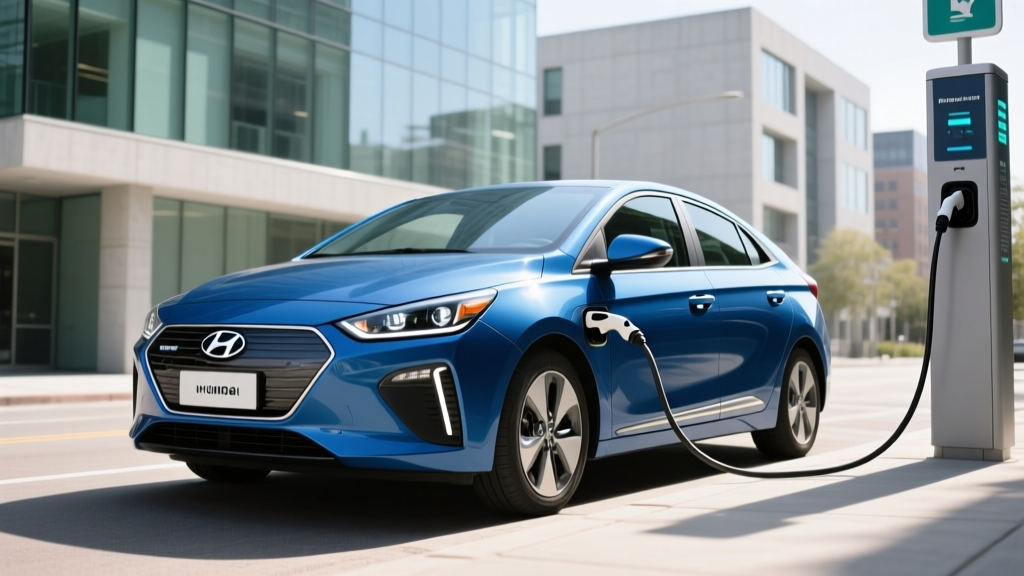
The 2019 Hyundai Ioniq Electric was never designed to win drag races or cross the country in a single charge. What it was designed to do — and still does remarkably well on the used market — is deliver some of the highest energy efficiency of any EV ever sold in the United States. With an EPA-estimated 170 miles of range from a modest 38.3 kWh battery, the Ioniq EV achieves 136 MPGe combined, a figure that still embarrasses many heavier, more expensive EVs built years later.
If you're shopping for a used commuter EV in 2026 and can live with moderate range and a compact footprint, the 2019 Ioniq Electric remains a compelling, budget-friendly option. But its limitations — small battery, moderate DC fast-charging speed, and a tight back seat — are very real. Here's everything you need to know before buying one.
Range, Battery & Real-World Efficiency
Real-World Expectation: ~130–150 miles at sustained highway speeds (70+ mph); ~110–130 miles in freezing temperatures with cabin heat. City and suburban driving in mild weather can match or slightly exceed the 170-mile sticker thanks to regenerative braking and low aero drag.
| Spec | Value |
|---|---|
| EPA Range | 170 miles |
| Battery (Usable / Gross) | 38.3 kWh / ~40.4 kWh |
| Battery Chemistry | NMC (Nickel Manganese Cobalt) |
| EPA Efficiency | 136 MPGe combined / 25 kWh/100 mi |
| Motor Output | 134 hp (100 kW) / 218 lb-ft torque |
| Drivetrain | FWD (single motor) |
| 0–60 mph | ~9.7 seconds |
| Max DC Fast Charge | ~100 kW (CCS1) |
| 10–80% DC Charge Time | ~54 minutes |
| Level 2 AC Charge Rate | 7.2 kW (onboard charger) |
| Base MSRP (2019) | $36,550 (Electric SE) |
| Battery/Powertrain Warranty | 8 years / 100,000 miles (original owner) |
The 38.3 kWh usable battery uses LG Chem NMC cells — energy-dense but subject to typical NMC degradation curves. Hyundai's battery management system is conservative, with a top-and-bottom buffer that helps preserve long-term State of Health (SoH). Used examples from 2019 with 60,000–80,000 miles commonly show 90–94% capacity retention when checked via OBD2 diagnostics, though results vary based on charging habits and climate exposure.
The Ioniq's party trick is its 25 kWh per 100 miles combined efficiency rating, per fueleconomy.gov. For context, the 2019 Tesla Model 3 Standard Range rated 26 kWh/100 mi, and the Chevy Bolt EV rated 28 kWh/100 mi. The Ioniq achieves this through a combination of low curb weight (~3,230 lbs), an exceptionally aerodynamic body (0.24 Cd), and a highly efficient powertrain. On a 300-mile road trip, that efficiency gap means the Ioniq needs fewer kWh — and fewer charging stops — than rivals with larger batteries but worse efficiency.
Charging Speeds: DC Fast, Level 2 & What to Expect
| Level | Power | Miles Added per Hour | Notes |
|---|---|---|---|
| Level 1 (120V) | ~1.4 kW | ~5 miles/hr | Emergency only; 34+ hours for full charge |
| Level 2 (240V, 32A) | 7.2 kW | ~27 miles/hr | ~6 hours for 10–100%; ideal overnight |
| DC Fast (CCS1) | Peak ~100 kW | N/A (time-based) | 10–80% in ~54 min; tapers significantly above 80% |
The 2019 Ioniq Electric was a significant upgrade over the earlier 2017–2018 model, which was limited to a 28 kWh battery and roughly 124 miles of range. The 2019 refresh also bumped the DC fast-charging capability from around 50 kW to approximately 100 kW peak. However, that peak rate is not sustained — the charge curve tapers noticeably after 60% State of Charge, and by 80% you're seeing roughly 40–50 kW. This is why the 10–80% time lands around 54 minutes, which is competitive for the era but noticeably slower than 2024+ vehicles with 250 kW+ architectures.
At home on a 7.2 kW Level 2 charger (a standard 240V/32A wallbox), you'll add roughly 27 miles of range per hour. A full overnight charge from near-empty takes about six hours. If your daily commute is under 50 miles round-trip, a Level 2 home setup means you'll rarely need public charging.
Important note for used buyers: The 2019 Ioniq uses the CCS1 (Combo) DC fast-charging connector, which remains the standard for non-Tesla EVs in North America. You will have no compatibility issues at Electrify America, EVgo, or ChargePoint DC stations. However, if you want access to Tesla Superchargers (now open to non-Tesla vehicles via the NACS standard), you'll need a CCS-to-NACS adapter — expect to pay $150–$250 for one from a reputable brand.
Performance & Driving Impressions
The single front-mounted motor produces 134 horsepower (100 kW) and 218 lb-ft of torque. That torque figure is the real story — like all EVs, it's available instantly from zero RPM, which makes the Ioniq feel sprightly in city and suburban driving despite its 9.7-second 0–60 mph time. Merge onto a highway at 55 mph and you'll have no trouble keeping up with traffic. Ask for a 75-to-90 mph passing burst and you'll notice the motor runs out of breath.
Ride quality is firm but compliant, and the low center of gravity (battery pack under the floor) gives it composed handling that belies its economy-car roots. The steering is light and numb — this is not a driver's car — but the turning radius is tight, making it an excellent urban companion. Three levels of regenerative braking, adjustable via steering-wheel paddles, let you tailor one-pedal-driving intensity. At maximum regen, you can drive most city routes without touching the brake pedal.
Interior, Cargo & Technology
The Ioniq Electric is a compact liftback, and that body style pays dividends in cargo versatility. Behind the rear seats, you get 19.9 cubic feet of cargo space — more than a Toyota Corolla sedan and comparable to a small hatchback like the Honda Civic Hatchback. Fold the rear seats flat and capacity expands to approximately 44.3 cubic feet, enough for a week's worth of groceries or a couple of suitcases for a weekend trip.
Front-seat legroom is generous at 42.2 inches, but rear legroom is tight at 35.7 inches — adults over six feet will feel cramped on longer trips. Headroom is fine all around thanks to the liftback roofline.
The 2019 model year came with a 7-inch touchscreen infotainment system (8-inch on the Limited trim) supporting Apple CarPlay and Android Auto. The Limited trim added navigation, a premium Infinity audio system, leather seats, and a power sunroof. Standard driver-assistance features included:
- Forward Collision-Avoidance Assist (AEB)
- Lane Keeping Assist
- Blind-Spot Collision Warning
- Rear Cross-Traffic Collision Warning
- Smart Cruise Control (adaptive, with stop-and-go)
These are SAE Level 1–2 driver-assistance features, not autonomous driving. You must remain fully engaged with hands on the wheel and eyes on the road at all times. The Smart Cruise Control is competent for highway commuting but lacks the lane-centering sophistication of systems like Hyundai's newer Highway Driving Assist found on the Ioniq 5.
Pricing, Used Market Values & Tax Credit Eligibility
When new, the 2019 Ioniq Electric started at $36,550 for the SE trim, with the SEL at ~$38,050 and the Limited at ~$42,550 (all including destination). A $7,500 federal tax credit was available to original purchasers who met income requirements.
As of early 2026, used-market values for the 2019 Ioniq Electric typically range from $11,000 to $17,000, depending on mileage, condition, trim, and battery State of Health. Low-mileage Limited examples in excellent condition command the top of that range; higher-mileage SE models with cosmetic wear cluster near the bottom.
- Sale price must be $25,000 or less
- Buyer income caps: $75,000 single / $112,500 head of household / $150,000 joint (modified AGI)
- Vehicle must be at least two model years old (2019 qualifies)
- Must purchase from a licensed dealer (private-party sales do not qualify)
- Credit is non-refundable — you must have sufficient tax liability to claim it
- Vehicle must not have been transferred after August 16, 2022, to a buyer who already claimed the credit for that VIN (check dealer documentation)
New-vehicle §30D credit: The original $7,500 new-vehicle federal tax credit is no longer relevant for a 2019 model. However, the §25E used credit effectively replaces it for qualified buyers and is often easier to claim since it doesn't involve battery-sourcing or critical-mineral requirements.
Warranty, Battery Longevity & Maintenance
Hyundai's original warranty for the 2019 Ioniq Electric included:
- Battery & Powertrain: 8 years / 100,000 miles (transferable to second owner in most states, though some states limit transferability — verify with Hyundai)
- New Vehicle (bumper-to-bumper): 5 years / 60,000 miles (expired for nearly all 2019 examples by 2024)
- Anti-Perforation: 7 years / unlimited miles
For a 2019 model purchased in 2026, the battery and powertrain warranty may still have remaining coverage if the vehicle has under 100,000 miles. Hyundai defines a battery failure as degradation below 70% of original capacity. In practice, NMC cells in the Ioniq's thermal management envelope degrade slowly — most owners report 90%+ SoH at 60,000 miles. Before purchasing, request an OBD2 battery health report or have a Hyundai dealer run a diagnostic to confirm capacity retention.
Maintenance costs are minimal: no oil changes, no spark plugs, no transmission fluid. Cabin air filter replacement (~$25 DIY), brake fluid every two years, and tire rotation are the primary recurring items. The regenerative braking system significantly extends brake pad life — many Ioniq EV owners report original brake pads at 80,000+ miles.
2019 Ioniq EV vs. Key Used Competitors
| Spec | 2019 Hyundai Ioniq EV | 2019 Chevy Bolt EV | 2019 Nissan Leaf Plus |
|---|---|---|---|
| EPA Range | 170 mi | 259 mi | 226 mi |
| Battery (usable) | 38.3 kWh | 60 kWh | 62 kWh |
| Efficiency (kWh/100mi) | 25 | 28 | 29 |
| DC Fast Charge (peak) | ~100 kW (CCS) | ~55 kW (CCS) | ~100 kW (CHAdeMO) |
| 0–60 mph | 9.7 sec | 6.5 sec | 7.0 sec |
| Cargo (behind rear seats) | 19.9 cu ft | 16.9 cu ft | 23.6 cu ft |
| Typical Used Price (2026) | $11K–$17K | $13K–$19K | $11K–$16K |
| Cooling System | Active liquid | Active liquid | Passive air |
The Bolt EV wins on range and acceleration but charges slower on DC and offers less cargo space. The Leaf Plus offers more range and cargo room but uses passive air cooling (risking battery degradation in hot climates) and the CHAdeMO connector, which is being phased out at many public stations in favor of CCS and NACS. The Ioniq's advantage is efficiency and DC charging speed relative to its battery size — plus active liquid cooling for battery longevity.
- Best-in-class efficiency (25 kWh/100 mi)
- Active liquid battery thermal management
- CCS1 connector (future-proof for public charging)
- Generous cargo space for a compact (19.9 cu ft)
- Strong Hyundai dealer network for warranty service
- Very low used prices + §25E credit eligibility
- Only 170 miles EPA range — tight for road trips
- Slow 0–60 (9.7 sec) — highway passing feels weak
- Cramped rear seat for tall passengers
- 54-minute 10–80% DC charge is slow by 2026 standards
- No heat pump (resistance heater hurts winter range)
- Infotainment feels dated vs. 2024+ EVs
Who Should Buy the 2019 Ioniq Electric?
- Your daily commute is under 60 miles round-trip and you can charge at home
- You prioritize low cost of ownership and high efficiency over range and speed
- You live in a mild-to-moderate climate (extreme cold will cut range to ~110 miles)
- You want a practical hatchback with decent cargo space for the price
- You qualify for the §25E used EV credit, bringing the effective price below $12,000
- You regularly drive more than 120 miles in a single day without access to mid-day charging
- You need to seat adults in the back regularly
- You take frequent road trips where 54-minute DC charging stops will frustrate you
- You live in a region with harsh winters and no garage parking
Frequently Asked Questions
What is the real-world range of the 2019 Hyundai Ioniq EV?
The EPA rates it at 170 miles. In real-world highway driving at 70–75 mph in moderate temperatures, expect 130–150 miles. In freezing weather with cabin heat running, plan for 110–130 miles. City driving with regenerative braking in mild weather can push close to or slightly above the EPA figure.
How fast does the 2019 Ioniq EV charge?
On a CCS1 DC fast charger, it peaks around 100 kW and charges from 10–80% in approximately 54 minutes. At home on a 7.2 kW Level 2 charger, a full charge takes about six hours, adding roughly 27 miles of range per hour. On a standard 120V outlet, expect about 5 miles per hour — useful only for emergencies or very low-mileage drivers.
Does the 2019 Ioniq EV qualify for any federal tax credit?
Not the new-vehicle §30D credit — that expired for this model years ago. However, if you buy from a licensed dealer for $25,000 or less and meet the income caps ($75K single / $150K joint), you may qualify for the §25E Used Clean Vehicle Credit — up to $4,000 or 30% of the sale price, whichever is less. Always verify eligibility with a tax professional before relying on the credit.
Is the battery warranty still valid on a used 2019 Ioniq?
Hyundai's battery warranty covers 8 years / 100,000 miles. For a 2019 model, that means coverage extends through the 2027 model year or until 100,000 miles, whichever comes first. Verify transferability with Hyundai — in most states, the powertrain warranty transfers to subsequent owners, but terms may differ from the original-owner coverage.
How does the 2019 Ioniq EV compare to a used Tesla Model 3?
A 2019 Model 3 Standard Range offers more range (~220 mi EPA), faster charging, better performance, and access to the Supercharger network — but used prices run $18,000–$24,000, significantly more than the Ioniq. The Ioniq wins on purchase price, efficiency, and hatchback practicality; the Model 3 wins on range, tech, and charging infrastructure. If your budget is strictly under $15,000, the Ioniq is the stronger option.
Does the 2019 Ioniq EV have a heat pump?
No. The 2019 Ioniq Electric uses a conventional PTC resistance heater for cabin warmth. This draws significantly more energy than a heat pump, contributing to the 20–30% range loss in cold weather. Hyundai didn't add heat pumps to the Ioniq line until later models.
Can I use Tesla Superchargers with the 2019 Ioniq EV?
Yes, but only at Supercharger stations that have the Magic Dock (built-in CCS adapter) or with a third-party CCS-to-NACS adapter. Tesla has been opening select Superchargers to non-Tesla EVs via the Non-Tesla Supercharging program, though coverage remains limited compared to CCS networks like Electrify America and EVgo.