Quick Answer: Can You Buy a Xiaomi EV in the US?
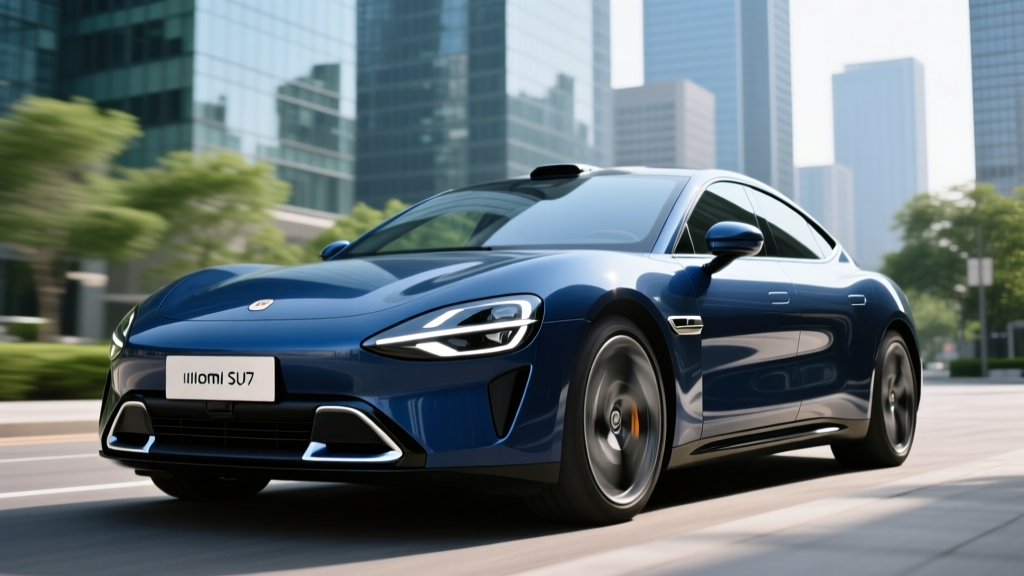
As of 2026, Xiaomi electric cars are not available for purchase in the United States. The Xiaomi SU7 sedan and SU7 Ultra launched exclusively in China and select international markets. There is no announced US launch timeline, and 100% import tariffs on Chinese-made EVs make a near-term US debut economically unviable. If you're researching Chinese electric cars from Xiaomi for a future purchase, import, or market analysis, this guide covers the real specs, ownership economics, and what it would take for Xiaomi to reach American roads.
Xiaomi SU7: Specs, Range, and What the Numbers Actually Mean
Xiaomi entered the EV market in March 2024 with the SU7 sedan, and by 2026 the lineup includes the standard SU7, SU7 Pro, SU7 Max, and the performance-focused SU7 Ultra. These vehicles compete directly with the Tesla Model 3, Porsche Taycan, and BYD Seal in China. Here are the hard numbers based on Xiaomi's official specifications and Chinese testing data:
| Spec | SU7 Standard | SU7 Pro | SU7 Max | SU7 Ultra |
|---|---|---|---|---|
| Battery Capacity | 73.6 kWh (BYD Blade LFP) | 94.3 kWh (CATL Qilin NMC) | 101 kWh (CATL Qilin NMC) | 150 kWh (CATL Qilin NMC) |
| CLTC Range | 700 km (435 mi) | 830 km (516 mi) | 800 km (497 mi) | 630 km (391 mi) |
| Estimated EPA Range | ~290 mi | ~345 mi | ~330 mi | ~260 mi |
| Peak DC Fast Charge | 400V / ~120 kW | 800V / ~250 kW | 800V / ~270 kW | 800V / ~300 kW |
| 10–80% DC Charge | ~28 min | ~19 min | ~18 min | ~19 min |
| Horsepower | 295 hp | 295 hp | 664 hp (dual motor AWD) | 1,527 hp (tri-motor) |
| 0–100 km/h (0–62 mph) | 5.3 sec | 5.7 sec | 2.78 sec | 1.98 sec |
| China MSRP (approx. USD) | ~$30,000 | ~$34,500 | ~$41,500 | ~$113,000 |
Real-World Range Reality Check
China's CLTC range standard is notoriously optimistic — typically 25–35% higher than the US EPA cycle. For the SU7 Max, a CLTC rating of 800 km translates to roughly 330 miles EPA-equivalent. In real-world highway driving at 70 mph, expect 270–290 miles. In cold weather (below 32°F), that drops to 220–250 miles due to battery chemistry limitations and cabin heating load, even with the SU7's standard heat pump system. These figures put the SU7 Max in the same real-world range bracket as the Tesla Model 3 Long Range (EPA 341 mi) and Hyundai Ioniq 6 (EPA 342 mi).
The Tariff Wall: Why Xiaomi Can't Sell in the US (Yet)
The single biggest barrier between Xiaomi and American buyers isn't technology — it's trade policy. In 2024, the Biden administration raised tariffs on Chinese-made EVs to 100% under Section 301, and those tariffs remain in effect through 2026. Here's what that means in practice:
| Cost Factor | Xiaomi SU7 Max (China Price) | Projected US Import Cost |
|---|---|---|
| Base MSRP | ~$41,500 | $41,500 |
| Shipping & Logistics | — | ~$2,500 |
| 100% Section 301 Tariff | — | $41,500 |
| 2.5% Standard Auto Tariff | — | ~$1,100 |
| Dealer/Distribution Margin | — | ~$5,000–$8,000 |
| Estimated US Sticker | — | ~$91,000–$94,000 |
A car that competes with the Tesla Model 3 in China on price would land in the US at BMW i5 or Porsche Taycan pricing — completely destroying its value proposition. Even if Xiaomi wanted to absorb some costs, the math doesn't work. The company would need to manufacture outside China (potentially in Mexico, Southeast Asia, or Europe) to sidestep the tariff, and Xiaomi has announced no such plans as of 2026.
Additionally, any Xiaomi EV sold in the US would need to meet NHTSA safety certification standards, which differ from China's GB standards. Crash-testing, software localization, and establishing a US service network represent years of investment and hundreds of millions of dollars.
Xiaomi SU7 vs. US-Available EVs: How Would It Compare?
If tariffs disappeared tomorrow and Xiaomi could sell the SU7 at its China-adjusted price, here's how it would stack up against what you can actually buy in the US right now:
| Metric | Xiaomi SU7 Max (est.) | Tesla Model 3 LR AWD | Hyundai Ioniq 6 SEL | BMW i5 eDrive40 |
|---|---|---|---|---|
| EPA Range (est./actual) | ~330 mi (est.) | 341 mi | 342 mi | 295 mi |
| Battery | 101 kWh NMC | 79 kWh NMC | 77.4 kWh NMC | 81.2 kWh NMC |
| Peak DC Charge | 270 kW | 250 kW | 235 kW | 205 kW |
| 10–80% DC Time | ~18 min | ~22 min | ~18 min | ~27 min |
| 0–60 mph | 2.7 sec | 4.2 sec | 5.1 sec | 5.7 sec |
| US MSRP | ~$91K (w/tariff) | $47,240 | $42,715 | $57,575 |
| Federal Tax Credit (§30D) | $0 (not US-sold) | Up to $7,500 | $0 (Korea-built) | $0 (Germany-built) |
The SU7 Max's 800-volt architecture gives it a genuine charging advantage — its 18-minute 10–80% time is among the fastest of any production sedan. The 101 kWh CATL Qilin battery is one of the largest in its class. Performance is supercar territory at 2.78 seconds to 62 mph. But at the tariff-inflated price, you'd be paying BMW i5 money for a vehicle with no US service network, no NHTSA certification, and zero federal tax credit eligibility.
For comparison, the Tesla Model 3 Long Range at $47,240 (potentially $39,740 after the §30D federal tax credit, if income and sourcing requirements are met) delivers similar range, access to the Supercharger network, and an established service infrastructure. The economics overwhelmingly favor domestically available vehicles.
The Real Costs of Owning a Chinese EV (If You Could Import One)
Some enthusiasts ask about personally importing a Xiaomi SU7 via the 25-year rule or through gray-market channels. Let's address the economics honestly:
Common Misconceptions About Importing Chinese EVs
| Myth | Fact |
|---|---|
| "I can import a Xiaomi SU7 for $40K and register it" | The 25-year import exemption applies to vehicles 25+ years old. The SU7 is brand new. You cannot legally register a non-FMVSS-compliant 2026 vehicle for US road use. |
| "Chinese EVs are dirt cheap, so I'd save money" | After 100% tariff, shipping, compliance modifications, and registration hurdles, a $40K SU7 becomes a $90K+ vehicle with no warranty support. |
| "Xiaomi's battery is just as good as CATL batteries in Teslas" | Xiaomi uses CATL and BYD cells — the same suppliers Tesla uses. The battery quality is real. But without US service centers, a battery issue becomes a five-figure liability. |
| "Software is the same everywhere" | Xiaomi's HyperOS EV platform is deeply integrated with Chinese apps, navigation, and infrastructure. US localization would require a ground-up rebuild, and a gray-market import would have Chinese-only interfaces. |
What Xiaomi's EV Strategy Means for US Buyers
Even though you can't buy one today, Xiaomi's entry into EVs matters for the American market because it intensifies global competitive pressure. Here's what to watch:
- Price pressure on Tesla: Xiaomi's SU7 undercuts the Model 3 in China, forcing Tesla to reduce prices and accelerate refreshes. US Tesla buyers benefit from this competition indirectly.
- 800V architecture becoming standard: Xiaomi's 800V platform at a $30K price point pushes competitors like Hyundai, Volkswagen, and GM to bring 800V charging to lower-priced models faster.
- Software-defined vehicle benchmarks: Xiaomi's integration of phone-to-car ecosystem (HyperOS) sets a bar that Apple CarPlay and Android Automotive are racing to match.
- Battery tech trickle-down: CATL's Qilin cells, debuted at scale in the SU7, are appearing in more globally-sold vehicles, improving energy density across the market.
If Xiaomi ever establishes manufacturing in a tariff-exempt country and achieves FMVSS compliance, the SU7 could realistically land in the US at $38,000–$45,000 — which would be genuinely disruptive. But industry analysts estimate that timeline at 2029 at the earliest, and more likely 2030+.
Decision Framework: What Should You Do Right Now?
If You're Interested in Chinese Electric Cars Like Xiaomi...
If you want a performance EV sedan today → Buy the Tesla Model 3 Performance ($54,990, 315 mi range, 2.9s 0–60, Supercharger access, eligible for §30D credit) or the Hyundai Ioniq 6 Limited ($46,915, 316 mi range, 800V charging).
If you want maximum range per dollar → The Tesla Model 3 Long Range ($47,240 before credit) or the Chevrolet Equinox EV LT ($33,600, 315 mi range) are the value leaders you can actually buy.
If you want the most advanced Chinese EV tech → You'll need to wait. Monitor Xiaomi's expansion into Europe and Southeast Asia, where lower tariffs may create a proving ground for eventual US entry.
If you're an investor or industry analyst → Xiaomi's EV division is a genuine threat to BYD's dominance in China's premium segment. The SU7's sales exceeded 100,000 units in its first year — a pace that rivals Tesla's early Model 3 ramp. Watch for the SU8 SUV (announced for late 2026) as Xiaomi's potential volume play.
Xiaomi SU7 Ownership Costs: A Hypothetical US Comparison
To illustrate the economic gap, here's what a 5-year ownership comparison would look like if the SU7 Max were somehow available in the US at its China price versus a comparable Tesla Model 3:
| 5-Year Cost | Xiaomi SU7 Max (hypothetical $41.5K US price) | Tesla Model 3 LR AWD ($47,240) |
|---|---|---|
| Purchase Price (after credit) | $41,500 (no credit) | $39,740 (after $7,500 §30D) |
| Home Charging (5 yrs, 60K mi) | ~$3,100 | ~$3,100 |
| Insurance (5 yrs avg.) | Unknown (no US data) | ~$9,500 |
| Maintenance (5 yrs) | Unknown (no US network) | ~$1,500 |
| Depreciation (est.) | High risk (no brand equity) | ~$18,000 |
| Estimated 5-Yr Total | ~$47,700+ (high uncertainty) | ~$71,840 |
The Tesla's higher purchase price is offset by known insurance rates, established maintenance costs, predictable depreciation, and the §30D credit. The Xiaomi's unknowns — insurance underwriting without US crash data, zero service infrastructure, and catastrophic depreciation risk from lack of brand presence — make it an unquantifiable gamble.
Frequently Asked Questions
Is Xiaomi making electric cars in 2026?
Yes. Xiaomi currently produces the SU7 sedan lineup (Standard, Pro, Max, Ultra) at its Beijing EV factory, with capacity exceeding 200,000 units annually. The SU8 SUV is expected to launch in late 2026 or early 2027.
Will Xiaomi EVs ever be sold in the United States?
There is no announced US launch. The 100% Section 301 tariff on Chinese-made EVs makes it economically impossible without manufacturing outside China. Industry estimates place the earliest possible US entry at 2029–2030, contingent on Xiaomi building a non-China factory and achieving NHTSA certification.
How does Xiaomi's EV battery compare to Tesla's?
Xiaomi uses CATL Qilin NMC cells and BYD Blade LFP cells — the same tier-one suppliers that Tesla sources from. Battery chemistry and energy density are comparable. The SU7 Max's 101 kWh CATL pack delivers energy density similar to Tesla's 4680 cells. The difference is in pack integration, thermal management tuning, and long-term degradation data, which won't be fully known until SU7 vehicles accumulate high mileage.
Can I import a Xiaomi SU7 to the US myself?
Not legally for road use. The 25-year import rule only applies to vehicles manufactured 25+ years ago. A 2026 SU7 does not meet FMVSS safety standards and cannot be registered for US road use without manufacturer-level compliance modifications that would cost more than the car itself.
What Chinese EVs CAN you buy in the US?
Currently, none. Chinese brands including BYD, NIO, XPeng, and Xiaomi have no US retail presence. Volvo (owned by China's Geely) manufactures some vehicles in China but US-market Volvos are built in Europe or South Carolina. Polestar, also Geely-owned, assembles vehicles in China but has faced tariff-related pricing challenges in the US market.
What's the closest US-available alternative to the Xiaomi SU7?
The Tesla Model 3 Long Range is the closest match in size, range, and tech. For performance comparable to the SU7 Max, the Tesla Model 3 Performance or the BMW i5 eDrive40 are the nearest US-market equivalents — at significantly different price points.