The Short Answer on the Xiaomi EV Car
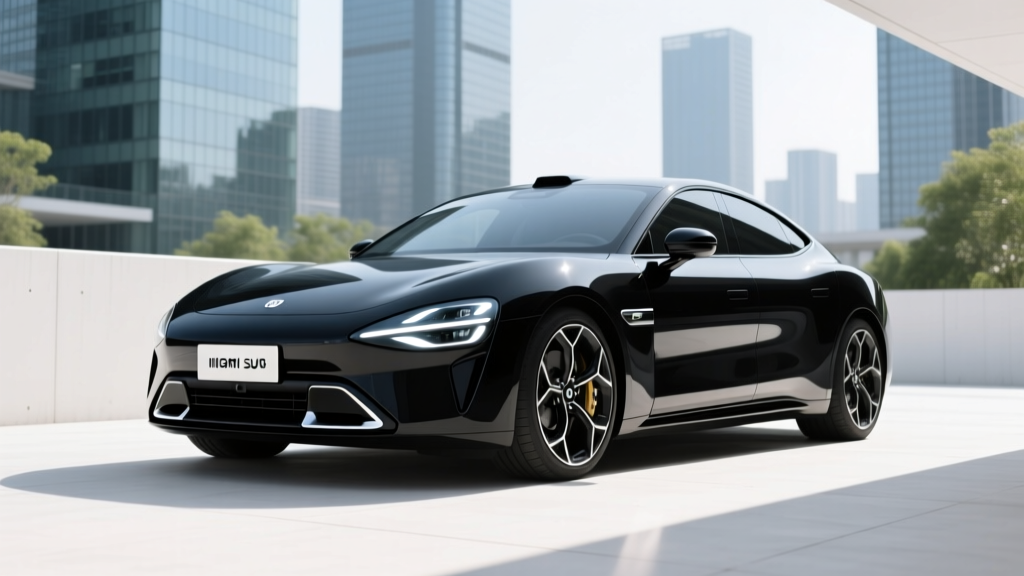
As of early 2026, Xiaomi's electric vehicles — the SU7 sedan and SU7 Ultra performance variant — are not sold in the United States and have no announced US launch date. The SU7 is currently available in China, where it competes with the Tesla Model 3 and BYD Seal on a CLTC range rating of up to 800 km (~497 miles CLTC). For US buyers, the Xiaomi EV car remains an import-only curiosity, meaning no EPA certification, no federal §30D tax credit eligibility, no US-spec charging connector standardization, and no domestic service network. If you're shopping for a comparable sport sedan in the US today, the Tesla Model 3, Hyundai Ioniq 6, and BMW i4 remain your practical options.
Xiaomi SU7: What the Specs Actually Mean for Buyers
Xiaomi entered the automotive market in March 2024 with the SU7, a full-size electric sport sedan built on a self-developed platform. The company followed with the SU7 Ultra in 2025, a track-focused variant producing 1,548 horsepower. For context, here's how the Xiaomi EV car lineup stacks up using manufacturer-published Chinese specifications, converted where useful to US metrics.
| Specification | SU7 Standard | SU7 Pro | SU7 Max | SU7 Ultra |
|---|---|---|---|---|
| Battery Capacity | 73.6 kWh (BYD Blade LFP) | 94.3 kWh (CATL Shenxing LFP) | 101 kWh (CATL Qilin NMC) | ~100+ kWh (CATL NMC) |
| CLTC Range | 700 km (435 mi) | 830 km (516 mi) | 800 km (497 mi) | ~630 km (391 mi) |
| Est. EPA Range (if certified) | ~300-330 mi | ~350-380 mi | ~340-370 mi | ~260-290 mi |
| Platform Voltage | 400V | 400V | 800V | 800V |
| Peak DC Fast Charge | ~120 kW | ~150 kW | ~260 kW | ~300+ kW |
| 10–80% DC Charge (est.) | ~35 min | ~32 min | ~19 min | ~17 min |
| 0–100 km/h (0–62 mph) | 5.28 sec | 5.7 sec | 2.78 sec | 1.98 sec |
| Horsepower | 299 hp | 299 hp | 673 hp | 1,548 hp |
| Drivetrain | RWD | RWD | AWD | AWD (Tri-Motor) |
| China MSRP (approx. USD) | ~$30,000 | ~$34,500 | ~$41,500 | ~$114,000 |
Critical note on range figures: Xiaomi publishes CLTC (China Light-Duty Vehicle Test Cycle) range, which runs significantly more optimistic than the US EPA cycle. A CLTC rating of 800 km typically converts to roughly 340–370 EPA miles for a vehicle of this weight and drag profile. Real-world highway driving at 70+ mph in the SU7 Max would likely yield 280–320 miles per charge, and cold-weather operation (below 32°F) could reduce that by another 15–25%. This is consistent with the physics of all lithium-ion EVs — no brand is immune.
How the Xiaomi EV Car Compares to US Alternatives
Since US buyers cannot purchase the SU7 through official channels, here's how it stacks up against vehicles you can buy stateside — all with EPA certification, US service networks, and §30D tax credit potential.
| Metric | Xiaomi SU7 Max (China) | Tesla Model 3 Long Range AWD | Hyundai Ioniq 6 SEL AWD | BMW i4 M50 |
|---|---|---|---|---|
| EPA Range | N/A (est. ~350 mi) | 346 mi | 270 mi (310 mi RWD) | 227 mi (270 mi eDrive35) |
| Battery (usable) | 101 kWh (NMC) | 75 kWh (NMC) | 77.4 kWh (NMC) | 81.5 kWh (NMC) |
| Peak DC Charge | ~260 kW (800V) | 250 kW | 240 kW | 205 kW |
| 10–80% Charge | ~19 min | ~25 min | ~18 min | ~31 min |
| 0–60 mph | ~2.6 sec | 4.2 sec | 5.1 sec | 3.7 sec |
| US Base MSRP | Not available | $47,740 | $46,700 | $67,300 |
| Federal Tax Credit (§30D) | None | Up to $7,500* | Up to $7,500* | $0 (MSRP/sourcing) |
| US Service Network | None | Nationwide | Nationwide | Nationwide |
* §30D credit eligibility depends on buyer income caps ($150K single / $300K joint), vehicle MSRP caps ($55K sedans), battery critical-mineral sourcing, and point-of-sale transfer rules. Always verify current-year rules at IRS.gov before purchasing.
The Xiaomi SU7 Max's 800V architecture gives it a genuine charging-speed advantage over most competitors — comparable to the Hyundai/Kia E-GMP platform and Porsche Taycan. However, the US charging ecosystem is dominated by EPA-certified vehicles with CCS1 or NACS connectors, and Xiaomi has not committed to either standard for an export model.
The Real Cost of Owning an EV vs. Gas: What the Numbers Show
If you're weighing whether to wait for a hypothetical Xiaomi US launch or buy an available EV now, the ownership economics strongly favor acting sooner. Here's a 5-year cost comparison using a typical US driver profile (12,000 miles/year, $0.16/kWh home electricity, $3.50/gallon regular unleaded).
| Cost Category (5 years) | EV (e.g., Model 3 LR) | Gas Sedan (e.g., Camry) | Difference |
|---|---|---|---|
| Purchase Price (after credit) | $40,240 | $30,000 | +$10,240 EV |
| Fuel/Energy (60,000 mi) | $3,072 | $7,560 | −$4,488 EV |
| Maintenance | $1,800 | $3,600 | −$1,800 EV |
| Insurance (avg.) | $9,000 | $7,200 | +$1,800 EV |
| Depreciation (est.) | $18,000 | $12,000 | +$6,000 EV |
| Total 5-Year Cost | $72,112 | $60,360 | +$11,752 EV |
The EV still costs more over 5 years in this scenario, primarily due to higher upfront price and depreciation. However, the gap narrows significantly with higher annual mileage, cheaper electricity rates (solar-charged homes can drop below $0.08/kWh), or state-level incentives not captured here. At 15,000 miles/year with home solar, the EV breaks even around year 4. The key variable is home charging access — without Level 2 home charging, public DC fast charging at $0.35–$0.50/kWh erases the fuel-cost advantage entirely.
Why the Xiaomi EV Car Isn't in the US — and When It Might Be
Xiaomi has not announced any US market entry plan as of 2026. The barriers are substantial:
- Regulatory homologation: US-market vehicles require EPA emissions certification (even for EVs, for documentation), NHTSA compliance with Federal Motor Vehicle Safety Standards (FMVSS), and crash-testing to IIHS/NCAP protocols. This process typically takes 2–4 years.
- Tariff exposure: Chinese-manufactured EVs face a 100% tariff under current US trade policy, which would push an SU7 Max from ~$41,500 to ~$83,000 before any dealer markup — eliminating the value proposition entirely.
- Service infrastructure: Xiaomi has zero US dealership or authorized service presence. Even Tesla took a decade to build its service network.
- Connector standards: The US has consolidated around NACS (Tesla's connector, now adopted by Ford, GM, Hyundai, and others) and legacy CCS1. Xiaomi's China-spec GB/T connector is incompatible without adapters not approved for US use.
- Geopolitical risk: Ongoing US-China trade tensions and data-security scrutiny of connected Chinese vehicles (similar to concerns raised about connected vehicles from NHTSA and Commerce Department reviews) create uncertain regulatory headwinds.
Xiaomi CEO Lei Jun has stated the company's automotive ambitions are global, but Europe and Southeast Asia are far more likely initial export markets due to lower tariff barriers and more compatible regulatory frameworks. A US launch before 2028–2029 appears unlikely under current trade conditions.
Common Misconceptions About Importing a Xiaomi EV
| Myth | Fact |
|---|---|
| "I can just import one through a gray-market dealer." | US import law requires FMVSS compliance or a 25-year exemption. You cannot legally register a non-compliant new vehicle for road use. Show-or-display exemptions are extremely limited. |
| "The CLTC range of 800 km means it goes 497 miles in the US." | CLTC is ~25–35% more optimistic than EPA testing. Expect roughly 340–370 EPA-equivalent miles from the SU7 Max, and 280–320 in real-world highway use. |
| "Xiaomi's battery tech is ahead of Tesla's." | Xiaomi sources cells from CATL and BYD — the same suppliers used by many global automakers. The 800V architecture is impressive but matches Hyundai/Kia E-GMP and is behind Lucid's 900V+ system. |
| "If Xiaomi comes to the US, it'll be dirt cheap." | Current 100% tariffs on Chinese EVs would double the price. Even with a local assembly plant (not announced), battery sourcing rules under §30D would limit tax credit eligibility. |
| "The SU7 is self-driving." | Xiaomi's Pilot Max ADAS is an SAE Level 2 system — it provides adaptive cruise and lane-centering but requires full driver engagement, identical to Tesla Autopilot or GM Super Cruise in that regard. |
Decision Framework: Should You Wait for Xiaomi or Buy Now?
Choose an Available US EV Now If:
- You need a vehicle within the next 12 months
- You want §30D federal tax credit eligibility (up to $7,500 point-of-sale)
- You rely on a local service network for warranty repairs
- You want NACS/CCS charging compatibility with the US public network
- You want IIHS crash-test ratings and NHTSA safety data
- Your daily commute or road-trip pattern requires reliable charging infrastructure
Follow Xiaomi's Progress (But Don't Wait) If:
- You're 3+ years from your next vehicle purchase
- You're tracking Xiaomi for potential European/global market pricing disruption
- You're interested in the SU7 Ultra as a future collector/import-eligible vehicle (post-2049)
- You want to monitor whether Xiaomi's entry pressures US automakers to lower prices
What First-Time EV Buyers Should Know (Regardless of Brand)
If the Xiaomi EV car caught your attention and you're new to electric vehicles, here are the fundamentals that apply to any EV purchase in 2026:
kW vs. kWh — the most common confusion: kW (kilowatts) measures power — how fast energy flows during charging. kWh (kilowatt-hours) measures energy — the battery's total capacity, like gallons in a tank. A 101 kWh battery charged at 260 kW doesn't fill in 23 minutes; the charge curve tapers significantly above 80% State of Charge to protect cell longevity.
Home charging is non-negotiable for most owners: Level 2 home charging (240V, 7–11 kW) adds 25–44 miles per hour of charging and costs $500–$2,500 to install depending on panel capacity and conduit run. Without home charging, EV ownership becomes significantly more expensive and time-consuming. Budget for a 50-amp circuit installation by a licensed electrician before purchasing any EV.
Cold weather reduces range — plan for it: All lithium-ion batteries lose 15–30% range in sub-freezing temperatures, with LFP chemistry slightly more affected than NMC at extreme cold. If you live above the 40th parallel, size your battery for winter range, not summer. A vehicle rated at 300 EPA miles delivers roughly 210–255 real winter miles.
Battery warranties protect you: Federal law mandates a minimum 8-year/100,000-mile battery warranty for EVs, with most manufacturers guaranteeing 70% capacity retention. Replacement costs for a 75–100 kWh pack range from $8,000–$20,000 out of warranty, but catastrophic failure rates are below 1% in current-generation packs.
Frequently Asked Questions
Is the Xiaomi SU7 available for purchase in the United States?
No. As of 2026, Xiaomi does not sell vehicles in the US market. There is no announced timeline for US availability, and current 100% tariffs on Chinese-manufactured EVs make a near-term launch economically challenging.
What is the real-world range of the Xiaomi SU7 Max?
Xiaomi claims 800 km (497 miles) on the CLTC cycle. Converted to EPA-equivalent testing, expect approximately 340–370 miles. In real-world highway driving at 70+ mph, plan for 280–320 miles. In freezing temperatures, reduce that by another 15–25%.
How does the Xiaomi SU7 charging speed compare to Tesla?
The SU7 Max's 800V architecture supports peak DC charging around 260 kW, slightly above the Tesla Model 3's 250 kW peak. However, sustained charge rate and the 10–80% time (~19 minutes for the SU7 Max vs. ~25 minutes for the Model 3) depend on the full charge curve, not just peak kW. Both vehicles taper significantly above 80% SoC.
Can I import a Xiaomi SU7 to the US as a personal vehicle?
Practically, no. US import regulations require FMVSS compliance for vehicles under 25 years old. The SU7 has not been certified to US safety standards, making legal road registration essentially impossible through standard channels.
What US-available EVs are most similar to the Xiaomi SU7?
The closest US-market equivalents are the Tesla Model 3 Performance ($52,740, 315 mi EPA, 0–60 in 2.9s), Hyundai Ioniq 6 ($46,700, up to 361 mi EPA), and BMW i4 M50 ($67,300, 227 mi EPA, 0–60 in 3.7s). The Model 3 remains the closest in performance-per-dollar to the SU7 Max's China pricing.
Does Xiaomi use LFP or NMC battery chemistry?
It depends on the trim. The SU7 Standard uses BYD's Blade LFP (lithium iron phosphate) cells, which offer longer cycle life and lower cost but slightly lower energy density. The SU7 Pro uses CATL Shenxing LFP cells. The SU7 Max uses CATL Qilin NMC (nickel manganese cobalt) cells for higher energy density and better cold-weather performance.
Will Xiaomi EVs qualify for the US federal tax credit if they launch here?
Under current §30D rules, even if Xiaomi began US sales, the vehicle would need to meet MSRP caps ($55,000 for sedans), buyer income limits, and battery component/critical mineral sourcing requirements — which currently exclude most Chinese-sourced battery materials. Qualification would be unlikely without significant supply-chain restructuring. Always verify rules at IRS.gov.