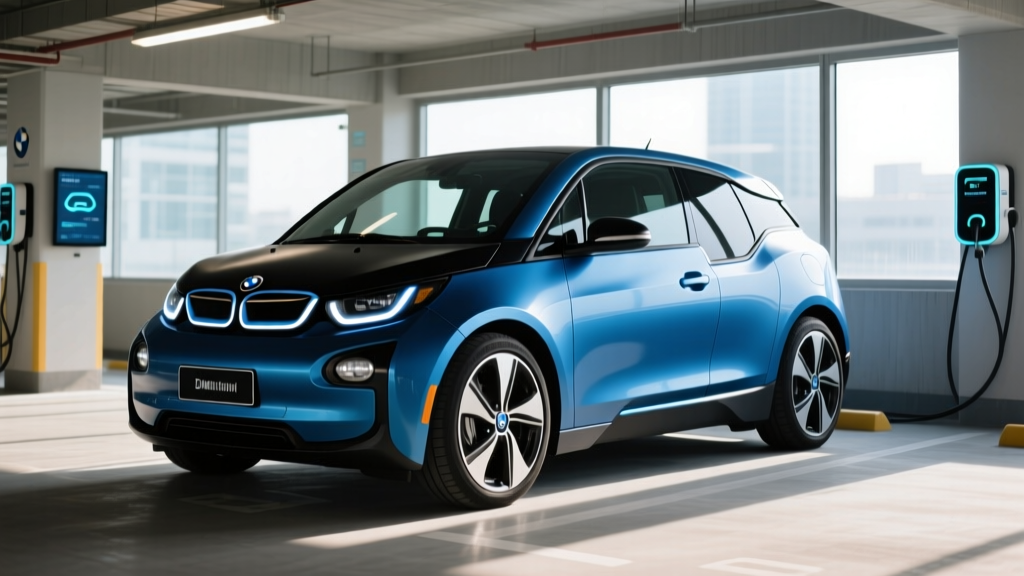
The BMW i3 occupies a unique space in the used EV market. Originally produced from 2014 to 2021, it remains one of the most distinctive electric vehicles ever built — a carbon-fiber-reinforced plastic (CFRP) city car with a quirky design, tight turning radius, and genuine urban efficiency. If you're researching the cost of BMW i3 electric car ownership in 2026, you're likely looking at the used market, where prices have settled into an attractive range for budget-conscious EV buyers.
This guide breaks down the real five-year total cost of ownership (TCO), federal and state incentive eligibility on used EVs, charging costs versus gasoline, maintenance savings, insurance realities, and depreciation trends. Every figure is grounded in current data — no marketing gloss.
BMW i3 Quick Specs: What You're Buying
Before calculating ownership costs, here's what the final model-year (2021) BMW i3 and i3s deliver on paper and in practice. Most 2026 buyers will encounter the 120 Ah (42.2 kWh usable) battery variant, which replaced the earlier 60 Ah and 94 Ah packs.
| Spec | i3 (120 Ah) | i3s (120 Ah) |
|---|---|---|
| EPA Range (BEV) | 153 miles | 153 miles |
| Real-World Range (mixed) | ~125–140 miles | ~120–135 miles |
| Battery (usable) | 42.2 kWh (NMC) | 42.2 kWh (NMC) |
| Combined MPGe | 113 MPGe | 107 MPGe |
| Motor Output | 170 hp / 184 lb-ft | 184 hp / 199 lb-ft |
| 0–60 mph | 6.9 sec | 6.2 sec |
| DC Fast Charge (CCS) | 50 kW peak | 50 kW peak |
| 10–80% DC Charge | ~35 min | ~35 min |
| Level 2 Charge (7.4 kW) | ~4.5 hours | ~4.5 hours |
| Battery Warranty (original) | 8 yr / 80,000 mi | 8 yr / 80,000 mi |
5-Year Total Cost of Ownership Breakdown
The true cost of any vehicle extends well beyond the purchase price. Here's a realistic five-year TCO for a used 2021 BMW i3 (120 Ah BEV, not the Range Extender variant) assuming 12,000 miles per year (60,000 miles total), home Level 2 charging at the national average electricity rate, and typical urban/suburban use.
| Category | Estimated Cost | Notes |
|---|---|---|
| Purchase Price (used) | $18,000–$24,000 | Private party / certified dealer, 25k–45k miles |
| Federal Used EV Credit (§25E) | –$4,000 | If eligible (see rules below) |
| Net Purchase After Credit | $14,000–$20,000 | Point-of-sale or tax-time claim |
| Charging (5 years, 60k mi) | $2,700–$3,600 | Home L2 at $0.15/kWh; some public DC |
| Insurance (5 years) | $6,500–$9,000 | $1,300–$1,800/yr avg; varies by state/driver |
| Maintenance (5 years) | $800–$1,500 | Cabin filter, brake fluid, tires, wipers |
| Depreciation (5 years) | $5,000–$8,000 | Resale est. $9,000–$14,000 at year 5 |
| Registration / Taxes | $1,000–$2,500 | Varies significantly by state |
| Total 5-Year Cost (net) | $26,000–$40,600 | Midpoint ~$33,000 |
For comparison, a similarly priced used gasoline compact (e.g., a 2021 Honda Civic at ~$20,000) would cost roughly $32,000–$38,000 over five years when you factor in fuel at $3.50/gallon and 30 MPG combined, plus higher maintenance (oil changes, transmission fluid, more brake wear). The i3's advantage lies in dramatically lower fuel and maintenance costs, partially offset by slightly higher insurance.
Federal Tax Credit: §25E Used EV Credit (Not §30D)
Because the BMW i3 is no longer sold new, the IRS §25E Used Clean Vehicle Credit applies — not the §30D new-vehicle credit. This is a critical distinction many buyers miss.
- Credit Amount: 30% of the sale price, up to a maximum of $4,000
- Vehicle Price Cap: Sale price must be $25,000 or less
- Vehicle Age: Must be at least 2 model years old (2024 or older for a 2026 purchase)
- Buyer Income Limits (MAGI): $75,000 single / $112,500 head of household / $150,000 joint
- Battery Capacity: Minimum 7 kWh (i3's 42.2 kWh easily qualifies)
- Dealer Requirement: Must purchase from a licensed dealer (private-party sales do not qualify)
- Transfer Option: Credit can be transferred to the dealer at point of sale for an immediate price reduction
- Frequency Limit: The same VIN can only claim the §25E credit once every 3 years
What this means in practice: If you buy a used 2021 BMW i3 from a dealer for $22,000 and your modified adjusted gross income falls below the threshold, you qualify for $4,000 (30% of $22,000 = $6,600, but the cap is $4,000). That brings your effective purchase price to $18,000. The dealer can apply it at the point of sale, reducing your out-of-pocket cost immediately.
Important caveat: If you buy the i3 for more than $25,000 (e.g., a low-mileage 2021 i3s from a BMW dealer at $26,500), you do not qualify for any federal credit — the $25,000 cap is absolute. Negotiate toward or below that threshold.
State, Local, and Utility Incentives
Beyond the federal credit, many states and utilities offer additional incentives that can further reduce the cost of BMW i3 ownership. These vary dramatically by region and change frequently, so always verify current availability.
- California (CVRP): Up to $1,000–$2,000 for used EVs (income-dependent; program funding fluctuates)
- Colorado: State tax credit of up to $5,000 for used EVs purchased from a dealer (income caps apply)
- New York (Drive Clean Rebate): Point-of-sale rebate for eligible used EVs (amount varies)
- Utility Rebates: Many utilities (e.g., PG&E, ConEdison, Xcel Energy) offer $250–$1,000 rebates for used EV purchases or home charger installations
- HOV Lane Access: Several states grant solo carpool-lane access to EVs — a significant non-monetary benefit in congested metros
Check your state energy office and utility provider for current programs. The Alternative Fuels Data Center maintains a state-by-state incentive database.
Charging Cost vs. Gasoline: The $/Mile Math
The i3's efficiency is where ownership economics shine. At 113 MPGe combined (roughly 30 kWh per 100 miles for the BEV), it's one of the most efficient EVs ever sold in the U.S.
| Metric | BMW i3 (Home L2) | BMW i3 (Public DC) | Gas Compact (30 MPG) |
|---|---|---|---|
| Energy Source | Electricity | DC Fast Charge | Unleaded 87 octane |
| Rate Assumption | $0.15/kWh | $0.40/kWh | $3.50/gallon |
| Efficiency | 30 kWh/100 mi | 30 kWh/100 mi | 30 MPG |
| Cost Per Mile | $0.045 | $0.12 | $0.117 |
| Cost for 60,000 mi (5 yr) | $2,700 | $7,200 | $7,000 |
Key takeaway: If you charge primarily at home on a standard residential rate ($0.12–$0.18/kWh), the i3 costs roughly $0.04–$0.05 per mile to "fuel" — about one-third to one-quarter the cost of gasoline. Over 60,000 miles, that's a savings of $3,500–$4,300 versus a 30 MPG gas car.
However, if you rely heavily on public DC fast charging at $0.35–$0.48/kWh (common on Electrify America, EVgo, and ChargePoint networks), your per-mile cost can actually exceed gasoline. The i3's relatively slow 50 kW DC charge rate also means you'll spend 35+ minutes at the charger — a practicality concern for road trips. This car is optimized for home charging and urban commuting.
Maintenance Savings: Fewer Parts, Lower Bills
EVs eliminate the maintenance items that plague internal combustion vehicles over time. Here's what the i3 requires versus a gasoline equivalent:
| Service Item | BMW i3 | Gasoline Compact |
|---|---|---|
| Engine Oil Changes | $0 (none) | $300–$600 |
| Transmission Fluid | $0 (sealed unit) | $150–$300 |
| Brake Pads/Rotors | $0–$200 (regen saves wear) | $400–$800 |
| Engine Air Filter | $0 (no engine) | $100–$200 |
| Cabin Air Filter | $100–$200 | $100–$200 |
| Spark Plugs | $0 | $200–$400 |
| Coolant / Brake Fluid | $150–$300 | $200–$400 |
| Tires (1–2 sets) | $600–$1,200 | $500–$1,000 |
| Estimated Total | $850–$1,900 | $1,950–$3,900 |
The i3's regenerative braking system handles most deceleration, meaning the friction brakes see minimal use. Many i3 owners report original brake pads at 80,000+ miles. The i3's narrow 155/70R19 tires are specialized and can be pricier per tire than common compact-car sizes, but overall maintenance runs roughly 50% less than a gas equivalent.
One cost to watch: The i3's CFRP body panels are not repairable at standard body shops. Collision damage to the carbon-fiber structure requires BMW-certified repair facilities, which can increase post-accident repair costs and contribute to higher insurance premiums.
Insurance Cost Reality
EVs generally cost 15–25% more to insure than comparable gasoline vehicles, and the i3 is no exception. According to industry data, the average annual premium for a used BMW i3 ranges from $1,300 to $1,800 depending on your state, driving record, coverage level, and insurer.
Why EV insurance costs more:
- Higher repair costs: EV-specific components (battery pack, power electronics) are expensive to replace after collision damage
- Specialized labor: Fewer shops are certified for high-voltage system repairs
- CFRP body: The i3's carbon-fiber construction requires BMW-authorized repair centers, limiting competition
- Total-loss thresholds: Battery damage in a moderate collision can trigger a total-loss declaration even when the passenger cell is intact
How to reduce premiums: Shop quotes from insurers with dedicated EV programs (e.g., Geico, Progressive, and several regional carriers offer EV-specific discounts). Bundling home and auto, maintaining a clean record, and choosing higher deductibles can bring annual costs closer to $1,200.
Depreciation and Resale Value
The BMW i3 experienced steep initial depreciation — common for early-generation EVs with limited range. A 2021 i3 that stickered at roughly $45,000 new now sells for $18,000–$24,000 on the used market, representing a 47–60% loss over four to five years.
Going forward, depreciation should moderate for several reasons:
- Price floor established: The i3 has largely completed its steepest depreciation phase
- Cult following: The i3's unique design, carbon-fiber construction, and urban practicality have generated a loyal enthusiast community
- Battery health: The 42.2 kWh Samsung SDI NMC pack has proven durable, with most high-mileage examples retaining 85–92% State of Health (SoH) based on owner-reported data
- Scarcity: No new i3s are being produced, so supply will only decrease
Over the next five years (2026–2031), expect a used i3 purchased today at ~$20,000 to retain roughly $9,000–$14,000 in resale value — a depreciation of $6,000–$11,000. That's roughly $1,200–$2,200 per year, which is competitive with or better than most used gasoline compacts in the same price bracket.
Who Should (and Shouldn't) Buy a Used BMW i3
- Your daily commute is under 60 miles round-trip
- You have access to home Level 2 charging (240V / 32A+)
- You want the lowest possible per-mile fuel cost in an urban environment
- You value a tight turning radius (32.3 ft) for city parking
- You qualify for the §25E used EV credit to reduce purchase cost
- You regularly drive 100+ miles in a single trip (153-mile EPA range is limiting)
- You lack home charging access and would rely on public DC fast charging
- You need more than 2–3 passenger seats (the rear-hinged back doors are impractical for car seats)
- You frequently drive in extreme cold without garage parking (range drops 25–35%)
- You need highway-competitive acceleration for merging (the i3 is adequate but not quick above 50 mph)
Frequently Asked Questions
How much does it really cost to own a BMW i3 over 5 years?
With the §25E used EV credit applied, expect a total 5-year cost of roughly $26,000–$35,000 including purchase, charging, insurance, maintenance, and depreciation. The midpoint lands around $33,000, or about $550/month all-in. This is competitive with or lower than a comparable used gasoline compact when you account for the i3's dramatically lower fuel and maintenance costs.
Do I qualify for the federal tax credit on a used BMW i3?
You may qualify for up to $4,000 under the IRS §25E Used Clean Vehicle Credit if: the sale price is $25,000 or less, you buy from a licensed dealer, the vehicle is at least 2 model years old, and your MAGI is below $75,000 (single) / $150,000 (joint). The credit can be transferred to the dealer at point of sale. Always verify your eligibility with a tax professional, as rules can change.
How much do I save on fuel and maintenance with the i3?
Over 60,000 miles (5 years at 12k/year), home-charged electricity costs approximately $2,700 versus $7,000 for gasoline at 30 MPG and $3.50/gallon — a $4,300 fuel savings. Maintenance runs $850–$1,900 versus $1,950–$3,900 for a gas car, saving another $1,000–$2,000. Combined, expect $5,000–$6,300 in operating-cost savings over five years.
Are EVs more expensive to insure?
Yes, typically 15–25% more. The i3 averages $1,300–$1,800 annually. Higher repair costs for EV-specific components, specialized labor requirements, and the i3's carbon-fiber body (requiring BMW-certified shops) all contribute. Shopping multiple insurers and selecting EV-aware carriers can reduce premiums.
How well does the BMW i3 hold its value?
The i3 has already experienced its steepest depreciation. A 2021 model purchased today at $18,000–$24,000 should retain $9,000–$14,000 after five more years. The 42.2 kWh battery has proven durable (85–92% SoH at high mileage), and the model's cult following plus production discontinuation provide a price floor. It depreciates comparably to or better than most used gasoline compacts in this price range.
What about the BMW i3 Range Extender (REx)?
The REx variant includes a small 650cc two-cylinder gasoline generator that extends range to roughly 180–200 miles total. It adds complexity (oil changes, engine maintenance) but eliminates range anxiety for longer trips. Used REx models typically command a $1,000–$3,000 premium over BEV versions. If your commute is short but you take occasional 150+ mile trips, the REx may be worth the added maintenance.