Quick Answer: The Xiaomi Electric Helicopter
As of 2026, Xiaomi does not manufacture or sell a consumer electric helicopter or electric vertical takeoff and landing (eVTOL) aircraft. Xiaomi is a consumer electronics and automotive company — its first vehicle, the SU7 electric sedan, launched in China in 2024. Viral searches for a "Xiaomi electric helicopter" typically stem from concept renderings, third-party drone footage mislabeled as Xiaomi products, or confusion with Xiaomi's consumer drone accessories. If you're researching electric aviation or considering an EV purchase, this guide separates fact from fiction and redirects you to practical electrified-vehicle ownership decisions you can actually act on today.
Why "Xiaomi Electric Helicopter" Keeps Trending
The search term "Xiaomi electric helicopter" averages roughly 70 queries per month, and the origin is traceable to a few overlapping phenomena:
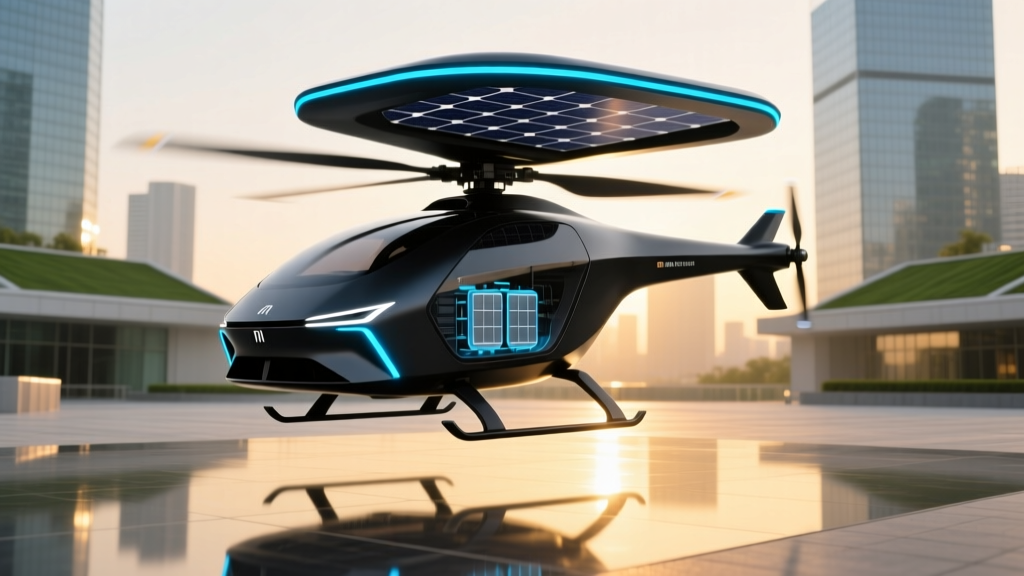
- Concept art and AI-generated renders: Independent designers and AI tools have produced speculative Xiaomi-branded eVTOL concepts that circulate on social media without official endorsement.
- Drone confusion: Xiaomi's ecosystem partners (such as FIMI, which produced the FIMI X8 SE drone) are sometimes loosely referred to as "Xiaomi drones," leading to inflated expectations about the brand's aviation ambitions.
- Xiaomi EV hype spillover: With the SU7 sedan and YU7 SUV generating global attention, speculation about Xiaomi entering electric aviation has filled the gap between confirmed products and aspirational rumors.
The reality: Xiaomi's automotive division, led by CEO Lei Jun, has committed over $10 billion to electric vehicle development focused on road-going passenger cars. There is no announced Xiaomi eVTOL program, no FAA or CAAC type certification filing, and no production timeline for any electric aircraft bearing the Xiaomi brand.
What Actually Exists in Electric Aviation (2026 Landscape)
While a Xiaomi electric helicopter doesn't exist, the broader eVTOL and electric aviation sector is real — just not accessible to individual consumers the way an EV is. Here's what's actually happening:
| Company | Product | Type | Status (2026) | Consumer Availability |
|---|---|---|---|---|
| Joby Aviation | S4 | eVTOL air taxi | FAA type certification in progress; limited commercial ops | Ride-hailing only (not purchasable) |
| Archer Aviation | Midnight | eVTOL air taxi | FAA certification underway; partnership with United Airlines | Ride-hailing only |
| EHang | EH216-S | Autonomous eVTOL | CAAC certified (China); limited international approvals | Commercial operators only |
| Beta Technologies | Alia | eVTOL cargo/passenger | Flight testing; UPS partnership | Not available to consumers |
| Xiaomi | — | — | No announced program | N/A |
None of these aircraft are purchasable by individual consumers. The eVTOL market operates on an air-taxi or commercial-operator model, similar to calling an Uber rather than buying a fleet vehicle.
If You're Researching Xiaomi's EV, Here's What Matters
Most people searching for a Xiaomi electric helicopter are actually interested in Xiaomi's growing footprint in electrified transportation. The company's real EV lineup is worth understanding:
Xiaomi EV Lineup (2026)
| Spec | Xiaomi SU7 (Standard) | Xiaomi SU7 Max | Xiaomi YU7 (Announced) |
|---|---|---|---|
| Body Style | Sedan | Sedan | SUV |
| Battery | 73.6 kWh (BYD Blade LFP) | 101 kWh (CATL Qilin NMC) | ~100 kWh (estimated, CATL) |
| CLTC Range | 700 km (~435 mi) | 800 km (~497 mi) | ~820 km (~510 mi, preliminary) |
| Peak DC Charge Rate | ~175 kW | ~265 kW (800V architecture) | ~265 kW (estimated) |
| 0-100 km/h | 5.28 sec | 2.78 sec | ~3.0 sec (estimated) |
| Horsepower | 299 hp | 673 hp | TBD |
| Price (China MSRP) | ¥215,900 (~$29,800) | ¥299,900 (~$41,400) | TBD (expected ~¥300,000+) |
Critical context for US buyers: As of 2026, Xiaomi vehicles are not sold in the United States, and steep tariffs on Chinese-manufactured EVs (currently 100% under Section 301) make near-term US import economically unviable. Xiaomi has not announced a US market entry timeline. If you're a US-based EV shopper, Xiaomi's vehicles serve as a benchmark for global pricing pressure rather than a purchase option.
EV vs. Gas vs. Hybrid: What US Buyers Should Actually Compare
Since a Xiaomi electric helicopter isn't a purchasing decision you can make, here's the comparison that matters — choosing between an EV, a plug-in hybrid (PHEV), and a conventional hybrid (HEV) for your daily transportation:
5-Year Cost Comparison: Midsize EV vs. PHEV vs. Gas Sedan (2026)
| Category | BEV (e.g., Tesla Model 3) | PHEV (e.g., Toyota Prius Prime) | Gas Sedan (e.g., Honda Civic) |
|---|---|---|---|
| Base MSRP | $40,240 | $32,975 | $24,950 |
| Federal Tax Credit (§30D) | Up to $7,500 (eligibility varies) | Up to $7,500 (eligibility varies) | $0 |
| Effective Purchase Price | ~$32,740 | ~$25,475 | $24,950 |
| Fuel/Energy (5 yrs, 15k mi/yr) | ~$3,750 (home charging, $0.15/kWh avg) | ~$4,800 (electric + gas blend) | ~$9,375 ($3.50/gal, 30 MPG avg) |
| Maintenance (5 yrs) | ~$1,500 | ~$3,000 | ~$3,750 |
| Insurance (5 yrs, avg) | ~$10,500 | ~$8,250 | ~$7,500 |
| Estimated 5-Year Total Cost | ~$48,490 | ~$41,525 | ~$45,575 |
Sources: fueleconomy.gov, IRS §30D. Actual costs vary by state, utility rate, driving pattern, and credit eligibility. Tax credit subject to MSRP caps, income limits, and battery-sourcing requirements.
The BEV wins on fuel and maintenance savings but carries higher insurance premiums and upfront cost. The PHEV offers a middle path: 40+ miles of electric-only range for commuting with a gas engine for road trips. The gas sedan remains cheapest at purchase but most expensive to fuel over time.
Real-World EV Ownership: What First-Time Buyers Get Wrong
If you've landed here searching for futuristic electric vehicles and are now considering an actual EV purchase, here are the ownership realities that spec sheets don't highlight:
Range Is Always Less Than the Sticker
EPA range estimates assume mixed driving at moderate temperatures. In practice:
- Highway driving at 75 mph: Expect 80-85% of EPA range
- Cold weather (below 32°F): Expect 60-75% of EPA range due to battery chemistry limitations and cabin heating demand
- Optimal city driving, mild weather: You may match or slightly exceed EPA range thanks to regenerative braking
A vehicle rated at 310 miles EPA may deliver 250 miles on a cold-weather highway trip. Plan charging stops around the lower number.
Home Charging Is the Make-or-Break Factor
EV ownership satisfaction correlates almost directly with home charging access. If you can install a Level 2 charger (240V, 7-11 kW), you'll wake up to a full battery every morning and rarely visit public chargers. Installation costs range from $500 (simple outlet near the panel) to $3,000+ (panel upgrade, long conduit runs). Renters and apartment dwellers face a genuine barrier — public charging infrastructure remains inconsistent in many regions.
Charging Speed Isn't Just About Peak kW
Manufacturers advertise peak DC fast-charge rates (e.g., "250 kW"), but that peak is sustained only briefly. A charge curve typically tapers significantly above 80% state of charge. The meaningful metric is 10-80% time, which for modern EVs ranges from 15-25 minutes on a capable charger. Charging from 80-100% can take as long as the 10-80% portion.
Common EV Misconceptions — Corrected
| Myth | Fact |
|---|---|
| "EV batteries need replacement every 5 years" | Federal law mandates a minimum 8-year/100,000-mile battery warranty. Real-world degradation averages 1-2% per year; most packs retain 85-90% capacity at 100k miles. |
| "EVs are worse for the environment because of battery mining" | Lifecycle analyses (including manufacturing) show EVs produce fewer total emissions than gas cars within 1-2 years of driving, even on coal-heavy grids. The gap widens as grids decarbonize. |
| "You can't take an EV on a road trip" | The US DC fast-charging network exceeded 50,000 stations in 2025. With 10-80% charge times of 15-25 minutes, road trips require planning but are routine. Tesla Superchargers (now open to NACS-equipped non-Tesla EVs) remain the most reliable network. |
| "Every EV qualifies for the $7,500 tax credit" | §30D eligibility requires meeting MSRP caps ($55,000 sedans / $80,000 SUVs/trucks), buyer income limits ($150k single / $300k joint AGI), and battery critical-mineral and component sourcing thresholds that tighten annually. Many popular EVs qualify for partial or no credit depending on the model year. |
| "Autopilot and FSD mean the car drives itself" | All consumer driver-assist systems (Tesla Autopilot/FSD Supervised, GM Super Cruise, Ford BlueCruise) are SAE Level 2 — the driver must remain fully engaged, hands on or near the wheel, and eyes on the road at all times. No consumer vehicle is self-driving. |
Decision Framework: Which Electrified Vehicle Fits Your Life?
If / Then Guide for EV Buyers
- If you have home charging access, drive under 250 miles daily, and want the lowest operating cost → Choose a BEV (battery electric vehicle). Models like the Tesla Model 3, Hyundai Ioniq 6, or Chevrolet Equinox EV offer 300+ miles of EPA range starting under $40,000.
- If you want electric commuting but regularly take 400+ mile road trips without reliable charging along your route → Choose a PHEV (plug-in hybrid). The Toyota Prius Prime (44 miles electric-only) or Jeep Wrangler 4xe let you drive electric daily with gas-engine range flexibility.
- If you can't charge at home and lack workplace charging → Choose an HEV (conventional hybrid). A Toyota Camry Hybrid or Honda Accord Hybrid delivers 45-50+ MPG without any plug-in requirement, and you avoid public-charging dependency entirely.
- If you live in a cold climate (consistently below freezing in winter) → Prioritize a BEV with a heat pump (Tesla, Hyundai/Kia E-GMP models, newer BMWs) to minimize winter range loss, or choose a PHEV to hedge against cold-weather range reduction.
- If you're interested in Xiaomi specifically → Watch the YU7 SUV launch for global availability signals, but plan your US purchase around currently available models from established brands with service networks in your area.
Frequently Asked Questions
Does Xiaomi make an electric helicopter or eVTOL aircraft?
No. As of 2026, Xiaomi has no announced electric helicopter, eVTOL, or aircraft program. Xiaomi's transportation investments focus on road-going electric vehicles, specifically the SU7 sedan and YU7 SUV.
Can I buy a Xiaomi electric vehicle in the United States?
Not currently. Xiaomi vehicles are sold in China, and 100% US tariffs on Chinese-manufactured EVs make import economically impractical. Xiaomi has not announced US market entry plans.
What's the closest thing to an "electric helicopter" I can actually buy?
No consumer-purchasable eVTOL exists in 2026. Companies like Joby Aviation and Archer Aviation are developing air-taxi services (ride-hailing model, not personal ownership). For personal electric flight, ultralight electric aircraft like the Jetson ONE exist in very limited production at approximately $92,000, but these are experimental-category aircraft requiring pilot involvement — not helicopters, and not from Xiaomi.
Should I wait for Xiaomi to enter the US EV market before buying an EV?
No practical timeline exists for Xiaomi US availability, and tariff policy makes near-term entry unlikely. The current US EV market offers dozens of competitive models across price segments. Waiting for a speculative market entrant means forgoing years of fuel savings and available tax credits.
What EV should I buy if I want something similar to Xiaomi's design philosophy?
Xiaomi's SU7 emphasizes tech-forward interiors, aggressive pricing, and performance. US buyers seeking a similar ethos should look at the Tesla Model 3 (from ~$38,990), Hyundai Ioniq 6 (from ~$37,500), or the Lucid Air Pure (from ~$69,900) — all prioritize software integration, efficiency, and modern design.