The Short Answer: There Is No Dodge EV Challenger Yet
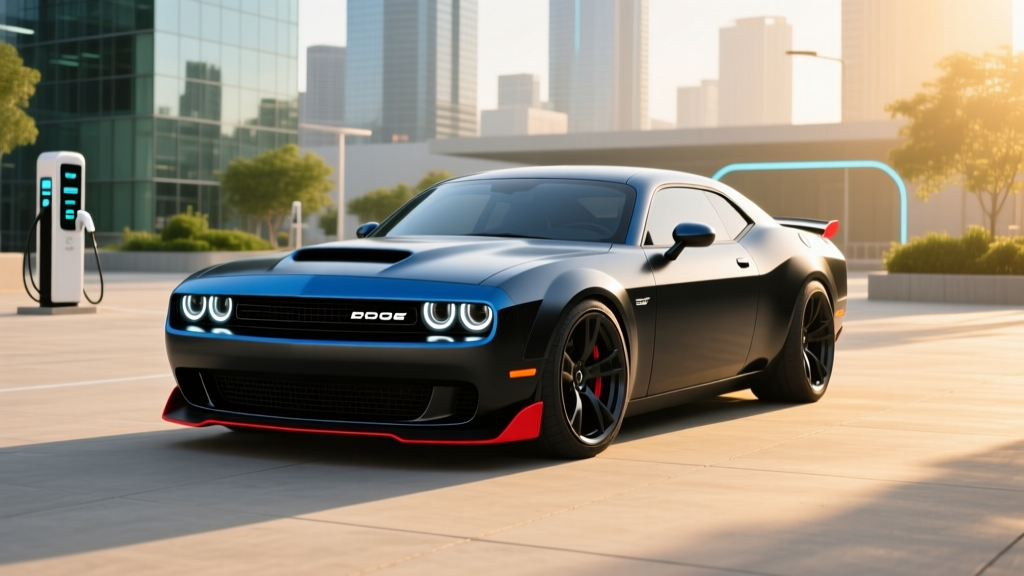
As of 2026, Dodge has not announced a dedicated electric Challenger. The brand's electric muscle strategy centers on the Dodge Charger Daytona EV (production beginning late 2024, with broader availability through 2025–2026). Stellantis has retired the gas-powered Challenger after the 2023 model year, but a battery-electric two-door Challenger successor has not been confirmed with specs, pricing, or a release date. If you're searching for a "Dodge EV Challenger," what you're actually looking for is likely the Charger Daytona — the two-door electric muscle car Dodge has put into production. Here's what that means for buyers, and how the math works versus the gas Challenger you may be replacing.
Why the Confusion? Challenger vs. Charger EV Naming
Dodge's muscle car lineup has historically included two distinct nameplates: the Challenger (two-door coupe) and the Charger (four-door sedan). When Dodge unveiled the Charger Daytona SRT Banshee concept in August 2022, it previewed a two-door electric coupe built on Stellantis' STLA Large platform — effectively a spiritual successor to both the Challenger and Charger coupe, despite carrying the Charger name.
Stellantis CEO Carlos Tavares confirmed in 2022 that the next-generation Dodge muscle cars would go electric, but the company consolidated its naming under the Charger Daytona badge for the production EV. The Challenger nameplate has not been applied to any announced electric model as of early 2026.
Bottom line: If Dodge ever produces a standalone "Challenger EV," it has not been announced. The Charger Daytona is the electric muscle car to watch.
Dodge Charger Daytona EV: The Specs That Matter
Since the Charger Daytona is the closest thing to a "Dodge EV Challenger," here are the confirmed and estimated specifications for the production model, based on Dodge's official announcements and Dodge's product pages.
| Spec | Charger Daytona R/T (AWD) | Charger Daytona Scat Pack (AWD) |
|---|---|---|
| Powertrain | Dual-motor AWD | Dual-motor AWD |
| Horsepower | 496 hp | 670 hp |
| 0–60 mph | ~4.7 sec (est.) | ~3.3 sec (est.) |
| Battery (usable, est.) | ~100 kWh (NMC) | ~100 kWh (NMC) |
| EPA Range (target) | ~317 mi (est.) | ~260 mi (est.) |
| Max DC Fast Charge | ~200 kW (peak) | ~200 kW (peak) |
| 10–80% DC Charge | ~27 min (est.) | ~27 min (est.) |
| Level 2 Charging (240V) | ~11 kW onboard | ~11 kW onboard |
| Platform | STLA Large (800V architecture capable) | |
| Body Style | 2-door coupe (also 4-door sedan variant) | |
| Base MSRP (est.) | ~$60,000 | ~$75,000+ |
Important caveats: Dodge has not published final EPA range certifications for all trims as of this writing. The figures above are based on Dodge's stated targets and STLA Large platform capabilities. Real-world range will vary — expect 15–25% reduction in sustained highway driving at 75+ mph, and up to 30% loss in sub-freezing temperatures due to battery thermal demands and cabin heating.
Real-World Range Reality Check
EPA target (R/T): ~317 miles
Expected highway real-world: ~250–270 miles at 70–75 mph
Cold weather (below 32°F): ~220–240 miles
Why it drops: EVs use battery energy for cabin heat (no waste heat from an engine), and cold slows lithium-ion charge acceptance, reducing regenerative braking efficiency.
Charger Daytona EV vs. Gas Challenger: Cost & Performance Comparison
For buyers cross-shopping the last-generation gas Challenger (2023 model year, final production) against the incoming Charger Daytona EV, here's how the numbers stack up.
| Metric | 2023 Challenger R/T (5.7L HEMI V8) | Charger Daytona R/T (EV, est.) | Charger Daytona Scat Pack (EV, est.) |
|---|---|---|---|
| Horsepower | 375 hp | 496 hp | 670 hp |
| 0–60 mph | ~5.0 sec | ~4.7 sec | ~3.3 sec |
| Fuel/Range | 19 MPG combined (EPA) | ~317 mi (EPA est.) | ~260 mi (EPA est.) |
| "Fuel" Cost per Mile | ~$0.17/mi (gas at $3.50/gal) | ~$0.04–0.06/mi (home L2) | ~$0.04–0.06/mi (home L2) |
| Annual Fuel/Energy (15k mi) | ~$2,550 | ~$600–$900 | ~$600–$900 |
| Base MSRP (when new) | ~$42,000 | ~$60,000 | ~$75,000+ |
| Federal Tax Credit (§30D) | $0 | Up to $7,500* | Up to $7,500* |
*§30D credit eligibility depends on MSRP caps (sedans: $55,000; SUVs/trucks: $80,000), buyer income limits ($150k single / $300k joint), and battery critical-mineral sourcing requirements. The Charger Daytona coupe may fall under sedan or "other" classification — verify with a tax professional and IRS guidance. Point-of-sale transfer is available at participating dealers.
Real Costs of Ownership: What a First-Time EV Buyer Needs to Know
Beyond the sticker price, EV ownership involves infrastructure, energy, and maintenance costs that differ fundamentally from a gas muscle car.
Estimated 5-Year Cost of Ownership (15,000 miles/year)
| Category | Gas Challenger R/T | Charger Daytona EV (R/T, est.) |
|---|---|---|
| Purchase Price (base) | $42,000 | $60,000 |
| Federal Tax Credit | $0 | Up to –$7,500 |
| Net Purchase | $42,000 | ~$52,500 |
| Home Charger Install (Level 2) | $0 | $800–$2,500 |
| 5-Year Fuel/Energy | ~$12,750 | ~$3,000–$4,500 |
| 5-Year Maintenance | ~$3,500 (oil, plugs, trans fluid) | ~$1,200 (cabin filter, tires, wipers) |
| 5-Year Insurance (est.) | ~$9,000 | ~$12,000–$14,000 |
| 5-Year Total (approx.) | ~$67,250 | ~$71,200–$74,700 |
Sources: fueleconomy.gov for MPG/efficiency data; insurance estimates based on industry averages for performance vehicles. Actual costs vary by state, driving record, and electricity rates.
Key takeaway: The EV's higher purchase price and insurance premiums are partially offset by dramatically lower energy and maintenance costs. Break-even typically occurs around year 4–6 depending on your electricity rate, mileage, and whether you qualify for the full §30D credit. If you drive more than 15,000 miles/year or have cheap home electricity (under $0.12/kWh), the EV pulls ahead faster.
Home Charging: The Non-Negotiable for EV Muscle Car Ownership
A 100 kWh battery charging on a standard 120V outlet (Level 1, ~1.4 kW) adds roughly 4–5 miles of range per hour — meaning a full charge takes over 20 hours. That's impractical for a daily-driver muscle car.
Level 2 home charging (240V, 48A circuit) at ~11 kW adds ~35–40 miles per hour, fully replenishing the battery overnight in ~9–10 hours. Installation costs break down as follows:
| Item | Cost Range |
|---|---|
| Level 2 charger (hardwired, 48A) | $400–$700 |
| Electrician labor (240V/50A circuit run) | $500–$1,500 |
| Permit & inspection | $50–$200 |
| Electrical panel upgrade (if needed, 200A) | $1,500–$3,500 |
| Total (no panel upgrade) | $950–$2,400 |
| Total (with panel upgrade) | $2,450–$5,900 |
If you live in an apartment, rely exclusively on street parking, or lack access to a dedicated parking space with electrical infrastructure, EV ownership becomes significantly harder. Public DC fast charging is viable for road trips but costs $0.30–$0.50/kWh — two to three times home rates — and repeated exclusive use of DC fast charging can accelerate battery degradation over time.
Common Myths About Electric Muscle Cars — Fact-Checked
| Myth | Fact |
|---|---|
| "EVs can't do burnouts or drag racing." | Dodge's Charger Daytona includes a "PowerShot" overboost feature and eRupt multi-speed transmission simulation. EVs deliver instant torque from 0 RPM — the Scat Pack's ~3.3 sec 0–60 rivals a Hellcat-era Challenger. |
| "The battery will need replacing in 5 years." | Stellantis backs the STLA Large battery with an expected 8-year/100,000-mile warranty (capacity retention above 70%). NMC batteries in thermally managed packs typically retain 85–90% capacity at 100,000 miles based on industry data. |
| "There's no engine sound, so it's boring." | Dodge developed the "Fratzonic Exhaust" — a synthetic sound system that simulates V8 rumble through external speakers and cabin audio. It's polarizing, but it exists. You can also turn it off. |
| "EVs are worse in winter." | Range drops 15–30% in freezing temps — this is real. But EVs have instant cabin heat (heat pump or resistive), AWD traction from dual motors, and no cold-start issues. Preconditioning while plugged in mitigates most range loss. |
| "You can't take an EV on a road trip." | With ~200 kW DC fast charging, the Charger Daytona can add ~150 miles in 15 minutes. The U.S. now has over 70,000 public charging ports (AFDC data), though rural coverage varies. |
Decision Framework: Should You Wait for a Dodge EV Challenger?
Choose the Charger Daytona EV if:
- You want a modern electric muscle car now (or by late 2025/2026 delivery) and accept the Charger nameplate
- You have home charging access (garage or dedicated driveway with 240V capability)
- You drive under 300 miles/day and can charge overnight
- You value instant torque, low running costs, and 670 hp in the Scat Pack trim
- You're eligible for the §30D federal tax credit (check income and MSRP caps on irs.gov)
Wait or look elsewhere if:
- You specifically need the "Challenger" nameplate — no EV Challenger has been announced
- You lack home charging and live in an area with sparse public DC fast-charging infrastructure
- You regularly tow or drive 400+ miles in a single day (charging stops add 30–60 min per stop)
- Your budget is under $50,000 — the Charger Daytona EV starts well above that
- You want a proven, multi-year track record — this is a first-generation EV platform from Dodge
Consider a used gas Challenger if:
- You want the HEMI V8 sound and feel without compromise
- You need a sub-$40,000 muscle car (2020–2023 used models are widely available)
- You drive in extreme cold climates where range loss compounds with long rural distances
Federal Tax Credit (§30D): What Applies to the Charger Daytona
The IRS §30D New Clean Vehicle Credit offers up to $7,500 for qualifying EVs, but eligibility is not guaranteed for every buyer or every trim. Key requirements for 2026:
- MSRP cap: Sedans/"other" vehicles must have an MSRP ≤ $55,000. The Charger Daytona R/T at ~$60,000 may exceed this cap depending on how the coupe is classified. SUVs/trucks have an $80,000 cap. Verify classification with your dealer.
- Buyer income limits: Adjusted gross income must be ≤ $150,000 (single), $225,000 (head of household), or $300,000 (married filing jointly).
- Battery sourcing: At least 60% of battery critical minerals must be sourced from the U.S. or FTA partners (increasing annually). Stellantis has not published full sourcing details for the STLA Large battery as of this writing.
- Point-of-sale transfer: You can transfer the credit to the dealer at purchase, reducing your out-of-pocket cost immediately — even if you owe less than $7,500 in taxes.
- VIN registration: The vehicle must be registered for personal use in the U.S.
Always consult a tax professional and verify current-year rules at irs.gov before making a purchase decision based on credit eligibility.
Frequently Asked Questions
Is Dodge making an electric Challenger?
Dodge has not announced a vehicle specifically named "EV Challenger." The brand's electric muscle car is the Charger Daytona, available as a two-door coupe and four-door sedan on the STLA Large platform. The Challenger nameplate was retired after the 2023 model year with no confirmed electric successor bearing that name.
How much will the Dodge Charger Daytona EV cost?
Dodge has indicated the R/T trim will start around $60,000, with the Scat Pack expected above $75,000. Final pricing by trim and option packages had not been fully published as of early 2026. These prices place the Charger Daytona EV above the last-generation gas Challenger R/T (~$42,000 MSRP) but in line with high-performance EVs like the Tesla Model S Plaid and Porsche Taycan.
What is the real-world range of the Charger Daytona?
Dodge targets approximately 317 miles EPA for the R/T and 260 miles for the Scat Pack. Real-world highway driving at 70–75 mph typically yields 250–270 miles for the R/T. In sub-freezing temperatures, expect 220–240 miles. These figures assume an estimated ~100 kWh usable NMC battery pack.
Can I charge the Charger Daytona at a Tesla Supercharger?
Stellantis has announced that future vehicles on the STLA platform will adopt the NACS (North American Charging Standard) connector, enabling access to Tesla's Supercharger network. Early production Charger Daytona models may ship with CCS1 and include a NACS adapter, or ship NACS-native depending on production date. Confirm connector type with your dealer before purchase.
How fast does the Charger Daytona charge?
The estimated peak DC fast-charge rate is ~200 kW, which should deliver a 10–80% charge in approximately 27 minutes. Note that charge speed tapers significantly above 80% SoC to protect battery health — a full 10–100% charge will take closer to 40–45 minutes. On a Level 2 home charger (~11 kW), expect a full charge in roughly 9–10 hours.
Will the Charger Daytona have all-wheel drive?
Yes. Both the R/T and Scat Pack trims use a dual-motor all-wheel-drive configuration, which improves traction and enables the sub-3.5-second 0–60 time in the Scat Pack. There is no RWD-only variant announced.