The Short Answer on Wuling Electric Vehicles
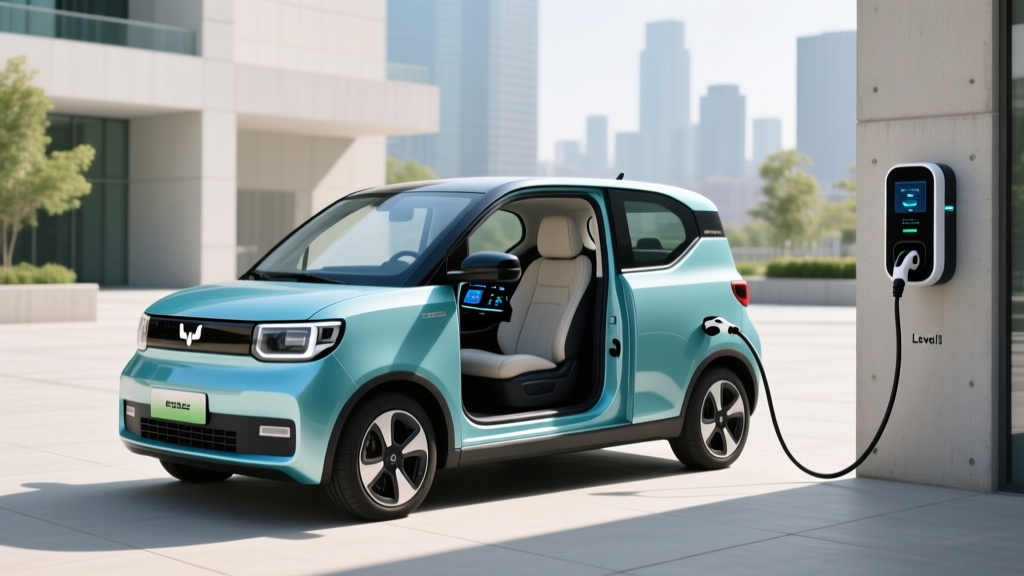
Wuling electric vehicles — produced by SAIC-GM-Wuling, a joint venture headquartered in Liuzhou, China — are among the world's most affordable EVs. The Wuling Air EV starts under $10,000 in Indonesia and India (badged as MG Comet), while the larger Binguo EV offers up to 333 km (CLTC) of range from roughly $8,500–$12,000 in Chinese domestic markets. However, as of 2026, Wuling does not sell vehicles directly in the United States. US buyers cannot purchase a new Wuling EV through any authorized dealer network, and these models have not been crash-tested by NHTSA or IIHS. For American shoppers drawn by the price, understanding what Wuling offers globally — and what realistic alternatives exist domestically — is essential before considering any import path or waiting for a market entry that may never come.
Wuling's EV Lineup: The Models Behind the Headlines
Wuling has built its EV reputation on micro-mobility. The brand's Hongguang Mini EV became China's best-selling EV by volume in 2021–2022, with over 1.2 million units sold cumulatively. Here's what the current lineup looks like from a specifications standpoint:
| Model | Battery (kWh) | Range (CLTC) | Motor Output | Top Speed | Approx. Price (China/Export) |
|---|---|---|---|---|---|
| Hongguang Mini EV (3rd Gen) | 9.0 / 13.9 kWh (LFP) | 120–170 km (75–106 mi) | 20 kW (27 hp) | 100 km/h (62 mph) | ¥32,800–¥49,800 (~$4,500–$6,900) |
| Air EV (Indonesia/India) | 17.3 kWh (LFP) | 200–300 km (124–186 mi) | 30 kW (40 hp) | 100 km/h (62 mph) | ~$9,500–$12,500 (export markets) |
| Binguo EV | 17.3 / 31.9 kWh (LFP) | 203–333 km (126–207 mi) | 30–50 kW (40–68 hp) | 100–120 km/h (62–75 mph) | ¥59,800–¥88,800 (~$8,300–$12,300) |
| Yun (Cloud) EV | 37.9 kWh (LFP) | 360 km (224 mi) | 75 kW (101 hp) | 150 km/h (93 mph) | ¥79,800–¥99,800 (~$11,000–$13,800) |
Key takeaway: These ranges are measured under China's CLTC cycle, which is notably more optimistic than the US EPA test cycle. As a rule of thumb, expect EPA-equivalent range to be roughly 25–35% lower than CLTC figures. A Binguo rated at 333 km CLTC would likely deliver closer to 135–155 miles in EPA testing — and potentially 110–125 miles in real-world highway driving at 70 mph.
Why Wuling EVs Aren't Available in the US (Yet)
Several structural barriers keep Wuling electric vehicles out of the American market:
- Federal safety homologation: Vehicles sold in the US must comply with Federal Motor Vehicle Safety Standards (FMVSS), which cover crashworthiness, lighting, airbags, and electronic stability control. Wuling's micro-EVs were engineered to Chinese GB standards and ASEAN NCAP frameworks, not FMVSS. Achieving compliance would require significant structural redesign.
- Tariff exposure: Chinese-manufactured EVs imported to the US face a 100% tariff under Section 301 trade actions as of 2024, effectively doubling any Wuling's landed cost and destroying the price advantage that defines the brand.
- No dealer or service network: Even if homologated, Wuling has no US dealership infrastructure, parts supply chain, or certified technician base — critical for warranty service and collision repair.
- Tax credit ineligibility: Under IRS §30D rules, the federal clean vehicle credit requires final assembly in North America and compliance with battery-sourcing and critical-mineral requirements. A Wuling import would qualify for $0 in federal credits.
SAIC-GM-Wuling's parent company, SAIC Motor, has indicated interest in European and Southeast Asian expansion, but no US market entry timeline has been announced as of early 2026.
What a Wuling Would Cost vs. US-Market Budget EVs
The appeal of Wuling is obvious: an EV for under $10,000. But how does that compare to what you can actually buy in the US? Let's compare the Binguo EV (if it were available) against the most affordable new EVs on the American market:
| Specification | Wuling Binguo (Hypothetical US) | Nissan LEAF S (2025) | Chevrolet Bolt EV 2LT (2025) | Hyundai Kona Electric SE (2025) |
|---|---|---|---|---|
| Base MSRP | ~$12,000 (pre-tariff) | $28,140 | $26,500 | $32,975 |
| After 100% Tariff | ~$24,000 | $28,140 | $26,500 | $32,975 |
| After §30D Credit | $24,000 (ineligible) | $28,140 (ineligible – Japan assembly) | $26,500 (eligible, varies by sourcing) | $32,975 (eligible, varies by sourcing) |
| Battery (usable kWh) | 31.9 kWh (LFP) | 40 kWh (NMC) | 65 kWh (NMC) | 64.8 kWh (NMC) |
| EPA Range | ~140 mi (est.) | 149 mi | 259 mi | 261 mi |
| DC Fast Charge (peak kW) | ~30 kW (est.) | 50 kW (CHAdeMO) | 115 kW (CCS) | 100 kW (CCS/NACS) |
| 10–80% DC Charge | ~50 min (est.) | ~40 min | ~30 min | ~43 min |
| Motor (hp) | 68 hp | 147 hp | 200 hp | 201 hp |
| 0–60 mph | ~12 sec (est.) | 7.5 sec | 6.5 sec | 7.2 sec |
| FMVSS / NHTSA Tested | No | Yes | Yes | Yes |
Even before the tariff doubles its price, the Binguo offers roughly half the range and significantly less power than US-market alternatives. After tariffs, the price gap nearly vanishes — and you'd still lack crash-test validation, a service network, and fast-charging capability competitive with the Bolt or Kona.
Real Ownership Costs: The Budget EV Equation
For buyers fixated on minimizing total cost of ownership, here's how a hypothetical Wuling-class micro-EV stacks up against a US-market budget EV and a comparable gas car over five years and 75,000 miles:
| Cost Category | Wuling-Class Micro-EV (Hypothetical) | Chevy Bolt EV (2025) | Honda Civic LX (Gas, 2025) |
|---|---|---|---|
| Purchase Price (after tariff/credits) | $24,000 | $26,500 | $24,650 |
| Fuel/Energy (75k mi) | $1,875 (at $0.15/kWh, 4 mi/kWh) | $2,813 (at $0.15/kWh, 4 mi/kWh) | $7,500 (at $3.50/gal, 35 MPG) |
| Maintenance (5 yr) | $1,200 | $1,500 | $3,750 |
| Insurance (5 yr avg.) | $7,500 (est., no US data) | $8,500 | $7,000 |
| Depreciation (est.) | $12,000 (50%, unknown resale) | $13,250 (50%) | $11,093 (45%) |
| 5-Year Total | $46,575 | $52,563 | $53,993 |
The micro-EV wins on energy and maintenance, but unknown depreciation, lack of US resale data, and potential insurance complications (no US crash ratings) introduce real financial risk. The Bolt's eligibility for the §30D credit — which can transfer to the dealer at point of sale for an instant price reduction — narrows the gap considerably when factoring in its 259-mile range and established support network.
Common Misconceptions About Wuling EVs
| Myth | Fact |
|---|---|
| "I can just import a Wuling myself" | Importing a non-FMVSS-compliant vehicle for road use requires a registered importer, crash-test modifications, and DOT approval — a process that can cost $20,000–$50,000+ and take months, destroying any price advantage. |
| "The range is 207 miles — that's plenty" | That's the CLTC rating. Real-world EPA-equivalent range is closer to 135–155 miles, and highway driving at 70 mph or cold-weather operation (below 40°F) can reduce that by another 20–30%. |
| "LFP batteries are worse" | LFP (lithium iron phosphate) chemistry actually offers longer cycle life (~3,000+ cycles vs ~1,500 for NMC), better thermal stability, and no cobalt. The trade-off is lower energy density, which is why Wuling's range is modest despite decent kWh figures. |
| "GM is a partner, so it'll come to the US" | GM's stake in SAIC-GM-Wuling is a China-market joint venture. GM sells its own EVs (Bolt, Equinox EV, Blazer EV) in the US and has no announced plan to badge or import Wuling models here. |
| "Charging is just plugging into any outlet" | Level 1 (120V) charging on a ~32 kWh battery delivers roughly 3–5 miles of range per hour — a full charge takes 8–10 hours. Without home Level 2 (240V, 6–7 kW), daily usability suffers significantly. |
If You Want Ultra-Affordable EV Ownership in the US: A Decision Framework
Choose a used Chevy Bolt EV/EUV (2022–2024) if:
- Your budget is $15,000–$20,000
- You need 230–259 miles of real EPA range
- You want DC fast charging at 55–115 kW (CCS)
- You qualify for the §25E used EV credit (up to $4,000, income caps apply)
Choose a new Nissan LEAF if:
- You want the lowest new-EV MSRP (~$28,140)
- 149 miles of range fits your commute
- You accept CHAdeMO charging (declining US infrastructure)
- You don't need DC fast-charge speed (50 kW peak is slow by 2026 standards)
Choose a new Chevy Equinox EV or Hyundai Kona Electric if:
- Your budget is $33,000–$37,000 (before credits)
- You need 250+ miles of range and modern DC fast charging (100–150 kW)
- You want NACS compatibility for Tesla Supercharger access
- You plan to road-trip beyond your metro area
Wait on Wuling only if:
- You're outside the US (Southeast Asia, India, Latin America) where Wuling sells through authorized channels
- You're tracking SAIC's global expansion for potential future US entry — but have a backup purchase plan
What First-Time EV Buyers Should Know (Regardless of Brand)
Whether you're drawn to Wuling's price or shopping US-market options, these ownership realities apply universally:
- Home charging is non-negotiable for convenience. A Level 2 home charger (240V, 32–48 amps) costs $500–$1,500 for equipment plus $800–$2,500 for electrician installation (more if your panel needs a 200-amp upgrade). Without it, you're dependent on public infrastructure.
- kW ≠ kWh. Kilowatt-hours (kWh) measure battery capacity — the size of the tank. Kilowatts (kW) measure charging power — how fast you fill it. A 32 kWh battery charged at 7 kW takes about 4.5 hours from empty.
- Cold weather cuts range 20–40%. LFP batteries (like those in Wuling models) are somewhat more resilient than NMC in cold, but all EVs lose range below freezing due to cabin heating demands and reduced battery chemistry efficiency.
- Charging curves taper above 80% SoC. Peak kW rates apply only between roughly 10–60% state of charge. The final 20% can take as long as the first 60%. Plan road trips around 10–80% charges.
- Insurance can be higher. EVs generally carry 15–25% higher insurance premiums than comparable gas cars due to repair costs and battery replacement risk. Get quotes before purchasing.
Frequently Asked Questions
Can I legally import a Wuling Air EV or Binguo to the US?
Technically, you can attempt to import one through a Registered Importer (RI) approved by NHTSA, but the vehicle must be modified to meet all applicable FMVSS standards. This process typically costs $20,000–$50,000, takes 6–12 months, and there is no guarantee of approval. The resulting vehicle would still lack US crash-test ratings, a warranty network, and eligibility for any federal or state EV incentives.
Will Wuling ever sell cars in America?
As of 2026, SAIC-GM-Wuling has announced no US market entry plans. The 100% tariff on Chinese EVs, FMVSS compliance costs, and the absence of a dealer network make near-term entry unlikely. SAIC's MG brand has focused on Europe and ASEAN markets instead.
How does Wuling's LFP battery compare to NMC in US-market EVs?
LFP (lithium iron phosphate) offers superior cycle life (3,000–5,000 cycles vs. 1,000–2,000 for NMC), better thermal runaway resistance, and zero cobalt. The trade-off is roughly 15–25% lower energy density by weight, which limits range in small vehicle platforms. Tesla, Ford, and others now use LFP in standard-range US models — it's a proven, durable chemistry.
What's the cheapest EV I can actually buy in the US in 2026?
The Nissan LEAF S starts at approximately $28,140 (149-mile range). If you can find a used 2022–2024 Chevy Bolt EV, prices hover around $15,000–$20,000 and may qualify for the §25E used clean vehicle credit of up to $4,000 (30% of sale price, subject to buyer income caps of $75,000 single / $150,000 joint).
Is a micro-EV practical for daily American driving?
For a sub-30-mile urban commute with home charging, a micro-EV with 100–150 miles of range is functionally adequate. However, US driving patterns average 37 miles/day (FHWA data), and most American households need at least one vehicle capable of highway speeds, 200+ mile road trips, and winter operation — areas where micro-EVs with sub-70 hp motors and limited range fall short.