If you've ever slid into your Model 3 or Model Y and been hit by a wave of something unpleasant, you're not alone. "Why does my Tesla smell bad?" is one of the most-searched ownership questions in Tesla forums, and the answers span everything from a clogged cabin air filter to a puddle of water decomposing under your frunk liner. Below, we diagnose the most common Tesla odors, explain the engineering behind them, and give you the exact steps to fix each one — plus the routine maintenance that prevents them from returning.
The Most Common Tesla Cabin Odors (And What They Mean)
Teslas don't have internal combustion engines, so you'll never smell unburnt fuel or exhaust. But the cabin is a sealed environment with its own ecosystem of filters, ducts, heat pumps, and upholstery materials — each a potential odor source. Here's a diagnostic matrix:
| Odor Type | Most Likely Cause | Severity |
|---|---|---|
| Musty / damp / "wet dog" | Clogged cabin air filter, mold on evaporator coil | Common, easy fix |
| Sewage / sulfur / "swamp" | Standing water in AC drain pan, blocked condensate drain | Moderate, needs cleaning |
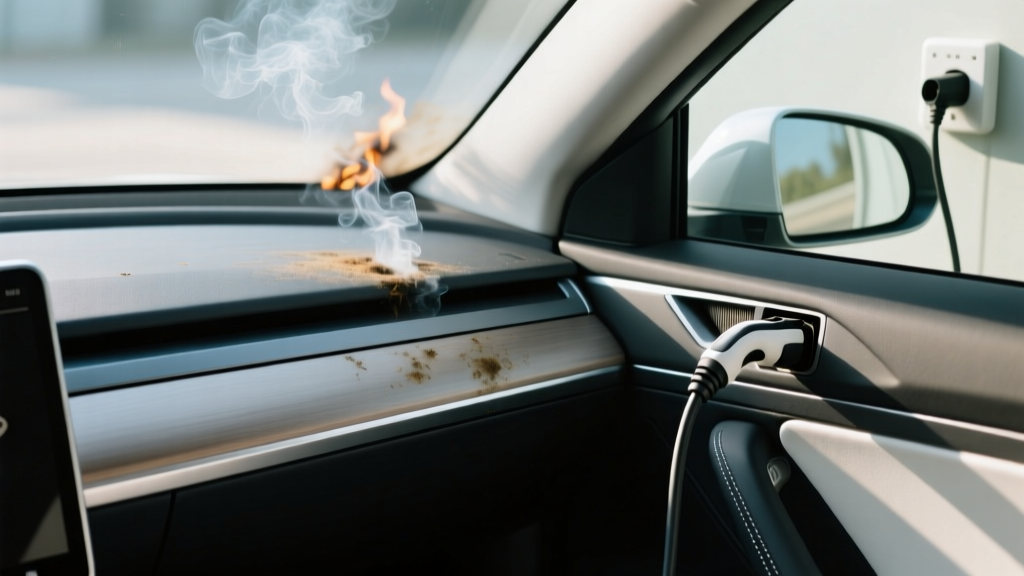
| Burning plastic / acrid | Overheated wiring, brake dust on rotors, or motor inverter stress | Inspect immediately |
| Chemical / "new car" that won't fade | Off-gassing from adhesives, sound deadening, or aftermarket tint | Low, ventilate |
| Sweet / syrupy | Coolant leak from battery thermal management loop | Service required |
| Rotten egg / sulfur | 12V auxiliary battery venting (rare on Li-ion 12V, more common on older lead-acid models) | Replace 12V battery |
Musty or Damp Smell: The #1 Tesla Complaint
By far the most frequent reason a Tesla smells bad is biological growth on the HVAC evaporator coil or a saturated cabin air filter. Here's why Teslas are uniquely prone to it:
The cabin overheat protection feature (standard on all Teslas) runs the AC compressor periodically when parked in hot weather to keep the interior below 105°F. This cycles the evaporator coil through wet-dry transitions, which — combined with dust and pollen trapped on the coil — creates an ideal environment for mold and mildew. The same issue affects the Cabin Overheat Protection system documented in Tesla's owner manual.
The fix:
- Replace the cabin air filter (HEPA on Model S/X, standard particulate on Model 3/Y). Tesla recommends replacement every 2 years for Model 3/Y and every 3 years for Model S/X. Part number for Model 3/Y: 1458390-00-B (pair, ~$35 from Tesla or ~$18 aftermarket).
- Run the AC on max cold with recirculation OFF for 10 minutes with the doors open to dry the evaporator coil.
- Apply an EPA-registered HVAC coil cleaner (e.g., Nu-Calgon Evap Foam) through the exterior air intake at the base of the windshield while the fan runs on high.
- Switch Cabin Overheat Protection to "No A/C" (fan only) if you live in a humid climate and don't need aggressive cooling — this reduces evaporator wetness.
Sewage or Swamp Smell: The Hidden Water Problem
A distinctly foul, sewage-like odor in a Tesla almost always traces to standing water in the front trunk (frunk) area or the AC condensate drain pan. Here's the failure chain:
- Rainwater or car-wash water enters the frunk through the seal or the windshield cowl.
- Water pools in the frunk drain channel, which can clog with leaves, road debris, or even the adhesive from the frunk liner.
- Standing water stagnates, growing bacteria that produce hydrogen sulfide — the "rotten egg" or sewage smell.
- The odor migrates into the cabin through the HVAC fresh-air intake, which sits directly behind the frunk area.
The fix: Remove the frunk liner, clear the drain holes (two small rubber-grommeted holes at the lowest point of the frunk tub), and dry the area with a wet-vac. For the AC condensate drain, locate the drain tube under the passenger-side dash (near the firewall) and clear it with compressed air or a flexible brush. On Model 3/Y, this tube exits beneath the car near the front passenger footwell.
Burning or Acrid Smell: When to Worry
A burning-plastic or acrid smell in an EV requires immediate attention because Teslas have high-voltage systems operating at 400V (or 800V in the Cybertruck and refreshed Model S Plaid). However, most "burning" smells are benign:
- New brake pads: The first 200-500 miles after a brake service, pad material off-gasses during initial heating. This is normal.
- Regenerative braking heat: On long downhill descents, the drive motors and inverter can heat significantly. The thermal management system vents hot air from the underbody — you may notice a warm, slightly metallic smell through open windows.
- Charging heat: During DC fast charging at 250 kW, the battery and charge cables generate substantial heat. The coolant pumps run at full speed, and you may smell warm plastic from the charge port area. This is normal and managed by the thermal system.
Chemical or "New Car" Smell That Won't Go Away
Teslas use water-based adhesives and low-VOC materials, but the vegan leather (polyurethane-based), sound-deadening butyl sheets, and adhesive bonding agents still off-gas — especially in the first 3-6 months and in hot climates. Some owners report a persistent chemical smell linked to:
- Aftermarket window tint: Cheap dyed-film tint uses adhesives that off-gas aggressively in heat. Ceramic tint (XPEL, 3M Crystalline) uses more stable adhesives.
- Aftermarket floor liners: Some budget TPE/rubber liners emit a strong petroleum smell. OEM Tesla all-weather mats or WeatherTech use lower-VOC compounds.
- Cargo-area items: The sealed nature of Tesla cabins means volatile compounds from gym bags, cleaning supplies, or wet gear accumulate rather than dissipate through natural ventilation.
The fix: Park in shade with windows cracked 1 inch (use Tesla's "Camp Mode" or the ventilation feature via the app to circulate air without running the full HVAC). Replace cabin air filter with an activated-carbon variant (available aftermarket for Model 3/Y) — the carbon layer adsorbs VOCs that a standard particulate filter cannot capture.
Prevention: The Tesla HVAC Maintenance Schedule
Tesla's official maintenance schedule is minimal compared to ICE vehicles, but the HVAC system needs proactive care. Here's the schedule we recommend based on climate and usage:
| Task | Interval | Cost (DIY / Service Center) |
|---|---|---|
| Replace cabin air filter | Every 12 months (humid) or 24 months (dry) | $18-$35 DIY / $75-$120 at Tesla |
| Replace HEPA filter (Model S/X) | Every 36 months | $65 DIY / $150-$200 at Tesla |
| Inspect/clear frunk drains | Every 6 months, especially fall | Free (DIY) |
| Run evaporator dry cycle | Monthly (turn off recirculation, fan on high, doors open, 10 min) | Free |
| Desiccant replacement (heat pump) | Per Tesla service bulletin, if AC performance drops | $200-$400 at Tesla |
When the Smell Means a Warranty Claim
Tesla's New Vehicle Limited Warranty covers defects in materials and workmanship for 4 years or 50,000 miles. If a persistent odor is traced to a manufacturing defect — such as a misrouted AC drain tube, a defective evaporator coil, or adhesive failure — Tesla Service will repair it under warranty. However, odors caused by lack of maintenance (clogged filters, standing water from blocked drains) are not covered.
If your Tesla is equipped with the heat pump system (standard on all Model 3/Y since 2021 and Model S/X since 2020 refresh), be aware that early heat pump units (2020-2021 Model Y) had a known issue with the octovalve — a multi-way coolant valve that could fail and cause refrigerant leaks. A sweet or chemical smell combined with reduced heat output is a strong indicator. This was addressed in later production and is covered under warranty if within the 4yr/50k window.
Frequently Asked Questions
Why does my Tesla smell like wet dog when I turn on the AC?
This is mold or mildew on the evaporator coil, fed by dust and moisture from the Cabin Overheat Protection cycles. Replace the cabin air filter, run an evaporator coil foam cleaner through the exterior intake, and switch Cabin Overheat Protection to "fan only" if you live in a humid area.
Can the Tesla cabin air filter be replaced at home?
Yes. On Model 3 and Model Y, the filter is behind the glovebox and requires no tools beyond a trim removal pry tool and a T20 Torx driver. The process takes 15-20 minutes. Tesla's official how-to is available in the vehicle's touchscreen under Service > How-To Videos > Cabin Air Filter.
Does Tesla's Bioweapon Defense Mode prevent smells?
Bioweapon Defense Mode pressurizes the cabin using the HEPA filter (Model S/X) or high-efficiency filter (Model 3/Y) to block outside particulates. It does not address internal odor sources like a dirty evaporator coil or standing water. It's excellent for wildfire smoke and pollution but won't fix a musty AC.
My Tesla smells like coolant — is that dangerous?
A sweet, syrupy smell indicates a possible leak in the battery thermal management coolant loop (Tesla uses a G48-type ethylene glycol coolant). While not immediately dangerous to occupants (the loop is sealed from the cabin), a coolant leak can lead to battery overheating and reduced range. Schedule a Tesla Service appointment via the app — the car's thermal management system will log any pressure-drop events.
Why does my Tesla smell bad only after Supercharging?
During DC fast charging, the battery heats up and the thermal management system runs coolant pumps and fans at maximum speed. You may notice a warm-plastic or slightly metallic smell from the underbody and charge port area as the system sheds heat. This is normal. If the smell is sharp, acrid, or accompanied by visible smoke or an alert, stop charging and contact Tesla Roadside Assistance.