The Tesla Model S P100D 0 to 60: Still a Benchmark Years Later
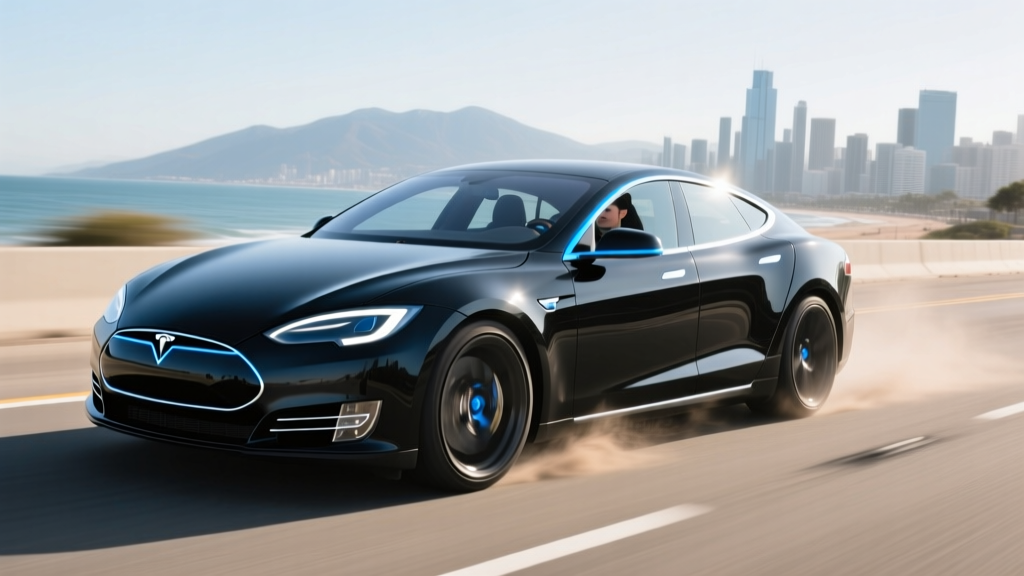
When Tesla launched the Model S P100D with Ludicrous Mode, it rewrote the rules of what a four-door sedan could do. The headline figure — a Tesla Model S P100D 0 to 60 time of 2.5 seconds — made it the quickest production sedan on the planet at its debut. But raw acceleration was only part of the story. The P100D paired that supercar-crushing launch with a 100 kWh battery, over 300 miles of EPA-rated range, and access to Tesla's Supercharger network, making it a genuine daily driver and road-trip machine.
Today, the P100D badge has been retired (replaced by the Plaid powertrain), but the used market is flush with well-maintained examples. If you're researching a Tesla Model S P100D 0 to 60 experience, you're likely weighing this icon against newer EVs. This profile gives you the exact numbers — range, charging, efficiency, ownership costs, and real-world caveats — so you can decide if the P100D still earns its legendary status in 2026.
| Spec | Value |
|---|---|
| EPA Range | 315 miles (2017–2019) |
| Battery (Usable) | ~100 kWh (NMC chemistry) |
| 0–60 mph (Ludicrous) | 2.5 seconds |
| Horsepower | ~762 hp (combined, peak output) |
| Drivetrain | Dual-Motor AWD |
| Top Speed | 155 mph |
| MPGe (Combined) | 98 MPGe |
| Efficiency | ~34 kWh / 100 mi |
| DC Fast Charge (Peak) | ~120 kW (V2 Supercharger) |
| Level 2 Charge Rate | 11.5 kW (48A) / ~34 mi/hr |
| Cargo Volume | 26.3 cu ft (rear) + 5.3 cu ft (frunk) |
| Battery Warranty | 8 years / 150,000 miles |
Real-World Range: What the EPA Number Doesn't Tell You
The P100D's EPA sticker reads 315 miles, an impressive figure for a 100 kWh pack pushing 762 horsepower. But as with every EV, real-world results depend heavily on how and where you drive.
EPA Estimated Range: 315 miles
Real-World Highway (70–75 mph, moderate temps): ~250–275 miles
Real-World City / Mixed Commute: ~280–305 miles
Cold-Weather Highway (below 32°F / 0°C): ~200–230 miles
Why the gap? The P100D's dual-motor performance setup and heavy curb weight (~4,900 lbs) consume more energy at sustained highway speeds. Cold temperatures further reduce battery efficiency and increase cabin heating load. Owners who precondition the battery while plugged in and use seat heaters instead of cabin heat can recover 15–25 miles of range in winter.
On a 300-mile road trip at 75 mph in 50°F weather, expect to arrive with roughly 10–15% State of Charge (SoC) remaining — tight but manageable with Supercharger stops. In summer heat with A/C running, highway range typically lands around 260–270 miles. For daily commuting under 80 miles round-trip, you'll rarely dip below 50% SoC, which is ideal for long-term NMC battery health.
Charging Speeds: Supercharger V2 vs. Home Level 2
The P100D was designed during the era of Tesla's V2 Superchargers, which peak at roughly 120 kW. While newer EVs push 250–350 kW on V3/V4 stations, the P100D's charging curve remains practical for road trips.
| Charging Level | Power (kW) | Speed (mi/hr added) | Notes |
|---|---|---|---|
| Level 1 (120V / 12A) | ~1.4 kW | ~3–4 mi/hr | Emergency / trickle only |
| Level 2 (240V / 48A) | 11.5 kW | ~34 mi/hr | Full charge in ~9 hrs |
| DC Fast (V2 Supercharger) | ~120 kW peak | ~300 mi/hr at peak | 10–80% in ~45 min |
| DC Fast (CCS adapter + 250 kW station) | ~120 kW (vehicle-limited) | ~300 mi/hr at peak | Same peak; car is bottleneck |
Charging curve reality: The P100D hits peak ~120 kW only between roughly 10–30% SoC. From 30–60%, it tapers to ~80–90 kW. Above 80%, speed drops sharply to ~40 kW and below, which is why Tesla recommends charging to 80% on road trips for optimal time efficiency. A typical 10–80% session at a V2 Supercharger takes about 45 minutes.
For home charging, a Wall Connector or quality Level 2 EVSE on a 60A circuit delivers the full 11.5 kW (48A). That's roughly 34 miles of range per hour of charging — enough to replenish a full day's commute overnight. Installation costs vary widely: expect $800–$2,500 for a standard install, or $3,000–$5,500+ if your home needs a panel upgrade to support a 60A circuit. Always get a quote from a licensed electrician before purchasing equipment.
Performance: The 2.5-Second Launch Explained
The Tesla Model S P100D 0 to 60 time of 2.5 seconds isn't just a marketing claim — it was independently verified by multiple automotive publications including Motor Trend and Car and Driver. The secret lies in the P100D's dual-motor AWD layout, which sends instantaneous torque to all four wheels, and Tesla's Ludicrous Mode, which preconditions the battery for maximum discharge rate.
At roughly 762 combined horsepower (though peak output varies with SoC and temperature), the P100D pulls 0–60 with a violence that few production cars — electric or otherwise — can match. The quarter-mile arrives in approximately 10.9 seconds at ~125 mph. Even by 2026 standards, this places the P100D in elite company alongside the Porsche Taycan Turbo S and well ahead of most performance EVs in its price bracket.
But performance comes with trade-offs. The P100D's heavy battery pack (~1,200 lbs alone) is felt in cornering, where body roll is more pronounced than in lighter competitors like the Taycan. The adaptive air suspension helps, but this is a grand-touring missile, not a track car. Regenerative braking in "Standard" mode provides strong one-pedal driving, though not as aggressive as some newer EVs.
Interior, Tech, and Daily Livability
The P100D's interior reflects the era it was designed in — minimalist, screen-centric, and occasionally quirky by modern standards.
Infotainment: The 17-inch center touchscreen controls nearly everything: climate, navigation, media, and vehicle settings. The interface is responsive, and over-the-air (OTA) updates have kept older P100Ds surprisingly current with features like improved navigation, Sentry Mode, and entertainment apps. However, earlier P100Ds (2017–early 2018) may have the older MCU1 (Nvidia Tegra) processor, which is noticeably slower than the MCU2 (Intel Atom) introduced in mid-2018. Tesla offered an MCU upgrade program — check whether the vehicle you're considering has been upgraded.
Driver Assistance: P100Ds came with Autopilot hardware (HW2.0 or HW2.5 depending on build date). Basic Autopilot includes Traffic-Aware Cruise Control and Autosteer (lane centering). Full Self-Driving (FSD) capability was an expensive add-on, but it's critical to understand: FSD is a Level 2 SAE driver-assist system, not autonomous driving. The driver must remain fully engaged, hands on or near the wheel, eyes on the road at all times.
Cargo and Passenger Space: The Model S liftback design provides 26.3 cubic feet behind the rear seats (foldable to 58.1 cu ft) plus a 5.3 cu ft front trunk (frunk). Rear legroom measures 35.4 inches — adequate for adults but tighter than a BMW 5 Series. The optional rear-facing third-row seat (for small children) was available on earlier models but is rare on P100Ds.
Notable Drawbacks: Panel gaps and interior material quality on 2017–2019 Model S vehicles are inconsistent — some examples are excellent, others show early rattles and creaks. The panoramic glass roof lets in a lot of light but also significant heat in summer; a sunshade is strongly recommended. The original steering wheel and seat designs, while comfortable, feel dated compared to the 2021+ "Palladium" refresh.
Pricing, Tax Credits, and Total Cost of Ownership
The P100D is no longer available new. On the used market in 2026, well-maintained 2017–2019 examples typically range from $35,000 to $55,000 depending on mileage, condition, MCU version, and whether FSD was purchased outright.
| Category | Details |
|---|---|
| Used Market Price (2017–2019) | $35,000 – $55,000 |
| Federal Used EV Credit (§25E) | Up to $4,000 (30% of sale price, max $4,000) |
| §25E Income Cap | $75K single / $112.5K HOH / $150K joint (AGI) |
| §25E Vehicle Price Cap | $25,000 maximum sale price |
| Federal New EV Credit (§30D) | Not applicable (discontinued model) |
| Estimated Insurance (Annual) | $2,800 – $4,200 |
| Avg. Electricity Cost (Home) | ~$0.14/kWh → ~$4.76 per 100 mi |
Does the P100D qualify for the federal EV tax credit? The new vehicle §30D credit does not apply since the P100D is discontinued. The used EV credit (§25E) offers up to $4,000, but the vehicle must sell for $25,000 or less to qualify — which eliminates most P100Ds on the market. A high-mileage or project-condition P100D priced at or under $25K could qualify, provided the buyer meets income caps. Always verify current rules at IRS.gov and consult a tax professional before relying on credit eligibility.
Total cost of ownership is where the P100D shines relative to gas performance sedans. At $0.14/kWh (national average), fueling costs roughly $4.76 per 100 miles — compared to $18–$22 per 100 miles for a BMW M5 or Mercedes-AMG E63 getting 16–18 MPG on premium fuel. Over 15,000 miles/year, that's a fuel savings of $2,000–$2,500 annually. However, insurance premiums are high (performance EV classification), and out-of-warranty battery or drive-unit replacement can cost $12,000–$20,000 — a real risk on vehicles now 7–9 years old.
Battery Longevity, Warranty, and What to Check
The P100D uses a 100 kWh NMC (nickel-manganese-cobalt) battery pack — the largest Tesla offered in the Model S at the time. NMC chemistry provides excellent energy density and power delivery but is more sensitive to sustained high-SoC storage and extreme heat than LFP (lithium iron phosphate) packs found in some newer Teslas.
Battery Warranty: Tesla covers the P100D battery and drive units for 8 years or 150,000 miles, whichever comes first, with a guaranteed minimum 70% capacity retention. For a 2017 P100D, that warranty expires in 2025; for 2019 models, coverage extends through 2027. If you're buying a P100D today, check the remaining warranty window carefully.
Real-world degradation: Data aggregated from Tesla owner communities and fleet analyses (including sources cited by Teslanorth) suggest that 100 kWh packs from this era typically lose 8–12% capacity in the first 100,000 miles, with the degradation curve flattening significantly afterward. A P100D at 80,000 miles with 10% degradation would still deliver roughly 283 miles of EPA-equivalent range — very usable.
What to check before buying:
- State of Health (SoH): Request a battery health report from Tesla Service or use third-party tools that read the BMS (Battery Management System) via the vehicle's diagnostic port.
- MCU version: Confirm whether the car has MCU1 or MCU2. MCU2 is significantly more responsive and supports newer software features.
- Drive unit history: Early P100Ds had some front drive-unit failures. Check service records for replacements.
- Supercharger eligibility: All P100Ds support Supercharging, but free unlimited Supercharging (a perk on some early vehicles) may or may not transfer to subsequent owners. Verify with Tesla.
P100D vs. the Competition: Is It Still Worth It?
The P100D's closest competitors on the used market include the Porsche Taycan Turbo (2020+), Audi e-tron GT (2022+), and Tesla's own Model S Long Range / Plaid (2021+). Here's how they compare for a buyer cross-shopping a P100D:
- Porsche Taycan Turbo (used, ~$65K–$85K): Better handling, superior interior quality, 800V architecture for faster charging (up to 270 kW). But 0–60 is 3.0 seconds, range is ~200–250 miles EPA, and price is significantly higher.
- Tesla Model S Plaid (used, ~$70K–$90K): 1,020 hp, 1.99-second 0–60, 396-mile EPA range, modern Palladium interior. The clear upgrade — but at nearly double the P100D's price.
- Tesla Model S Long Range (2020–2021, ~$45K–$60K): 405-mile EPA range, 3.1-second 0–60, refreshed interior. Better range and efficiency than the P100D, but less raw acceleration.
Who should buy the P100D? The P100D is ideal for enthusiasts who want supercar-level acceleration at a fraction of the original $140,000+ MSRP, who have home charging access, and who can accept higher maintenance risk on an aging performance vehicle. It's less suited for buyers who prioritize the latest tech, maximum range, or low out-of-warranty repair costs.
Pros
- 2.5-second 0–60 mph — still elite by 2026 standards
- 315-mile EPA range remains practical for road trips
- Access to Tesla Supercharger network (most reliable DC fast-charging infrastructure)
- OTA updates keep software current
- Spacious liftback cargo area + frunk
- Significantly lower fuel cost vs. gas performance sedans
Cons
- Out of factory warranty for most examples (8yr/150K mi)
- MCU1 infotainment is sluggish; upgrade costs ~$1,500–$2,000
- 120 kW peak DC charging is slow vs. modern 250+ kW EVs
- Insurance premiums are high ($2,800–$4,200/yr)
- Panel gap and build quality inconsistency
- Potential $12K–$20K battery/drive-unit repair risk out of warranty
Frequently Asked Questions
What is the real-world range of the Tesla Model S P100D?
The EPA rates the P100D at 315 miles, but real-world highway driving at 70–75 mph typically yields 250–275 miles in moderate weather, and 200–230 miles in cold conditions below freezing. City driving with regenerative braking can approach the EPA number.
How fast does the Tesla Model S P100D charge?
On a V2 Supercharger, the P100D peaks at approximately 120 kW, achieving a 10–80% charge in roughly 45 minutes. At home on a Level 2 (240V, 48A) charger, it adds about 34 miles of range per hour, fully charging in roughly 9 hours.
Does the Tesla Model S P100D qualify for the federal EV tax credit?
Not the §30D new-vehicle credit — the P100D is discontinued. The §25E used-EV credit offers up to $4,000, but the vehicle must sell for $25,000 or less, which excludes most P100Ds. Income caps also apply ($75K single / $150K joint). Verify details at IRS.gov.
Is the Tesla Model S P100D still worth buying in 2026?
Yes, for the right buyer. If you want 2.5-second 0–60 performance, Supercharger access, and 300+ mile range at a $35K–$55K price point, nothing else matches it. But you're accepting out-of-warranty risk, older infotainment, and slower DC charging than modern EVs. If budget allows, a used Model S Long Range (2020–2021) offers better range and newer hardware.
How long will the P100D battery last?
Tesla's 100 kWh NMC packs from this era typically show 8–12% degradation at 100,000 miles, with the curve flattening afterward. Many P100Ds are projected to reach 200,000+ miles before dropping below 70% capacity. Best practices: avoid frequent 100% charges, minimize DC fast charging when possible, and precondition in cold weather.
What's the difference between MCU1 and MCU2 in the P100D?
MCU1 (Nvidia Tegra, found in most 2017–early 2018 cars) is noticeably slower, lacks Netflix/YouTube/theater mode, and has a less responsive touchscreen. MCU2 (Intel Atom, mid-2018+) is faster and supports all modern Tesla software features. Tesla offered a paid MCU upgrade (~$1,500–$2,000) — ask whether it's been done on any car you're considering.
Sources: EPA Fuel Economy (fueleconomy.gov), IRS Used Clean Vehicle Credit (§25E), Tesla Owner's Manual and press archives.