If you've been searching who owns Lucid Motors, the answer is a mix of Silicon Valley engineering pedigree and deep-pocketed international backing. Lucid Group, Inc. is a publicly traded company (NASDAQ: LCID) headquartered in Newark, California, with its manufacturing plant — known as Lucid AMP-1 — in Casa Grande, Arizona. The company's largest shareholder is Saudi Arabia's Public Investment Fund (PIF), which holds a majority stake. Former Tesla Model S chief engineer Peter Rawlinson has served as CEO and CTO since the company's early days, shaping the Air sedan's efficiency-focused powertrain architecture.
But corporate structure only matters if the car delivers. Below is a comprehensive, numbers-driven review of the Lucid Air lineup as it stands for the 2025–2026 model years — covering real-world range, charging behavior, pricing after tax credits, and whether this luxury EV sedan earns its spot against the Tesla Model S, Mercedes EQS, and BMW i7.
Lucid Air at a Glance: Trim Specs & Pricing
| Spec | Air Pure | Air Touring | Air Grand Touring | Air Sapphire |
|---|---|---|---|---|
| Base MSRP | $69,900 | $78,900 | $111,900 | $250,500 |
| Drivetrain | RWD (single motor) | AWD (dual motor) | AWD (dual motor) | AWD (tri-motor) |
| Horsepower | 430 hp | 620 hp | 819 hp | 1,234 hp |
| 0–60 mph | 5.0 sec | 3.4 sec | 3.0 sec | 1.89 sec |
| Battery (usable) | 88 kWh (NMC) | 112 kWh (NMC) | 112 kWh (NMC) | 118 kWh (NMC) |
| EPA Range | 419 mi | 425 mi | 516 mi | 427 mi |
| EPA Efficiency | 136 MPGe / 24 kWh/100mi | 131 MPGe / 26 kWh/100mi | 131 MPGe / 26 kWh/100mi | 109 MPGe / 31 kWh/100mi |
| Max DC Fast Charge | 200 kW | 250 kW | 300 kW | 300 kW |
| 10–80% DCFC Time | ~30 min | ~22 min | ~20 min | ~20 min |
| Level 2 Home Rate | 11.5 kW (~48 mi/hr) | 19.2 kW (~80 mi/hr) | 19.2 kW (~80 mi/hr) | 19.2 kW (~80 mi/hr) |
| Cargo Volume | 32 cu ft (trunk + frunk combined) | |||
| Rear Legroom | 37.4 in | |||
| Battery/Powertrain Warranty | 8 years / 100,000 miles | |||
| Bumper-to-Bumper | 5 years / 60,000 miles | |||
Real-World Range: Beyond the EPA Sticker
EPA Sticker: Up to 516 miles (Grand Touring with 19" Aero wheels)
Real-World Expectation: 380–440 miles highway at 70–75 mph in mild weather; 300–360 miles in sub-freezing winter conditions; 450+ miles achievable in city/suburban driving with regen use.
The Lucid Air Grand Touring's 516-mile EPA figure remains the highest of any production sedan sold in the United States, per fueleconomy.gov. But that number assumes a mix of city and highway driving at moderate speeds.
In independent highway range tests at a steady 70 mph, the Grand Touring has returned between 400 and 450 miles depending on ambient temperature and elevation. The Air's industry-leading efficiency — approximately 4.5 miles per kWh in the Grand Touring — is what makes these numbers possible. Lucid's proprietary miniaturized drive units (each roughly the size of a carry-on suitcase) reduce weight and parasitic losses compared to competitors.
Cold-weather impact is meaningful but better-managed than most rivals. The Air uses a heat pump for cabin and battery thermal management, which limits range loss to roughly 15–25% in 20°F conditions — compared to 30–40% in some EVs without heat pumps. Still, a 516-mile EPA car becomes a ~380-mile car on a freezing January highway run. Plan accordingly.
The Pure trim's 88-kWh battery yields 419 EPA miles — still exceptional for a base model. Because the Pure is RWD and lighter, its real-world efficiency often tracks very close to its sticker number in suburban driving.
Charging Speed: DC Fast, Home Level 2 & the 900-Volt Architecture
| Charging Level | Connector | Power / Rate | Miles Added per Hour |
|---|---|---|---|
| Level 1 (120V outlet) | J1772 / NACS adapter | ~1.4 kW | ~5 mi/hr |
| Level 2 (240V home) | J1772 or NACS (2025+ models) | 19.2 kW (Touring/GT/Sapphire) | ~80 mi/hr |
| Level 2 (240V home) | J1772 or NACS | 11.5 kW (Pure) | ~48 mi/hr |
| DC Fast Charge | CCS1 or NACS (adapter) | Up to 300 kW (GT/Sapphire) | ~300 mi in ~20 min (10–80%) |
| DC Fast Charge | CCS1 or NACS (adapter) | Up to 200 kW (Pure) | ~200 mi in ~30 min (10–80%) |
Lucid's 900-volt electrical architecture is the secret behind its charging performance. Higher voltage means lower current for the same power, which reduces heat buildup in the battery and cables — allowing the Air Grand Touring and Sapphire to sustain peak charge rates longer than 400-volt competitors.
At a 350-kW Electrify America or Tesla Supercharger (with NACS adapter), the Grand Touring will accept up to 300 kW at low states of charge. The charge curve is relatively flat through 50–55% SoC, then begins a gradual taper. You'll reach 80% in roughly 20 minutes, but pushing from 80–100% adds another 25–30 minutes — standard lithium-ion behavior, but worth planning around on road trips.
For home charging, the Touring, Grand Touring, and Sapphire support 19.2 kW Level 2 AC charging — among the fastest onboard chargers in any production EV. This requires a hardwired wall connector on a 100-amp circuit. On a standard 48-amp / 11.5-kW home setup (NEMA 14-50 or equivalent), expect roughly 48 miles of range per hour of charging — meaning an overnight session (8–10 hours) replenishes 380–480 miles, covering virtually all daily needs.
Important connector note: Starting with 2025 production, Lucid began equipping new Air models with the NACS (Tesla-style) charge port natively. Earlier 2022–2024 models use CCS1 and include a NACS adapter for Supercharger access. If buying used, confirm which port your vehicle has.
Performance & Driving Dynamics
The Air lineup spans an unusually wide performance envelope:
- Air Pure (430 hp, RWD): 5.0 seconds to 60 mph. This is brisk by any sedan standard and more than sufficient for highway merging and passing. The single-motor RWD layout also delivers the best efficiency in the lineup.
- Air Touring (620 hp, AWD): 3.4 seconds to 60 mph. Dual-motor AWD provides all-weather confidence and strong acceleration without stepping to the Grand Touring's price.
- Air Grand Touring (819 hp, AWD): 3.0 seconds to 60 mph. Effortlessly quick, with the range to back it up on long drives.
- Air Sapphire (1,234 hp, tri-motor AWD): 1.89 seconds to 60 mph — hypercar territory. Lucid positions this as a limited-production halo model, competing directly with the Tesla Model S Plaid.
Across all trims, the Air's ride quality leans luxury-compliant rather than sport-stiff. Adaptive air suspension is standard on Touring and above. Steering is precise but light — this is a grand tourer, not a track car (Sapphire excepted). Cabin noise levels at highway speed are among the lowest measured in any EV sedan.
Pricing, Tax Credits & Total Cost
| Trim | Base MSRP | Federal §30D Credit Eligibility | Effective Price (est.) |
|---|---|---|---|
| Air Pure | $69,900 | Eligible — under $55,000 sedan MSRP cap? No. Sedan cap is $55,000; Air Pure exceeds it. | $69,900 (no federal credit) |
| Air Touring | $78,900 | Exceeds $55,000 sedan cap | $78,900 (no federal credit) |
| Air Grand Touring | $111,900 | Exceeds $55,000 sedan cap | $111,900 (no federal credit) |
| Air Sapphire | $250,500 | Exceeds $55,000 sedan cap | $250,500 (no federal credit) |
Federal Tax Credit Reality: Under IRS §30D rules, new electric sedans must have an MSRP at or below $55,000 to qualify for the up-to-$7,500 federal tax credit. Because every Lucid Air trim starts above that cap, no Air qualifies for the new-vehicle federal credit as of 2025–2026. Always verify current rules at irs.gov.
However, a used Lucid Air (model year 2022 or later, purchased from a dealer for $25,000 or less) may qualify for the up-to-$4,000 used clean vehicle credit — though finding a used Air under $25K is unlikely in the current market. State and local incentives may also apply; check your jurisdiction's energy office or the AFDC state incentive database.
Interior, Tech & Driver Assistance
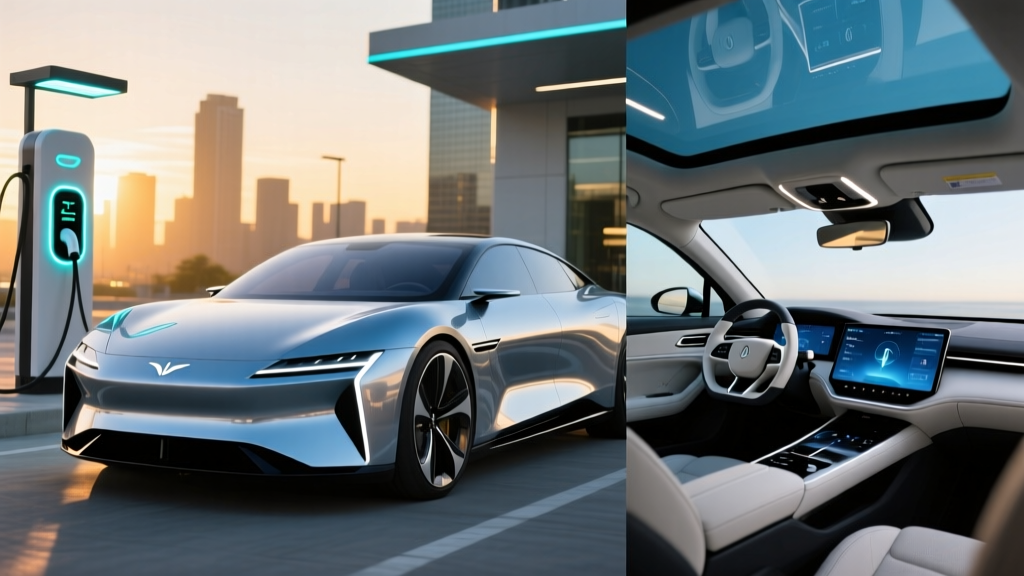
The Air's cabin is defined by its glass canopy roof (one of the largest in any sedan), a 34-inch curved floating cockpit display, and a secondary lower touchscreen for climate and media controls. The UI is responsive but has drawn criticism for burying some functions behind menus. Wireless Apple CarPlay and Android Auto are standard.
Lucid's DreamDrive Pro ADAS suite includes adaptive cruise control, lane-centering steering, automatic emergency braking, blind-spot monitoring, and a 3D surround-view camera. This is a SAE Level 2 driver-assistance system — meaning the driver must remain fully engaged with hands on the wheel and eyes on the road. It is not autonomous driving.
Notably, Lucid does not currently offer a hands-free highway driving mode comparable to GM's Super Cruise or Ford's BlueCruise. If hands-off-capable highway cruising is a priority, this is a competitive gap worth acknowledging.
Passenger space is generous: 37.4 inches of rear legroom accommodates tall adults comfortably, and the 32 cubic feet of combined cargo volume (trunk + front trunk) rivals many midsize SUVs. The frunk alone offers roughly 7 cu ft — useful for charging cables or a carry-on.
Pros, Cons & the Verdict
Pros
- Class-leading EPA range (516 mi Grand Touring)
- Outstanding efficiency (~4.5 mi/kWh)
- 900V architecture enables 300-kW DC fast charging
- 19.2-kW onboard charger for rapid home replenishment
- Spacious cabin with massive glass canopy and frunk
- Competitive luxury pricing vs. Mercedes EQS, BMW i7
- Strong 8-year/100,000-mile battery warranty
Cons
- No federal §30D tax credit (exceeds $55K sedan cap)
- Charging network still relies on CCS or NACS adapter (older models)
- DreamDrive Pro is competent but lacks hands-free highway mode
- Limited service center footprint vs. Tesla or legacy luxury brands
- Brand is young — long-term reliability data is still limited
- UI can feel cluttered; some settings buried in submenus
Who Should Buy the Lucid Air?
Choose the Air Pure if: You want the most efficient luxury sedan on the market, primarily commute in suburban/city conditions, and value 400+ miles of range at a sub-$70K entry point.
Choose the Air Touring if: You need AWD for snow-belt winters, want sub-3.5-second acceleration, and find the Grand Touring's price steep.
Choose the Air Grand Touring if: Range is your top priority, you take regular 300+ mile road trips, and you want the fastest 10–80% charging in a luxury sedan.
Choose the Air Sapphire if: You want hypercar performance with four doors and don't care about the $250K price tag or federal credit eligibility.
Look elsewhere if: You need hands-free highway driving (consider BMW i7 with Highway Assistant or Mercedes EQS with Drive Pilot in approved areas), you rely on a dense service-center network (Tesla Model S), or you need third-row seating (look at SUVs).
Frequently Asked Questions
Who owns Lucid Motors?
Lucid Group, Inc. is a publicly traded company (NASDAQ: LCID) based in Newark, California. Saudi Arabia's Public Investment Fund (PIF) is the majority shareholder. Peter Rawlinson, formerly the chief engineer of the Tesla Model S, is CEO and CTO. Lucid manufactures the Air sedan at its AMP-1 factory in Casa Grande, Arizona.
What is the real-world range of the Lucid Air?
The EPA rates the Grand Touring at 516 miles, but expect 380–450 miles in real-world highway driving depending on speed, temperature, and terrain. City driving with regenerative braking can exceed 450 miles. In freezing conditions, plan for a 15–25% range reduction.
How fast does the Lucid Air charge?
The Grand Touring and Sapphire accept up to 300 kW on DC fast chargers, reaching 10–80% in approximately 20 minutes. The Pure peaks at 200 kW (~30 minutes). At home on a 19.2-kW Level 2 connection (Touring/GT/Sapphire), you'll add roughly 80 miles of range per hour.
Does the Lucid Air qualify for the federal EV tax credit?
No. Under current IRS §30D rules, new electric sedans must have an MSRP of $55,000 or less to qualify. Every Air trim exceeds that cap. A used Air under $25,000 could theoretically qualify for the up-to-$4,000 used-vehicle credit, but market prices make this unlikely. Always verify eligibility at irs.gov and consult a tax professional.
Is the Lucid Air worth buying vs. the Tesla Model S or Mercedes EQS?
The Air Grand Touring offers more range and faster charging than either competitor. The Tesla Model S has a denser Supercharger network (though NACS adapters close this gap) and more mature software. The Mercedes EQS offers a more traditional luxury experience and available hands-free driving in limited areas. If range and efficiency are your top metrics, the Air leads the segment.
What battery chemistry does the Lucid Air use?
All Air trims use NMC (nickel manganese cobalt) lithium-ion cells supplied primarily by Samsung SDI and LG Energy Solution. NMC offers higher energy density than LFP, which is critical for fitting 112+ kWh into a sedan form factor. The battery is warrantied for 8 years or 100,000 miles against degradation below 70% capacity.