Who Manufactures Lucid Cars? The Company Behind the Air
Lucid Motors — officially Lucid Group, Inc. (NASDAQ: LCID) — manufactures Lucid cars. Headquartered in Newark, California, the company was founded in 2007 as Atieva, a battery-technology firm focused on EV powertrain components. It pivoted to full vehicle manufacturing in 2016, rebranded as Lucid Motors, and began production of the Lucid Air sedan at its vertically integrated factory in Casa Grande, Arizona (branded AMP-1) in late 2021.
Unlike many EV startups that outsource assembly or rely heavily on third-party suppliers, Lucid designs and builds its electric motors, battery packs, and power electronics in-house. The Casa Grande facility is the first purpose-built EV manufacturing plant in North America and has expanded capacity significantly through 2025–2026 to support the Air sedan and the upcoming Gravity SUV. Saudi Arabia's Public Investment Fund (PIF) remains the company's majority shareholder, providing capital stability that has allowed Lucid to weather the EV market consolidation that claimed competitors like Fisker.
This vertical integration is precisely why the Lucid Air achieves class-leading efficiency numbers — the engineering DNA runs from cell-level battery design all the way to the drivetrain. Let's look at what that engineering produces in the 2026 model year.
2026 Lucid Air: Quick Spec Overview
| Spec | Air Pure | Air Touring | Air Grand Touring | Air Sapphire |
|---|---|---|---|---|
| EPA Range | 419 mi | 425 mi | 516 mi | 427 mi |
| Battery (usable) | 88 kWh (NMC) | 92 kWh (NMC) | 112 kWh (NMC) | 118 kWh (NMC) |
| Drivetrain | RWD (single motor) | AWD (dual motor) | AWD (dual motor) | AWD (tri-motor) |
| Horsepower | 430 hp | 620 hp | 819 hp | 1,234 hp |
| 0–60 mph | 5.0 sec | 3.4 sec | 3.0 sec | 1.89 sec |
| Efficiency | 136 MPGe | 131 MPGe | 131 MPGe | 110 MPGe |
| Base MSRP | $69,900 | $87,400 | $125,600 | $249,000 |
Source: fueleconomy.gov and Lucid Motors official specs. Specs reflect 2026 model year.
Range & Efficiency: Real-World vs. EPA Sticker
EPA Estimated: 516 miles
Real-World Highway (75 mph, moderate climate): ~410–440 miles
Cold Weather (below 32°F, mixed driving): ~340–380 miles
City/Commuter (with regen): ~470–510 miles
The Lucid Air Grand Touring's 516-mile EPA figure remains the highest of any production sedan sold in the U.S. as of 2026. But as with every EV, that sticker number reflects a weighted city/highway test cycle that favors regenerative braking and lower speeds.
In sustained highway driving at 75 mph with climate control active, expect roughly 410–440 miles from the 112 kWh usable NMC battery pack. The Air's efficiency advantage comes from its class-leading aerodynamics (a drag coefficient of 0.20 Cd on the Grand Touring) and Lucid's proprietary miniaturized drive units, which reduce parasitic losses. Efficiency clocks in around 24 kWh/100 mi on the highway — roughly 15–20% better than the Tesla Model S Long Range at comparable speeds.
Cold-weather range loss is real but mitigated by the Air's standard heat pump, which scavenges waste heat from the drivetrain rather than relying solely on resistive cabin heating. Expect a 25–30% reduction in sub-freezing conditions, which still leaves the Grand Touring with over 340 usable miles — more than most competitors' EPA ratings.
The Air Pure and Touring trims, with smaller battery packs, see real-world highway ranges of approximately 330–360 miles and 340–370 miles respectively — still highly competitive for daily and road-trip use.
Charging Speed: DC Fast Charge & Home Level 2
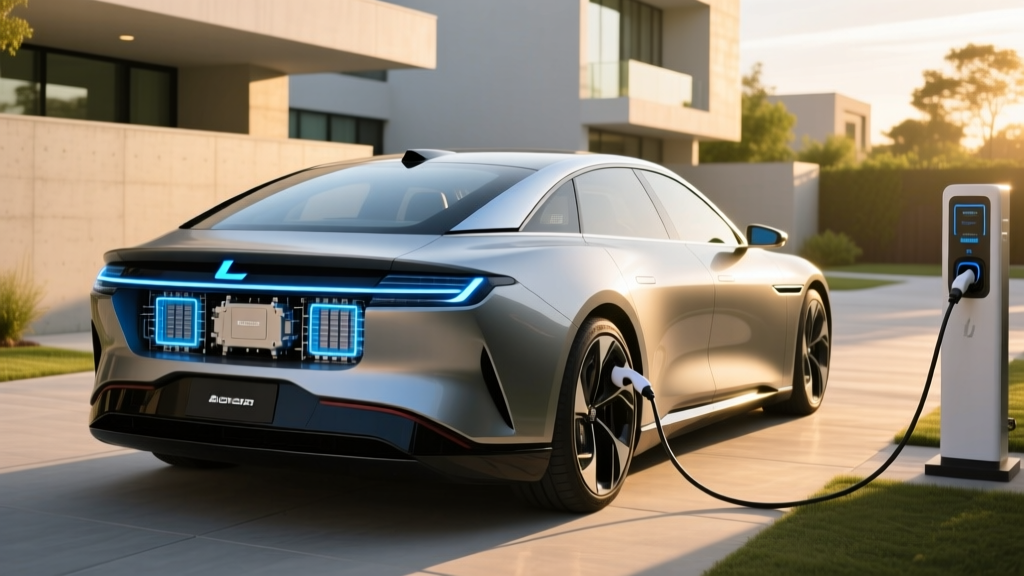
Charging speed is where Lucid's 900V+ electrical architecture pays dividends. The Air supports DC fast charging at up to 300 kW peak on compatible CCS1 stations (and via NACS adapter at Tesla Superchargers, as Lucid adopted the NACS port standard beginning with 2025 models).
| Charging Method | Max Power (kW) | Charge Time / Rate | Notes |
|---|---|---|---|
| DC Fast Charge (CCS/NACS) | 300 kW peak | 10–80% in ~20 min | Sustains ~200+ kW to 55% SoC; tapers significantly above 80% |
| Level 2 Home (240V, 48A) | 11.5 kW | ~37 mi/hr added | Full charge in ~10–12 hr (112 kWh pack) |
| Level 2 Home (240V, 80A — optional) | 19.2 kW | ~62 mi/hr added | Requires Lucid Connected Home charger; 100A circuit recommended |
| Level 1 (120V) | ~1.4 kW | ~4 mi/hr added | Emergency/top-up only |
The charge curve matters more than peak kW. The Air ramps quickly to around 250–280 kW when preconditioned and at low state of charge, holding above 200 kW until approximately 55% SoC before tapering. The 10–80% sprint takes roughly 20 minutes on a 350 kW-capable Electrify America or Tesla V4 Supercharger station. Above 80%, charging slows sharply — a characteristic of NMC chemistry protecting long-term cell health. If you regularly need 100%, budget an additional 25–35 minutes for that final 20%.
At home, most owners install a 48-amp Level 2 wall connector on a 60-amp circuit, yielding about 37 miles of range per hour of charging. Lucid's optional 80A Connected Home charger (requiring a 100-amp dedicated circuit) pushes that to 62 miles per hour — meaning even the 112 kWh Grand Touring pack can replenish overnight in about 10 hours. Panel upgrades may be necessary for the 80A option; budget $500–$2,000 for electrical work depending on your home's existing service. Always consult a licensed electrician for final specifications.
Performance & Driving Dynamics
Every Lucid Air uses permanently excited synchronous motors designed and manufactured in-house. The results are striking across the lineup:
- Air Pure (RWD): 430 hp, 0–60 in 5.0 seconds — brisk for daily driving, one-pedal regen capable
- Air Touring (AWD): 620 hp, 0–60 in 3.4 seconds — sports-sedan territory with all-weather traction
- Air Grand Touring (AWD): 819 hp, 0–60 in 3.0 seconds — effortless highway passing, near-silent acceleration
- Air Sapphire (tri-motor AWD): 1,234 hp, 0–60 in 1.89 seconds — hypercar performance with four doors and a trunk
The Air's low center of gravity (battery pack mounted under the floor) and double-wishbone front / multi-link rear suspension deliver composed handling that belies the sedan's 4,800–5,200 lb curb weight. Steering is precise if slightly light on feel, and the ride quality on the standard air suspension (Touring and above) is genuinely luxury-grade — absorbing broken pavement without the floatiness that plagues some competitors.
The Sapphire trim is an engineering showcase: three motors (one front, two rear) with torque vectoring, carbon-ceramic brakes, and a track-tuned suspension. It is, by every measurable metric, one of the quickest production cars ever built.
Pricing, Tax Credits & Total Cost
| Trim | Base MSRP | As-Tested (typical) | §30D Credit Eligible? | Effective Price (est.) |
|---|---|---|---|---|
| Air Pure | $69,900 | $72,400 | Potentially up to $7,500* | ~$62,400–$64,900 |
| Air Touring | $87,400 | $93,000 | No (MSRP exceeds $55K sedan cap) | $87,400+ |
| Air Grand Touring | $125,600 | $135,000 | No (MSRP exceeds $55K sedan cap) | $125,600+ |
| Air Sapphire | $249,000 | $249,000 | No (MSRP exceeds $55K sedan cap) | $249,000 |
* Under IRS §30D Clean Vehicle Credit rules, the Lucid Air Pure may qualify for up to $7,500 if all conditions are met: buyer AGI below $150K (single) / $300K (joint), vehicle MSRP under the $55,000 sedan cap (note: the Pure's $69,900 MSRP exceeds this cap as of 2026, making it ineligible for the new-vehicle credit as well), and battery critical-mineral and component sourcing thresholds. As of the 2026 tax year, no Lucid Air trim currently qualifies for the §30D new-vehicle credit because all trims exceed the $55,000 MSRP cap for sedans. The point-of-sale transfer option is available for eligible vehicles. Always consult a tax professional and verify current rules at IRS.gov before purchasing.
For cost-conscious buyers, the used-EV credit (§25E) offers up to $4,000 on pre-owned Lucid Air models priced under $25,000 — though as of early 2026, very few Airs have depreciated to that threshold.
Interior, Cargo & Technology
The Lucid Air cabin leans into what the brand calls "California design" — airy, minimalist, and glass-forward. A 34-inch curved glass cockpit display spans the dash, supplemented by a retractable lower touchscreen for climate and secondary controls.
Passenger space:
- Front legroom: 45.3 inches
- Rear legroom: 41.6 inches (class-leading — exceeds the Mercedes EQS and BMW i7)
- Rear headroom: 37.8 inches (adequate despite the sloped roofline)
Cargo:
- Trunk: 22.1 cu ft (deep and wide, with a low load floor)
- Frunk (front trunk): 10.1 cu ft (usable for charging cables, soft bags)
- Total enclosed storage: 32.2 cu ft
Standout tech features:
- Lucid DreamDrive Pro: SAE Level 2 driver-assistance suite with 32 sensors (including LiDAR on Grand Touring and above). Includes adaptive cruise, lane centering, and automatic lane change — but requires active driver supervision at all times. This is not autonomous driving.
- Over-the-air updates: Regular firmware improvements to powertrain mapping, UI, and ADAS features.
- Surrealist sound: 21-speaker Dolby Atmos audio system (standard on Touring and above).
- Phone-as-key: BLE-based proximity unlock with no fob required.
Notable drawbacks:
- The lower retractable touchscreen can be slow to respond and is glare-prone in direct sunlight.
- No Apple CarPlay or Android Auto — Lucid uses its own native infotainment stack. Wireless phone mirroring is not available.
- Rear visibility is limited by the sloped rear glass; the digital rearview mirror helps but takes adjustment.
- The Air's width (76.3 inches without mirrors) makes tight parking garages challenging.
Warranty & Ownership Considerations
Lucid provides competitive warranty coverage:
- Basic vehicle warranty: 4 years / 50,000 miles
- Battery & powertrain warranty: 8 years / 100,000 miles (with a minimum 70% capacity retention threshold)
- Roadside assistance: 4 years / 50,000 miles
The battery warranty's 70% retention floor is industry-standard, matching Tesla and slightly trailing Hyundai/Kia's 10-year/100,000-mile coverage. Lucid's NMC cells have demonstrated modest degradation in early fleet data — approximately 5–7% capacity loss over the first 50,000 miles — which is consistent with well-managed NMC packs using active liquid thermal management.
Insurance costs for the Air tend to run 15–25% higher than equivalent ICE luxury sedans, driven by repair-cost data for aluminum-intensive structures and high-voltage components. Get quotes before purchasing.
Who Should Buy the Lucid Air?
- You need maximum real-world range for frequent 300+ mile road trips without charging stops
- Rear-seat passenger space is a priority (legroom beats every competitor in the segment)
- You value engineering efficiency (best kWh/100mi in the luxury EV sedan class)
- You want a sedan, not an SUV, and appreciate understated design over badge prestige
- You need Apple CarPlay/Android Auto (consider the BMW i5 or Mercedes EQE)
- Budget is under $65,000 — the Air Pure starts at $69,900 and doesn't qualify for §30D
- You want a certified dealership experience with nationwide service (Lucid's service-center network is growing but still limited in rural areas)
- Towing is a priority — the Air is not rated for towing; consider the Rivian R1S or Tesla Model X
Lucid Air vs. Key Competitors
| Spec | Lucid Air GT | Tesla Model S LR | BMW i5 eDrive40 | Mercedes EQS 450+ |
|---|---|---|---|---|
| EPA Range | 516 mi | 402 mi | 295 mi | 390 mi |
| Battery (kWh) | 112 | 100 | 84.3 | 108.4 |
| Peak DC Charge (kW) | 300 | 250 | 205 | 200 |
| 0–60 mph | 3.0 sec | 3.1 sec | 5.3 sec | 5.9 sec |
| Base MSRP | $125,600 | $79,990 | $70,200 | $105,550 |
| Rear Legroom | 41.6 in | 35.4 in | 36.6 in | 41.2 in |
The Air Grand Touring commands a premium but delivers measurably more range, faster charging, and more rear-seat space than any rival. The Model S Long Range offers a more established Supercharger network experience and a lower entry price. The BMW i5 is the value pick for buyers who don't need 400+ miles of range. The EQS matches the Air on luxury but falls short on efficiency and charging speed.
Frequently Asked Questions
What is the real-world range of the Lucid Air?
The Grand Touring delivers approximately 410–440 miles on the highway in moderate temperatures and up to 510 miles in city commuting with regenerative braking. Cold weather (below 32°F) reduces range by roughly 25–30%, yielding 340–380 miles. The Air Pure and Touring trims offer 330–370 real-world highway miles depending on pack size.
How fast does the Lucid Air charge?
On a 350 kW-capable DC fast charger, the Air charges from 10–80% in approximately 20 minutes, peaking at 300 kW. At home on a 48-amp Level 2 station, it adds about 37 miles of range per hour. The optional 80A Lucid Connected Home charger adds up to 62 miles per hour.
Does the Lucid Air qualify for the federal EV tax credit?
As of the 2026 tax year, no Lucid Air trim qualifies for the §30D new clean vehicle credit. All trims exceed the $55,000 MSRP cap for sedans established by the Inflation Reduction Act. The credit also has buyer income limits ($150K single / $300K joint) and battery-sourcing requirements. Always verify current eligibility at IRS.gov and consult a tax professional.
Is the Lucid Air worth buying over a Tesla Model S?
If maximum range, interior space, and ride refinement are your priorities, the Air Grand Touring is the stronger vehicle. If you rely on the Supercharger network's reliability, want a lower starting price, or prefer a more mature software ecosystem, the Model S Long Range remains compelling. Test-drive both — the Air's cabin quality and the Model S's software polish represent different philosophies.
Where are Lucid cars manufactured?
All Lucid vehicles are manufactured at AMP-1, the company's purpose-built factory in Casa Grande, Arizona. Lucid Group, Inc. is headquartered in Newark, California, and is publicly traded on NASDAQ (LCID). The Saudi Public Investment Fund holds a majority ownership stake.
What are the biggest pros and cons of the Lucid Air?
- Class-leading 516-mile EPA range (Grand Touring)
- Best-in-class energy efficiency (kWh/100mi)
- 300 kW peak DC fast charging
- Spacious rear seat (41.6 in legroom)
- Refined ride on air suspension
- Standard heat pump for cold-weather efficiency
- No Apple CarPlay or Android Auto
- All trims exceed §30D MSRP cap — no federal credit
- Service center network still expanding
- Lower touchscreen is glare-prone and occasionally laggy
- Higher insurance premiums vs. ICE luxury sedans
- Limited rear visibility (digital mirror helps)
Safety: The 2026 Lucid Air has earned a 5-Star Overall Safety Rating from NHTSA. IIHS ratings should be verified at iihs.org as testing is ongoing for updated model-year structures.