Colorado remains one of the most EV-friendly states in the U.S., and the Colorado electric car tax credit is a major reason why. When stacked with the federal §30D Clean Vehicle Credit and local utility rebates, Colorado buyers can knock thousands off the effective price of a new electric vehicle. But incentives only tell half the story — real ownership cost includes charging, insurance, maintenance, and depreciation.
This guide breaks down exactly what it costs to own an EV in Colorado over five years, how to qualify for every available credit, and where EVs still carry a cost premium over gas cars. All figures reflect 2026 model-year pricing and current IRS and Colorado Department of Revenue rules.
Federal §30D Tax Credit: Up to $7,500 — With Strings Attached
The federal Clean Vehicle Credit under IRS §30D offers up to $7,500 for qualifying new EVs and plug-in hybrids. Since 2024, buyers can transfer the credit to the dealer at the point of sale, applying it as an immediate price reduction rather than waiting to claim it on their tax return. But eligibility is not automatic — multiple caps and sourcing rules apply.
§30D Eligibility Checklist (2026 Rules)
- Income caps: Modified AGI must not exceed $300,000 (joint filers), $225,000 (head of household), or $150,000 (single filers)
- MSRP caps: Vans, SUVs, and trucks must be under $80,000; sedans and other body styles under $55,000
- Battery sourcing: Credit splits into two halves — $3,750 for critical-minerals sourcing and $3,750 for battery-component assembly. Both requirements tighten annually through 2032
- FEOC exclusion: Vehicles with battery components from a Foreign Entity of Concern (primarily Chinese-linked supply chains) are disqualified from the affected half
- Point-of-sale transfer: Buyers can assign the credit to the dealer for an immediate price reduction, or claim it on IRS Form 8936 at tax time
- One credit per VIN: The vehicle itself must not have been previously titled or claimed for the credit
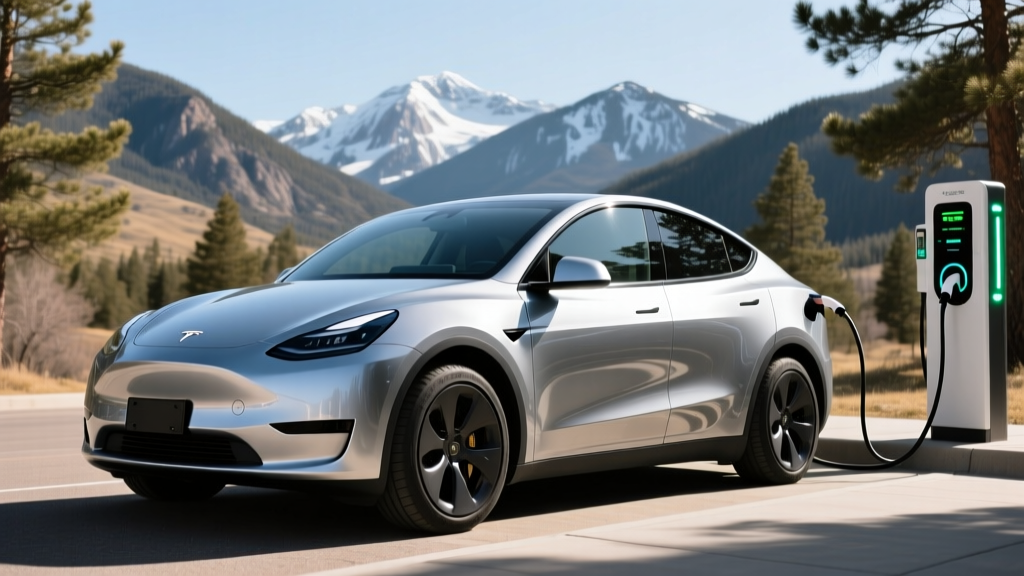
The practical result: a $45,000 Tesla Model Y Long Range (SUV, under the $80K cap) may qualify for the full $7,500 if its battery meets both sourcing thresholds — bringing the effective price to $37,500. But a $56,000 BMW i4 sedan exceeds the $55K sedan cap and qualifies for zero federal credit regardless of buyer income.
Important: Battery-sourcing rules change yearly. Always verify a specific VIN's eligibility on fueleconomy.gov before purchasing.
Colorado Electric Car Tax Credit: State Incentives Explained
Colorado's state EV tax credit is among the most generous in the country. As of 2026, the Colorado Innovative Motor Vehicle Credit provides up to $5,000 for the purchase or lease of a new qualifying EV with an MSRP of $80,000 or less. The credit applies to battery-electric vehicles (BEVs) and plug-in hybrids (PHEVs) and can be claimed in addition to the federal §30D credit.
Key details:
- Amount: $5,000 for new EVs and PHEVs (MSRP ≤ $80,000)
- Income-based bonus: Buyers with income at or below 300% of the federal poverty level may qualify for an additional $2,500 rebate, stackable with the base credit
- Transferability: The state credit can be transferred to the dealer at point of sale, similar to the federal credit
- Used EV credit: A separate credit of up to $3,500 is available for qualifying used EVs purchased in Colorado
Local & Utility Rebates Vary by Region
Beyond state credits, Colorado utilities offer additional rebates that vary significantly by provider and location:
- Xcel Energy (Denver metro): Up to $500 rebate for Level 2 home charger installation; EV-specific time-of-use rates as low as $0.05/kWh off-peak
- Colorado Springs Utilities: Rebates up to $500 for residential charger equipment
- Black Hills Energy: Periodic EV incentive programs — check current availability
- Municipal utilities (Fort Collins, Longmont, Boulder): Some offer additional $200–$500 charger or EV purchase incentives
Always check your specific utility's current programs, as rebate amounts and availability change frequently.
Stacking example: A Colorado buyer purchasing a $42,000 Hyundai Ioniq 5 SE (qualifying for full federal + state credits) could see: $7,500 federal + $5,000 Colorado + $500 Xcel charger rebate = $13,000 in total incentives, bringing the effective cost to roughly $29,000 before destination fees.
5-Year Total Cost of Ownership: EV vs. Gas in Colorado
Incentives lower the purchase price, but long-term ownership cost determines true value. Here's a realistic 5-year/75,000-mile breakdown comparing a typical mid-size EV (e.g., Tesla Model Y or Hyundai Ioniq 5) against a comparable gas-powered crossover (e.g., Toyota RAV4 AWD).
| Category | EV (e.g., Ioniq 5 SEL) | Gas (e.g., RAV4 XLE AWD) | EV Advantage |
|---|---|---|---|
| Purchase price (after incentives) | $34,500 | $33,500 | -$1,000 |
| Fuel / charging (75K mi) | $3,375 | $9,375 | +$6,000 |
| Maintenance | $1,500 | $3,750 | +$2,250 |
| Insurance (5 years) | $9,500 | $7,750 | -$1,750 |
| Depreciation (est.) | $14,000 | $12,000 | -$2,000 |
| Total 5-Year Cost | $62,875 | $66,375 | +$3,500 |
Assumptions: EV charged 80% at home ($0.12/kWh avg, 3.5 mi/kWh), 20% public DCFC ($0.40/kWh avg). Gas at $3.50/gal, 28 MPG combined. Insurance based on Colorado average premiums. Depreciation estimated from current resale trends.
Charging vs. Gas: The Per-Mile Math
Energy cost is where EVs consistently win, and Colorado's relatively low electricity rates make the gap wider than the national average.
| Scenario | Rate | Efficiency | $/Mile |
|---|---|---|---|
| Home Level 2 (Xcel off-peak) | $0.05/kWh | 3.5 mi/kWh | $0.014 |
| Home Level 2 (standard rate) | $0.14/kWh | 3.5 mi/kWh | $0.040 |
| Public DC fast charging | $0.40/kWh | 3.2 mi/kWh | $0.125 |
| Gas vehicle (28 MPG combined) | $3.50/gal | 28 MPG | $0.125 |
At home on standard rates, an EV costs roughly $0.04/mile to fuel — about one-third the cost of a 28 MPG gas vehicle at $3.50/gallon. Over 15,000 miles/year, that's a $1,275 annual fuel savings. Over five years, the savings compound to roughly $6,000–$6,500.
The caveat: if you rely entirely on public DC fast charging at $0.40+/kWh, your per-mile cost approaches or equals gasoline. Home charging access is the single biggest variable in EV operating economics. Colorado's growing Level 2 infrastructure in apartments and workplaces helps, but homeowners with garage or driveway access see the most savings.
One Colorado-specific advantage: the state's cold, dry climate and mountain driving can actually boost regen braking efficiency on descents, partially offsetting the range loss from cold temperatures and altitude.
Maintenance Savings: Where EVs Keep Winning
EVs have dramatically fewer moving parts than internal-combustion vehicles. No engine oil, no transmission fluid, no spark plugs, no timing belts, no exhaust system. The maintenance gap is real and measurable.
| Service Item | EV Cost (5 yr) | Gas Cost (5 yr) |
|---|---|---|
| Oil changes | $0 | $400–$600 |
| Brake pads (regen extends life) | $0–$200 | $400–$800 |
| Coolant flush | $0–$150 | $150–$300 |
| Transmission fluid | $0 | $200–$400 |
| Air filters (cabin + engine) | $100–$150 | $200–$350 |
| Tires (EVs are heavier; wear faster) | $1,200–$1,800 | $800–$1,400 |
| Total estimated | $1,300–$2,300 | $2,150–$3,850 |
The biggest maintenance offset for EVs is tire wear. EVs are 300–700 lbs heavier than equivalent gas vehicles and deliver instant torque, which accelerates tire wear. Budget for one extra tire replacement over five years compared to a gas car. Even with this, total EV maintenance runs roughly $1,500–$2,000 less over five years.
Brake life is a genuine EV advantage. Regenerative braking handles most deceleration, so friction brake pads often last 80,000–120,000+ miles. Many EV owners report original brake pads at 60,000 miles with significant remaining life.
The Insurance Reality: EVs Cost More to Insure
This is where EV ownership stings. Insurance premiums for electric vehicles run 15–30% higher than equivalent gas vehicles in Colorado, according to industry data. The reasons are structural, not temporary:
- Higher repair costs: EV battery packs are expensive to replace if damaged; even minor collision damage near the battery can trigger a full-pack replacement ($10,000–$20,000+)
- Specialized labor: Fewer certified EV repair technicians means higher labor rates
- Higher vehicle values: Even after incentives, EVs often carry higher MSRPs than gas equivalents, raising comprehensive and collision premiums
- Parts availability: EV-specific body panels and structural components can have longer lead times
For a Colorado driver with a clean record, expect annual EV insurance premiums of roughly $1,800–$2,200 versus $1,400–$1,700 for a comparable gas crossover. Over five years, that's an additional $1,500–$2,500 in insurance costs.
Mitigation strategies: Shop quotes from EV-friendly insurers (Tesla Insurance, Progressive, State Farm all have competitive EV rates). Some insurers offer discounts for vehicles with advanced ADAS features. Bundling home and auto can also narrow the gap.
Depreciation and Resale Value: The EV Wildcard
EV depreciation has been volatile. After aggressive price cuts by Tesla and others in 2023–2024, used EV values dropped sharply — some models losing 40–50% of value in two years. By 2026, the market has stabilized somewhat, but EVs still depreciate faster on average than top-selling gas vehicles like the Toyota RAV4 or Honda CR-V.
Current 5-year depreciation estimates for mainstream EVs range from 40–55% of purchase price, compared to 30–40% for popular gas crossovers. Several factors drive this:
- Battery health uncertainty: Used buyers worry about remaining battery capacity and replacement cost ($10,000–$20,000+), suppressing resale values
- Rapid tech advancement: Newer EVs with longer range and faster charging make older models feel dated quickly
- Incentive compression: When a new EV qualifies for $12,500+ in combined credits, the effective new price undercuts used EV prices, forcing used values down
- Leasing dominance: Heavy EV leasing floods the used market with off-lease vehicles, increasing supply
However, some models hold value better: the Porsche Taycan, Rivian R1T/R1S, and well-equipped Tesla Model Y have shown stronger-than-average retention. And critically, depreciation is calculated on your net purchase price after incentives — so a $42,000 Ioniq 5 bought for $29,000 after credits that depreciates 50% loses $14,500, not $21,000.
Maximizing Your Colorado EV Incentives: A Step-by-Step Playbook
Here's how to stack every available dollar when buying an EV in Colorado:
- Verify federal eligibility first: Check your target vehicle's VIN on fueleconomy.gov and confirm your income is within §30D caps
- Confirm state credit qualification: Ensure the vehicle MSRP is ≤ $80,000 and that you're purchasing from a licensed Colorado dealer
- Choose point-of-sale transfer: Both federal and Colorado credits can be applied at purchase, reducing your financed amount and monthly payment immediately
- Apply for utility rebates post-purchase: Most utility charger rebates require proof of EV purchase or registration — file within 90 days of installation
- Enroll in time-of-use rates: Xcel Energy's EV rate plan can cut your home charging cost by 60%+ during off-peak hours (typically 10 PM–6 AM)
- Keep documentation: Retain all purchase paperwork, credit transfer forms, and utility rebate confirmations for your tax preparer
Consult a tax professional before finalizing your purchase. Credit eligibility depends on your specific tax situation, and rules can change between model years.
Frequently Asked Questions
How much does it really cost to own an EV over 5 years in Colorado?
For a mainstream EV like the Hyundai Ioniq 5 or Tesla Model Y, expect a total 5-year cost of approximately $60,000–$65,000 including purchase (after incentives), charging, insurance, maintenance, and depreciation. This is typically $3,000–$5,000 less than a comparable gas vehicle, primarily due to fuel and maintenance savings. The exact figure depends heavily on your home charging access, annual mileage, insurance profile, and which incentives you qualify for.
Do I qualify for the federal §30D tax credit?
You likely qualify if your modified AGI is under $150K (single) or $300K (joint), the vehicle MSRP is under the applicable cap ($55K sedans, $80K SUVs/trucks/vans), and the vehicle's battery meets current-year critical-mineral and component sourcing requirements. The vehicle must be new and purchased for personal use in the U.S. Check your specific VIN on fueleconomy.gov and consult a tax professional for your situation.
How much do I save on fuel and maintenance?
Most Colorado EV owners save $1,000–$1,500 annually on fuel (assuming mostly home charging) and $300–$500 annually on maintenance. Combined, that's roughly $6,500–$10,000 over five years. Savings are highest if you have access to cheap home electricity (especially off-peak utility rates) and drive 12,000+ miles per year.
Are EVs more expensive to insure in Colorado?
Yes — typically 15–30% more expensive than equivalent gas vehicles. Expect annual premiums of $1,800–$2,200 for an EV versus $1,400–$1,700 for a gas crossover. The gap is driven by higher repair costs, expensive battery replacement, and specialized labor requirements. Shop multiple insurers and ask specifically about EV discounts.
How well do EVs hold their value?
EVs currently depreciate 40–55% over five years, somewhat worse than popular gas crossovers (30–40%). However, because Colorado incentives reduce your effective purchase price significantly, the dollar-amount depreciation may be comparable or even favorable. Battery health reports (available on most modern EVs) can help preserve resale value by proving remaining capacity to buyers.
Can I stack the Colorado state credit with the federal credit?
Yes. The Colorado Innovative Motor Vehicle Credit is fully stackable with the federal §30D credit, and both can be transferred to the dealer at point of sale for an immediate price reduction. Combined savings of $10,000–$12,500 are achievable on qualifying vehicles, plus additional utility rebates for charger installation.
Does Colorado offer a used EV tax credit?
Yes. Colorado provides a credit of up to $3,500 for qualifying used electric vehicles purchased from a licensed dealer. The vehicle must have an MSRP (original or current sale price depending on program year rules) within specified limits. This stacks with the federal used EV credit of up to $4,000 (subject to separate IRS income and price caps under §25E).