Who Makes the Best Electric Vehicle? A Comprehensive Brand-by-Brand Review
The electric vehicle market has exploded with options from legacy automakers and ambitious startups alike. With so many choices, the question on every buyer's mind is simple: who makes the best electric vehicle? The answer depends on what you value most — whether it's real-world range, lightning-fast charging, cutting-edge interior technology, or long-term ownership costs. In this in-depth review, we break down the top EV manufacturers across every category that matters, so you can make a confident, informed decision.
We evaluate vehicles from Tesla, Hyundai/Kia, Ford, BMW, Rivian, Porsche, Chevrolet, and Mercedes-Benz — the brands consistently topping expert rankings and consumer satisfaction surveys. For a broader look at specific segments, check out our best electric SUVs roundup and our best electric sedans guide.
Real-World Range: Which EVs Go the Farthest?
Range anxiety remains one of the biggest barriers to EV adoption, and for good reason. While EPA-estimated ranges provide a useful baseline, real-world results can vary significantly based on driving style, weather conditions, and terrain. Here's how the top contenders stack up.
Tesla continues to lead the pack in range efficiency. The EPA rates the Tesla Model S at up to 402 miles on a single charge, while the more affordable Model 3 Long Range achieves an impressive 363 miles. Tesla's industry-leading efficiency comes from a combination of lightweight construction, advanced heat pump technology, and class-leading aerodynamics.
Lucid Motors has emerged as a serious range champion. The Lucid Air Grand Touring boasts an EPA-estimated 516 miles of range — the highest of any production electric vehicle currently available. Lucid's proprietary drivetrain technology achieves remarkable energy efficiency measured in miles per kilowatt-hour.
Hyundai and Kia, sharing the E-GMP platform, deliver strong range figures at more accessible price points. The Hyundai Ioniq 6 SE Long Range achieves an EPA-estimated 361 miles, while the Kia EV6 GT-Line AWD manages around 310 miles. Independent testing by outlets like Edmunds has confirmed these figures hold up well in mixed driving conditions.
Chevrolet surprised many with the Equinox EV, offering up to 319 miles of EPA-estimated range at one of the most competitive price points in the segment. The Silverado EV pushes even further with up to 440 miles in certain configurations, making it a top choice for truck buyers.
BMW takes a different approach with its fifth-generation eDrive technology. The BMW iX xDrive50 delivers approximately 324 miles of EPA-estimated range, while the i4 eDrive40 achieves around 301 miles. BMW prioritizes consistent, predictable range delivery over headline-grabbing numbers.
For a deeper dive into maximizing your daily driving distance, explore our complete EV range comparison guide.
Charging Speed & Infrastructure: Who Gets You Back on the Road Fastest?
Fast-charging capability can make or break the road-trip experience. The speed at which an EV can accept a DC fast charge — combined with the availability of reliable charging networks — determines how practical an electric vehicle truly is for long-distance travel.
Tesla holds a massive advantage here thanks to the Supercharger network, which now includes over 50,000 fast chargers globally. Tesla vehicles can accept up to 250 kW on V3 Superchargers, adding approximately 200 miles of range in 15 minutes. With the adoption of the North American Charging Standard (NACS) by nearly every major automaker, Tesla's charging ecosystem is becoming the industry standard.
Hyundai and Kia vehicles built on the E-GMP platform feature 800-volt architecture, enabling peak charging speeds of up to 350 kW on compatible chargers. The Ioniq 5 and EV6 can charge from 10% to 80% in approximately 18 minutes under ideal conditions — among the fastest in the industry. Independent tests by Car and Driver have validated these impressive charging curves.
Porsche was a pioneer in 800-volt charging with the Taycan. The Taycan Turbo GT can accept up to 320 kW of DC fast charging power, reaching from 10% to 80% in roughly 18 minutes. Porsche's sophisticated thermal management system ensures consistent charging performance even during repeated hard acceleration and charging sessions.
Ford has partnered with Tesla to provide F-150 Lightning and Mustang Mach-E owners access to the Supercharger network via adapters. The F-150 Lightning Extended Range can accept up to 150 kW, while the Mustang Mach-E peaks around 150 kW as well. Ford's charging speeds are respectable but trail the leaders.
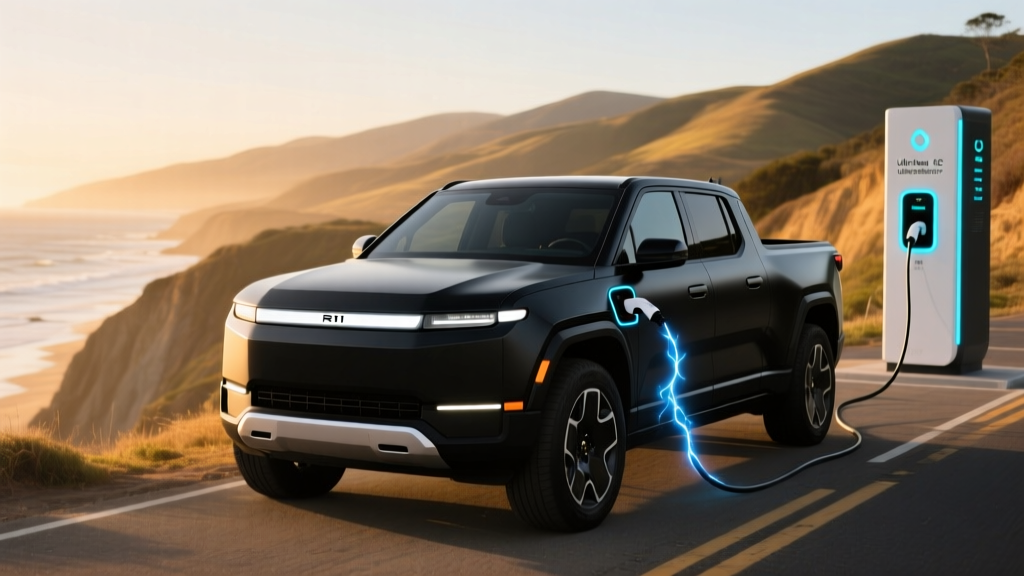
Rivian is building its own Adventure Network of fast chargers near popular outdoor destinations. Current Rivian vehicles support up to 200 kW DC fast charging, with the R1T and R1S gaining roughly 140 miles of range in 20 minutes. The company has also committed to adopting the NACS connector in future models.
Want to learn more about charging at home? Read our guide to the best home EV chargers for every budget.
Interior, Technology & Build Quality
The interior experience is where EV manufacturers differentiate themselves most dramatically. From minimalist touchscreens to luxurious handcrafted cabins, the approach varies widely by brand.
Tesla is synonymous with minimalism. The Model 3 and Model Y feature a single central touchscreen that controls virtually every vehicle function. The latest "Highland" and "Juniper" refreshes have brought ventilated seats, ambient lighting, rear passenger screens, and improved sound insulation. However, the reliance on touchscreen controls — including for turn signals and gear selection in newer models — remains polarizing among reviewers and owners alike.
BMW and Mercedes-Benz represent the traditional luxury approach to EV interiors. The BMW iX features a stunning Curved Display running iDrive 8.5, premium materials including open-pore wood and crystal controls, and an available Bowers & Wilkins Diamond Surround Sound system. The Mercedes-Benz EQS sedan showcases the hyperscreen — a 56-inch curved glass panel spanning the entire dashboard — paired with MBUX software and exceptional cabin quietness.
Hyundai has punched well above its weight class with the Ioniq 5 and Ioniq 6 interiors. Retro-modern design elements, dual 12.3-inch displays, physical climate controls, and a universally praised center console design make these cabins both functional and attractive. Build quality has been consistently rated highly by J.D. Power dependability studies.
Rivian has crafted interiors that blend rugged functionality with modern design. The R1T and R1S feature a 15.6-inch central display, a unique gear tunnel for extra storage, built-in camp kitchen options, and thoughtfully designed cargo solutions. The materials quality is solid, though some reviewers note it doesn't quite match luxury competitors at similar price points.
Porsche delivers a driver-focused cockpit in the Taycan with a curved 16.8-inch instrument cluster, an available passenger display, and the tactile, premium feel expected from the brand. Build quality is exceptional, with tight panel gaps and high-grade materials throughout.
Driving Dynamics & Performance
One of the most compelling arguments for electric vehicles is the driving experience. Instant torque, a low center of gravity, and precise powertrain control give EVs inherent dynamic advantages. But not all electric vehicles are created equal when it comes to performance and handling.
Porsche sets the benchmark for EV driving dynamics. The Taycan Turbo GT produces up to 1,092 horsepower with Launch Control and has set lap records at the Nürburgring for production EVs. Even the base Taycan delivers the steering feel, chassis balance, and braking performance that Porsche enthusiasts expect. The two-speed transmission on the rear axle provides both explosive acceleration and efficient highway cruising.
Tesla offers staggering straight-line performance. The Model S Plaid produces 1,020 horsepower and sprints from 0 to 60 mph in under 2 seconds — making it one of the quickest production cars ever built. However, some driving enthusiasts note that the steering feel and chassis dynamics don't always match the powertrain's capability, particularly on twisty roads.
BMW has successfully translated its "Ultimate Driving Machine" ethos into the electric era. The i4 M50 delivers M-car-level performance with 536 horsepower and adaptive M suspension, while the iX M60 provides a surprisingly engaging driving experience for a large SUV. BMW's eDrive system provides smooth, progressive power delivery that feels natural and confidence-inspiring.
Hyundai has made performance a priority with the Ioniq 5 N, a track-capable hot hatch EV producing 641 horsepower with N Active Sound and simulated gear shifts designed to engage driving enthusiasts. The standard Ioniq 5 and EV6 GT models also offer engaging dynamics with well-tuned suspensions and responsive steering.
Ford has leveraged its performance heritage with the Mustang Mach-E GT, which delivers 480 horsepower and a 0-60 mph time of approximately 3.5 seconds. The F-150 Lightning, despite its size, offers surprisingly composed handling thanks to its independent rear suspension — a significant upgrade over the solid axle found in many gas-powered trucks.
Interested in performance EVs? Don't miss our roundup of the fastest electric cars available today.
Ownership Costs & Long-Term Value
The sticker price is only part of the equation. Total cost of ownership — including maintenance, insurance, depreciation, electricity costs, and available tax incentives — determines whether an EV is truly a smart financial decision.
Hyundai and Kia consistently rank among the best for long-term value. Both brands offer industry-leading warranty coverage, including a 10-year/100,000-mile powertrain warranty and an 8-year/100,000-mile battery warranty. Combined with competitive pricing, low maintenance costs, and strong reliability ratings, the total cost of ownership for vehicles like the Ioniq 5 and EV6 is among the lowest in the EV segment.
Tesla benefits from lower maintenance costs compared to most competitors — fewer moving parts, no oil changes, and over-the-air updates that continuously improve the vehicle. However, Tesla's depreciation curves have been volatile, and insurance costs tend to be higher than average due to repair complexity. The federal clean vehicle tax credit availability varies by model and buyer eligibility.
Chevrolet has positioned the Equinox EV and Blazer EV as value leaders, with starting prices undercutting many competitors while still offering competitive range and features. GM's Ultium battery platform is designed for cost-effective manufacturing, which translates to more affordable pricing for consumers. Chevrolet also offers a solid 8-year/100,000-mile battery warranty.
BMW and Mercedes-Benz EVs carry premium price tags and premium ownership costs. Insurance, maintenance, and repair expenses are higher than mainstream brands. However, strong brand cachet, excellent build quality, and comprehensive certified pre-owned programs can help offset some of these costs for buyers who prioritize luxury.
Rivian faces the steepest depreciation challenge as a newer brand, though strong enthusiast demand and a growing service network are helping stabilize values. The company offers a 8-year/175,000-mile battery warranty for Adventure trim vehicles, which is among the most generous in the industry.
For a complete breakdown of what to expect financially, check out our EV total cost of ownership calculator.
Pros & Cons: Brand-by-Brand Summary
Tesla
Pros: Industry-leading Supercharger network, excellent range efficiency, strong over-the-air update program, rapid performance, extensive Autopilot/FSD features.
Cons: Minimalist interior not for everyone, controversial UI decisions (no physical stalks in newer models), inconsistent build quality reports, higher insurance costs.
Hyundai / Kia
Pros: Outstanding 800V charging speeds, competitive pricing, class-leading warranty, attractive design, strong reliability ratings.
Cons: No proprietary charging network, some models have limited availability, infotainment learning curve for some users.
BMW
Pros: Excellent driving dynamics, premium interior quality, strong brand reputation, smooth power delivery, advanced driver assistance.
Cons: Higher purchase price, expensive maintenance and repairs, range figures trail some competitors, complex option packages.
Porsche
Pros: Best-in-class driving dynamics, exceptional build quality, 800V fast charging, stunning design, track-capable performance.
Cons: Very high starting price, limited rear-seat space in Taycan, expensive options, higher running costs.
Ford
Pros: Strong dealer network, Supercharger access via adapter, practical vehicle designs (F-150 Lightning), competitive pricing on Mach-E.
Cons: Charging speeds lag behind competitors, software issues reported in early models, some recalls affecting confidence.
Rivian
Pros: Innovative vehicle design, exceptional adventure capability, generous battery warranty, strong community and brand identity.
Cons: Limited service center network, newer brand with less proven long-term reliability, higher depreciation, limited model lineup.
Key Specifications Comparison Table
| Vehicle | Est. Starting Price | EPA Range (Max) | Peak DC Charge Rate | 0-60 mph | Battery Warranty |
|---|---|---|---|---|---|
| Tesla Model 3 LR | $47,740 | 363 mi | 250 kW | 4.2 sec | 8 yr / 120k mi |
| Lucid Air Grand Touring | $125,600 | 516 mi | 300 kW | 3.0 sec | 8 yr / 100k mi |
| Hyundai Ioniq 6 SE LR | $42,715 | 361 mi | 350 kW | 5.1 sec | 10 yr / 100k mi |
| Kia EV6 GT-Line AWD | $52,825 | 310 mi | 350 kW | 4.5 sec | 10 yr / 100k mi |
| BMW iX xDrive50 | $87,250 | 324 mi | 200 kW | 4.4 sec | 8 yr / 100k mi |
| Porsche Taycan 4S | $103,800 | 277 mi | 270 kW | 3.8 sec | 8 yr / 100k mi |
| Ford F-150 Lightning Ext. | $69,995 | 320 mi | 150 kW | 4.0 sec | 8 yr / 100k mi |
| Chevy Equinox EV 3RS | $36,000 | 319 mi | 150 kW | 6.5 sec | 8 yr / 100k mi |
| Rivian R1T Dual Motor | $79,900 | 352 mi | 200 kW | 4.5 sec | 8 yr / 175k mi |
| Mercedes-Benz EQS 450+ | $104,400 | 352 mi | 200 kW | 5.9 sec | 10 yr / 155k mi |
Note: Prices and specifications reflect manufacturer data at time of publication and are subject to change. Consult your local dealer for the most current information.
So, Who Makes the Best Electric Vehicle?
There is no single "best" electric vehicle manufacturer — the right answer depends entirely on your priorities and budget. Here's our verdict by category:
- Best Overall Value: Hyundai/Kia — outstanding range, ultra-fast charging, excellent warranty, and accessible pricing make the Ioniq 5, Ioniq 6, and EV6 the smartest buys for most shoppers.
- Best Charging Network: Tesla — the Supercharger ecosystem remains the gold standard for hassle-free long-distance travel.
- Best Range: Lucid Motors — the Air Grand Touring's 516-mile EPA rating is in a class of its own.
- Best Driving Dynamics: Porsche — the Taycan delivers a sports car experience that no other EV can match.
- Best Luxury EV: BMW — the iX and i4 combine premium materials, advanced technology, and engaging performance.
- Best Electric Truck: Ford — the F-150 Lightning proves that electric trucks can be practical, powerful, and surprisingly refined.
- Best Adventure Vehicle: Rivian — the R1T and R1S are purpose-built for outdoor enthusiasts with no compromises.
- Best Budget EV: Chevrolet — the Equinox EV offers over 300 miles of range at a price point that undercuts nearly every competitor.
For personalized recommendations, browse our best electric vehicles picks across every category and budget.
Frequently Asked Questions
Is Tesla still the best electric vehicle brand?
Tesla remains the leader in charging infrastructure and energy efficiency, and the Supercharger network is a major advantage for frequent road trippers. However, competitors like Hyundai, Kia, BMW, and Porsche have closed the gap — and in some areas surpassed Tesla — in build quality, interior design, and charging speed. The "best" brand depends on your specific needs, but Tesla is no longer the only compelling choice in the EV market.
Which electric vehicle brand has the best reliability?
Based on data from Consumer Reports and J.D. Power, Hyundai and Kia consistently rank among the most reliable EV manufacturers, thanks to proven powertrain technology and excellent warranty coverage. Tesla has shown improvement in recent model years but still faces criticism for panel gaps and minor quality issues. Porsche and BMW also score well in dependability studies, though their higher complexity can lead to costlier repairs outside of warranty.
What is the best electric vehicle for long road trips?
For long-distance travel, you need a combination of long range and fast charging. The Tesla Model S and Model 3 paired with the Supercharger network offer the most seamless road-trip experience. The Lucid Air provides unmatched range, though public charging infrastructure for non-Tesla vehicles is still expanding. Hyundai and Kia models with 800-volt charging capability can recharge extremely quickly on Electrify America and other high-power networks, making them strong alternatives.
Are electric vehicles cheaper to own than gas cars?
Over a typical ownership period, many EVs can be cheaper to own than comparable gasoline vehicles. Electricity costs significantly less per mile than gasoline, maintenance expenses are lower (no oil changes, fewer brake replacements due to regenerative braking), and federal and state incentives can reduce the effective purchase price. However, higher insurance premiums, potentially steeper depreciation, and the upfront cost of home charging equipment can offset some savings. Our EV vs. gas cost comparison breaks down the numbers in detail.
Which EV brand offers the best warranty coverage?
Hyundai and Kia lead the industry with their 10-year/100,000-mile powertrain warranty and 8-year/100,000-mile battery warranty. Rivian offers an impressive 8-year/175,000-mile battery warranty on Adventure trim vehicles. Mercedes-Benz also stands out with a 10-year/155,000-mile battery warranty on the EQS. Most other manufacturers, including Tesla, Ford, BMW, and Chevrolet, provide the industry-standard 8-year/100,000-mile battery warranty. Always review the specific warranty terms for the model and trim you're considering.
Ready to find your perfect EV? Explore our complete EV buying guide for tips on test drives, incentives, and negotiating the best deal on your next electric vehicle.