Who Makes the Lucid Auto? The Company Behind the Car
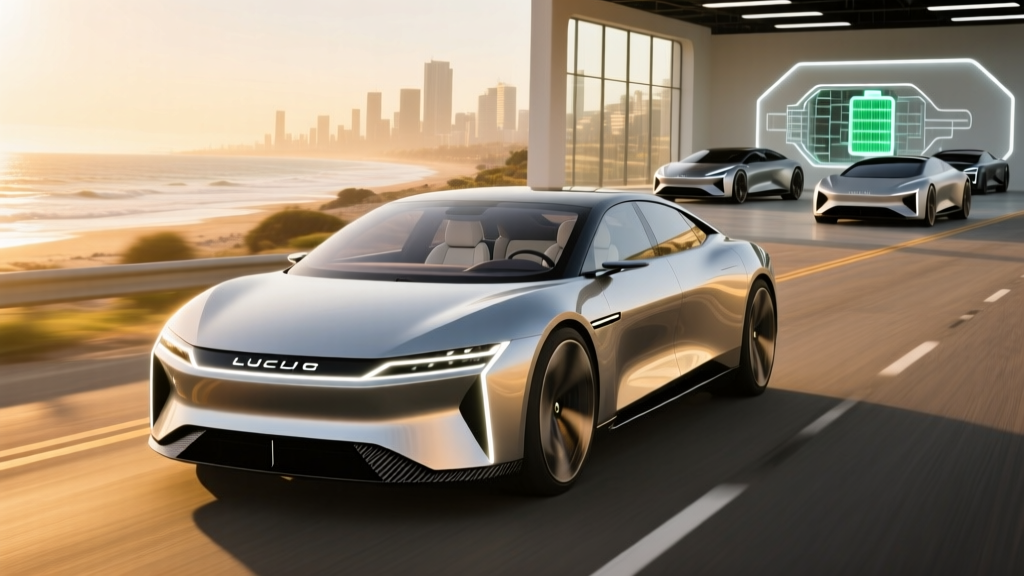
Lucid Motors — officially Lucid Group, Inc. (NASDAQ: LCID) — makes the Lucid auto. Headquartered in Newark, California, Lucid began life in 2007 as Atieva, a battery-technology company focused on EV powertrains and energy storage. It pivoted to building its own luxury electric vehicles in 2016 and rebranded as Lucid Motors. The company's first production car, the Lucid Air, began deliveries in late 2021.
Lucid's manufacturing happens at its AMP-1 factory in Casa Grande, Arizona, a vertically integrated plant where the company stamps, welds, paints, and assembles vehicles in-house. As of 2026, Lucid also produces the Lucid Gravity, its first SUV, alongside the Air sedan. The company is publicly traded and counts Saudi Arabia's Public Investment Fund (PIF) as its majority shareholder, which has provided critical capital for production scaling.
Lucid's engineering DNA is rooted in efficiency. CEO and CTO Peter Rawlinson, formerly the chief engineer of the Tesla Model S, designed Lucid's proprietary drive units to be among the most compact and efficient in the industry. That focus shows up on the EPA sticker: the Air holds the production-sedan efficiency crown.
2026 Lucid Air: Spec Sheet at a Glance
| Spec | Air Pure | Air Touring | Air Grand Touring | Air Sapphire |
|---|---|---|---|---|
| EPA Range | 419 mi | 425 mi | 516 mi | 427 mi |
| Battery (usable) | 88 kWh (NMC) | 92 kWh (NMC) | 112 kWh (NMC) | 118 kWh (NMC) |
| Drivetrain | RWD (single motor) | AWD (dual motor) | AWD (dual motor) | AWD (tri-motor) |
| Horsepower | 430 hp | 620 hp | 819 hp | 1,234 hp |
| 0-60 mph | 5.0 sec | 3.4 sec | 3.0 sec | 1.89 sec |
| Efficiency (MPGe) | 146 MPGe | 134 MPGe | 131 MPGe | 116 MPGe |
| Efficiency (kWh/100 mi) | 23 | 25 | 26 | 29 |
| Max DC Fast Charge | 200 kW | 250 kW | 300+ kW | 300+ kW |
| 10-80% DC Time | ~25 min | ~20 min | ~18 min | ~20 min |
| Level 2 Home Charge | 19.2 kW (~70 mi/hr) | 19.2 kW | 19.2 kW | 19.2 kW |
| Base MSRP | $69,900 | $87,400 | $125,600 | $249,000 |
Sources: fueleconomy.gov, Lucid Motors official specs. All figures reflect 2025-2026 model year data.
Real-World Range: What the EPA Number Doesn't Tell You
EPA Estimated: 516 miles
Real-World Highway (70 mph, mild weather): ~430-460 miles
Real-World Highway (cold weather, 30°F): ~350-390 miles
Real-World Mixed Commute (city/suburban): ~470-500 miles
The Air Grand Touring's 516-mile EPA figure is extraordinary — no other production sedan comes close. But EPA tests include generous city-regen cycles that flatter efficient EVs. On a sustained 70-mph highway run in 65-75°F weather, independent testing (including Edmunds real-world loops) consistently returns 430-460 miles. That's still class-leading, but it's a 12-17% drop from the sticker.
Cold weather compounds the loss. At 30°F, lithium-ion cells face higher internal resistance, and cabin heating draws significant energy (the Air uses a heat pump, which helps but doesn't eliminate the penalty). Expect a 25-30% range reduction in sustained freezing conditions, bringing the Grand Touring to roughly 350-390 real-world highway miles. That's still enough for most road-trip legs without charging, but it's a far cry from 516.
The Air Pure (RWD, 419 mi EPA) loses proportionally less on the highway because its single-motor drivetrain has fewer parasitic losses and a lower curb weight. Real-world highway: ~350-380 miles.
Charging Speed: DC Fast, Level 2, and the 900V Architecture
Lucid uses a 900-volt electrical architecture (nominal), which enables faster DC charging with lower current and thinner cables. Here's the full picture:
| Charge Type | Power | Speed | Notes |
|---|---|---|---|
| DC Fast Charge (peak) | Up to 300+ kW (GT/Sapphire) | 10-80% in ~18 min (GT) | Requires 350 kW CCS station; preconditioning required |
| DC Fast Charge (sustained avg) | ~180-220 kW average | ~200 miles added in 18 min | Charge curve tapers sharply above 80% |
| Level 2 (home, 48A) | 19.2 kW | ~70 miles per hour | Full charge in ~6 hours (112 kWh battery) |
| Level 2 (standard 32A) | 7.7 kW | ~28 miles per hour | Common with lower-amperage wall connectors |
| Level 1 (120V household) | 1.4 kW | ~5 miles per hour | Emergency/trickle only |
Charging-curve reality: The Grand Touring peaks above 300 kW only between roughly 10-35% state of charge. From 35-60%, it sustains around 220-250 kW. Above 80%, the rate drops to under 50 kW to protect the NMC cells. If you're road-tripping, plan to charge from 10-80% and move on — the last 20% takes nearly as long as the first 70%.
Lucid uses the CCS1 connector in North America. As of 2026, Lucid has announced a NACS (Tesla-style) adapter and future native NACS port, but current deliveries ship with CCS. You can charge at Electrify America, EVgo, and other CCS networks. Tesla Supercharger access requires an approved adapter.
Home charging: The Air's onboard charger supports up to 19.2 kW (80A) on Level 2, which is best-in-class. Most home installations use a 48A hardwired wall connector (11.5 kW on a 60A circuit), which adds roughly 42 miles per hour — enough for overnight replenishment of any daily drive. A 60A circuit requires a 100A-or-larger electrical panel; budget $1,200-$2,500 for professional installation including permit, per energy.gov EV charging guidelines.
Performance and Driving Dynamics
Even the base Air Pure delivers 430 hp and a 5.0-second 0-60 time from a single rear motor — quick by any luxury-sedan standard. The dual-motor AWD Touring (620 hp, 3.4 sec) and Grand Touring (819 hp, 3.0 sec) enter sports-car territory while maintaining sedan comfort.
The Air Sapphire is Lucid's halo: a tri-motor, 1,234-hp monster that hits 60 mph in a verified 1.89 seconds and runs the quarter-mile in under 9 seconds. It's a legitimate Bugatti challenger wearing four doors. But at $249,000, it's a low-volume statement piece.
Across the lineup, the Air rides on an adaptive air suspension with a double-wishbone front and multi-link rear setup. The steering is precise and well-weighted, and the low center of gravity (battery pack under the floor) keeps body roll minimal. Regenerative braking offers adjustable levels but does not enable true one-pedal driving to a complete stop — a deliberate choice by Lucid to mimic traditional luxury-sedan braking feel.
Interior Space, Tech, and Notable Drawbacks
Passenger space: The Air is a full-size luxury sedan with generous proportions.
- Front headroom: 39.0 in | Front legroom: 41.7 in
- Rear headroom: 37.9 in | Rear legroom: 37.6 in
- Trunk: 16.2 cu ft (rear) + 7.1 cu ft (frunk) = 23.3 cu ft total
The rear seat is where the Air outpaces the Tesla Model S. Adults over 6 feet sit comfortably with ample knee and head clearance, aided by the "Space Concept" interior design that pushes the dashboard forward and eliminates the transmission tunnel.
Infotainment: A 34-inch curved glass cockpit display spans the driver zone, running Lucid's proprietary OS. A lower retractable touchscreen handles secondary controls (climate, media, navigation). The system is responsive but not as intuitive as Tesla's or BMW's iDrive. Wireless Apple CarPlay and Android Auto are standard. A 21-speaker Surreal Sound system by Dolby Atmos is available.
Driver assistance (ADAS): Lucid's DreamDrive Pro is a Level 2 SAE driver-assist system using 32 sensors including LiDAR (a Luminar unit on higher trims). It handles adaptive cruise, lane centering, and automatic lane changes on highways. However, it is not a hands-free system like GM's Super Cruise or Ford's BlueCruise. You must keep your hands on the wheel. DreamDrive has drawn mixed reviews for occasional lane-centering hesitation and conservative following distances.
Notable drawbacks:
- Service network: Lucid has roughly 20+ service centers nationwide as of 2026 — far fewer than Tesla or legacy luxury brands. Mobile service is available in many metros but can mean week-long waits for parts in less-covered areas.
- Infotainment learning curve: The dual-screen setup requires more menu-diving than competitors for basic functions.
- No hands-free driving mode: Competitors like the BMW i7 and Mercedes EQS offer more advanced Level 2+ features.
- Depreciation risk: Lucid's resale values have trailed Tesla and Porsche, partly due to brand-newness and limited service footprint.
Pricing, Tax Credits, and Total Cost
| Trim | Base MSRP | Federal §30D Credit | Effective Price |
|---|---|---|---|
| Air Pure | $69,900 | Up to $7,500 (if eligible) | ~$62,400 |
| Air Touring | $87,400 | Not eligible (MSRP > $55K sedan cap) | $87,400 |
| Air Grand Touring | $125,600 | Not eligible (MSRP > $55K sedan cap) | $125,600 |
| Air Sapphire | $249,000 | Not eligible | $249,000 |
Tax credit reality: Under IRS §30D rules, new electric sedans must have an MSRP at or below $55,000 to qualify for the federal credit. Only the Air Pure clears this cap. Additionally, the buyer must meet income thresholds ($150K single / $300K joint AGI), and the vehicle must satisfy critical-mineral and battery-component sourcing requirements that tighten annually. The Air Pure's battery sourcing compliance should be verified at point of sale with the dealer, as rules update yearly. The credit can be applied as a point-of-sale rebate, reducing your out-of-pocket cost immediately.
The Touring, Grand Touring, and Sapphire are all above the $55K sedan MSRP cap and do not qualify for the federal new-vehicle credit, regardless of buyer income.
Ownership costs: The Air's efficiency translates directly to fuel savings. At the national average electricity rate of $0.17/kWh, the Air Pure costs roughly $3.91 to "fill" 100 miles of range. A comparable BMW 5 Series (28 MPG combined) at $3.50/gallon costs $12.50 per 100 miles. Over 15,000 annual miles, that's an energy savings of ~$1,290/year. Insurance premiums for the Air run 15-25% above comparable ICE luxury sedans due to repair costs and parts scarcity.
Lucid Air vs. Key Competitors
| Category | Lucid Air GT | Tesla Model S LR | Mercedes EQS 580 | BMW i7 xDrive60 |
|---|---|---|---|---|
| EPA Range | 516 mi | 402 mi | 371 mi | 318 mi |
| Efficiency | 131 MPGe | 120 MPGe | 97 MPGe | 86 MPGe |
| 0-60 mph | 3.0 sec | 3.1 sec | 4.1 sec | 4.5 sec |
| Max DC Charge | 300+ kW | 250 kW | 200 kW | 195 kW |
| Base MSRP | $125,600 | $79,990 | $125,950 | $120,295 |
| Rear Legroom | 37.6 in | 35.4 in | 38.7 in | 40.5 in |
The verdict: The Air Grand Touring wins on range, efficiency, and DC charging speed — no contest. The Model S undercuts it on price by $45K and offers a more mature Supercharger network and Autopilot. The EQS and i7 offer more traditional luxury cabin materials and vastly superior dealer/service networks but lag significantly on range and charging.
Choose a competitor if: You need a hands-free highway driving system (BMW i7 / Mercedes EQS), you rely on the Tesla Supercharger network exclusively (Model S), or you live far from a Lucid service center and need dealer proximity for peace of mind.
Warranty Coverage
- Basic Vehicle: 4 years / 50,000 miles
- Battery & Drive Unit: 8 years / 100,000 miles (retains ≥70% capacity)
- Roadside Assistance: 4 years / 50,000 miles
The 8-year/100,000-mile battery warranty with a 70% capacity retention threshold is industry-standard and matches Tesla, BMW, and Mercedes. Lucid's NMC cells use a proprietary thermal management system with a liquid-cooled plate design that has shown strong longevity in early fleet data, though long-term (10+ year) data is still accumulating given the brand's youth.
Frequently Asked Questions
Who owns Lucid Motors?
Lucid Group, Inc. is a publicly traded company (NASDAQ: LCID). Saudi Arabia's Public Investment Fund (PIF) holds a roughly 60% stake, making it the majority shareholder. Retail investors and institutional funds hold the remainder.
Where are Lucid vehicles manufactured?
All Lucid vehicles are assembled at the AMP-1 factory in Casa Grande, Arizona. Battery packs are assembled on-site using cells sourced primarily from Samsung SDI and LG Energy Solution.
Does the Lucid Air qualify for the $7,500 federal EV tax credit?
Only the Air Pure (MSRP $69,900) potentially qualifies — but wait: the §30D sedan MSRP cap is $55,000, which means even the Air Pure exceeds the cap and does not qualify for the new-vehicle credit as of current IRS rules. Always verify with the IRS §30D page and your tax professional, as rules and model eligibility can shift. Some buyers may qualify for a used EV credit (up to $4,000) if purchasing a pre-owned Air that meets the $25,000 price cap.
What is the real-world range of the Lucid Air?
The Grand Touring delivers ~430-460 real-world highway miles in mild weather and ~350-390 miles in freezing conditions. The Pure (RWD) returns ~350-380 highway miles. City and suburban driving with regenerative braking gets you closer to EPA numbers.
How fast does the Lucid Air charge at home and on the road?
On a 350 kW DC fast charger, the Grand Touring adds roughly 200 miles in 18 minutes (10-80%). At home on a 48A Level 2 connector (19.2 kW capable, typically installed at 11.5 kW), expect ~42-70 miles of range added per hour, fully replenishing overnight.
Is Lucid a reliable brand?
Lucid's powertrain engineering is excellent, but as a startup, its service infrastructure and parts supply chain are still maturing. Early build-quality issues (panel gaps, software bugs) have improved with subsequent model years. Reliability data from Consumer Reports and J.D. Power places Lucid in the middle of the EV pack — behind Tesla and Hyundai/Kia, ahead of some legacy luxury brands' first EV efforts.
Is the Lucid Air worth buying over a Tesla Model S?
If range, efficiency, and charging speed are your top metrics, the Air is objectively superior. If you value the Supercharger network, Autopilot/FSD functionality, and over-the-air software maturity, the Model S remains compelling — especially at a lower entry price. Test-drive both before deciding.
- Industry-leading EPA range (516 mi GT)
- Best-in-class efficiency (131+ MPGe)
- 300+ kW DC fast charging (900V architecture)
- Spacious rear seat for a sedan
- Refined, quiet ride quality
- 19.2 kW onboard Level 2 charger
- Limited service center network (~20 locations)
- No hands-free ADAS mode (Level 2 only)
- No federal tax credit (all trims above $55K cap)
- Infotainment less intuitive than competitors
- Higher insurance premiums
- CCS-only (NACS adapter pending)