Quick Answer: Is the 2017 Mercedes B-Class Electric Drive Worth Buying Used?
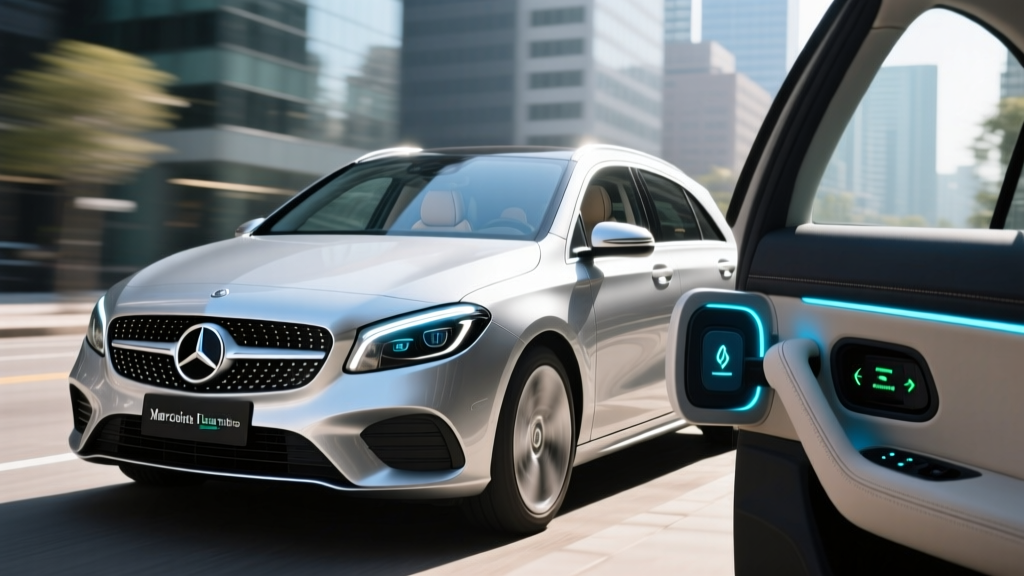
The 2017 Mercedes-Benz B-Class Electric Drive (sold as the B250e in some markets) is a niche used-EV option best suited for short urban commutes under 60 miles round-trip. Its EPA-rated range is just 87 miles from a 28 kWh usable lithium-ion battery, and it lacks DC fast charging entirely — meaning home Level 2 charging is essentially mandatory. In 2026, expect to pay $8,000–$13,000 on the used market depending on mileage and battery state of health. It does not qualify for the federal §30D new-vehicle tax credit, but may be eligible for the up-to-$4,000 used-EV credit (IRS §25E) if you meet income and dealer requirements. Buy it only if you have reliable home charging, a short commute, and want a premium-badge hatchback at a steep discount.
Range, Battery, and Efficiency: The Numbers That Matter
The 2017 B-Class Electric Drive was built on a modified front-wheel-drive platform shared with the gasoline B-Class. Mercedes partnered with Tesla to supply the electric powertrain — a fact that sounds more exciting than it plays out in practice. The motor produces 177 horsepower and 251 lb-ft of torque, delivering a respectable 0–60 mph time of about 7.9 seconds. That's genuinely quick for a 2017 compact hatchback.
But the battery tells the real story. The pack holds 36 kWh gross / 28 kWh usable of lithium-ion (NMC chemistry). The EPA rated it at 87 miles of combined range with an efficiency of 84 MPGe combined (roughly 40 kWh/100 miles). On the highway at 70 mph, expect that figure to drop to 65–75 miles in moderate temperatures. In cold weather (below 30°F), plan for 55–65 miles of usable range before you're hunting for a plug.
| Spec | Value |
|---|---|
| EPA Range | 87 miles |
| Real-World Range (highway, moderate) | 65–75 miles |
| Real-World Range (cold weather) | 55–65 miles |
| Battery (usable / gross) | 28 kWh / 36 kWh (NMC) |
| Efficiency | 84 MPGe combined (~40 kWh/100 mi) |
| Motor Output | 177 hp / 251 lb-ft |
| 0–60 mph | ~7.9 seconds |
| DC Fast Charging | Not available |
| Level 2 (240V) Charge Rate | ~7.2 kW (estimated ~4 hrs, 0–100%) |
| Level 1 (120V) Charge Rate | ~1.4 kW (~20+ hrs, 0–100%) |
| Original MSRP (2017) | ~$59,900 (before incentives) |
| Used Price (2026 est.) | $8,000–$13,000 |
Source: EPA / fueleconomy.gov
Charging Reality: No DC Fast Charging Is a Dealbreaker for Some
This is the single most important ownership factor for the 2017 B-Class Electric Drive: it has no DC fast-charging capability. There is no CCS port, no CHAdeMO port — just a standard J1772 connector for Level 1 and Level 2 AC charging.
On a 240-volt Level 2 home charger delivering approximately 7.2 kW, a full charge from empty takes roughly 4 hours. On a standard 120-volt household outlet (Level 1), you're looking at over 20 hours — effectively useless for daily replenishment if you drive more than about 30 miles per day.
| Charging Level | Power (kW) | Time (0–100%) | Miles Added per Hour |
|---|---|---|---|
| Level 1 (120V household) | ~1.4 kW | ~20+ hours | ~3–4 mi/hr |
| Level 2 (240V, 32A home charger) | ~7.2 kW | ~4 hours | ~18–22 mi/hr |
| DC Fast Charge | N/A | N/A | N/A — not equipped |
Without DC fast charging, road trips are impractical. Even a 100-mile drive requires a multi-hour stop at a public Level 2 charger — assuming you can find one that's operational and not occupied. This car is a commuter, not a traveler.
If you don't have access to home Level 2 charging — whether through a garage outlet, a dedicated wallbox, or a workplace charger — this vehicle is a poor fit. Public Level 2 charging infrastructure has expanded significantly by 2026, but relying on it daily adds time cost and unpredictability that most owners find frustrating.
Cost Breakdown: Purchase, Charging, and Maintenance
The financial case for a used 2017 B-Class Electric Drive rests on its rock-bottom purchase price versus its premium-badge interior and surprisingly low running costs.
| Cost Category | B-Class Electric (Est.) | Comparable Gas Hatchback (e.g., 2017 VW Golf) |
|---|---|---|
| Purchase Price | $8,000–$13,000 | $10,000–$15,000 |
| Fuel / Electricity | ~$540/yr (at $0.15/kWh) | ~$1,440/yr (at $3.60/gal, 30 MPG) |
| Maintenance | ~$200–$400/yr | ~$600–$900/yr |
| Insurance (avg.) | ~$1,100–$1,400/yr | ~$1,000–$1,300/yr |
| Estimated Annual Total (fuel + maint.) | ~$740–$940 | ~$2,040–$2,340 |
At the national average residential electricity rate of roughly $0.15/kWh in 2026, charging the B-Class's 28 kWh usable battery from empty costs about $4.20. Over 12,000 miles at 40 kWh/100 mi, that's approximately $540/year in electricity — versus about $1,440 in gasoline for a 30 MPG gas hatchback. You save roughly $900/year on fuel alone.
Maintenance is minimal: no oil changes, no spark plugs, no transmission fluid (it uses a single-speed reduction gear). Brake wear is dramatically reduced thanks to regenerative braking — many EV owners report original brake pads lasting 80,000+ miles. Your primary maintenance items are cabin air filters, wiper fluid, tire rotation, and eventual tire replacement (EVs are heavier and can wear tires faster).
Insurance tends to be slightly higher for EVs due to higher repair costs and specialized parts, but on a vehicle this inexpensive, the difference is modest — perhaps $100–$200/year more than a comparable gas car.
Federal Tax Credit: Used-EV Credit (§25E)
The 2017 B-Class Electric Drive does not qualify for the §30D new-vehicle credit (that applies only to new purchases). However, under the IRS §25E used clean vehicle credit, you may be eligible for up to $4,000 or 30% of the sale price (whichever is lower) if:
- The vehicle is purchased from a licensed dealer for $25,000 or less
- Your modified adjusted gross income is below $75,000 (single) / $112,500 (head of household) / $150,000 (joint)
- You haven't claimed the used-EV credit in the prior 3 years
- The vehicle is at least 2 model years old (easily satisfied)
At a $10,000 purchase price, the credit would be 30% × $10,000 = $3,000, effectively bringing your net cost down to ~$7,000. This is a significant value proposition, but consult a tax professional to confirm your eligibility — rules are subject to change.
Battery Health and Longevity: What to Check Before Buying
The B-Class Electric Drive uses an NMC (nickel-manganese-cobalt) lithium-ion pack. NMC chemistry offers good energy density but is more susceptible to capacity loss from frequent 100% charging, extreme heat, and DC fast charging (moot here, since it lacks DCFC).
After 8–9 years of service, expect 10–20% capacity degradation depending on climate and charging habits. A vehicle originally rated at 87 EPA miles might realistically deliver 70–78 miles on a full charge at this age in moderate conditions. In hot climates (Arizona, Texas), degradation tends to be on the higher end of that range.
Before buying, request a battery state-of-health (SoH) reading. Some Mercedes dealerships can pull this via diagnostic tools. Alternatively, a simple test: charge to 100% and note the dashboard-estimated range. If it reads below 70 miles in moderate weather, the pack has degraded significantly.
Battery replacement costs for the B-Class Electric Drive are poorly documented because so few were sold (Mercedes moved on to the EQ lineup). Estimates from independent EV shops suggest $8,000–$14,000 for a replacement pack — which could exceed the vehicle's value. This is the single biggest financial risk of ownership. The original high-voltage battery warranty was 8 years / 100,000 miles, meaning most 2017 examples have expired or are expiring in 2025–2026.
Common Misconceptions: Myth vs. Fact
| Myth | Fact |
|---|---|
| "The Tesla powertrain means it charges at Superchargers." | False. The B-Class uses a Tesla-supplied motor and battery, but it has a J1772 AC-only port. It cannot use Tesla Superchargers or any DC fast-charging network. |
| "87 miles of range is enough for anyone." | Misleading. The EPA figure assumes mixed driving. Highway, cold-weather, and hilly driving can reduce range to 55–65 miles. Most drivers need a 30–50% buffer above their daily round-trip. |
| "Used EVs always need expensive battery replacements." | Not always, but it's a real risk. Many EV batteries retain 80–90% capacity at 8–10 years. However, if a replacement is needed, it can total a low-value used EV. |
| "It qualifies for the $7,500 federal tax credit." | No. The §30D credit applies only to new vehicles. The used-EV credit (§25E) offers up to $4,000 with income and dealer requirements. |
| "Mercedes parts and service will be easy to find." | The B-Class Electric Drive was sold in very limited numbers. Some Mercedes dealers are unfamiliar with the EV-specific systems. Independent EV shops may be a better service option. |
Decision Framework: Should You Buy One?
Buy the 2017 B-Class Electric Drive if:
- Your daily round-trip commute is under 50 miles (leaving adequate range buffer for errands and climate effects)
- You have reliable home Level 2 charging (240V garage or driveway outlet, or a dedicated wallbox)
- You want a premium interior at a bargain price — the B-Class cabin materials and ride quality exceed most used EVs in this price range
- You qualify for the §25E used-EV credit, bringing your effective purchase price down significantly
- This is a second vehicle in a multi-car household, used specifically for local driving
Skip it and consider alternatives if:
- Your commute exceeds 60 miles round-trip — range anxiety will be a daily reality
- You lack home charging — relying on public Level 2 with no DCFC option is impractical
- You need a road-trip-capable vehicle — without DC fast charging, long-distance travel is painful
- You live in an extreme-cold climate — winter range drops to 55 miles or less
- You're concerned about battery replacement risk — the cost could exceed the car's value
Alternatives to Consider
For similar or slightly higher used-EV budgets in 2026:
- 2017–2018 Chevrolet Bolt EV: 238 miles EPA range, DC fast charging (CCS), ~$10,000–$16,000 used. Far more practical for most buyers.
- 2017–2018 Nissan Leaf (30 kWh): 107 miles EPA range, CHAdeMO DCFC, ~$7,000–$11,000 used. Slightly more range and has fast charging.
- 2018+ Hyundai Ioniq Electric: 124 miles EPA range, DC fast charging, excellent efficiency (~25 kWh/100 mi), ~$12,000–$17,000 used.
What First-Time EV Buyers Should Know
If the 2017 B-Class Electric Drive is your entry point into EV ownership, understand these fundamentals:
kW vs. kWh: kW (kilowatts) measures power — how fast energy flows, like water pressure. kWh (kilowatt-hours) measures energy — how much the battery holds, like tank size. The B-Class charges at up to ~7.2 kW and stores 28 kWh usable. Confusing these is the most common EV beginner mistake.
Home charging is king: Over 80% of EV charging happens at home. Budget $500–$2,000 for a Level 2 home charger installation (equipment plus electrician). If your electrical panel is outdated (e.g., 100-amp service), a panel upgrade could add $1,500–$3,000. Always get a quote from a licensed electrician before purchasing any used EV.
Preconditioning matters: The B-Class Electric Drive has limited battery thermal management compared to modern EVs. In cold weather, range suffers more than in vehicles with heat pumps and active battery heating. Preconditioning (warming the cabin while still plugged in) helps preserve range.
Tires wear faster: The B-Class Electric Drive weighs approximately 3,900 lbs — several hundred pounds more than its gas-powered sibling. That extra mass plus instant torque accelerates tire wear. Budget for tire replacement every 30,000–40,000 miles.
FAQ
Can the 2017 Mercedes B-Class Electric Drive use Tesla Superchargers?
No. Despite its Tesla-sourced powertrain components, the B-Class Electric Drive is equipped only with a J1772 AC charging port. It cannot connect to Tesla Superchargers, Electrify America, or any DC fast-charging network. It is limited to Level 1 (120V) and Level 2 (240V) AC charging.
What is the real-world range of the 2017 B-Class Electric Drive?
The EPA rates it at 87 miles combined. In real-world highway driving at 70 mph in moderate temperatures, expect 65–75 miles. In cold weather below 30°F, expect 55–65 miles. With age-related battery degradation (10–20% after 8–9 years), subtract another 10–15 miles from those figures.
How much does it cost to charge at home?
A full charge of the 28 kWh usable battery at the national average rate of $0.15/kWh costs approximately $4.20. Over 12,000 miles per year, expect roughly $540 in electricity costs — compared to about $1,440 in gasoline for a 30 MPG gas car.
Is the battery warranty still valid on a 2017 model?
The original high-voltage battery warranty was 8 years / 100,000 miles. For a 2017 model, this warranty expires in 2025 or upon reaching 100,000 miles — whichever comes first. Most 2017 examples in 2026 will be out of warranty unless they have very low mileage and are within the time window.
What should I check before buying a used 2017 B-Class Electric Drive?
Request a battery state-of-health (SoH) diagnostic from a Mercedes dealer or qualified EV technician. Verify the vehicle charges properly on both Level 1 and Level 2. Check for any outstanding recalls via NHTSA. Confirm that the charging cable and J1772 port are in good condition. And budget for a pre-purchase inspection by a technician familiar with EV systems.