The Design DNA Behind Tesla's 2026 Lineup
When EV shoppers ask who designed Tesla cars, the answer spans more than two decades of evolving design leadership. Franz von Holzhausen, Tesla's Chief Designer since 2008, has shaped every production Tesla from the Model S onward. A former Mazda designer who also worked at Volkswagen and General Motors, von Holzhausen brought a minimalist, aero-first philosophy that defines the brand. Under his direction—and alongside Chief Engineer Peter Rawlinson (who led Model S engineering before departing) and a growing global design team—Tesla's vehicles have become some of the most recognizable on the road.
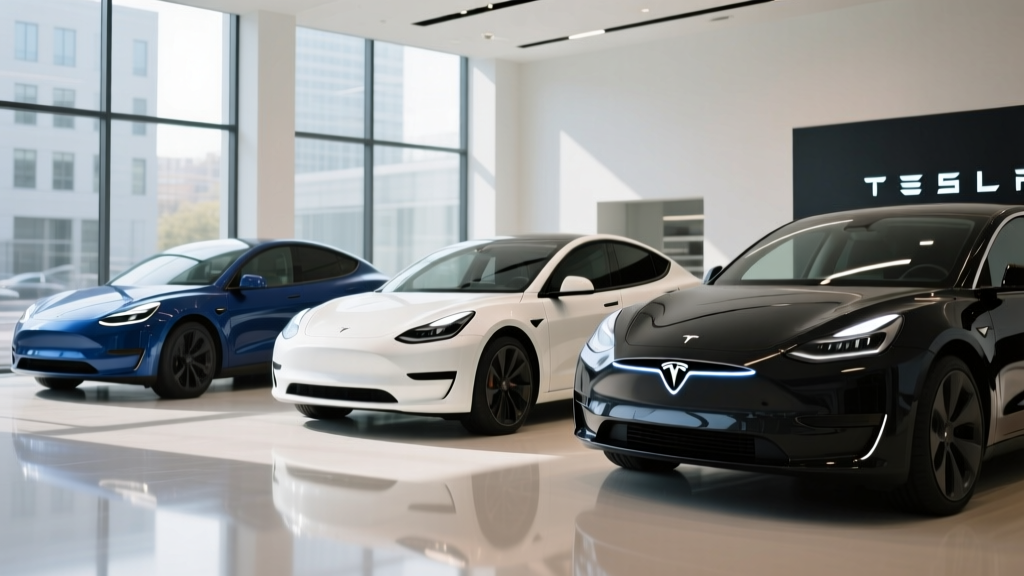
But design is only half the purchase decision. For 2026, Tesla's lineup includes the refreshed Model 3, Model Y, Model S, Model X, and the polarizing Cybertruck. Below, we break down the real numbers buyers need: range, charging speed, pricing, tax credit eligibility, and how each model stacks up in daily ownership.
2026 Tesla Lineup: Spec Comparison at a Glance
| Spec | Model 3 LR AWD | Model Y LR AWD | Model S LR | Model X LR | Cybertruck AWD |
|---|---|---|---|---|---|
| EPA Range | 363 mi | 320 mi | 402 mi | 348 mi | 340 mi |
| Battery (usable kWh) | ~79 kWh (NMC) | ~79 kWh (NMC) | ~100 kWh (NMC) | ~100 kWh (NMC) | ~123 kWh (NMC) |
| 0-60 mph | 4.2 sec | 4.8 sec | 3.1 sec | 3.8 sec | 4.1 sec |
| Horsepower | 346 hp | 384 hp | 670 hp | 670 hp | 600 hp |
| Drivetrain | Dual-Motor AWD | Dual-Motor AWD | Dual-Motor AWD | Dual-Motor AWD | Dual-Motor AWD |
| Max DC Charge | 250 kW | 250 kW | 250 kW | 250 kW | 250 kW (350 kW capable) |
| 10-80% DC Time | ~28 min | ~27 min | ~35 min | ~35 min | ~30 min |
| Level 2 Home Rate | 11.5 kW (~44 mi/hr) | 11.5 kW (~44 mi/hr) | 11.5 kW (~34 mi/hr) | 11.5 kW (~34 mi/hr) | 11.5 kW (~37 mi/hr) |
| MPGe (combined) | 134 MPGe | 123 MPGe | 120 MPGe | 108 MPGe | 76 MPGe |
| Cargo (rear seats up) | 23 cu ft | 30 cu ft | 28 cu ft | 88 cu ft (seats down) | 34 cu ft bed + frunk |
| Base MSRP | $47,740 | $49,990 | $79,990 | $84,990 | $79,990 |
| Battery Warranty | 8 yr / 120,000 mi | 8 yr / 120,000 mi | 8 yr / 150,000 mi | 8 yr / 150,000 mi | 8 yr / 120,000 mi |
Sources: fueleconomy.gov, Tesla.com. All figures reflect 2026 model-year data where available.
Real-World Range: What the EPA Sticker Doesn't Tell You
EPA vs. Reality: Tesla's EPA range figures are among the most efficient in the industry, but real-world results depend heavily on conditions.
- Highway driving (75 mph): Expect ~85-90% of EPA range. A Model 3 LR rated at 363 miles will deliver roughly 300-320 miles at sustained highway speeds.
- Cold weather (below 32°F): Range drops 20-35% due to battery resistance and cabin heating. That same Model 3 may return 240-270 miles in January in Minnesota.
- City / stop-and-go: Regenerative braking recovers energy, often matching or exceeding EPA estimates.
Tesla's heat pump (standard on all 2026 models) significantly reduces cold-weather losses compared to older resistive-heater EVs, but physics still applies. Preconditioning the battery while plugged in before departure mitigates much of the winter penalty.
Charging Speed: DC Fast Charging and Home Setup
Tesla's Supercharger network remains the gold standard for public DC fast charging in the U.S., with over 20,000 stalls nationwide. All 2026 Teslas use the NACS (North American Charging Standard) connector natively—the same plug now adopted by Ford, GM, Rivian, and most major automakers.
| Charging Level | Power (kW) | Typical Miles Added per Hour | Use Case |
|---|---|---|---|
| Level 1 (120V household) | ~1.2 kW | 3-5 miles | Overnight top-up, emergencies |
| Level 2 (240V home / public) | 7.6-11.5 kW | 28-44 miles | Daily home charging |
| DC Fast (Supercharger V3) | Up to 250 kW | ~170 miles in 15 min | Road trips |
| DC Fast (V4 / 350 kW stalls) | Up to 350 kW (Cybertruck) | ~200 miles in 15 min | Next-gen Superchargers |
Charging curve reality: Peak kW is not sustained. A Model 3 LR will hit 250 kW only between roughly 10-30% State of Charge, then taper progressively. The 10-80% time of ~28 minutes reflects the full curve, not a constant 250 kW rate. Above 80%, charging slows dramatically to protect the NMC cells—plan to charge to 80% on road trips and move on rather than waiting for 100%.
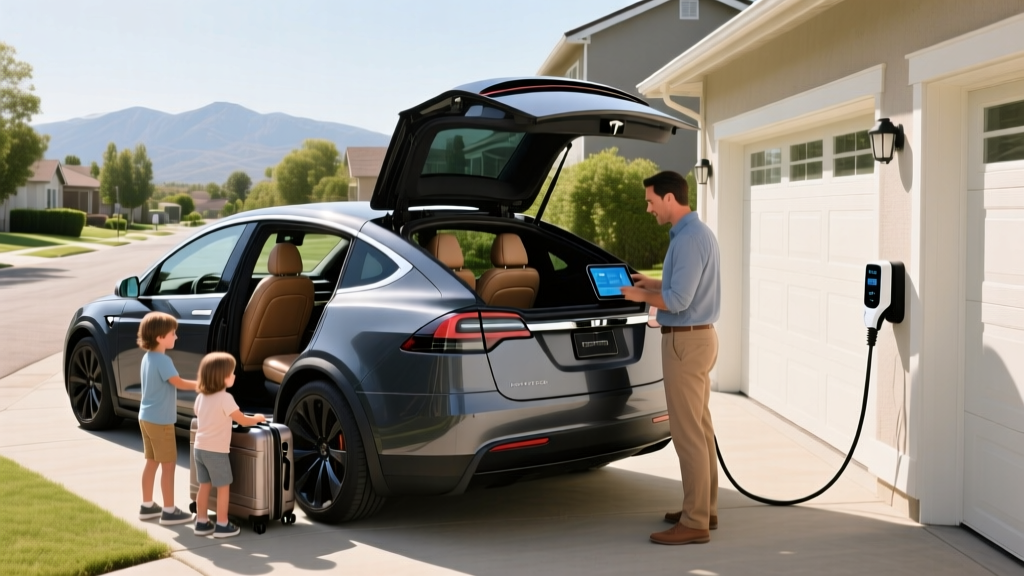
Home charging: A Tesla Wall Connector ($420) on a 60-amp circuit delivers 11.5 kW (48 amps continuous). Most owners charging overnight from 20% to 80% will fully replenish in 5-6 hours. Installation by a licensed electrician typically costs $500-$2,000 depending on panel proximity and whether a panel upgrade (to 200A service) is needed.
Pricing, Trims, and Federal Tax Credit Eligibility
Tesla's pricing has shifted frequently, but as of early 2026, here is the current lineup. Eligibility for the IRS §30D federal EV tax credit (up to $7,500) depends on MSRP caps, buyer income, and battery-sourcing requirements.
| Model | Base MSRP | §30D MSRP Cap | Likely Credit | Effective Price (est.) |
|---|---|---|---|---|
| Model 3 LR AWD | $47,740 | $55,000 (sedans) | Up to $7,500* | ~$40,240 |
| Model 3 RWD | $38,990 | $55,000 (sedans) | Up to $3,750-$7,500* | ~$31,490-$35,240 |
| Model Y LR AWD | $49,990 | $80,000 (SUVs) | Up to $7,500* | ~$42,490 |
| Model S LR | $79,990 | $55,000 (sedans) | Not eligible (over cap) | $79,990 |
| Model X LR | $84,990 | $80,000 (SUVs) | Not eligible (over cap) | $84,990 |
| Cybertruck AWD | $79,990 | $80,000 (trucks) | Uncertain (sourcing rules) | Varies |
*Credit amount depends on critical-mineral and battery-component sourcing requirements, which phase in annually. Buyer income caps apply: $150,000 single / $300,000 joint MAGI. Point-of-sale transfer is available through registered dealers. Always verify current eligibility on IRS.gov and confirm with a tax professional.
Technology, Driver Assistance, and Interior
Tesla's interior design reflects Franz von Holzhausen's minimalist ethos: a single central touchscreen (15.4" in Model 3/Y, 17" in Model S/X) controls nearly every function. There is no traditional instrument cluster—speed and navigation appear on the main display or, in the refreshed Model 3, a small driver-facing screen.
Autopilot and FSD (Supervised): Every Tesla ships with Autopilot (traffic-aware cruise control + lane centering). Full Self-Driving (Supervised) is a $8,000 option or $99/month subscription that adds automatic lane changes, traffic-light recognition, and city-street navigation.
SAE Level 2 — Not Self-Driving: Both Autopilot and FSD (Supervised) are classified as SAE Level 2 driver-assistance systems. The driver must remain fully engaged, hands on the wheel (or providing torque input), and eyes on the road at all times. Tesla monitors engagement via cabin camera. Only Level 4 services like Waymo operate without a human driver in geofenced areas.
Standout tech: Tesla's over-the-air update system is industry-leading, routinely adding features post-purchase. The infotainment system includes native streaming (Netflix, YouTube while parked), a robust navigation system with real-time Supercharger routing, and a phone-as-key system that eliminates fobs.
Notable drawbacks: The minimalist interior isn't for everyone—no physical buttons for climate or wipers can frustrate. Panel-gap quality has improved but still lags legacy luxury brands. The Cybertruck's steer-by-wire system has a learning curve and no mechanical backup linkage (redundant electronic systems handle failover).
Pros, Cons, and Who Should Buy
Pros
- Best-in-class Supercharger network (20,000+ stalls, 99%+ uptime)
- Industry-leading efficiency (Model 3: 134 MPGe combined)
- Over-the-air updates continuously improve the vehicle
- Strong resale value relative to most EVs
- Heat pump standard across lineup (better cold-weather range)
- NACS connector now the industry standard
Cons
- Touchscreen-only controls require adaptation
- FSD (Supervised) remains Level 2 despite the name
- Model S/X exceed MSRP caps for federal tax credit
- Insurance premiums 15-30% higher than comparable gas vehicles
- Service center wait times can stretch weeks in some markets
- Cybertruck's size limits garage and parking compatibility
Who Each Model Suits Best
- Model 3: Daily commuters and couples who want efficiency and value. Best highway-range-per-dollar in the lineup.
- Model Y: Families needing crossover cargo space (30 cu ft rear, 76 cu ft with seats folded) without stepping up to luxury pricing.
- Model S: Performance enthusiasts and executives who want 402-mile range and 3.1-second 0-60 without compromising comfort.
- Model X: Families wanting falcon-wing rear doors (easy car-seat access), three rows, and premium positioning.
- Cybertruck: Truck buyers needing 11,000-lb towing and a stainless-steel bed, willing to accept the polarizing design and large footprint.
Competitor Check: Is a Tesla Still the Best Buy?
The EV market in 2026 is far more competitive than it was even two years ago. Here's how Tesla's core models compare:
- Model 3 vs. Hyundai Ioniq 6: The Ioniq 6 offers comparable range (361 mi) and 800V charging (10-80% in ~18 min), but Tesla's Supercharger network and software ecosystem remain stronger for road-trip-heavy buyers.
- Model Y vs. Ford Mustang Mach-E / Kia EV9: The Mach-E is a compelling alternative with similar range; the three-row EV9 offers more family space but less efficiency. Tesla's cargo versatility and charging infrastructure give it an edge for frequent travelers.
- Model S vs. Lucid Air / BMW i7: The Lucid Air Pure offers 420+ miles of range and a more luxurious interior, but Tesla's service network and software maturity are more proven.
Frequently Asked Questions
Who designed Tesla cars?
Franz von Holzhausen has been Tesla's Chief Designer since 2008, responsible for the exterior and interior design language of every production Tesla from the Model S through the Cybertruck. He previously designed for Mazda, VW, and GM.
What is the real-world range of a 2026 Tesla?
Expect 85-90% of EPA range on the highway and 65-80% in freezing weather. A Model 3 Long Range (363 mi EPA) typically delivers 300-320 miles at 75 mph and 240-270 miles in sub-freezing temperatures.
How fast does a Tesla charge at home and on road trips?
At home on a Level 2 Wall Connector (11.5 kW), Teslas add 34-44 miles per hour, fully replenishing overnight. On Superchargers, 10-80% takes 27-35 minutes depending on battery size, with peak rates of 250 kW tapering above 80%.
Does Tesla qualify for the $7,500 federal EV tax credit?
Model 3 and Model Y are eligible for up to $7,500 under IRS §30D, subject to buyer income caps ($150K single / $300K joint), MSRP limits ($55K sedans / $80K SUVs and trucks), and battery-sourcing requirements. Model S and Model X exceed MSRP caps and do not qualify. Verify current rules on IRS.gov.
Is Tesla's FSD actually self-driving?
No. Full Self-Driving (Supervised) is an SAE Level 2 driver-assist system. It requires continuous driver supervision, hands on the wheel, and eyes on the road. It is not autonomous driving.
What is Tesla's battery warranty?
Model 3 and Model Y: 8 years / 120,000 miles. Model S and Model X: 8 years / 150,000 miles. Tesla warrants that the battery will retain at least 70% of its original capacity during the warranty period.
Is a Tesla worth buying vs. competitors in 2026?
For buyers who prioritize charging infrastructure, software, and efficiency, Tesla remains a top choice—especially the Model 3 and Model Y. For those prioritizing luxury interiors, faster 800V charging (Hyundai/Kia), or three-row seating (Kia EV9), competitors offer compelling alternatives. Test-drive both before deciding.