The Tesla Roadster has occupied a strange space in the EV world since Elon Musk first unveiled the second-generation model in November 2017. Over eight years later, the car remains unreleased — a rolling promise that has survived multiple production delays, shifting corporate priorities, and an EV market that has moved on to Cybertrucks and affordable sedans. Yet search interest persists, particularly around specific configurations like the white Tesla Roadster, a colorway that has appeared in promotional renders and resonates with buyers drawn to the car's futuristic aesthetic.
This profile treats the Roadster honestly: as an announced but not yet available vehicle. Every spec below reflects Tesla's most recent public statements, investor communications, and engineering teasers as of early 2026. Nothing here should be interpreted as a buying guide for a car you can order today. If and when Tesla opens reservations or deliveries, figures may shift — and we'll update accordingly.
What the White Tesla Roadster Actually Is (And Isn't)
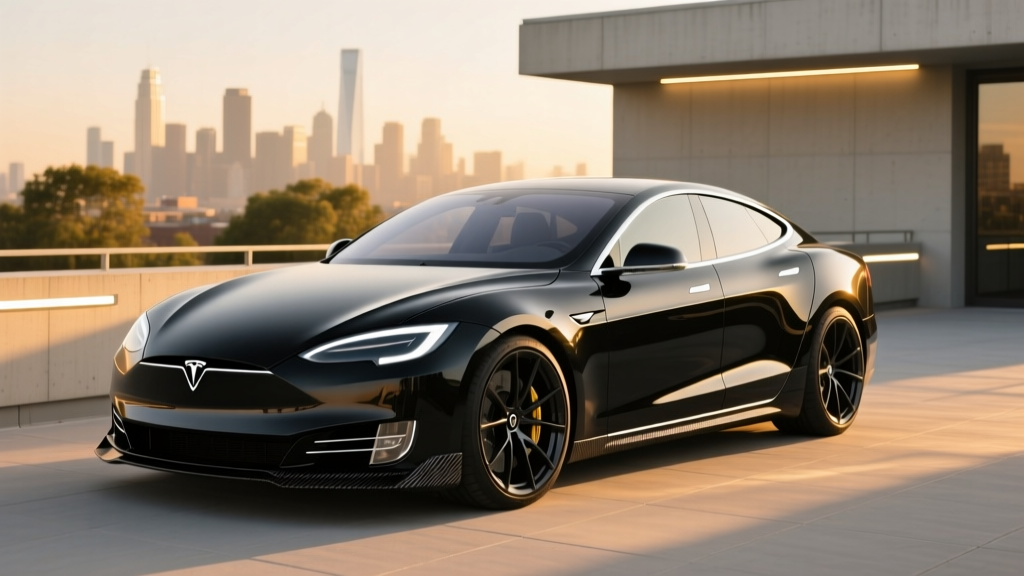
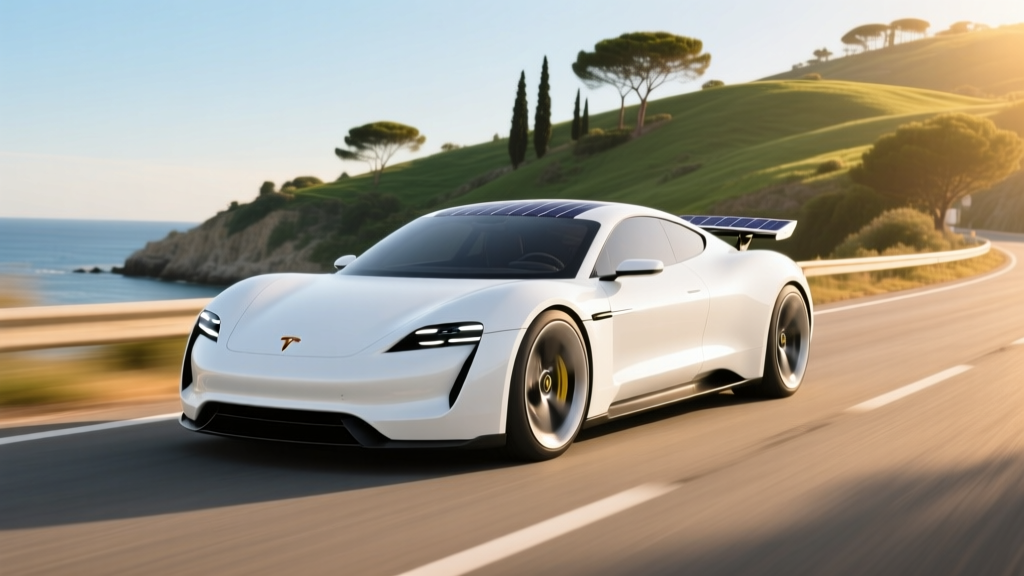
The second-generation Tesla Roadster is a two-door, four-seat electric sports car positioned as a halo performance vehicle. Tesla has described it as a "hardcore" demonstration of what an EV powertrain can achieve when cost-efficiency and mass-market practicality are secondary concerns. The white exterior — officially "Pearl White Multi-Coat" in Tesla's current palette — has been featured in most official renders and the original 2017 reveal event prototype.
Critically, as of Q1 2026, the Roadster is not in production, not available for test drives, and not deliverable. Tesla has periodically referenced a production timeline (most recently hinting at late 2025 or 2026 during earnings calls), but no confirmed date, reservation window, or final spec sheet has been published. Buyers searching for a "white Tesla Roadster for sale" will find only the original 2008–2012 first-generation Roadster on the used market — an entirely different vehicle with a 53 kWh battery, ~245-mile range, and Lotus Elise underpinnings.
Announced Specifications: What Tesla Has Claimed
The numbers Tesla has floated for the Roadster are extraordinary — if they materialize. Below is a consolidated table of the most frequently cited figures from Tesla's 2017 reveal, subsequent updates, and Elon Musk's public commentary. Treat these as targets, not guarantees.
| Attribute | Claimed Figure |
|---|---|
| EPA Range (target) | 620 miles |
| Battery Capacity | 200 kWh (announced) |
| Battery Chemistry | Not confirmed; likely high-nickel NMC/NCA |
| Drivetrain | Tri-motor AWD (1 front, 2 rear) |
| 0–60 mph | 1.9 seconds (base); <1 sec w/ SpaceX package |
| Top Speed | 250+ mph |
| Horsepower | Not officially stated; estimated 1,000+ hp at wheels |
| Peak DC Fast Charge | Not published; 250–350 kW estimated |
| Seats | 2+2 (small rear seats) |
| Removable Roof | Yes (glass panel, per 2017 reveal) |
| Base MSRP (announced 2017) | $200,000 ($50k reservation) |
| Founders Series | $250,000 (first 1,000 units) |
Range Reality: 620 Miles on Paper, But What About the Real World?
A 620-mile EPA target would make the Roadster the longest-range production EV ever announced — roughly double the Lucid Air Grand Touring's 516-mile EPA rating. Tesla's claim rests on the 200 kWh battery pack, which would also be the largest ever fitted to a production passenger car.
EPA Target: 620 miles
Highway (70 mph, moderate climate): ~480–530 miles estimated
Cold weather (30°F, highway): ~380–440 miles estimated
Track / aggressive driving: Significantly lower; high-speed aerodynamic drag and sustained high-power discharge erode range rapidly.
Physics constrains even the most optimistic claims. A 200 kWh pack is enormously heavy — likely adding 1,200–1,500 lbs over a Model S Plaid's ~100 kWh pack. That mass, combined with a sports-car tire compound and a wide, low-slip aero profile optimized more for downforce than efficiency, means real-world highway consumption could land in the 300–350 Wh/mile range rather than the sub-250 Wh/mile that 620 miles from 200 kWh would require. Cold-weather lithium-ion impedance, cabin heating, and battery thermal management further compress usable range.
If Tesla achieves even 500 miles EPA — still a staggering figure — the Roadster would redefine long-distance EV travel. But buyers should anchor expectations below the headline number until independent testing (EPA cycle or real-world validation by outlets like fueleconomy.gov) is published.
Charging Speed: The 200 kWh Problem
Large batteries charge slowly unless paired with extreme charge rates. A 200 kWh pack charging at 250 kW (Tesla's current V3 Supercharger peak) would take roughly 48 minutes to move from 10% to 80% state of charge — assuming the pack can sustain peak rate, which large packs typically cannot throughout the curve. At 350 kW (V4 Supercharger architecture), that drops to ~34 minutes, still long for a "road trip sports car."
| Charging Level | Power | 10–80% Time (est.) | Miles Added per Hour |
|---|---|---|---|
| Level 1 (120V household) | ~1.4 kW | ~100 hours | ~4 mi/hr |
| Level 2 (240V / 48A) | 11.5 kW | ~12 hours | ~35 mi/hr |
| DC Fast (V3 Supercharger) | 250 kW peak | ~45–50 min | N/A (curve-dependent) |
| DC Fast (V4 / future) | 350 kW peak | ~30–38 min | N/A (curve-dependent) |
Home charging is the more practical daily concern. Even on a 48-amp Level 2 circuit (the most common residential install), a fully depleted 200 kWh pack would require overnight-plus charging. Most owners will charge opportunistically — topping up from 30% to 80% rather than cycling the full pack — which makes Level 2 perfectly adequate for non-track use.
The key unknown is whether Tesla will engineer the Roadster's pack for sustained high-C-rate charging. High-nickel NMC/NCA chemistries can accept rapid charge but degrade faster under repeated high-power sessions. Tesla's thermal management is industry-leading, but a 200 kWh pack introduces thermal mass challenges no current production EV has solved elegantly.
Performance, Drivetrain, and the SpaceX Thruster Question
Tesla's tri-motor AWD layout — one front, two rear — mirrors the Model S Plaid architecture but with power outputs tuned for a lighter, lower-slung chassis. The announced 1.9-second 0–60 mph time would make the base Roadster one of the quickest production cars ever built, trailing only the Rimac Nevera and Pininfarina Battista among EVs.
The more speculative claim is the "SpaceX package" — a set of cold-gas thrusters positioned around the car to increase cornering grip, braking force, and straight-line acceleration. Musk has stated this package could drop 0–60 below 1 second. No independent engineering body has validated this, and cold-gas thruster systems are extraordinarily rare in road vehicles (the only precedent being limited motorsport applications). Treat this claim as conceptual until demonstrated in production form.
What's more relevant for most buyers: a 250+ mph top speed, if achieved, would demand tires, brakes, and cooling systems rated for sustained high-speed operation. These are solvable engineering problems, but they add cost and weight — both enemies of the handling purity a Roadster buyer expects.
Pricing, Tax Credits, and the Reservation Question
The announced 2017 pricing structure was $200,000 for the base Roadster and $250,000 for the first 1,000 "Founders Series" units (requiring full payment upfront). Given inflation, battery material costs, and Tesla's tendency to revise pricing closer to launch (see: Cybertruck), a realistic 2026-era price would likely land between $220,000 and $280,000 before options.
| Item | Figure / Status |
|---|---|
| Announced Base MSRP (2017) | $200,000 |
| Founders Series MSRP | $250,000 |
| Realistic 2026 Launch Price (est.) | $220,000–$280,000 |
| §30D Federal Tax Credit | Not eligible — MSRP cap for cars is $55,000 (per IRS §30D rules) |
| Buyer Income Cap (if eligible) | $150k single / $300k joint (N/A here) |
| Point-of-Sale Transfer | Not applicable |
The Roadster will not qualify for the federal §30D clean vehicle credit. The IRS caps eligible sedans and sports cars at $55,000 MSRP (SUVs/pickups at $80,000), and no version of the Roadster will come close. State-level incentives (California's CVRP, Colorado's tax credit, etc.) are also unlikely to cover a vehicle in this price class, though buyers should verify with their state's energy office and a tax professional.
Tesla paused Roadster reservations years ago; the original $50,000 deposit window is closed. Any future reservation process will likely require a fresh deposit under updated terms.
Interior, Tech, and Daily Usability
Based on the 2017 prototype and Tesla's current design language, the Roadster's interior will feature a minimalist, screen-dominated cockpit — likely a 15–17 inch central touchscreen, yoke-style steering wheel, and minimal physical controls. The 2+2 seating layout offers small rear seats suitable for children or cargo overflow, not adults on anything beyond short trips.
Cargo space is the open question. The original Roadster had virtually no trunk. A 200 kWh battery pack consumes the floorpan, and a mid-engine sports car layout leaves little rear volume. Expect a small frunk (front trunk) and minimal rear storage — perhaps 5–8 cubic feet total, sufficient for a weekend bag but not a grocery run.
Tech features will almost certainly include Tesla's latest infotainment stack, over-the-air updates, and Autopilot / Full Self-Driving (Supervised) hardware. A critical reminder: FSD is a Level 2 driver-assistance system per SAE definitions, not autonomous driving. The driver must remain fully engaged, hands on or near the wheel, at all times. No Tesla vehicle currently offers Level 3 or higher automation for consumer use.
Who Is the White Tesla Roadster Actually For?
The honest answer: collectors, Tesla loyalists, and buyers who want a halo EV that signals both performance credibility and brand allegiance. It is not a practical daily driver, a family car, a road-trip workhorse (despite the range claim), or a rational financial decision relative to a Porsche Taycan Turbo GT, Rimac Nevera, or even a Tesla Model S Plaid at one-quarter the price.
The Roadster's value proposition, if it ships, is emotional and symbolic. It's a statement that EVs can outperform hypercars, that Tesla's engineering ambition has no ceiling, and that a 620-mile, sub-2-second sports car is possible. For the ~1,000–5,000 buyers worldwide willing to pay $250k+ for that statement, the Roadster may be worth the wait. For everyone else, the Model S Plaid, Lucid Air Sapphire, or Taycan Turbo GT deliver 90% of the thrill at 50% of the price — today, not in some future model year.
Competitor Comparison: What You Can Actually Buy Now
| Vehicle | EPA Range | 0–60 mph | MSRP | Availability |
|---|---|---|---|---|
| Tesla Model S Plaid | 396 mi | 1.99 sec | ~$89,990 | In production |
| Lucid Air Sapphire | 427 mi | 1.89 sec | ~$249,000 | In production |
| Porsche Taycan Turbo GT | ~280 mi | 2.1 sec | ~$230,000 | In production |
| Rimac Nevera | ~340 mi (WLTP) | 1.85 sec | ~$2,400,000 | Limited production |
| Tesla Roadster (Gen 2) | 620 mi (claimed) | 1.9 sec (claimed) | $200k+ (announced) | Not available |
The Model S Plaid is the rational choice for most performance-EV buyers: similar 0–60, proven Supercharger network access, real-world range validation, and a price that, while steep, doesn't require a quarter-million-dollar bet on an unproven platform.
Frequently Asked Questions
Can I order a white Tesla Roadster right now?
No. The second-generation Tesla Roadster is not in production and cannot be ordered, reserved, or delivered as of early 2026. Tesla has not opened a new reservation window. The white (Pearl White Multi-Coat) renders shown in promotional materials represent a planned colorway, not a configurable option available today.
Is the 620-mile range claim realistic?
Possibly, but with major caveats. A 200 kWh battery pack could theoretically deliver 620 miles at ~322 Wh/mile efficiency — achievable on a combined EPA cycle but optimistic for real-world highway driving, where expect 480–530 miles in moderate conditions and 380–440 miles in cold weather. Independent EPA testing will be the only authoritative answer once the car ships.
Will the Roadster qualify for any EV tax credits?
No. The federal §30D credit caps eligible passenger cars at $55,000 MSRP. At an expected $220,000–$280,000 price, the Roadster is far outside eligibility. Most state incentive programs have similar or lower caps. Consult a tax professional for your specific situation.
How does the Roadster compare to the Model S Plaid?
On paper, the Roadster promises more range (620 vs 396 miles), similar 0–60 performance (1.9 vs 1.99 sec), and a more exotic two-door form factor. In reality, the Model S Plaid is a proven, deliverable, four-door sedan with validated real-world performance and full Supercharger compatibility — available today for under $90,000. The Roadster is speculative.
What happened to the first-generation Tesla Roadster?
The original Roadster (2008–2012) was a converted Lotus Elise with a 53 kWh battery, ~245-mile range, and 3.7-second 0–60. About 2,450 units were built. Used examples trade between $80,000 and $150,000 depending on condition and battery health. It is a collector's item, not a practical EV by modern standards.
Should I wait for the Roadster or buy something else?
Unless you are a Tesla collector willing to park a six-figure deposit for an indefinite timeline, buy something else. The Lucid Air Sapphire, Model S Plaid, and Taycan Turbo GT all deliver extraordinary performance today. If Tesla eventually ships the Roadster, you can revisit — but don't defer a purchase decision on a vehicle that has been "coming soon" for eight years.