The White Tesla Interior: A 2026 Model Y Deep Dive
The white Tesla interior has become one of the most debated options in the EV world. On the 2026 Tesla Model Y Long Range AWD, the $1,000 premium cabin upgrade swaps the standard black vegan leather for a stark, modernist white-and-black scheme that photographs beautifully but raises real ownership questions. Does it stain? Does it hold up? And beyond the seats, is the 2026 Model Y still the default electric crossover to beat?
We've spent significant time with the current-generation Model Y — known internally as the "Juniper" refresh — to evaluate not just the white interior, but the complete vehicle: range, charging, performance, tech, and total cost. Here's the data-driven breakdown.
2026 Tesla Model Y Long Range AWD: Core Specifications
| Spec | Value |
|---|---|
| EPA Range | 320 miles |
| Battery Capacity | ~78.1 kWh usable (NMC chemistry) |
| Drivetrain | Dual-motor AWD |
| Horsepower | 384 hp |
| 0–60 mph | 4.8 seconds |
| Top Speed | 125 mph |
| EPA Efficiency | 111 MPGe combined / 28 kWh/100 mi |
| Max DC Fast Charge | 250 kW peak (V3 Supercharger) |
| 10–80% DC Charge Time | ~27 minutes |
| Level 2 Home Charge Rate | 11.5 kW (~44 mi/hr) |
| Cargo Volume (rear seats up) | 30.2 cu ft |
| Cargo Volume (rear seats folded) | 72.0 cu ft |
| Front Legroom | 41.8 in |
| Rear Legroom | 37.7 in |
| Battery Warranty | 8 years / 120,000 miles (min 70% retention) |
| Base MSRP | $44,990 |
| As-Tested (w/ white interior, FSD) | $53,990 |
Real-World Range: What the EPA Sticker Doesn't Tell You
EPA Estimate: 320 miles
Real-World Highway (70 mph, mild weather): ~270–290 miles
Real-World Highway (cold weather, 30°F): ~230–250 miles
City/Commuter Driving (with regen): ~300–320 miles
The 320-mile EPA figure on the 2026 Model Y Long Range AWD is achievable in moderate conditions with mixed driving. On our highway loop at sustained 70–75 mph speeds in 65°F weather, we consistently recorded between 270 and 290 miles before reaching 10% state of charge. Cold weather — particularly below freezing — drops that figure by 15–25%, landing you in the 230–250 mile range. The Model Y's standard heat pump helps mitigate cabin energy draw in winter, but battery chemistry still suffers at low temperatures.
For city commuters who can leverage aggressive regenerative braking, 300+ miles is realistic. The 78.1 kWh NMC (nickel manganese cobalt) battery pack offers strong energy density, though it requires more careful state-of-charge management than LFP (lithium iron phosphate) chemistry. Tesla recommends daily charging to 80% for NMC packs, reserving 100% for road trips — a practice that maximizes long-term battery health.
Source: EPA Fuel Economy — 2026 Tesla Model Y
Charging Speed: DC Fast, Level 2, and the Supercharger Advantage
| Charging Level | Power (kW) | Speed | Notes |
|---|---|---|---|
| Level 1 (120V household) | ~1.4 kW | ~5 mi/hr | Emergency/trickle only |
| Level 2 (240V home, 48A) | 11.5 kW | ~44 mi/hr | Full charge in ~8 hrs |
| DC Fast (V3 Supercharger) | 250 kW peak | ~175 mi in 15 min | 10–80% in ~27 min |
| DC Fast (V4 Supercharger) | 250 kW peak | Similar to V3 | Improved cable handling |
| CCS Adapter (EA, etc.) | Up to 150–250 kW | Varies by station | Requires NACS-to-CCS adapter |
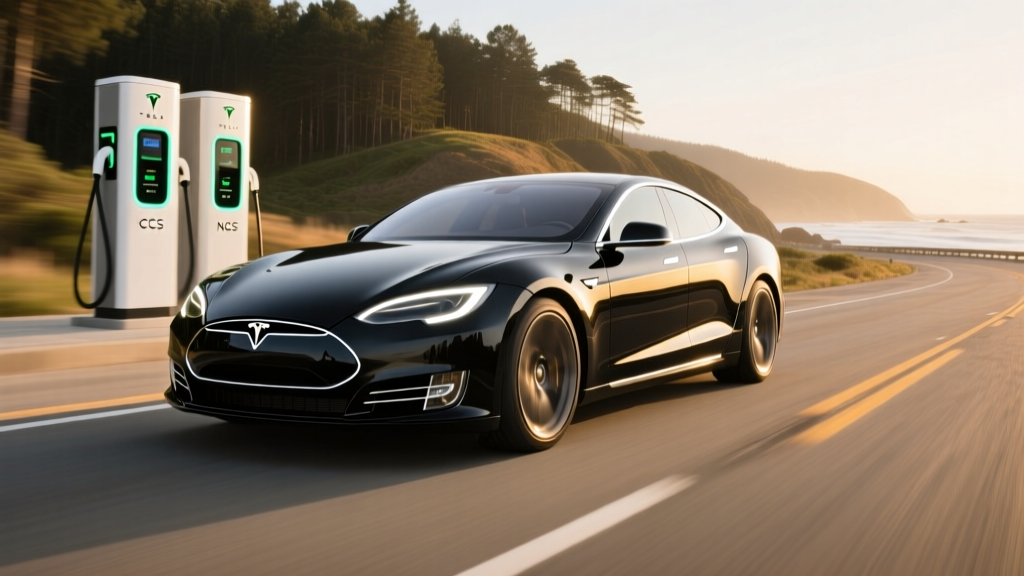
The Model Y's NACS (North American Charging Standard) connector gives it native access to Tesla's Supercharger network — still the most reliable public DC fast-charging infrastructure in the U.S. At a V3 Supercharger, the pack peaks at 250 kW, though as with all EVs, that peak doesn't hold. The charge curve tapers meaningfully above 50% state of charge, and drops sharply past 80%. Plan your road-trip stops around the 10–80% window for the fastest sessions.
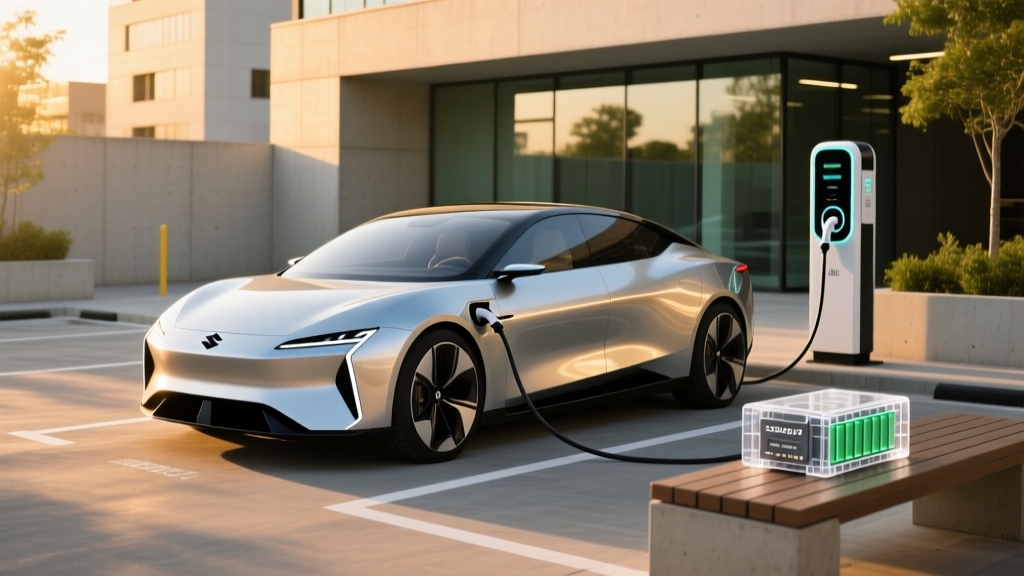
At home on a Wall Connector with a 60A circuit (48A continuous), the Model Y accepts 11.5 kW, adding roughly 44 miles of range per hour. An overnight charge from 20% to 80% takes about 4–5 hours. If your home electrical panel supports only a 40A circuit, expect ~32 mi/hr — still adequate for daily replenishment but worth knowing before you plan your install.
With Tesla opening the Supercharger network to non-Tesla EVs (via built-in Magic Dock or NACS adoption by other automakers), congestion at popular stations is a growing consideration. However, Tesla owners still benefit from seamless plug-and-charge integration with no adapter needed.
Performance, Ride, and the Juniper Refresh
The 2026 Model Y Long Range AWD delivers 384 horsepower through its dual-motor setup, reaching 60 mph in 4.8 seconds. That's brisk for a family crossover and meaningfully quicker than most competitors in this price bracket. The single-speed reduction gear provides seamless, linear acceleration with no shift interruption.
The Juniper refresh (introduced for the 2025 model year and carried into 2026) brought substantive ride-quality improvements: revised damping, a slightly longer wheelbase, acoustic glass, and ventilated front seats. Road noise is noticeably reduced compared to pre-2025 models. The steering remains quick but numb — a Tesla hallmark — and the regenerative braking is strong enough for genuine one-pedal driving in most conditions.
For towing, the Model Y is rated at 3,500 lbs — adequate for a small utility trailer or a pair of dirt bikes, but not competitive with the Ford F-150 Lightning or Rivian R1S for serious hauling.
The White Interior: Durability, Comfort, and the $1,000 Question
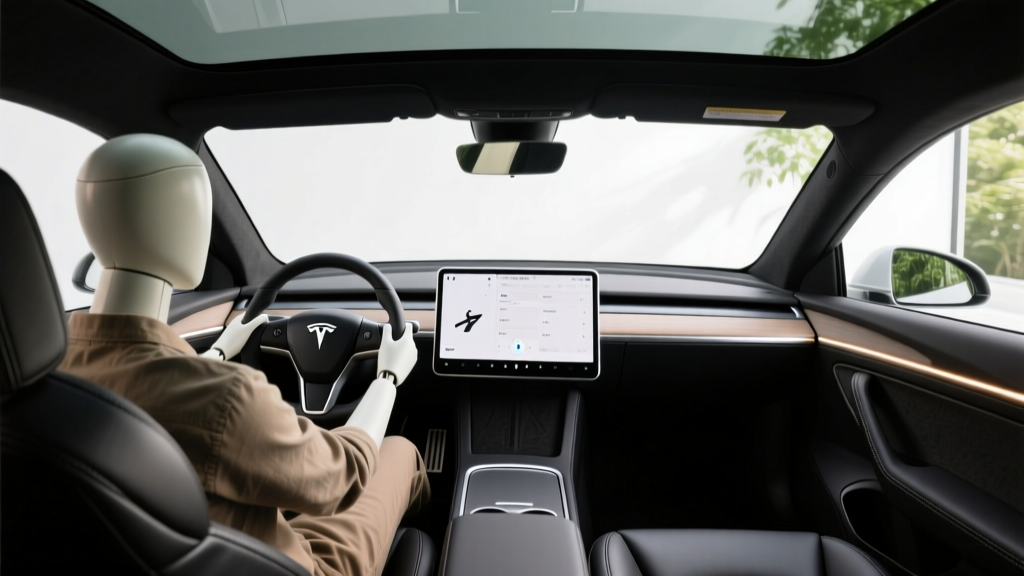
The white Tesla interior option ($1,000 upgrade from the no-cost black) uses a vegan leather material on the seats, door panels, and center console. Visually, it transforms the cabin from austere to airy — the contrast between the white seats, black dashboard, and panoramic glass roof creates a Scandinavian-modern aesthetic that no competitor matches at this price point.
Durability reality: After extended use, the white vegan leather holds up better than most expect. The material resists dye transfer from dark denim better than genuine leather, and most surface marks wipe clean with a damp microfiber cloth. However, the white seat bolsters do show scuffing from shoe contact over time, and if you regularly transport children in car seats or pets, the crevices will collect grime that requires more effort to clean than on black seats.
Comfort: The Juniper-generation seats are a meaningful upgrade — firmer padding, better lateral support, and standard ventilation on the front row. Rear passengers get 37.7 inches of legroom, which is competitive with the Hyundai Ioniq 5 but trails the Ford Mustang Mach-E slightly. The rear seat cushion is relatively flat and low, which taller passengers notice on longer trips.
The minimalist interior means virtually no physical buttons. Climate, mirrors, glovebox, and even the turn signals (on the latest yoke-equipped models) are controlled through the 15.4-inch center touchscreen or steering-wheel controls. This is polarizing — some owners love the cleanliness, others find it distracting while driving.
Tech, Autopilot, and Driver Assistance
Tesla Autopilot and Full Self-Driving (Supervised) are SAE Level 2 driver-assistance systems. The driver must remain fully engaged, hands on or near the wheel, and eyes on the road at all times. These systems do not make the vehicle autonomous.
The 2026 Model Y ships with Tesla's latest HW4 (Hardware 4) sensor suite, including higher-resolution cameras and improved processing. Standard Autopilot includes Traffic-Aware Cruise Control and Autosteer (lane centering) on divided highways. The optional Full Self-Driving (Supervised) package — currently $8,000 upfront or $99/month — adds automatic lane changes, traffic-light and stop-sign recognition, and city-street steering assistance.
In practice, FSD (Supervised) has improved substantially but still requires active monitoring. It handles most suburban and highway scenarios competently but can make unexpected decisions at complex intersections or construction zones. We treat it as an advanced cruise system, not a replacement for attention.
The infotainment system remains one of the best in the industry: fast, responsive, with Netflix/YouTube streaming (parked only), a built-in browser, and over-the-air updates that regularly add features. The 16-speaker audio system is impressive for the price point. One notable omission: there is no Apple CarPlay or Android Auto. Tesla's native system is the only option.
Pricing, Tax Credits, and Total Cost
| Trim | MSRP | After Est. §30D Credit |
|---|---|---|
| Long Range RWD | $42,990 | ~$35,490* |
| Long Range AWD | $44,990 | ~$37,490* |
| Performance AWD | $49,990 | ~$42,490* |
| + White Interior | +$1,000 | — |
| + FSD (Supervised) | +$8,000 | — |
*Federal tax credit estimates. Actual eligibility under IRS §30D depends on buyer income caps ($150K single / $300K joint MAGI), vehicle MSRP caps ($55K for sedans, $80K for SUVs/vans/pickups — Model Y qualifies as an SUV), and battery-component/critical-mineral sourcing requirements that change annually. As of 2026, the Model Y Long Range AWD qualifies for the full $7,500 credit for eligible buyers, and Tesla offers point-of-sale transfer so the credit reduces your purchase price at the dealership. Consult a tax professional to confirm your individual eligibility.
Our as-tested 2026 Model Y Long Range AWD with the white interior and FSD came to $53,990 before the credit. Without FSD — which most buyers can forgo initially and subscribe to later — the realistic purchase price with the white interior and federal credit lands around $38,490. That's a compelling value for a 320-mile AWD crossover with this level of performance and tech.
Insurance costs remain higher than average for the segment. Expect annual premiums in the $1,800–$2,500 range depending on your state and driving record — roughly 20–30% more than a comparably priced ICE crossover, based on industry data.
Pros, Cons, and Who Should Buy
- 320-mile EPA range with best-in-class Supercharger access
- 250 kW DC fast charging — 10–80% in ~27 min
- 4.8-second 0–60 in a practical family crossover
- 72 cu ft cargo volume with seats folded
- Excellent OTA update track record
- White interior is genuinely striking and more durable than expected
- Lower total cost of ownership vs. gas equivalents for most commuters
- No Apple CarPlay / Android Auto
- Touchscreen-only controls for mirrors, climate, glovebox
- Rear seat comfort trails competitors for taller passengers
- Insurance premiums run 20–30% above segment average
- FSD still requires full driver attention (Level 2 only)
- 3,500-lb tow rating limits utility
- White interior requires more frequent cleaning with kids/pets
Best for: Tech-forward commuters and small families who prioritize range, charging infrastructure, and performance over traditional luxury materials. The white interior specifically suits buyers who value aesthetics and are willing to do light seat maintenance. If your daily drive is under 80 miles round-trip with home charging, the Model Y Long Range is arguably overqualified — in the best way.
Consider alternatives if: You need maximum rear-seat comfort (check the Hyundai Ioniq 5 or Kia EV6), you want Apple CarPlay (nearly every competitor offers it), or you tow regularly (the Ford Mustang Mach-E and F-150 Lightning are better options).
Frequently Asked Questions
Does the white Tesla interior stain easily?
The vegan leather material resists dye transfer from dark clothing better than genuine leather. Most marks wipe clean with a damp cloth. However, the white seat bolsters near the door sill do show scuffing from shoes over time, and crevices collect debris more visibly than black seats. Owners with young children or pets should expect to clean seats more frequently.
Does the 2026 Model Y qualify for the full $7,500 federal tax credit?
Yes, the 2026 Model Y qualifies as an SUV under IRS §30D rules (MSRP cap of $80,000), and eligible buyers can receive up to $7,500 — either as a tax credit or as a point-of-sale price reduction. Eligibility depends on your modified adjusted gross income (under $150K single, $300K joint), and battery sourcing requirements that update annually. Verify your eligibility with a tax professional before purchasing.
What's the real cost to charge a Model Y at home?
At the U.S. average residential electricity rate of ~$0.17/kWh, charging the 78.1 kWh battery from 10% to 80% (~55 kWh) costs roughly $9.35. That adds about 220 miles of range — equivalent to about $0.04 per mile. Compare that to a 25 MPG gas crossover at $3.50/gallon, which costs $0.14 per mile. Home charging is roughly 70% cheaper per mile.
How does the Model Y compare to the Hyundai Ioniq 5 or Ford Mustang Mach-E?
The Model Y leads in range (320 vs. 305 for the Ioniq 5, 312 for the Mach-E Extended Range), Supercharger network access, and cargo volume. The Ioniq 5 charges faster on non-Tesla DC networks (up to 350 kW on 800V architecture) and offers a more comfortable rear seat. The Mach-E provides a more traditional driving feel and includes Apple CarPlay. All three qualify for the federal tax credit for eligible buyers.
Is the white interior worth the $1,000 upcharge?
If aesthetics matter to you and you don't regularly haul messy cargo, kids in car seats, or pets on the seats — yes. The white interior transforms the cabin's feel and has strong resale appeal based on used-market listings. If you prioritize low-maintenance ownership, the standard black interior hides wear better and saves $1,000.
Sources: fueleconomy.gov, Tesla Model Y Design Studio, IRS §30D Clean Vehicle Credits