Quick Verdict: Is the 2013 Ford Focus Electric Worth Buying Used in 2026?
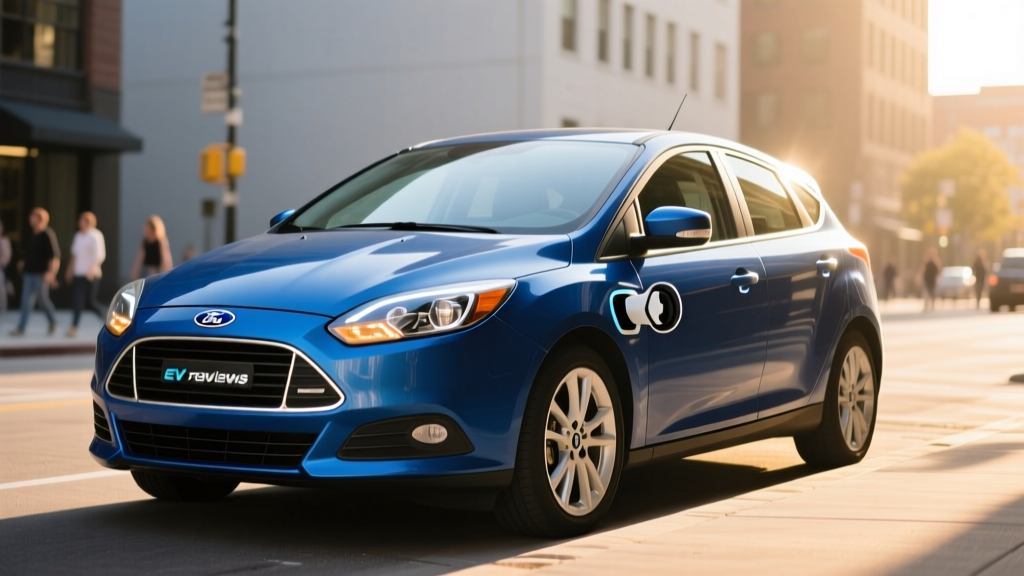
The 2013 Ford Focus Electric hatchback is a budget-priced, short-range commuter EV best suited for drivers with a predictable sub-40-mile daily round trip and reliable home Level 2 charging. With an EPA-rated 76 miles of range from its 23 kWh battery, this car is not a road-trip vehicle — it's a second car or a dedicated city runabout. Used prices in 2026 typically range from $4,000 to $7,500 depending on mileage and battery health. It remains one of the cheapest ways to get into a battery-electric vehicle, but buyers must go in with eyes open about its limitations: no DC fast charging, modest range that shrinks further in cold weather, and a battery that has likely degraded 15-25% over 13 years.
Range, Battery, and What You'll Actually Get
The 2013 Ford Focus Electric was built on Ford's global C-platform (shared with the gas Focus) and fitted with a liquid-cooled lithium-ion battery pack supplied by LG Chem. Here are the hard numbers:
| Specification | 2013 Ford Focus Electric |
|---|---|
| EPA Range | 76 miles |
| Battery Capacity (Total / Usable) | 23 kWh / ~19.5 kWh |
| Battery Chemistry | NMC (Nickel Manganese Cobalt) |
| Motor Output | 107 kW (143 hp), 184 lb-ft torque |
| 0-60 mph | ~9.2 seconds |
| EPA Efficiency | 105 MPGe combined (32 kWh/100 mi) |
| Level 2 Charging (6.6 kW onboard) | ~3-4 hours (0-100%) |
| DC Fast Charging | Not available |
| Connector | J1772 (Level 2) |
| Cargo Volume | 14.5 cu ft (reduced by battery packaging) |
| Original MSRP | $39,200 (before incentives) |
| Typical 2026 Used Price | $4,000 – $7,500 |
Real-World Range Reality Check
The EPA sticker says 76 miles. In practice, plan for 55-65 miles of usable range in mixed driving. Here's why:
- Battery degradation: After 13 years, expect 15-25% capacity loss on an NMC pack, depending on climate history and charging habits. A 20% degradation drops effective capacity to roughly 15.6 kWh usable.
- Highway driving: At 70+ mph, efficiency drops sharply. Expect 60-70% of EPA range on sustained highway trips.
- Cold weather: In sub-40°F temperatures, range can drop an additional 20-30%. A degraded battery in a Minnesota January may deliver as little as 35-45 miles before you're searching for a plug.
- Climate control: The Focus Electric uses a resistive heater (not a heat pump), which draws significant power from the pack in winter.
This is critical context: the 2013 Focus Electric was designed for a different EV era. According to fueleconomy.gov, its combined efficiency of 105 MPGe was competitive in 2013, but the small battery was always its Achilles' heel. Ford added a larger 33.5 kWh battery for the 2017 model year (boosting range to 115 miles), but the 2013 model never received that upgrade.
Charging: The Good, the Bad, and the No-DCFC Problem
The 2013 Focus Electric includes a 6.6 kW onboard charger, which was actually class-leading for 2013 — the Nissan Leaf of the same era only offered 3.3 kW standard. This means Level 2 charging at home or at public stations is reasonably quick:
| Charging Level | Power | Time (Empty to Full) | Miles Added per Hour |
|---|---|---|---|
| Level 1 (120V household) | ~1.2 kW | ~18-20 hours | ~3-4 miles |
| Level 2 (240V, 30A circuit) | 6.6 kW (max onboard) | ~3-4 hours | ~20-22 miles |
| DC Fast Charge | N/A | N/A | N/A |
The lack of DC fast charging is the single biggest practical limitation of this car. You cannot pull into an Electrify America or Tesla Supercharger station and add 100 miles in 20 minutes. Every charge, whether at home or in public, will take hours. This eliminates the Focus Electric as a viable road-trip car and makes public charging largely impractical unless you're parked at a destination for an extended period (shopping mall, workplace, gym).
Home charging setup: For a 6.6 kW Level 2 charger, you'll need a dedicated 240V/30A circuit. If your electrical panel has capacity, installation typically runs $500-$1,500 for the circuit plus $300-$600 for a quality Level 2 EVSE (such as a ChargePoint Home Flex or Emporia Vue). Total home charging setup: $800-$2,100. If your panel needs an upgrade (common in older homes), add $1,500-$3,000.
Cost of Ownership: The Real Numbers
This is where a used 2013 Focus Electric makes its strongest case — if your situation fits. Let's break down the actual economics compared to a comparable used gas car.
| Cost Factor | 2013 Focus Electric (Used) | 2013 Ford Focus Gas (Used) |
|---|---|---|
| Purchase Price (2026 typical) | $4,000 – $7,500 | $5,000 – $9,000 |
| Fuel/Energy Cost per Mile | ~$0.04 – $0.06 (home charging at $0.14/kWh) | ~$0.12 – $0.15 (30 MPG at $3.50/gal) |
| Annual Fuel/Energy (10,000 mi) | $400 – $600 | $1,200 – $1,500 |
| Annual Maintenance | $200 – $400 (no oil, fewer brakes) | $600 – $1,000 |
| Insurance (avg annual) | $900 – $1,300 | $900 – $1,200 |
| Federal Tax Credit (§30D) | Not eligible (used EV credit expired/limited) | N/A |
| 5-Year Total Operating Cost* | ~$3,000 – $5,000 | ~$9,000 – $12,500 |
*Operating cost = fuel/energy + maintenance. Excludes purchase price, insurance, and depreciation. Based on 10,000 miles/year.
The fuel savings are real: $600-$1,000 per year if you charge at home on residential electricity rates. Over five years of ownership, that's $3,000-$5,000 in fuel savings alone. Maintenance savings add another $2,000-$3,000 over the same period, since there are no oil changes, no spark plugs, no transmission fluid, and regenerative braking significantly extends brake pad life.
However, there's a critical caveat: battery replacement risk. If the 23 kWh pack fails or degrades beyond usability, a replacement battery for the Focus Electric costs an estimated $6,000-$10,000 (parts and labor) through a Ford dealer or independent EV shop. Ford's original battery warranty was 8 years/100,000 miles — which expired in 2021 for all 2013 models. Any battery failure now is entirely out of pocket. This is the single biggest financial risk of buying this car.
EV vs Gas: Who Should Actually Buy This Car?
| Factor | 2013 Focus Electric | 2013 Focus Gas / Comparable Used Compact |
|---|---|---|
| Daily Range Needs | Under 40 miles round trip | Any distance |
| Home Charging Access | Required (Level 2 strongly recommended) | Not applicable |
| Climate Suitability | Best in mild climates; struggles in extreme cold | All climates |
| Road Trips | Not viable | Fully viable |
| Cargo Space | 14.5 cu ft (battery intrudes) | 23.8 cu ft (gas Focus hatchback) |
| Driving Experience | Smooth, quiet, instant torque | Adequate, familiar |
| Depreciation Risk | Already bottomed out; limited further loss | Gradual decline |
The Focus Electric's cargo area is notably compromised. Ford packaged the battery in a T-shaped layout that intrudes into the rear cargo floor, reducing volume from the gas hatchback's 23.8 cubic feet to just 14.5. This is a genuine daily-life limitation if you regularly haul groceries, strollers, or luggage.
Common Misconceptions: Myth vs. Fact
| Myth | Fact |
|---|---|
| "It qualifies for the $7,500 federal EV tax credit." | The §30D new-vehicle credit is long expired for this model. The used EV credit (§25E) offers up to $4,000 (30% of sale price, capped) for qualifying used EVs sold through a dealer, but the vehicle must be sold for $25,000 or less and buyer income caps apply ($75K single / $150K joint). At typical 2013 Focus Electric prices, the credit would be limited to roughly $1,200-$2,250. Verify current-year eligibility with a tax professional. |
| "I can fast-charge it on road trips." | The 2013 Focus Electric has no DC fast-charge port. It can only accept Level 1 (120V) or Level 2 (240V) AC charging. Every charge takes hours. |
| "76 miles of range is enough for anyone's commute." | EPA 76 miles translates to 55-65 real-world miles in a 13-year-old battery. Cold weather, highway speeds, and HVAC use further reduce this. Drivers with 40+ mile one-way commutes should look elsewhere. |
| "EV batteries always need replacement after 8 years." | NMC batteries degrade gradually, not catastrophically. Many 2013 Focus Electrics still retain 75-85% of original capacity. The risk is real but not a certainty — get a pre-purchase battery health check. |
| "It's basically the same as a newer EV, just cheaper." | Modern EVs (2023+) offer 250+ miles of range, DC fast charging, heat pumps, and vastly better infotainment. The 2013 Focus Electric is a generation behind in every measurable way. It's cheap for a reason. |
Pre-Purchase Checklist: What to Inspect Before Buying
If you're seriously considering a 2013 Focus Electric, take these steps before handing over cash:
- Battery health check: Ask the seller for a State of Health (SoH) reading. Some Ford dealers can pull this via OBD-II diagnostics. Third-party tools like Leaf Spy (with a compatible OBD adapter) may also work. Target: SoH above 75%. Below 70%, walk away or negotiate aggressively.
- Charging test: Verify the car charges on both Level 1 (the included 120V cord) and Level 2. Check that the J1772 port latch engages cleanly and the charge indicator illuminates normally.
- Coolant system: The Focus Electric uses liquid cooling for its battery. Check for coolant leaks, and verify service records show the thermal management system was maintained.
- Tire wear: EVs are heavier than their gas counterparts and wear tires faster. Check tread depth and confirm the car has EV-rated or high-load-index tires.
- Recall status: Check the VIN at NHTSA.gov for any open recalls. The Focus Electric had a recall related to the battery electric control module (BECM) that should have been addressed.
- Service history: While there's no engine to maintain, the cabin air filter, brake fluid, coolant, and 12V auxiliary battery still need periodic attention.
Decision Framework: Should You Buy It?
Choose the 2013 Ford Focus Electric If:
- Your daily round-trip commute is under 40 miles
- You have access to Level 2 home charging (garage or driveway with 240V circuit)
- You live in a mild climate (rarely below 30°F)
- This will be a second car; you have a gas vehicle for longer trips
- You want the lowest possible entry price into a battery-electric vehicle
- You value quiet, smooth electric driving and don't need cargo space
Look Elsewhere If:
- Your daily driving exceeds 50 miles round trip
- You rely on street parking or apartment living without charging access
- You live in a region with harsh winters (Upper Midwest, Northeast, Mountain West)
- This needs to be your only car
- You need cargo space for a family (strollers, sports gear, groceries)
- You want DC fast charging for occasional road trips
- You're uncomfortable with the risk of an out-of-warranty battery replacement costing $6,000-$10,000
Consider These Alternatives Instead:
- 2016-2017 Nissan Leaf (30 kWh): 107 miles EPA, similar used pricing, larger community and more aftermarket support. Still no DCFC on base trims, but S trim with CHAdeMO exists.
- 2017+ Ford Focus Electric (33.5 kWh): 115 miles EPA, same platform, significantly more range. Expect $8,000-$12,000 used.
- 2017+ Chevy Bolt EV: 238 miles EPA, DC fast charging, vastly more practical. Used prices $10,000-$15,000 — higher upfront but far more capable.
- Used PHEV (Toyota Prius Prime, Chevy Volt): Electric-only range of 25-53 miles covers most commutes, with a gas engine for longer trips. Eliminates range anxiety entirely.
Frequently Asked Questions
What is the real-world range of a 2013 Ford Focus Electric in 2026?
Expect 55-65 miles in moderate temperatures with mixed driving, assuming the battery has degraded 15-25% from its original 23 kWh capacity. In cold weather (below 40°F), plan for 35-50 miles. On warm-weather city driving at low speeds, you might stretch to 70 miles on a well-preserved example.
Does the 2013 Ford Focus Electric support DC fast charging?
No. The 2013 Focus Electric has only a J1772 AC charging port supporting Level 1 (120V, 1.2 kW) and Level 2 (240V, 6.6 kW max). There is no CCS, CHAdeMO, or NACS port. You cannot use any public DC fast-charging network.
How much does it cost to charge a 2013 Focus Electric at home?
A full charge from empty to 100% uses approximately 23 kWh of electricity (accounting for charging losses, closer to 25-26 kWh from the wall). At the US average residential rate of $0.16/kWh in 2026, a full charge costs about $3.70-$4.15. For a typical daily top-up of 10-12 kWh, expect $1.60-$1.90 per day or roughly $48-$57 per month.
What happens if the battery dies on a used 2013 Focus Electric?
Ford's original 8-year/100,000-mile battery warranty has expired for all 2013 models. A replacement battery pack costs an estimated $6,000-$10,000 installed. Given that the entire car is worth $4,000-$7,500, a battery failure could total the vehicle economically. This is the primary financial risk. Before purchasing, invest in a battery State of Health assessment.
Is the 2013 Ford Focus Electric eligible for any tax credits in 2026?
The IRS §25E used clean vehicle credit may apply if you purchase through a licensed dealer for $25,000 or less. The credit is 30% of the sale price, capped at $4,000, with buyer income limits ($75,000 single / $150,000 joint AGI). At a $6,000 purchase price, the maximum credit would be $1,800. Confirm eligibility with a tax professional, as rules and vehicle qualification lists change. The new-vehicle §30D credit does not apply to used purchases.
Can I install a Level 2 charger for the Focus Electric in my garage?
Yes, and it's strongly recommended. The car's 6.6 kW onboard charger will work with any standard Level 2 EVSE on a 240V/30A (or higher) circuit. Installation costs range from $800-$2,100 if your electrical panel has spare capacity. Consult a licensed electrician to assess your panel and pull any required permits. Level 2 charging cuts a full charge from ~18 hours (Level 1) to ~3-4 hours — essential for daily usability.
How does the Focus Electric compare to a 2013 Nissan Leaf?
The 2013 Leaf had a 24 kWh battery and 75 miles EPA range — nearly identical to the Focus Electric's 76 miles. The Focus Electric's advantage was its 6.6 kW onboard charger (the Leaf offered only 3.3 kW standard, with 6.6 kW as an option) and liquid-cooled battery (the Leaf used passive air cooling, which accelerates degradation in hot climates). The Leaf, however, offered optional CHAdeMO DC fast charging and a larger cargo area. Both are viable budget used EVs; the Focus Electric edges ahead in hot climates due to active thermal management.