Quick Verdict: The Budget EV Benchmark Still Delivers in 2026
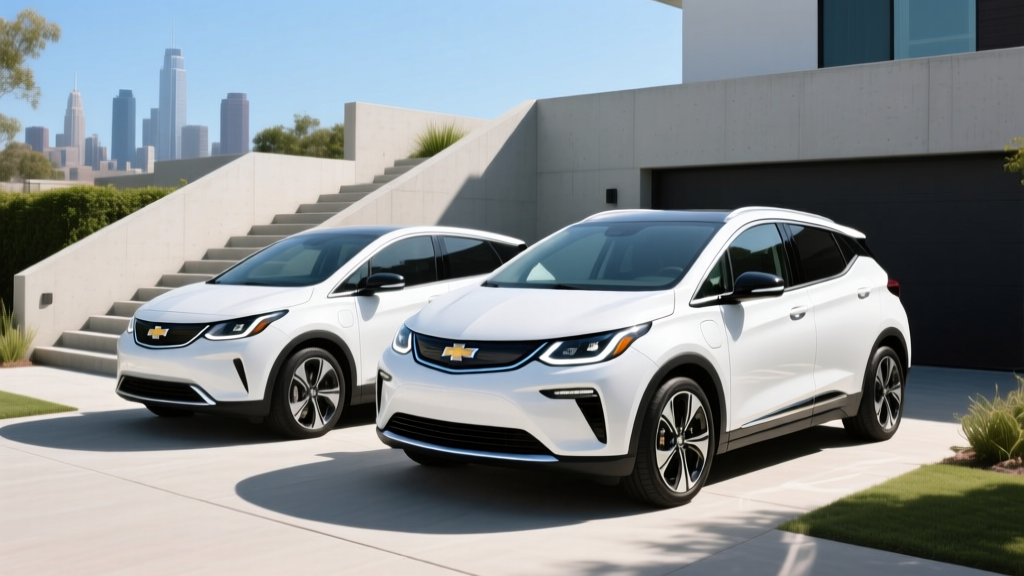
The Chevrolet Bolt EV (and its stretched sibling, the Bolt EUV) remains one of the most accessible new electric vehicles on the market. Whether you're eyeing the classic Summit White Bolt EV or the EUV crossover variant, the value proposition is hard to ignore: a sub-$27,000 starting price, a usable 259-mile EPA range, and a surprisingly spacious cabin. But the Bolt's 2026 formula comes with a well-known Achilles' heel — DC fast charging that peaks at just 55 kW. For city commuters with home charging access, that limitation rarely matters. For road-trippers, it's a dealbreaker worth understanding before you sign.
This review covers the current-generation Bolt EV and Bolt EUV as sold for the 2026 model year, including updated pricing, real-world range expectations, and a detailed breakdown of federal tax credit eligibility under current IRS §30D rules.
Range, Efficiency, and the Real-World Numbers
Bolt EV: EPA 259 miles | Real-world highway (70 mph): ~220–235 mi | Cold weather (below 30°F): ~185–205 mi
Bolt EUV: EPA 247 miles | Real-world highway (70 mph): ~210–225 mi | Cold weather (below 30°F): ~175–195 mi
The Bolt EV's EPA-estimated 259 miles is legitimate for mixed suburban and city driving in mild temperatures. The 65 kWh (usable) lithium-ion NMC (nickel manganese cobalt) battery pack is generous for this price segment. Efficiency is rated at 120 MPGe combined, or roughly 28 kWh per 100 miles — competitive with vehicles costing $15,000 more.
Where the numbers shift is on the highway. The Bolt's relatively upright, hatchback shape creates more aerodynamic drag than sleeker rivals. At sustained 70–75 mph speeds, expect to lose 10–15% from the EPA figure. In freezing temperatures, the Bolt lacks a heat pump (it uses resistive PTC heating), which draws significant energy from the pack — plan for 25–30% range loss in deep winter conditions. Preconditioning the battery while plugged in mitigates some of this, but it won't eliminate it.
For daily commuting under 80 miles round-trip, even in winter, the Bolt's range is more than sufficient with margin to spare. You'll charge at home overnight and rarely think about the number on the dash.
| Spec | Bolt EV | Bolt EUV |
|---|---|---|
| EPA Range | 259 miles | 247 miles |
| Battery (usable) | 65 kWh (NMC) | 65 kWh (NMC) |
| Efficiency (combined) | 120 MPGe / 28 kWh/100mi | 115 MPGe / 29 kWh/100mi |
| Peak DC Fast Charge | 55 kW (CCS1) | 55 kW (CCS1) |
| 10–80% DCFC Time | ~55 minutes | ~55 minutes |
| Level 2 Home Charging | 11.5 kW (~39 mi/hr) | 11.5 kW (~39 mi/hr) |
| 0–60 mph | ~6.5 seconds | ~6.8 seconds |
| Horsepower / Torque | 200 hp / 266 lb-ft | 200 hp / 266 lb-ft |
| Drivetrain | FWD (single motor) | FWD (single motor) |
| Cargo (rear seats up) | 16.3 cu ft | 16.3 cu ft |
| Cargo (seats folded) | 57.2 cu ft | 56.9 cu ft |
| Rear Legroom | 36.0 in | 39.1 in |
| Base MSRP | $26,995 | $28,595 |
| Battery/Powertrain Warranty | 8 yr / 100,000 mi | 8 yr / 100,000 mi |
Charging: Home Strength, Road-Trip Weakness
The Bolt's charging story is a tale of two speeds. At home, it's genuinely excellent. On a 240-volt Level 2 circuit, the onboard charger accepts up to 11.5 kW, adding roughly 39 miles of range per hour. A full charge from 10% to 100% takes about 7 hours — perfect for overnight replenishment. If you install a 48-amp Level 2 wall connector (on a 60-amp breaker), you'll max out the Bolt's AC charging capability.
On DC fast chargers, however, the Bolt is limited by its CCS1 connector and a 55 kW peak charge rate. In a segment where rivals like the Hyundai Ioniq 5 accept 240 kW and hit 10–80% in 18 minutes, the Bolt's ~55-minute 10–80% session feels painfully slow. The charge curve is relatively flat — there's no dramatic peak-and-taper — but 55 kW simply doesn't move 65 kWh of battery quickly.
| Charging Level | Power (kW) | Rate (mi/hr added) | Full Session Estimate |
|---|---|---|---|
| Level 1 (120V, 12A) | ~1.4 kW | ~4 mi/hr | ~40+ hours (0–100%) |
| Level 2 (240V, 48A) | 11.5 kW | ~39 mi/hr | ~7 hours (0–100%) |
| DC Fast (CCS1) | 55 kW peak | ~180 mi/hr (at peak) | ~55 min (10–80%) |
Practical implication: If you take a 400-mile road trip, plan for two 50–60-minute charging stops at Electrify America, EVgo, or compatible CCS stations. That's roughly double the stop time of a Tesla Model Y or Ioniq 5 on the same route. The Bolt is a commuter and regional traveler, not a cross-country cruiser.
Performance, Ride, and Daily Drivability
The single front-mounted permanent-magnet motor produces 200 horsepower and 266 lb-ft of torque, routed to the front wheels. The 0–60 mph time of approximately 6.5 seconds (EV) is brisk for a sub-$30K car — you'll merge onto highways with confidence and dart through city gaps with instant electric torque. There's no AWD option; if you need all-wheel drive, you'll need to look at competitors like the Subaru Solterra or Toyota bZ4X.
Ride quality is compliant and quiet at city speeds, though the Bolt's short wheelbase (EV) shows some chop on rough highway pavement. The EUV's longer wheelbase smooths things out noticeably, and the extra 3.1 inches of rear legroom makes it the better choice for anyone regularly carrying adults in back.
Regenerative braking offers two modes: a mild setting that mimics a gas car's coasting behavior, and a stronger "L" mode that enables near one-pedal driving in stop-and-go traffic. It's not quite true one-pedal (you'll still need the friction brake for a full stop), but it reduces brake wear significantly in urban use.
Interior, Tech, and the Features That Matter
Chevrolet's 10.2-inch touchscreen infotainment system anchors the dash, running Google Built-In on higher trims (which includes native Google Maps, Google Assistant, and Play Store apps). Wireless Apple CarPlay and Android Auto are standard across all trims. The digital instrument cluster is a 10.2-inch configurable display showing range, energy flow, and navigation.
Driver assistance is handled by Chevy Safety Assist, which includes:
- Automatic Emergency Braking with pedestrian detection
- Lane Keep Assist with Lane Departure Warning
- Forward Collision Alert
- Following Distance Indicator
- Intellibeam automatic high beams
Adaptive cruise control is available on the 2LT and Premier trims but is not standard — a notable omission at this price point in 2026. There is no Level 2+ hands-free system like Ford's BlueCruise or GM's own Super Cruise on the Bolt. This is SAE Level 1 driver assistance: the car can steer and brake in limited scenarios, but you are always the driver.
Standout practical features include the available DC Level 2 charging adapter (for NACS/Tesla destination chargers), a spacious 16.3 cu ft cargo area with a low load floor, and the Bolt EUV's available panoramic sunroof. Drawbacks include a lack of frunk (front trunk), mediocre rear visibility in the EV hatchback, and cloth seats on the base 1LT that feel budget-appropriate but not premium.
Pricing, Trims, and Federal Tax Credit Eligibility
The 2026 Bolt EV starts at $26,995 for the 1LT trim (including destination). The 2LT adds adaptive cruise, heated seats and steering wheel, and premium audio for roughly $2,000 more. The Bolt EUV starts at $28,595 (1LT) and tops out around $35,000 fully loaded in Premier trim with the panoramic roof and all available packages.
| Model / Trim | MSRP | Max §30D Credit | Effective Price (if eligible) |
|---|---|---|---|
| Bolt EV 1LT | $26,995 | Up to $7,500 | ~$19,495 |
| Bolt EV 2LT | $29,195 | Up to $7,500 | ~$21,695 |
| Bolt EUV 1LT | $28,595 | Up to $7,500 | ~$21,095 |
| Bolt EUV Premier | $34,995 | Up to $7,500 | ~$27,495 |
Federal tax credit eligibility under IRS §30D requires meeting several criteria simultaneously. The Bolt's MSRP is well under the $55,000 cap for cars. However, the full $7,500 credit depends on battery component and critical mineral sourcing requirements that have tightened significantly since 2023. Buyers must also fall under modified adjusted gross income (MAGI) caps: $150,000 (single), $225,000 (head of household), or $300,000 (joint). The credit can now be transferred to the dealer at point of sale, reducing your purchase price directly rather than waiting for tax filing.
Always verify current eligibility on the IRS clean vehicle credit page and confirm with your dealer before purchase — battery sourcing requirements and eligible vehicle lists are updated periodically.
Who Should Buy the White Chevy Bolt (and Who Shouldn't)
- You commute under 80 miles daily and can charge at home
- Budget is your top priority — you want the lowest-cost new EV available
- You want a compact hatchback for city parking and tight garages
- Road trips are rare (fewer than 4–5 per year over 200 miles)
- You need the extra rear legroom for children or occasional adult passengers
- You prefer a crossover ride height and styling
- You want the available panoramic sunroof and adaptive cruise
- You road-trip frequently and need 20-minute DC fast charging
- You need AWD for snow-belt winters
- You want hands-free highway driving (Super Cruise, BlueCruise)
- You regularly tow (the Bolt is not rated for towing)
The Bolt's ideal owner has a Level 2 home charger (or the ability to install one), a predictable commute, and values upfront affordability over charging speed. At an effective price potentially under $20,000 after the federal credit, the Bolt EV is cheaper than many gas-powered compact cars — with lower per-mile fuel costs on top.
Pros and Cons at a Glance
- Lowest base MSRP of any new EV in its class
- Genuine 259-mile EPA range covers most commutes easily
- Strong 11.5 kW Level 2 home charging for overnight fills
- Spacious cargo area and available EUV rear legroom
- Federal §30D credit can bring effective price under $20K
- Proven battery platform with 8-yr/100,000-mi warranty
- 55 kW DC fast charging is painfully slow for road trips
- No AWD option — FWD only
- No heat pump — significant cold-weather range loss
- Adaptive cruise not standard on base trims
- No frunk; CCS connector (NACS adapter needed for Superchargers)
- Interior materials feel budget-grade on base 1LT
Frequently Asked Questions
What is the real-world range of the white Chevy Bolt?
The EPA rates the Bolt EV at 259 miles and the EUV at 247 miles. In real-world mixed driving at moderate temperatures, owners typically see 235–250 miles. Highway-only driving at 70+ mph drops this to roughly 220–235 miles. In sub-freezing winter conditions, expect 185–210 miles due to resistive cabin heating and cold battery chemistry. The Bolt's 65 kWh pack is large enough that even worst-case winter range covers most commutes.
How fast does the Chevy Bolt charge at home and on the road?
At home on a 240V Level 2 charger (48A circuit), the Bolt accepts 11.5 kW and adds about 39 miles per hour — a full overnight charge from near-empty takes roughly 7 hours. On DC fast chargers, it peaks at 55 kW via CCS1, meaning a 10–80% session takes approximately 55 minutes. This is the Bolt's biggest competitive weakness: rivals like the Ioniq 5 and Tesla Model Y charge 3–4x faster on DC.
Does the 2026 Chevy Bolt qualify for the $7,500 federal EV tax credit?
The Bolt's MSRP is well under the $55,000 vehicle cap, so it passes that threshold. Full credit eligibility depends on meeting current-year battery sourcing requirements (critical minerals and battery components) and your personal income falling below the MAGI caps ($150K single / $300K joint). The credit can be applied at point of sale as a direct price reduction. Check the fueleconomy.gov tax credit page and confirm with your dealer at time of purchase, as sourcing rules are updated periodically.
Is the Chevy Bolt worth buying over competitors like the Nissan Leaf or Tesla Model 3?
The Bolt wins on pure value: lowest MSRP, longest range per dollar, and strong home charging. The Nissan Leaf offers less range (up to 212 mi) and uses the aging CHAdeMO connector. The Tesla Model 3 starts significantly higher (~$38,990) but offers dramatically faster DC charging (250 kW), Supercharger network access, and available AWD. If your budget is strict and you charge at home, the Bolt is the value king. If you road-trip often or need faster charging infrastructure, the Model 3 or Ioniq 5 justify their premium.
What color options are available, and is Summit White a good choice?
Summit White is one of the most popular Bolt colors and a no-cost option. It shows dirt less than black, keeps cabin temperatures marginally cooler in summer sun, and has strong resale appeal. Other 2026 colors typically include Sterling Gray, Mosaic Black, Radiant Red, and Riptide Blue, depending on trim. White is also the easiest to touch up if you get door-edge chips.
How long will the Bolt's battery last?
Chevrolet warranties the battery pack for 8 years or 100,000 miles against defects and excessive capacity loss (typically defined as dropping below 60–70% of original capacity). GM's Ultium-era NMC packs have shown degradation rates of roughly 1–2% per year in real-world fleet data, meaning a 5-year-old Bolt should retain approximately 90–95% of its original range. Out-of-warranty battery replacement, if ever needed, is estimated at $14,000–$16,000 — though most owners will sell or trade the vehicle long before this becomes relevant.