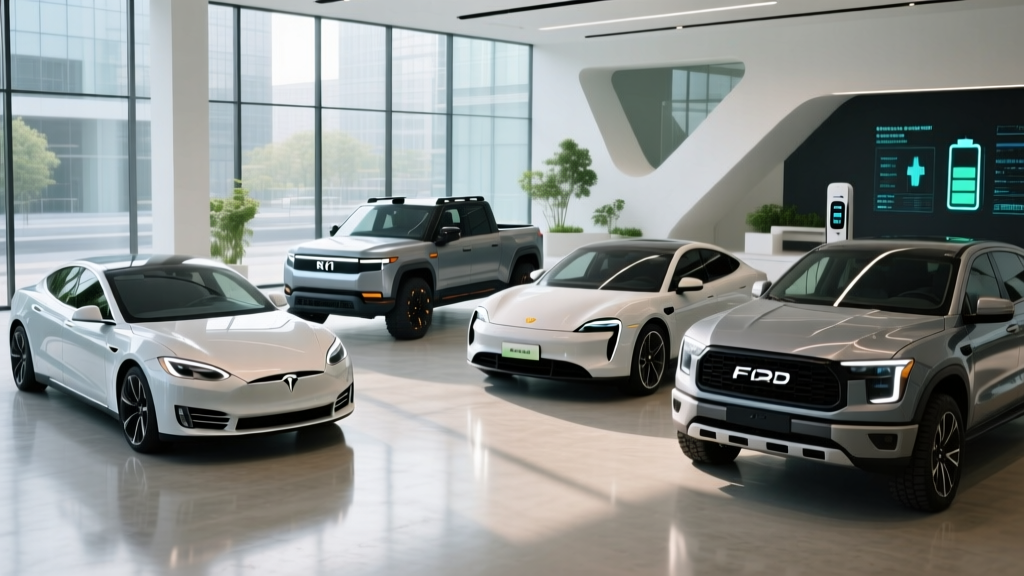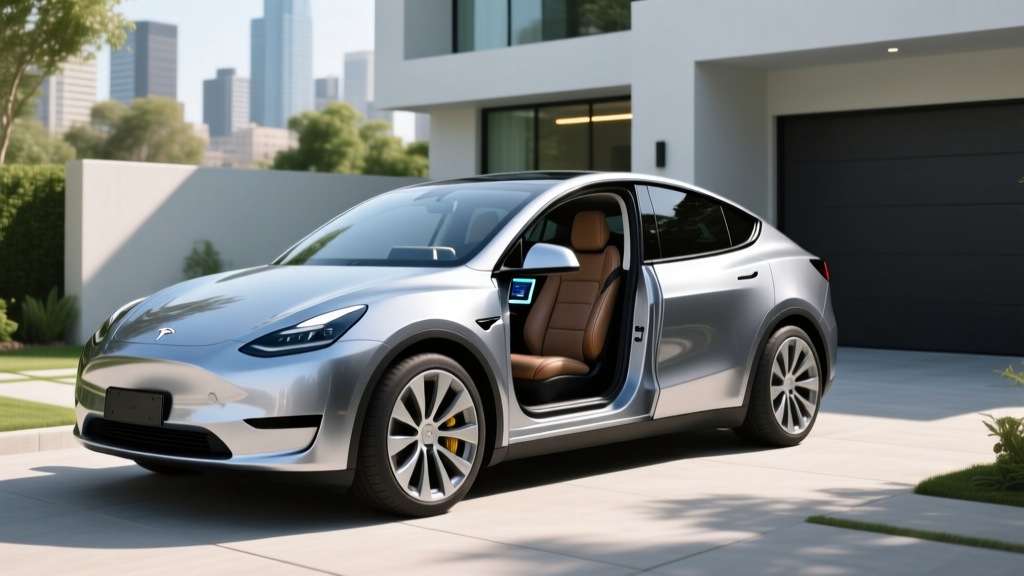
If you've ever typed "which Tesla has 3 rows" into a search bar, the answer is short: the Tesla Model X. As of 2026, it remains the only vehicle in Tesla's lineup offering a third-row seat, available in both a six-passenger (2+2+2) configuration with second-row captain's chairs and a seven-passenger (2+3+2) layout with a second-row bench. The Model Y, despite occasional rumors of a third-row option in certain markets, is sold strictly as a five-passenger crossover in the United States.
But knowing which Tesla has three rows is only the start. The real question is whether the Model X's third row is genuinely usable, whether its 348-mile EPA range holds up on family road trips, and whether its $79,990 starting price makes sense against rivals like the Rivian R1S, Kia EV9, and Mercedes EQS SUV. Below, we break down every spec that matters.
2026 Tesla Model X: Core Specifications at a Glance
| Spec | Value |
|---|---|
| EPA Range | 348 miles |
| Battery (usable) | ~100 kWh, NMC (nickel manganese cobalt) |
| Drivetrain | Dual-motor AWD |
| Horsepower | 670 hp |
| 0–60 mph | 3.8 seconds |
| Peak DC Fast Charge | 250 kW (CCS via adapter / NACS native) |
| 10–80% DC Charge Time | ~32 minutes |
| Level 2 Home Charging | 11.5 kW (~34 mi/hr) |
| Efficiency | 100 MPGe combined / 34 kWh/100 mi |
| Towing Capacity | 5,000 lbs |
| Cargo (behind 3rd row) | ~15 cu ft |
| Cargo (all rows folded) | ~85 cu ft |
| Seating | 5, 6, or 7 passengers |
| Battery Warranty | 8 years / 150,000 miles |
| Base MSRP | $79,990 |
Range: EPA Sticker vs. Real-World Family Driving
The Model X's ~100 kWh NMC battery pack is one of the largest in any consumer EV, and that capacity is what makes its 348-mile rating possible despite the vehicle's 5,185-pound curb weight and less-than-aerodynamic SUV profile. Efficiency lands at roughly 34 kWh per 100 miles — meaning it consumes more energy per mile than a Model Y (28 kWh/100 mi) but far less than a Rivian R1S Dual-Motor (approximately 43 kWh/100 mi).
For a family that primarily drives in-city or suburban routes, the 348-mile figure is achievable because regenerative braking and lower average speeds improve efficiency. Highway road trips, however, are where the physics of pushing a large, heavy SUV at 75 mph becomes apparent. Tesla's trip planner in the navigation system is generally conservative and accurate — trust it when it tells you to stop at a Supercharger.
Charging Speed: Supercharger Network Advantage
| Charging Level | Power | Miles Added per Hour | Notes |
|---|---|---|---|
| Level 1 (120V) | ~1.4 kW | ~4 mi/hr | Emergency/trickle only |
| Level 2 (240V, 48A) | 11.5 kW | ~34 mi/hr | Full charge in ~9 hours |
| DC Fast (V3 Supercharger) | 250 kW peak | ~175 mi in 15 min | 10–80% in ~32 min |
| DC Fast (V4 Supercharger) | 250 kW peak | ~175 mi in 15 min | No architectural gain for current Model X |
The Model X peaks at 250 kW on Tesla's V3 and V4 Superchargers. Like all EVs, it does not sustain peak power throughout the session. The charge curve is strong from 10% to roughly 45% State of Charge (SoC), then tapers progressively. A 10–80% session takes approximately 32 minutes under ideal battery preconditioning — meaning you've navigated to a Supercharger using the car's built-in routing, which warms the battery to optimal charging temperature en route.
If you arrive at a Supercharger without preconditioning (for example, by driving to one you found manually), expect the session to stretch to 40–45 minutes as the battery management system limits initial charge rates to protect the cells. This is standard behavior for all large NMC packs and underscores why you should always route through the car's navigation on road trips.
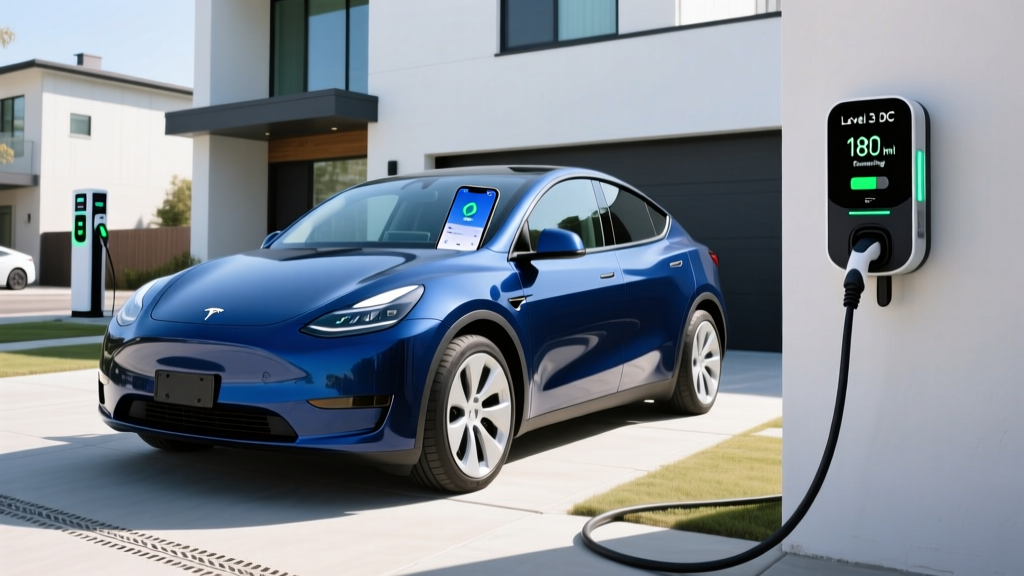
At home on a 240V/48A Level 2 circuit — such as a Tesla Wall Connector or equivalent — the Model X adds about 34 miles of range per hour, fully replenishing overnight in roughly 9 hours. Most owners who charge nightly at home rarely visit a Supercharger except on road trips.
Performance and Drivetrain: 670 HP Family Hauler
The Long Range AWD Model X uses a dual-motor setup — one permanent-magnet motor on the rear axle and one induction motor up front — producing a combined 670 horsepower. That translates to a 0–60 mph time of 3.8 seconds, which is absurdly quick for a 5,000+ pound three-row SUV. For context, that's faster than a Porsche Cayenne S.
The now-discontinued Plaid variant (tri-motor, 1,020 hp, 2.5-second 0–60) is no longer in Tesla's 2026 lineup, so the Long Range is the sole Model X configuration. For family use, the Long Range's 3.8-second sprint is more than adequate — and the dual-motor AWD system provides confident traction in rain and snow without the energy-consumption penalty of a tri-motor setup.
Air suspension is standard, allowing ride-height adjustment for highway efficiency (lower) or rough-road clearance (higher). It also enables a relatively flat load floor when folding seats, though the raised floor height from the battery pack does mean you're lifting cargo higher than in a conventional SUV.
Interior, Third-Row Space, and Cargo
The Model X interior centers on a 17-inch landscape touchscreen that controls virtually every vehicle function. A secondary 8-inch screen for second-row passengers handles climate and entertainment. The yoke-style steering wheel remains standard, though a conventional round wheel is available as a no-cost option — and for most family-hauling buyers, the round wheel is the more practical choice for multi-point turns and parking maneuvers.
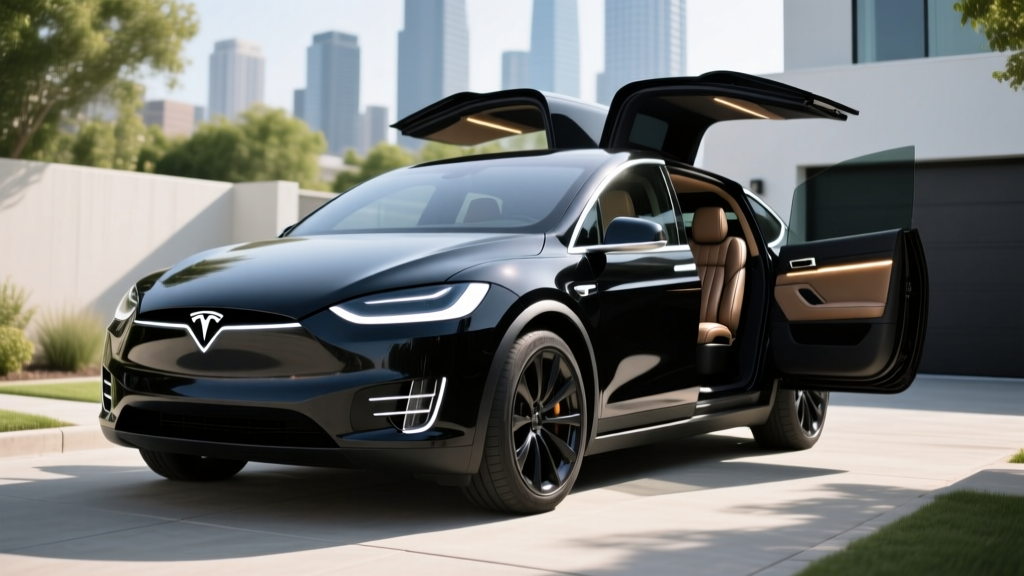
Third-row reality: The Model X third row accommodates two passengers (in the 6-seat config) or three (in the 7-seat bench config). Legroom in the third row is approximately 32.7 inches — adequate for children and shorter adults on trips under an hour, but tight for full-size adults on long journeys. Compare this to the Rivian R1S (third-row legroom ~34.2 inches) or the Kia EV9 (~32.0 inches). Access is via the second-row seats tilting and sliding forward, which is easier than in many competitors thanks to the Model X's falcon-wing rear doors — they open upward, providing a large opening that makes loading children into car seats notably easier than in a conventional SUV.
Cargo space behind the third row is approximately 15 cubic feet — enough for a few grocery bags or a compact stroller, but not enough for a full family's luggage on a road trip without a roof box. Fold the third row and you gain roughly 44 cubic feet; fold both rear rows and you access up to 85 cubic feet. The front trunk (frunk) adds another ~6.5 cubic feet for charging cables or a small bag.
Pricing, Trims, and Federal Tax Credit Eligibility
| Configuration | MSRP | Est. After §30D Credit |
|---|---|---|
| Long Range AWD (5-seat) | $79,990 | $72,490* |
| Long Range AWD (6-seat) | $81,490 | $73,990* |
| Long Range AWD (7-seat) | $81,490 | $73,990* |
*Federal tax credit estimates assume buyer eligibility. See IRS rules below.
The Model X starts at $79,990 for the five-seat Long Range AWD. Adding the six- or seven-seat configuration costs $1,500. Tesla periodically adjusts pricing, so confirm current figures on Tesla's configurator before ordering.
Federal tax credit (§30D) eligibility: The Model X qualifies for up to $7,500 under the federal EV tax credit, but only if you meet all of the following criteria, per current IRS rules:
- MSRP cap: SUVs must have an MSRP at or below $80,000. The base Long Range 5-seat at $79,990 clears this threshold. However, adding options (paint, wheels, FSD) that push MSRP above $80,000 will disqualify the vehicle.
- Buyer income cap: Modified adjusted gross income (MAGI) must not exceed $300,000 (married filing jointly), $225,000 (head of household), or $150,000 (single).
- Battery sourcing: A portion of the credit depends on critical-mineral and battery-component sourcing requirements that shift annually. As of 2026, full $7,500 eligibility requires meeting both thresholds. Verify current-year sourcing compliance on the IRS clean vehicle credit page or via fueleconomy.gov.
- Point-of-sale transfer: You may elect to transfer the credit to the dealer at purchase, reducing your out-of-pocket cost immediately rather than waiting to claim it on your tax return.
The margin here is razor-thin: the 5-seat Model X at $79,990 barely squeezes under the $80,000 SUV cap. Any factory-added option that pushes MSRP to $80,001 or higher eliminates the credit entirely. This makes the base configuration with no-cost paint and standard wheels the only reliably credit-eligible build.
Tech, Safety, and Driver Assistance
The Model X includes Tesla's Basic Autopilot as standard — adaptive cruise control and lane-centering on highways. This is an SAE Level 2 driver-assistance system, meaning you must keep your hands on the wheel and eyes on the road at all times. It is not self-driving.
Full Self-Driving (Supervised) remains an $8,000 add-on (or $99/month subscription). It adds automatic lane changes, traffic-light and stop-sign recognition, and more assertive navigation-assist behavior. However, it still requires active supervision and does not make the vehicle autonomous. For most family buyers, Basic Autopilot is sufficient for highway cruising, and the $8,000 FSD premium is difficult to justify on a practical level.
Safety ratings for the Model X remain strong. The vehicle earned a 5-star overall rating from NHTSA, with top marks in frontal and side crash tests. Standard active-safety features include automatic emergency braking, blind-spot monitoring, and collision warning.
Warranty and Ownership Costs
Tesla covers the Model X battery and drive unit for 8 years or 150,000 miles, whichever comes first, with a minimum 70% capacity retention guarantee during that period. The limited vehicle warranty is 4 years / 50,000 miles. These terms are competitive within the luxury EV segment, though some rivals (Hyundai/Kia at 10yr/100k on battery) offer longer coverage.
Insurance costs for the Model X tend to run higher than average — expect annual premiums in the $2,800–$4,200 range depending on your state, driving record, and coverage levels. This is driven by the vehicle's high repair costs (aluminum body, integrated battery structure) and performance classification. Get quotes before ordering.
Maintenance is minimal compared to a gas SUV: no oil changes, no spark plugs, no transmission fluid. Expect to budget for tire rotations, cabin air filter replacement, wiper fluid, and brake fluid checks. Tesla recommends tire rotation every 6,250 miles. The regenerative braking system means brake pads often last 100,000+ miles.
Model X vs. Three-Row EV Competitors
| Spec | Tesla Model X LR | Rivian R1S Dual-Motor | Kia EV9 GT-Line AWD |
|---|---|---|---|
| EPA Range | 348 mi | ~352 mi | ~270 mi |
| Base MSRP | $79,990 | $75,900 | $73,900 |
| Peak DC Charge | 250 kW | ~220 kW | ~210 kW |
| 10–80% Time | ~32 min | ~36 min | ~24 min |
| 3rd-Row Legroom | 32.7 in | 34.2 in | 32.0 in |
| 0–60 mph | 3.8 sec | 5.0 sec | 5.0 sec |
| Towing | 5,000 lbs | 7,700 lbs | 5,000 lbs |
| Battery Warranty | 8yr/150k mi | 8yr/175k mi | 10yr/100k mi |
The Model X wins on performance (quickest by far), charging infrastructure access (Supercharger network), and range efficiency. The Rivian R1S offers superior third-row space, significantly more towing capacity, and genuine off-road capability. The Kia EV9 undercuts both on price and offers a 10-year battery warranty, but sacrifices 70+ miles of range.
Choose the Model X if: You want the fastest three-row EV, rely on the Supercharger network for road trips, and prioritize range efficiency over interior luxury or off-road use.
Choose the Rivian R1S if: You need a genuinely usable third row for adults, tow more than 5,000 lbs, or want off-road capability.
Choose the Kia EV9 if: Budget is a priority, your daily drives are under 200 miles, and you value a longer battery warranty.
The Biggest Pros and Cons
Pros
- Only Tesla with a third row — 5, 6, or 7-seat flexibility
- 348-mile EPA range leads the luxury 3-row EV segment
- Access to Tesla Supercharger network (17,000+ stalls in North America)
- Falcon-wing doors make car-seat loading remarkably easy
- 3.8-second 0–60 is the quickest in its class
- Over-the-air updates keep the vehicle current
Cons
- Third row is tight for adults on long trips
- Only ~15 cu ft cargo behind the third row
- Base MSRP barely clears the $80k SUV tax-credit cap — any options risk disqualification
- High insurance premiums relative to competitors
- Interior materials don't match the price point (vs. BMW, Mercedes)
- Yoke steering is polarizing and impractical for some drivers
Who the 2026 Model X Suits Best
The Model X is ideal for tech-forward families who road-trip frequently and value the reliability and density of the Supercharger network above all else. If your household regularly uses the third row for children (not adults), takes multi-state road trips, and wants EV performance that embarrasses sports cars at stoplights, no other three-row EV matches the Model X's combination of range, speed, and charging infrastructure.
It is not ideal for buyers who need a spacious adult-friendly third row (look at the Rivian R1S), who tow heavy loads, who want a luxury-grade interior at this price point (consider the BMW iX or Mercedes EQS SUV, though neither offers three rows), or who need to stay comfortably under the $80,000 tax-credit MSRP cap while adding options.
Frequently Asked Questions
Which Tesla has 3 rows of seats?
The Tesla Model X is the only Tesla with a third row. It is available in five-seat (two rows), six-seat (2+2+2 with captain's chairs), and seven-seat (2+3+2 with second-row bench) configurations. No other current Tesla — including the Model Y, Model S, Model 3, or Cybertruck — offers third-row seating.
What is the real-world range of the 2026 Model X?
The EPA rates the Model X Long Range at 348 miles. In real-world highway driving at 70–75 mph with passengers and cargo, expect 275–300 miles in mild weather and 240–265 miles in cold conditions below 30°F. City and suburban driving with regenerative braking can approach or match the EPA figure.
How fast does the Model X charge at home and on the road?
On a DC fast charger (Tesla V3/V4 Supercharger), the Model X peaks at 250 kW and charges from 10–80% in approximately 32 minutes with battery preconditioning. At home on a 240V Level 2 charger (11.5 kW), it adds roughly 34 miles of range per hour, fully charging overnight in about 9 hours.
Does the 2026 Tesla Model X qualify for the $7,500 federal EV tax credit?
It can, but the margin is tight. The 5-seat Long Range at $79,990 MSRP is just under the $80,000 SUV cap. Adding any factory options that push MSRP above $80,000 will disqualify it. You must also meet IRS income caps ($300k joint / $150k single) and the vehicle must satisfy current-year battery-sourcing requirements. Verify eligibility at irs.gov before purchasing.
Is the Model X worth buying vs. the Rivian R1S or Kia EV9?
The Model X is worth buying if range, performance, and Supercharger access are your top priorities. The Rivian R1S is better for families needing a roomier third row and towing capability. The Kia EV9 is the budget pick with a superior battery warranty but shorter range. Test all three with your family in the third row before deciding.
Can adults sit comfortably in the Model X third row?
For short trips (under 30 minutes), yes — adults up to about 5'8" can manage. For longer journeys, the 32.7 inches of legroom and relatively upright seatback make it uncomfortable for full-size adults. Children and teenagers are the ideal third-row occupants in the Model X.