Where Was Rivian Founded? The Origin Story Behind America's Electric Adventure Brand
Rivian was founded in 2009 in Plymouth, Michigan, by MIT-educated engineer RJ Scaringe. Originally named Mainstream Motors, the company pivoted from a planned sports car to an all-electric adventure platform, eventually rebranding as Rivian Automotive. While the company later moved its headquarters to Irvine, California, and built its manufacturing plant in Normal, Illinois (in a former Mitsubishi factory), those early Michigan roots shaped the engineering-first, outdoors-oriented DNA that defines every Rivian vehicle today.
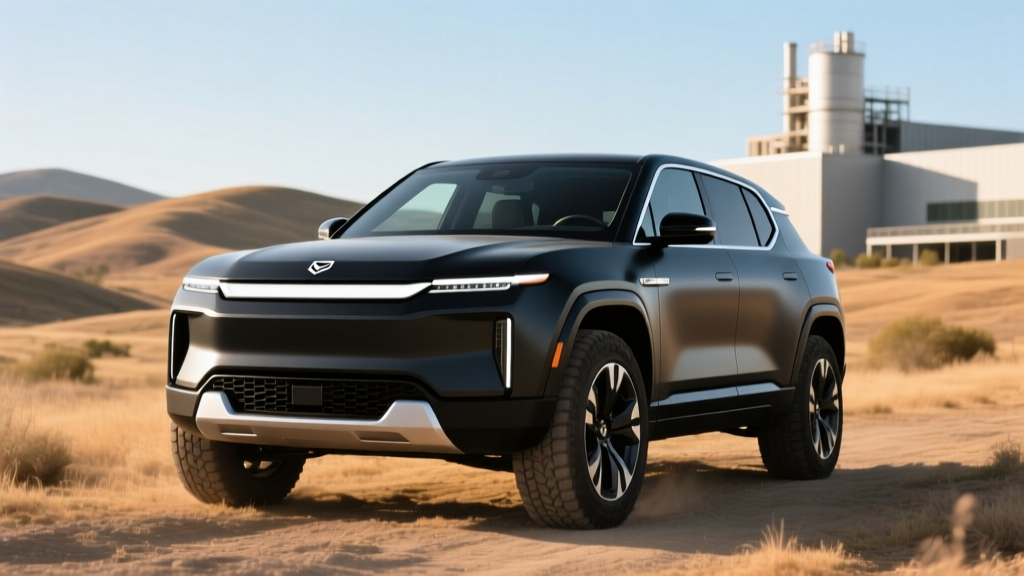
Understanding where Rivian came from matters because it explains why the company prioritizes off-road capability, massive battery packs, and adventure-ready features like the built-in camp kitchen on the R1T — choices that set it apart from every other EV automaker. In this profile, we examine Rivian's flagship SUV, the R1S, with full 2026 model-year specifications.
- Founded: 2009, Plymouth, Michigan
- Founder: RJ Scaringe (MIT PhD in mechanical engineering)
- Original name: Mainstream Motors
- Current HQ: Irvine, California
- Manufacturing: Normal, Illinois (since 2021)
- IPO: November 2021 (NASDAQ: RIVN)
2026 Rivian R1S: EPA Range, Battery Specs, and Real-World Expectations
The 2026 Rivian R1S offers three battery configurations across its Dual-Motor and Tri-Motor layouts. Rivian uses NMC (nickel manganese cobalt) chemistry across all packs, which delivers high energy density but trades some cycle-life longevity compared to LFP cells. The Standard, Large, and Max packs serve different range and budget needs.
| Config | Usable Battery (kWh) | Chemistry | EPA Range (mi) | Drivetrain |
|---|---|---|---|---|
| Dual-Motor Standard | ~92 kWh | NMC | 270 | AWD |
| Dual-Motor Large | ~128 kWh | NMC | 352 | AWD |
| Tri-Motor Max | ~149 kWh | NMC | 410 | AWD (3-motor) |
Charging Speeds: DC Fast Charging and Home Level 2
Rivian equips the R1S with NACS (North American Charging Standard) ports for 2026, granting direct access to the Tesla Supercharger network without an adapter. This is a significant advantage for road-trippers compared to CCS-only EVs still waiting for network expansions.
| Charging Level | Power / Rate | 10-80% Time | Notes |
|---|---|---|---|
| Level 1 (120V) | ~1.4 kW | N/A (days) | Emergency/trickle only |
| Level 2 (240V home) | 11.5 kW (48A) | ~10-13 hours (full) | ~25-30 mi/hr of range added |
| DC Fast Charge (NACS) | Peak ~220 kW | ~20-22 minutes | Tapers significantly above 80% |
The ~220 kW peak DC rate is competitive for a large, heavy SUV with a massive battery pack. However, the charge curve is not flat — Rivian sustains peak rates only through roughly 30-40% SoC, then tapers progressively. A 10-80% session on a 350 kW charger will take about 20-22 minutes for the Large pack. The Max pack, with its larger 149 kWh battery, takes proportionally longer despite the same peak rate.
For home charging, the R1S's onboard 11.5 kW charger is among the best in the segment. A full overnight charge from 20% to 100% on a 48-amp Level 2 wall connector adds roughly 250-290 miles in 10-11 hours — more than enough for daily commuters who plug in nightly.
Performance, Efficiency, and Drivetrain
The R1S Dual-Motor delivers 533 horsepower and 610 lb-ft of torque, achieving a 0-60 mph time of approximately 4.5 seconds. The Tri-Motor variant pushes output to 850+ horsepower with a 0-60 time under 3.0 seconds — supercar acceleration in a 7,000-pound SUV.
| Spec | Dual-Motor Large | Tri-Motor Max |
|---|---|---|
| Horsepower | 533 hp | 850+ hp |
| 0-60 mph | ~4.5 sec | ~2.9 sec |
| MPGe (combined) | ~73 MPGe | ~70 MPGe |
| Efficiency (kWh/100 mi) | ~46 kWh/100mi | ~48 kWh/100mi |
| Towing Capacity | 7,700 lbs | 7,700 lbs |
| Ground Clearance | Up to 14.9 in | Up to 14.9 in |
Efficiency is the tradeoff for this capability. At 46-48 kWh per 100 miles, the R1S consumes more electricity per mile than a Tesla Model X or Hyundai Ioniq 5. That translates to higher charging costs on road trips — roughly $0.14-$0.16 per mile at average public DC rates, compared to $0.09-$0.11 for a more aerodynamic crossover. If you tow, expect range to drop by 40-50%.
Pricing, Trim Levels, and Federal Tax Credit Eligibility
The 2026 R1S lineup starts at $79,900 for the Dual-Motor Standard pack and climbs to over $105,000 for a fully loaded Tri-Motor Max. Rivian simplified its trim structure for 2026 into Adventure, Ascend, and Ascend Max tiers.
| Trim / Config | Base MSRP | §30D Credit Eligible? |
|---|---|---|
| Dual-Motor Standard (Adventure) | $79,900 | Yes — under $80K SUV cap |
| Dual-Motor Large (Adventure) | $87,900 | No — exceeds $80K SUV cap |
| Tri-Motor Max (Ascend Max) | $105,900 | No — exceeds $80K SUV cap |
Tax credit reality check: Under IRS §30D rules, SUVs must have an MSRP at or below $80,000 to qualify. Only the base Dual-Motor Standard Adventure trim clears this bar. Additionally, the buyer must meet income caps ($300K joint / $150K single), and the vehicle must satisfy critical-mineral and battery-component sourcing requirements that shift annually. Rivian's U.S.-built status helps on final assembly, but battery-sourcing compliance is configuration-dependent. Always verify eligibility with a tax professional and the fueleconomy.gov credit lookup tool before purchasing. The credit can now be transferred at point-of-sale as an instant discount.
Interior Space, Cargo, and Standout Technology
The R1S seats up to seven across three rows, though the third row is best suited for children or occasional use — legroom measures approximately 30.4 inches in the third row versus 38.7 inches in the second. Cargo volume behind the third row is about 10.4 cubic feet, expanding to 46.7 cu ft with the third row folded and 92.1 cu ft with both rear rows down. A front trunk (frunk) adds 11.0 cu ft of secure, weatherproof storage — ideal for muddy gear or charging cables.
Standout tech features:
- 15.6-inch center touchscreen running Rivian's proprietary OS with over-the-air updates
- Driver+ (Level 2 ADAS) with hands-on highway assist and automatic lane changes on supported roads
- Quad-motor tank turns (Tri-Motor/Quad configurations) for tight off-road maneuvering
- Built-in air compressor with configurable PSI presets for tire inflation
- Powered tonneau-style cargo cover and gear tunnel pass-through (R1T; cargo organizer in R1S)
- Vehicle-to-load (V2L) capability — power campsite appliances or tools from the battery pack
- Full glass roof with electrochromic dimming
Notable drawbacks:
- No Apple CarPlay or Android Auto — Rivian insists on its native infotainment, which frustrates some buyers
- Third-row space is tight for adults on long trips
- Efficiency is below segment average due to boxy aerodynamics and heavy weight
- Service center network is still expanding — rural owners may face long tow distances for warranty work
- Insurance premiums run 20-35% higher than comparable ICE SUVs due to repair costs and parts availability
Warranty Coverage and Battery Longevity
Rivian provides the following warranty structure for the 2026 R1S:
- Battery & Drive Units: 8 years / 175,000 miles (whichever comes first), covering defects and capacity loss below 70% State of Health
- Limited Vehicle Warranty: 5 years / 60,000 miles bumper-to-bumper
- Corrosion Perforation: 5 years / unlimited miles
- Roadside Assistance: 5 years / 60,000 miles
The 175,000-mile battery warranty is generous and above the industry-standard 100,000 miles. NMC chemistry typically degrades 8-12% over the first 100,000 miles based on early R1S owner data, meaning most packs should retain well above the 70% threshold through the warranty period. Rivian's thermal management system is active and liquid-cooled, which helps mitigate degradation in hot climates.
Who Should Buy the Rivian R1S?
- Choose the R1S if: You need genuine off-road capability (14.9" ground clearance, wading depth), tow regularly (7,700 lbs), want 400+ mile range with the Max pack, and value a distinctive, adventure-oriented design that stands apart from Tesla and legacy brands.
- Look elsewhere if: You prioritize maximum efficiency (consider Tesla Model X or Hyundai Ioniq 9), need a comfortable adult-sized third row (Kia EV9 is better), want Apple CarPlay, or need a sub-$60K price point.
- For daily commuters: The Dual-Motor Standard at 270 miles EPA is more than sufficient, and home Level 2 charging covers daily needs easily.
- For road-trippers: The Dual-Motor Large or Tri-Motor Max pays dividends on long highway stretches, and NACS compatibility means Supercharger access nationwide.
Pros, Cons, and Competitive Position
- Class-leading off-road capability and ground clearance
- 410-mile Max pack range (best in 3-row EV SUV segment)
- NACS native — full Supercharger network access
- 8yr/175K-mile battery warranty
- Unique adventure features (compressor, V2L, tank turns)
- Strong build quality and material choices
- High starting price; most trims ineligible for §30D credit
- Below-average efficiency (46+ kWh/100mi)
- No Apple CarPlay or Android Auto
- Tight third row for adults
- Service network still growing
- High insurance costs
Frequently Asked Questions
Where was Rivian founded and where are its vehicles built?
Rivian was founded in Plymouth, Michigan, in 2009. All Rivian vehicles — R1S, R1T, and commercial delivery vans — are manufactured at the company's plant in Normal, Illinois. The headquarters is currently in Irvine, California.
What is the real-world range of the 2026 Rivian R1S?
The EPA rates the R1S at 270 to 410 miles depending on configuration. Real-world highway driving typically yields 10-15% less than EPA, and cold weather can reduce range an additional 15-25%. Plan conservatively: ~300 highway miles for the Large pack, ~340 for the Max pack in winter conditions.
Does the Rivian R1S qualify for the $7,500 federal EV tax credit?
Only the base Dual-Motor Standard trim (MSRP $79,900) qualifies, as it falls under the $80,000 SUV MSRP cap. Buyers must also meet income limits ($300K joint / $150K single) and the vehicle must satisfy battery-sourcing requirements. The credit can be applied at point-of-sale. Consult a tax professional and check irs.gov for current-year rules.
How fast does the R1S charge at home and on DC fast chargers?
At home on a 48-amp Level 2 charger (11.5 kW), the R1S adds roughly 25-30 miles of range per hour, fully charging overnight in 10-13 hours. On DC fast chargers, it peaks at ~220 kW and charges 10-80% in approximately 20-22 minutes, though the charge curve tapers significantly above 80%.
Is the Rivian R1S worth buying vs. the Tesla Model X or Kia EV9?
The R1S wins on off-road capability, adventure features, and range (with the Max pack). The Tesla Model X is more efficient and has a larger Supercharger ecosystem, while the Kia EV9 offers a more usable third row and a lower starting price. If your priority is outdoor adventure and towing, the R1S is the strongest choice. If you need family practicality at a lower price, the EV9 is compelling.