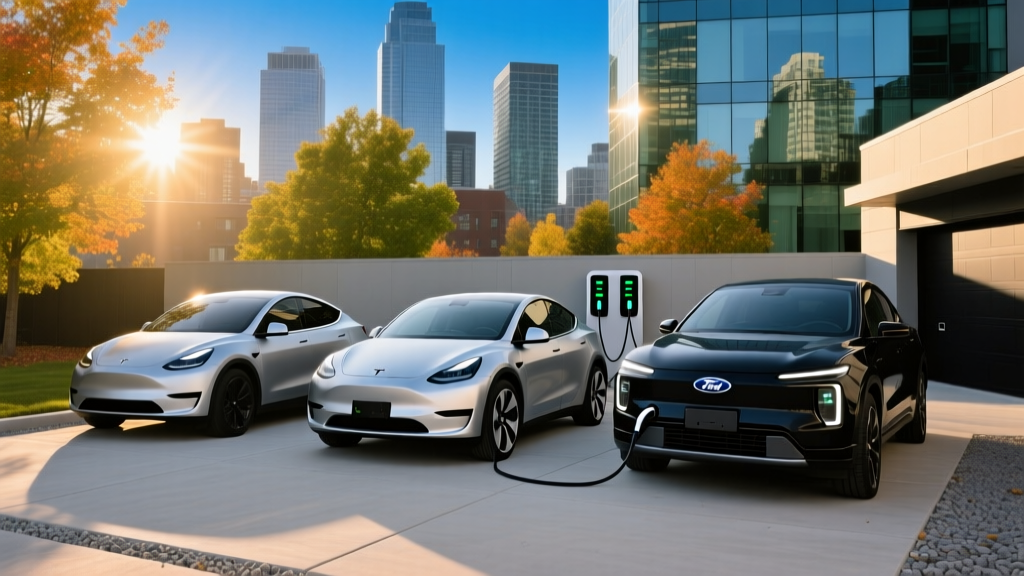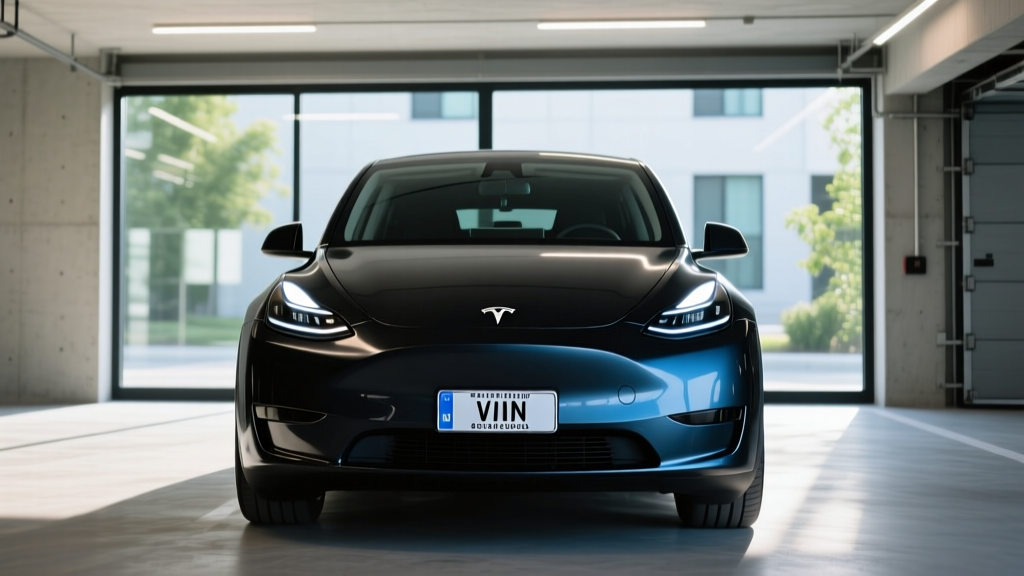
If you've ordered or are researching the 2026 Tesla Model Y, you've likely encountered your vehicle's VIN — or are waiting anxiously for one. A 2026 Tesla Model Y VIN number is more than a regulatory requirement: it encodes the vehicle's factory origin, powertrain type, restraint system, and production sequence. For EV buyers, decoding that 17-character string can confirm whether your Model Y is a Long Range AWD, a Rear-Wheel Drive variant, or a Performance build — and even which Gigafactory assembled it.
But the VIN only tells part of the story. Below, we break down what those characters mean, then deliver a comprehensive, spec-driven review of the 2026 Model Y lineup so you know exactly what you're getting before the first charge.
Decoding the 2026 Tesla Model Y VIN Number
Every street-legal vehicle sold in the United States carries a 17-character Vehicle Identification Number assigned per NHTSA standards. Tesla's VIN structure for the 2026 Model Y follows this pattern:
| Position(s) | Meaning | Typical Values for 2026 Model Y |
|---|---|---|
| 1–3 (WMI) | World Manufacturer Identifier | 7SA (Tesla, US-built — Austin or Fremont) |
| 4 | Vehicle type / body class | Y = Multi-purpose vehicle (SUV/CUV) |
| 5 | Restraint system / trim | Varies by seatbelt and airbag config |
| 6–7 | Model designation | Identifies Model Y platform generation |
| 8 | Powertrain / motor count | Single-motor RWD or Dual-motor AWD |
| 9 | Check digit | Calculated per DOT formula (0–9 or X) |
| 10 | Model year | T = 2026 |
| 11 | Assembly plant | A = Austin, TX; F = Fremont, CA |
| 12–17 | Production sequence | Unique serial number |
Why it matters: Position 11 tells you whether your Model Y rolled off the Austin or Fremont line — relevant because Austin-built vehicles sometimes ship with different interior trim sourcing or structural battery pack configurations. Position 8 distinguishes the single-motor RWD from dual-motor AWD trims, which directly affects your 0–60 time and EPA range.
2026 Tesla Model Y: Specs at a Glance
| Spec | Long Range RWD | Long Range AWD | Performance AWD |
|---|---|---|---|
| EPA Range | 320 mi | 308 mi | 285 mi |
| Battery (usable) | ~75 kWh (NMC) | ~75 kWh (NMC) | ~75 kWh (NMC) |
| Peak DC Fast Charge | 250 kW | 250 kW | 250 kW |
| 10–80% DCFC Time | ~25 min | ~25 min | ~25 min |
| Level 2 (240V/48A) | 11.5 kW (~44 mi/hr) | 11.5 kW (~44 mi/hr) | 11.5 kW (~44 mi/hr) |
| 0–60 mph | 6.5 sec | 4.8 sec | 3.5 sec |
| Horsepower | 346 hp | 384 hp | 456 hp |
| Drivetrain | RWD (single motor) | AWD (dual motor) | AWD (dual motor) |
| MPGe (combined) | 123 MPGe | 117 MPGe | 111 MPGe |
| Efficiency | 27 kWh/100 mi | 29 kWh/100 mi | 30 kWh/100 mi |
| Base MSRP | $44,990 | $47,990 | $52,490 |
Real-World Range: What the EPA Number Doesn't Tell You
EPA Sticker: 320 miles (Long Range RWD) / 308 miles (Long Range AWD) / 285 miles (Performance AWD)
Real-World Expectation:
- City / mixed driving (65°F): Expect to match or slightly exceed EPA — regenerative braking recovers energy in stop-and-go traffic. Owners report 310–330 mi in mild conditions.
- Highway (75 mph sustained): Plan for ~250–270 mi (Long Range RWD) due to aerodynamic drag dominating at speed.
- Cold weather (below 32°F): Range drops 15–30% depending on cabin heat usage and battery preconditioning. A 320-mi sticker may yield 220–260 mi in sub-freezing road trips.
The 2026 Model Y continues to use an NMC (nickel manganese cobalt) lithium-ion pack — chosen for its high energy density, which maximizes range in Tesla's crossover form factor. The structural battery pack introduced at Giga Austin reduces weight and increases torsional rigidity, but it does not meaningfully increase usable kWh over the previous generation.
Pro tip: Use Tesla's built-in trip planner and preconditioning feature. When you navigate to a Supercharger, the car warms the battery en route, which can shave 5–10 minutes off your 10–80% charge time in cold weather.
Charging Speed: DC Fast Charge, Level 2, and the Curve
| Charging Level | Max Power (kW) | Miles Added per Hour | Notes |
|---|---|---|---|
| Level 1 (120V / 12A) | ~1.4 kW | ~3–4 mi/hr | Emergency/trickle only; not viable for daily use |
| Level 2 (240V / 48A) | 11.5 kW | ~44 mi/hr | Full charge overnight in ~7 hours (0–100%) |
| DC Fast (Supercharger V3/V4) | 250 kW (peak) | Up to ~1,000 mi/hr at peak | 10–80% in ~25 min; tapers significantly above 80% |
The charge curve reality: The 250 kW peak is only sustained between roughly 10–30% State of Charge (SoC). From 30–60%, power drops to ~150–175 kW. From 60–80%, it falls further to ~80–100 kW. Above 80%, charging slows dramatically to protect the battery — expect 80–100% to take an additional 20–30 minutes. This is why Tesla (and most EV makers) quote 10–80% times rather than 0–100%.
The 2026 Model Y ships with the NACS (North American Charging Standard) connector natively. This gives you direct access to the Tesla Supercharger network — over 25,000 stalls in North America — without an adapter. Non-Tesla CCS chargers require a NACS-to-CCS adapter for DC fast charging.
Performance and Drivetrain
The Performance AWD variant hits 60 mph in 3.5 seconds with 456 hp from its dual-motor setup — genuinely sports-sedan quick in a 4,400-lb crossover. The Long Range AWD (4.8 sec, 384 hp) offers the best balance of acceleration and range for most buyers. The Long Range RWD (6.5 sec, 346 hp) is the efficiency play, trading some grip and acceleration for the lineup's longest range.
All trims feature Tesla's heat pump as standard, which significantly reduces cabin-heating energy draw in winter compared to resistive heaters — a meaningful efficiency advantage for cold-climate owners.
Pricing, Trims, and the Federal Tax Credit
| Trim | Base MSRP | Est. §30D Credit | Effective Price (if eligible) |
|---|---|---|---|
| Long Range RWD | $44,990 | Up to $7,500 | ~$37,490 |
| Long Range AWD | $47,990 | Up to $7,500 | ~$40,490 |
| Performance AWD | $52,490 | Up to $7,500 | ~$44,990 |
Federal tax credit caveats (IRS §30D, 2026 rules): All three trims fall under the $80,000 MSRP cap for SUVs. However, the full $7,500 credit requires meeting both critical-mineral sourcing and battery-component manufacturing requirements, which shift annually. Buyer income caps also apply: $150,000 single / $225,000 head of household / $300,000 joint (modified AGI). As of 2026, Tesla allows the credit to be transferred at the point of sale, reducing your purchase price directly rather than waiting for a tax refund.
Always verify current eligibility on IRS.gov before finalizing your order — battery sourcing requirements have tightened each year since 2023.
Cargo, Passenger Space, and Daily Practicality
The 2026 Model Y offers strong utility for its footprint:
- Cargo (rear seats up): 30.2 cu ft
- Cargo (rear seats folded): 72.1 cu ft
- Front trunk (frunk): 4.1 cu ft
- Rear legroom: 41.6 inches
- Front headroom: 41.0 inches
The flat floor and wide hatch opening make the Model Y genuinely practical for bulky cargo — strollers, camping gear, or a week's groceries for a family of four. The frunk adds useful space for charging cables or a small bag. However, the sloping roofline does cut into rear headroom for taller passengers (6'2"+), and the rear center seat is narrow — best for children on shorter trips.
Warranty, Tech, and Driver Assistance
Battery and drivetrain warranty: 8 years / 120,000 miles (whichever comes first) with a minimum 70% capacity retention threshold. This is competitive with Hyundai's 10-year/100,000-mile pack warranty in years but leads in mileage allowance.
Basic vehicle warranty: 4 years / 50,000 miles.
Tech highlights:
- 15.4-inch center touchscreen with Tesla's latest UI, streaming, and gaming
- Over-the-air software updates (frequent, meaningful feature additions)
- Autopilot standard (adaptive cruise + lane centering) — SAE Level 2, requires active driver supervision
- Full Self-Driving (Supervised) available as a $8,000 add-on or $99/mo subscription — still Level 2, not autonomous
- Sentry Mode dashcam surveillance, Dog Mode climate control, Camp Mode
SAE Automation Level Reminder: Tesla Autopilot and FSD (Supervised) are Level 2 driver-assistance systems. The driver must keep hands on or near the wheel and eyes on the road at all times. These systems do not make the Model Y self-driving. Only Level 4 services (like Waymo robotaxis operating in geofenced areas) function without a human driver.
Notable drawbacks: The minimalist interior still lacks physical buttons for climate, wipers, and turn signals (all screen- or stalk-dependent by trim). Panel gap consistency has improved but still varies by assembly plant. Insurance premiums remain above segment average — budget $1,800–$2,800/year depending on your state and driving record.
Who the 2026 Tesla Model Y Suits Best
Choose the Model Y if:
- You want access to the most reliable DC fast-charging network (Supercharger) without adapters
- You value over-the-air updates that meaningfully improve the car post-purchase
- Your daily commute is under 100 miles round-trip and you can charge at home
- You need crossover cargo space with EV efficiency
Look elsewhere if:
- You want a traditional dashboard with physical controls (consider Hyundai Ioniq 5 or Kia EV6)
- You need a third row for 7 passengers (Kia EV9 or upcoming Tesla Model Y 7-seat option)
- You want maximum DC fast-charge speed — the Hyundai Ioniq 5 peaks at 350 kW on 800V architecture
Pros and Cons
Pros
- Best-in-class Supercharger network access (NACS native)
- Strong real-world efficiency (27–30 kWh/100 mi)
- Practical hatchback cargo with frunk
- Continuous OTA improvements
- Competitive pricing after §30D credit
Cons
- 250 kW peak charge rate trails 800V competitors (350 kW)
- Minimalist controls frustrate some drivers
- Rear headroom limited for tall passengers
- Insurance costs above segment average
- FSD (Supervised) costs $8,000 and is still Level 2
Frequently Asked Questions
What is the real-world range of the 2026 Tesla Model Y?
The EPA rates the Long Range RWD at 320 miles, the Long Range AWD at 308 miles, and the Performance at 285 miles. In real-world mixed driving at moderate temperatures, expect to match or slightly exceed the EPA number. On sustained highway trips at 75 mph, plan for 250–270 miles (Long Range RWD). In sub-freezing weather, range drops 15–30%, so a 320-mile sticker may yield 220–260 miles.
How fast does the 2026 Model Y charge at home and on the road?
On a 240V / 48A Level 2 home charger, the Model Y charges at 11.5 kW — adding roughly 44 miles of range per hour, or a full 0–100% charge in about 7 hours. On a Tesla V3/V4 Supercharger, it peaks at 250 kW and charges from 10–80% in approximately 25 minutes, though the rate tapers significantly above 80% SoC.
How much does the 2026 Model Y cost after the federal tax credit?
If you qualify for the full $7,500 §30D credit, the Long Range RWD drops to approximately $37,490, the Long Range AWD to ~$40,490, and the Performance to ~$44,990. Eligibility depends on your modified adjusted gross income (caps at $150K single / $300K joint), and the vehicle must meet battery sourcing requirements that tighten each year. Check IRS.gov for current rules.
Does the 2026 Tesla Model Y qualify for the $7,500 federal EV tax credit?
All 2026 Model Y trims are under the $80,000 SUV MSRP cap. However, the full $7,500 credit depends on critical-mineral and battery-component sourcing requirements, which change annually. As of 2026, point-of-sale transfer is available, letting you apply the credit as a down-payment reduction at delivery. Confirm eligibility at purchase time via the IRS and your Tesla advisor.
Is the 2026 Model Y worth buying vs. the Hyundai Ioniq 5 or Ford Mustang Mach-E?
The Model Y wins on Supercharger network access, efficiency, and OTA software. The Ioniq 5 counters with 800V architecture (350 kW peak charging), a more conventional interior, and a longer battery warranty (10 years). The Mach-E offers a more traditional driving feel and competitive pricing. If charging-network reliability is your top priority, the Model Y's NACS-native Supercharger advantage is hard to beat.
What does the VIN number tell me about my 2026 Tesla Model Y?
Your VIN reveals the assembly plant (Austin or Fremont), model year (position 10 = "T" for 2026), drivetrain type (RWD vs. AWD), body style, and a unique production sequence. It's essential for registration, insurance, warranty claims, and confirming your exact build configuration before delivery.
What is the battery warranty on the 2026 Model Y?
Tesla covers the battery and drive unit for 8 years or 120,000 miles (whichever comes first), guaranteeing at least 70% capacity retention. If the battery degrades below that threshold within the warranty period, Tesla will repair or replace it at no cost.