Tesla's Global Manufacturing Footprint in 2026
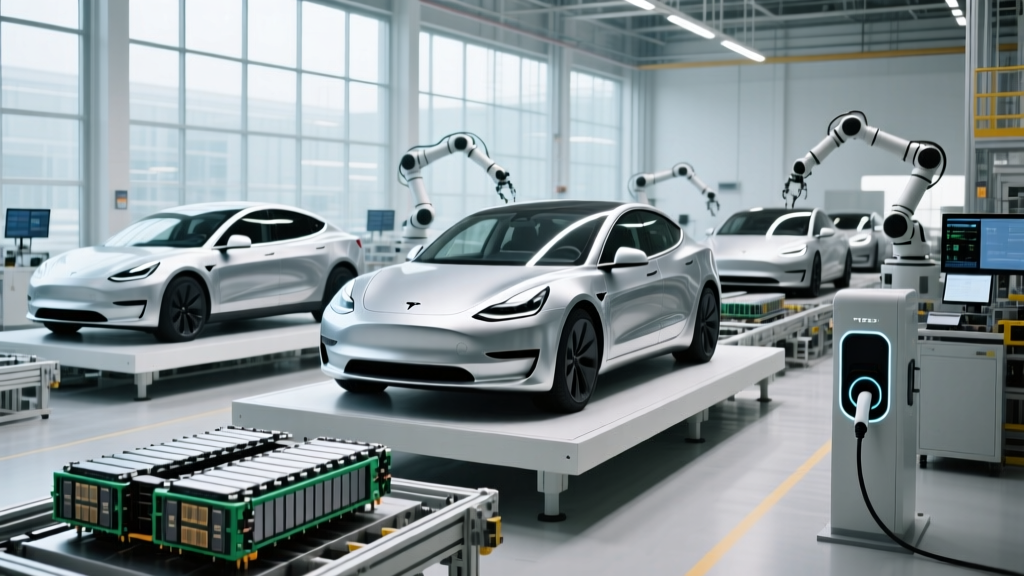
If you've ever looked at a Tesla window sticker and wondered where are Tesla cars assembled, the answer depends on which model you buy and which market you live in. Tesla operates four major vehicle assembly plants worldwide, and each factory handles specific models for its surrounding region. Understanding this footprint matters for US buyers because it directly affects federal tax credit eligibility under IRS §30D, delivery timelines, and even which battery chemistry ends up in your driveway.
Here's the current state of Tesla's vehicle assembly operations as of the 2026 model year:
| Factory | Location | Models Assembled | Primary Market |
|---|---|---|---|
| Fremont Factory | Fremont, California | Model S, Model X, Model 3, Model Y | North America, Asia-Pacific |
| Giga Texas | Austin, Texas | Model Y, Cybertruck | North America |
| Giga Shanghai | Shanghai, China | Model 3, Model Y | China, Europe, Asia-Pacific |
| Giga Berlin | Grünheide, Germany | Model Y | Europe |
For US buyers, the vehicles you'll take delivery of almost certainly rolled off the line at Fremont or Giga Texas. Tesla's Shanghai and Berlin plants primarily serve their regional markets, though Shanghai-built Model 3 sedans were exported to the US in limited batches in prior years. That practice has largely ended as Giga Texas ramped production.
Why Assembly Location Matters for Tax Credits
Under the IRS §30D Clean Vehicle Credit, a qualifying EV must undergo final assembly in North America. Both Fremont (California) and Giga Texas (Austin) satisfy this requirement. Every Model S, Model X, Model 3, Model Y, and Cybertruck delivered to US customers currently meets the North American final-assembly criterion.
However, final assembly is only one piece of the §30D puzzle. Full $7,500 credit eligibility also depends on:
- MSRP caps: Vans/SUVs/pickups must be under $80,000; sedans under $55,000
- Buyer income limits: AGI ≤ $300,000 (joint), $225,000 (head of household), $150,000 (single)
- Battery component sourcing: Increasingly strict requirements for North American–manufactured components and critical minerals free of foreign entities of concern (FEOC)
The Model Y (classified as an SUV) clears the $80,000 MSRP cap on most trims. The Model 3 sedan must stay under $55,000 — which it does on the base Rear-Wheel Drive and Long Range trims, but the Performance variant can push close to or above the threshold depending on options. Always verify eligibility on the IRS qualified vehicles list before purchase, as Tesla's battery sourcing compliance can shift with supply-chain changes.
US-Built Tesla Lineup: 2026 Specs at a Glance
Since US buyers will receive Fremont- or Texas-built vehicles, here's a detailed spec breakdown of the core lineup you can actually order today.
| Spec | Model 3 RWD | Model 3 Long Range AWD | Model Y Long Range AWD | Model Y Performance |
|---|---|---|---|---|
| EPA Range | 363 mi | 346 mi | 320 mi | 285 mi |
| Battery (usable) | ~60 kWh (LFP) | ~79 kWh (NMC) | ~79 kWh (NMC) | ~79 kWh (NMC) |
| Drivetrain | RWD, single motor | AWD, dual motor | AWD, dual motor | AWD, dual motor |
| Horsepower | 271 hp | 346 hp | 384 hp | 455 hp |
| 0–60 mph | 5.8 sec | 4.2 sec | 4.8 sec | 3.3 sec |
| Peak DC Charge Rate | 170 kW | 250 kW | 250 kW | 250 kW |
| 10–80% DCFC Time | ~30 min | ~27 min | ~27 min | ~27 min |
| Level 2 Rate (mi/hr) | ~32 mi/hr | ~44 mi/hr | ~44 mi/hr | ~44 mi/hr |
| Efficiency (MPGe) | 132 MPGe | 125 MPGe | 117 MPGe | 111 MPGe |
| Base MSRP | $38,990 | $44,990 | $44,990 | $51,490 |
| Battery Warranty | 8 yr / 100,000 mi | 8 yr / 120,000 mi | 8 yr / 120,000 mi | 8 yr / 120,000 mi |
Source: fueleconomy.gov and Tesla specification pages. Specs reflect 2026 model year at time of writing.
Real-World Range: What the EPA Sticker Doesn't Tell You
EPA estimates are generated under controlled lab conditions. In everyday driving, expect the following from the Model Y Long Range AWD (320 mi EPA):
- Mixed city/suburban driving: ~300–315 mi (regenerative braking recovers energy in stop-and-go)
- Sustained 75 mph highway: ~265–285 mi (aerodynamic drag dominates at speed)
- Cold weather (below 32°F): ~220–260 mi (battery resistance increases, cabin heating draws energy despite Tesla's heat pump)
- Mountain/towing: Significant further reduction; expect 180–220 mi equivalent when towing near the 3,500-lb max rating
The LFP (lithium iron phosphate) cells in the Model 3 RWD offer a different ownership trade-off than the NMC (nickel manganese cobalt) packs in Long Range and Performance trims. LFP batteries are heavier and less energy-dense — that's why the RWD model carries fewer kilowatt-hours — but they degrade more slowly over time and don't rely on cobalt. For high-mileage commuters who charge daily, LFP is arguably the more durable choice.
Charging Speed: DC Fast Charging and Home Setup
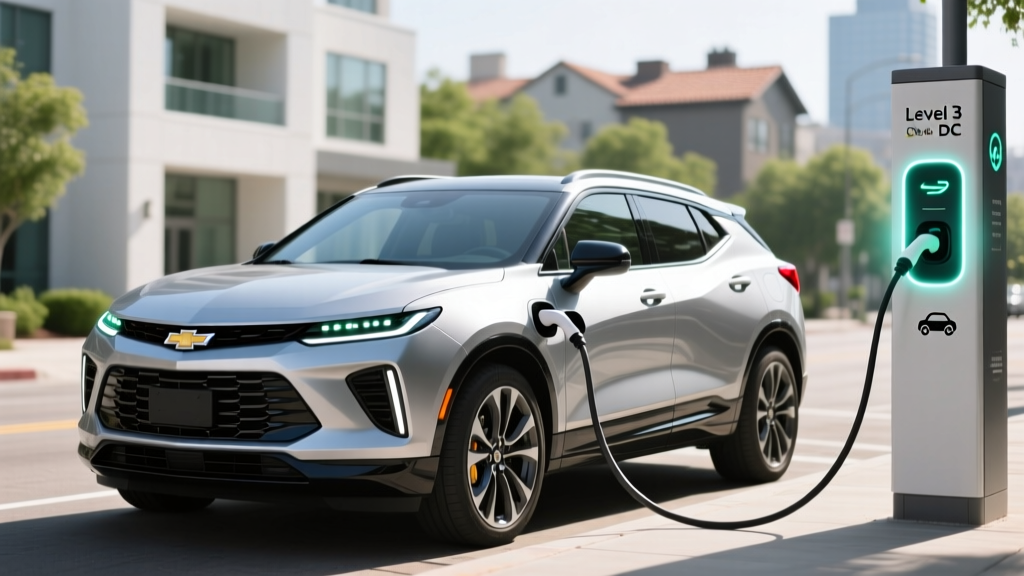
Tesla's Supercharger network remains the gold standard for public charging reliability, and the vehicles are optimized to use it. Here's how charging breaks down across levels:
| Charging Level | Power | Speed (Model Y LR) | Typical Use Case |
|---|---|---|---|
| Level 1 (120V) | ~1.4 kW | ~3–4 mi/hr | Emergency/trickle; not practical for daily use |
| Level 2 (240V, 48A) | 11.5 kW | ~44 mi/hr | Home overnight charging — full replenish in ~7–8 hours |
| DC Fast Charge (V3 Supercharger) | Peak 250 kW | ~175 mi in 15 min (10–80% in ~27 min) | Road trips; note charge curve tapers sharply above 80% |
| DC Fast Charge (V4 Supercharger) | Peak 250+ kW (cable-cooled) | Similar to V3 for current vehicles | Newer stations; future vehicles may unlock higher rates |
Key nuance on the charge curve: The 250 kW peak rate applies only at low state-of-charge (roughly 10–30% SoC) and with battery preconditioning active. Above 50% SoC, the rate tapers to roughly 100–120 kW, and above 80% it drops below 50 kW. This is why Tesla (and every other automaker) quotes 10–80% times rather than 0–100%. If you're road-tripping, plan your stops around the 10–80% window for the fastest throughput.
For home Level 2 charging, Tesla's Wall Connector ($420) delivers up to 11.5 kW on a 60-amp circuit (48A continuous). Installation costs vary widely: expect $500–$1,500 if your electrical panel has capacity, or $2,000–$4,000+ if a panel upgrade to 200A is needed. A licensed electrician should evaluate your panel before purchase.
Tech, Interior, and the Minimalist Trade-Off
Every current Tesla shares the same interior philosophy: a single 15.4-inch touchscreen handles navigation, climate, media, and vehicle settings. There is no instrument cluster, no head-up display, and no physical stalks on the refreshed Model 3 (turn signals are now steering-wheel-mounted buttons, which remains a polarizing choice).
Standout tech features:
- Autopilot (standard): SAE Level 2 driver-assist with adaptive cruise and lane centering. Requires continuous driver supervision — this is not self-driving.
- Full Self-Driving (Supervised): Optional $8,000 upgrade (or $99/mo subscription) adding city-street navigation, traffic-light recognition, and autosteer on local roads. Still SAE Level 2; you must remain engaged at all times.
- Over-the-air updates: Tesla pushes regular software updates that can add features, adjust range estimates, and improve efficiency post-purchase.
- Sentry Mode / Dashcam: Uses the vehicle's external cameras to record incidents while parked.
- Heat pump: Standard across the lineup, improving cold-weather range by ~10–15% compared to resistive cabin heating.
Notable drawbacks:
- Turn-signal buttons on the refreshed Model 3 frustrate some drivers, especially during roundabouts and parking maneuvers
- No Apple CarPlay or Android Auto — Tesla's proprietary infotainment only
- Rear visibility in the Model Y is limited; the digital rearview mirror option helps
- Build quality has improved significantly at Giga Texas and Fremont, but panel-gap consistency still trails legacy luxury automakers
- Best-in-class Supercharger network access (now also open to other brands, but Tesla vehicles still get plug-and-charge simplicity)
- LFP battery option on Model 3 RWD for maximum cycle life
- Strong efficiency (kWh/100mi) relative to competitors
- OTA updates keep the vehicle current
- North American assembly satisfies §30D final-assembly requirement
- Touchscreen-only controls require eyes-off-road for climate and mirror adjustments
- No CarPlay/Android Auto integration
- FSD (Supervised) remains a Level 2 system despite the name
- Insurance premiums run 15–30% higher than comparable non-Tesla EVs in many states
- Model Y rear wiper was only recently added; older stock may lack it
Pricing, Tax Credits, and Who Should Buy
Here's how the pricing and potential credit-adjusted cost breaks down for the most popular trims:
| Model / Trim | Base MSRP | §30D Credit (if eligible) | Effective Price |
|---|---|---|---|
| Model 3 RWD | $38,990 | Up to $7,500 | ~$31,490 |
| Model 3 Long Range AWD | $44,990 | Up to $7,500 | ~$37,490 |
| Model Y Long Range AWD | $44,990 | Up to $7,500 | ~$37,490 |
| Model Y Performance | $51,490 | Up to $7,500 | ~$43,990 |
| Cybertruck AWD | $79,990 | Varies (sourcing rules) | Check IRS list |
Critical caveat: The full $7,500 credit is not guaranteed for every buyer or every build week. Battery-sourcing and critical-mineral requirements tighten annually under the IRS §30D rules. Some Tesla configurations may qualify for only $3,750 (meeting one of two sourcing thresholds) or none at all in a given quarter. Tesla's checkout page typically displays an estimated credit, but you should cross-reference the fueleconomy.gov credit lookup tool and consult a tax professional before relying on the credit in your budget. The point-of-sale transfer option lets you apply the credit as a down-payment reduction at delivery, rather than waiting until you file taxes.
Who This EV Suits Best
Model 3 RWD: Solo commuters and couples who drive under 50 miles daily and want the lowest entry price. The LFP battery rewards daily 100% charging, making it ideal for predictable routines with home Level 2 access.
Model 3 Long Range AWD: Frequent road-trippers who want a sedan with 300+ mile real-world range and dual-motor traction in rain or snow.
Model Y Long Range AWD: Families needing 76 cu ft of cargo space (rear seats folded), child-seat room, and enough range for 250-mile highway stretches between Supercharger stops. The most practical Tesla for most American households.
Model Y Performance: Enthusiasts who want a 3.3-second 0–60 time without sacrificing cargo utility, and who accept ~35 miles of range loss for the privilege.
Cargo space reference: Model 3 offers 23 cu ft trunk + frunk; Model Y offers 76 cu ft max (rear seats folded) + 4.1 cu ft frunk.
Where Are Tesla Cars Assembled — Frequently Asked Questions
Are any Teslas made in China and sold in the US?
As of 2026, Tesla's Giga Shanghai primarily serves China, Europe, and Asia-Pacific markets. The US receives vehicles from Fremont, California, and Giga Texas in Austin. In 2021–2022, some Shanghai-built Model 3 sedans were delivered to US customers, but that practice has effectively ended as domestic production scaled.
Does the factory location affect build quality?
Early Giga Texas Model Y vehicles (2022–2023) drew criticism for panel gaps and paint inconsistencies. As of 2025–2026, Texas build quality has largely converged with Fremont. Giga Berlin produces Model Ys widely regarded as the best-painted in the lineup, but those vehicles are not exported to the US. For US buyers, Fremont and Texas build quality is comparable and meaningfully improved over pre-2024 production.
Where is the Tesla battery made?
Tesla sources cells from multiple suppliers: Panasonic (producing 2170 and 4680 cells at Tesla's Nevada Gigafactory and in Japan), CATL (LFP cells from China), and LG Energy Solution (NMC cells). The 4680 structural battery pack is manufactured at Giga Texas. Battery origin affects §30D critical-mineral and component-sourcing compliance — a key reason credit eligibility can change quarter to quarter.
Is the Model Y still worth buying vs. competitors?
The Model Y faces growing competition from the Hyundai Ioniq 5, Kia EV6, Ford Mustang Mach-E, and the refreshed Chevrolet Equinox EV. The Model Y's advantages remain its Supercharger network access (though competitors now have NACS adapters), strong software/OTA ecosystem, and class-leading efficiency. Where it trails: the Ioniq 5 and EV6 offer 800V architecture for faster peak charging on compatible stations, and the Mach-E offers a more traditional interior with physical controls. If you prioritize charging infrastructure reliability and software, the Model Y still leads. If you prefer a conventional cabin layout or faster peak charging at non-Tesla stations, the Korean platforms are compelling alternatives.
What's the battery replacement cost if it fails out of warranty?
Out-of-warranty Tesla battery replacement runs approximately $12,000–$16,000 for a Model 3/Y pack, depending on the cell type and labor. However, Tesla's battery warranty covers 8 years / 100,000–120,000 miles (depending on trim) with a minimum 70% capacity retention threshold. Real-world degradation data from fleet operators shows most Tesla NMC packs retain 85–90% capacity at 100,000 miles, and LFP packs degrade even more slowly. Complete failure before warranty expiry is rare.