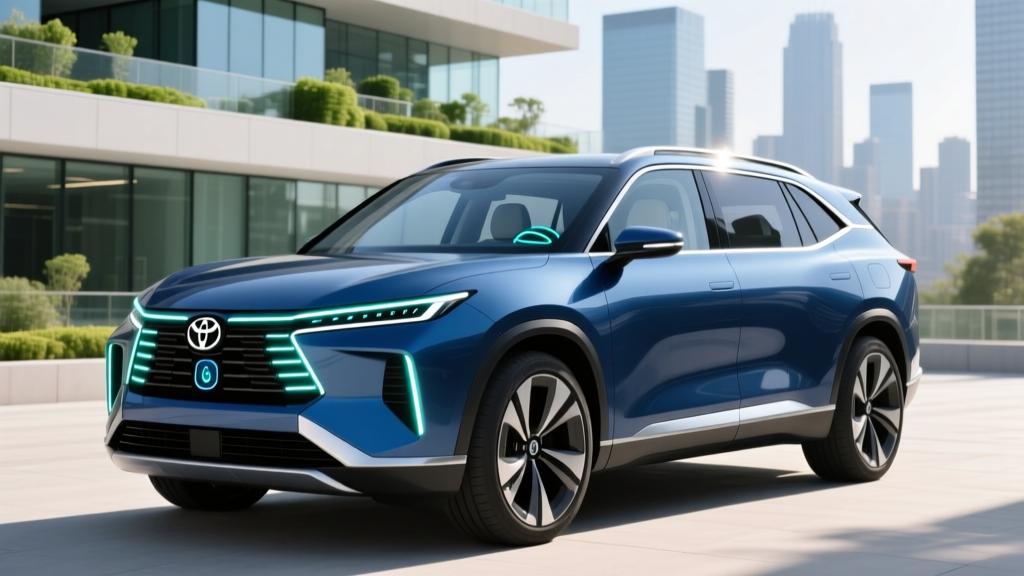
The short answer: Toyota teased an electric three-row SUV potentially named Highlander in late 2024, with production expected to begin at Toyota's Georgetown, Kentucky plant around 2025–2026. As of early 2026, Toyota has not released final EPA range, battery capacity, or pricing for this vehicle. Based on the bZ Large SUV concept and Toyota's current bZ4X architecture, industry analysts expect a usable battery around 95–105 kWh (NMC chemistry), an EPA range estimate in the 280–320 mile range, DC fast charging peaking near 150–180 kW, and a starting MSRP between $50,000–$55,000 before incentives. Until Toyota publishes official specs, every number below is an informed estimate — treat them as planning figures, not guarantees.
What Toyota Has Actually Confirmed (and What It Hasn't)
Toyota's electric three-row SUV sits on the company's e-TNGA platform — the same modular architecture underpinning the bZ4X and the Subaru Solterra. The bZ Large SUV concept, shown at the 2023 Japan Mobility Show, previewed the production vehicle's proportions: roughly 198 inches long, a 115-inch wheelbase, and three rows of seating for up to seven passengers. Toyota confirmed in its 2024 battery-EV strategy update that it will build a three-row electric SUV in North America, targeting families currently buying the Highlander or Grand Highlander.
What remains unconfirmed as of this writing:
- Official model name: "Highlander" is the most likely badge given Toyota's naming continuity strategy, but "bZ5" or another bZ-series designation hasn't been ruled out.
- Exact battery capacity: The concept didn't disclose kWh figures. Based on the platform's scalability and competitor benchmarks (Kia EV9's 100 kWh pack, Volkswagen ID. Buzz's 91 kWh), a 95–105 kWh usable capacity is the most credible estimate.
- Drivetrain configuration: Both single-motor FWD and dual-motor AWD variants are expected, mirroring the bZ4X lineup.
- Charging standard: Toyota committed to adopting the NACS (Tesla) connector for its North American EVs beginning in 2025. The production three-row SUV is expected to ship with a native NACS port, granting access to Tesla Supercharger stations.
Estimated Specs: How the Electric Highlander Stacks Up
| Attribute | Est. Electric Highlander (AWD) | 2026 Gas Highlander (XLE AWD) | 2026 Grand Highlander Hybrid (Limited AWD) |
|---|---|---|---|
| Powertrain | Dual-motor AWD (est.) | 2.4L Turbo I4 AWD | 2.5L Hybrid AWD |
| Horsepower | ~338 hp (est.) | 265 hp | 245 hp (net) |
| 0–60 mph | ~6.0 sec (est.) | ~7.5 sec | ~7.8 sec |
| EPA Range / MPG | ~290 mi (est. EPA) | 24 MPG combined | 36 MPG combined |
| Energy Capacity | ~100 kWh usable (NMC est.) | 17.9 gal tank | 17.1 gal tank |
| Max DC Charge Rate | ~170 kW peak (est.) | N/A | N/A |
| 10–80% Charge Time | ~30 min (est.) | ~5 min (refuel) | ~5 min (refuel) |
| Seating | 7-passenger (est.) | 7–8 passenger | 7–8 passenger |
| Cargo (behind 3rd row) | ~15 cu ft (est.) | 16.1 cu ft | 20.6 cu ft |
| Towing Capacity | ~3,500 lbs (est.) | 5,000 lbs | 5,000 lbs |
| Base MSRP | ~$52,000 (est.) | $42,090 | $48,120 |
Real-world range reality: An EPA estimate of ~290 miles assumes moderate temperatures and mixed driving. In real-world highway testing at 70–75 mph, expect approximately 240–260 miles from a full charge. In sub-freezing winter conditions (below 30°F), range can drop 20–30%, putting usable range closer to 200–230 miles. If you regularly drive in cold climates or take long highway trips, plan your charging stops around 200 miles of real-world range to maintain a safety buffer.
The Money Question: Purchase Price, Fuel Savings, and Total Cost
The biggest objection to any electric SUV is the upfront price gap. Let's run the numbers comparing the estimated electric Highlander against the gas and hybrid variants over a five-year, 75,000-mile ownership period.
| Cost Category | Est. Electric Highlander (AWD) | Gas Highlander (XLE AWD) | Grand Highlander Hybrid (Limited AWD) |
|---|---|---|---|
| Base MSRP | ~$52,000 | $42,090 | $48,120 |
| Federal §30D Credit (est.) | Up to $7,500* | $0 | $0 |
| Effective Purchase Price | ~$44,500 | $42,090 | $48,120 |
| Fuel/Energy (5 yr / 75k mi) | ~$4,125 (home charging)** | ~$10,938 ($3.50/gal) | ~$7,292 ($3.50/gal) |
| Maintenance (5 yr) | ~$1,800 | ~$3,500 | ~$3,200 |
| Insurance (5 yr avg.) | ~$9,500 | ~$7,800 | ~$8,200 |
| 5-Year Total Cost | ~$59,925 | ~$64,328 | ~$66,812 |
* Federal §30D credit eligibility depends on MSRP caps (vans/SUVs: $80,000), buyer income limits ($300k MFJ / $150k single), and battery critical-mineral sourcing requirements. Rules are subject to change — verify current eligibility at IRS.gov or consult a tax professional. The credit can be applied as a point-of-sale reduction at the dealer.
** Home charging cost assumes $0.15/kWh national average and 3.0 mi/kWh efficiency. Public DC fast charging at $0.35–$0.50/kWh would raise energy costs to approximately $6,125–$8,750 over five years if you rely on it exclusively.
The electric Highlander's 5-year cost advantage comes primarily from energy and maintenance savings — roughly $6,800 less in fuel and $1,700 less in maintenance versus the gas model. However, EV insurance premiums tend to run 15–25% higher, partially offsetting those gains. The break-even point versus the gas Highlander lands around year three if you qualify for the full federal credit.
Charging at Home and on the Road: What You Actually Need
Charging infrastructure is the single most important ownership variable for any EV buyer. Here's what a three-row electric SUV demands:
| Level | Power | Miles Added per Hour | Typical Use Case | Est. Cost |
|---|---|---|---|---|
| Level 1 (120V) | ~1.4 kW | ~3–4 mi/hr | Overnight trickle; insufficient for a 100 kWh pack | $0 (included cord) |
| Level 2 (240V, 48A) | ~11.5 kW | ~30–35 mi/hr | Daily home charging; full charge in ~9–10 hours | $500–$1,200 (unit) + $800–$2,500 (install) |
| DC Fast Charge | ~170 kW peak (est.) | ~180–220 mi in 30 min | Road trips; 10–80% in ~30 min, then tapers | $0.35–$0.50/kWh public |
Home charging reality for a 100 kWh pack: A Level 1 (120V) outlet adds roughly 35 miles overnight — far too slow for a family SUV that may need 150+ miles replenished daily. A 48-amp Level 2 charger on a 240V/60A circuit is effectively mandatory. If your home's electrical panel is already near capacity (common in homes with electric ranges, dryers, and HVAC), you may need a panel upgrade from 100A to 200A service, adding $1,500–$3,500 to your installation cost. Always get a licensed electrician's assessment before purchasing.
DC fast charging and the charge curve: Peak charge rates (170 kW estimated) are sustained only between roughly 10–50% State of Charge. Above 80%, charging slows dramatically to protect battery longevity — expect the final 20% to take as long as the first 60%. On road trips, plan to charge from 10% to 80% and drive on, rather than waiting for a full charge. With a native NACS port, the electric Highlander should access over 17,000 Tesla Supercharger stalls across North America, significantly improving road-trip viability compared to CCS-only vehicles.
Electric vs. Hybrid vs. Gas Highlander: Which One Fits Your Life?
Toyota's three-row lineup will soon offer all three powertrains. The right choice depends on your specific driving patterns, not ideology.
| Myth | Fact |
|---|---|
| "EVs can't handle family road trips." | With ~290 mi EPA range and 30-min fast charges, a 500-mile trip requires one stop. The Grand Highlander Hybrid covers 615 miles per tank with zero stops — a genuine advantage for very long hauls. |
| "EV batteries need replacing every few years." | Toyota's EV battery warranty covers 8 years/100,000 miles with a capacity retention threshold (typically 70%). NMC batteries in thermally managed packs typically degrade 10–15% over 100,000 miles — meaning a 290-mile pack still delivers ~245+ miles at 100k. |
| "Hybrids are always cheaper to own." | The Grand Highlander Hybrid's $48,120 MSRP with no federal credit and 36 MPG means ~$7,292 in fuel over 75k miles. The electric Highlander with a $7,500 credit and home charging costs ~$4,125 — a $3,167 fuel savings. The hybrid wins only if you can't charge at home. |
| "Electric SUVs can't tow." | Estimated 3,500-lb towing is adequate for light trailers and small boats. But the gas Highlander's 5,000-lb rating is meaningfully better for campers and heavy loads. Towing also cuts EV range by 30–50%. |
Decision framework — which Highlander is right for you:
- Choose the Electric Highlander IF: You have reliable home Level 2 charging, your daily commute is under 100 miles round-trip, you want the lowest per-mile operating cost, you qualify for the §30D federal credit, and you rarely tow more than 3,500 lbs.
- Choose the Grand Highlander Hybrid IF: You lack home charging access, you regularly drive 300+ miles between stops, you tow 4,000–5,000 lbs frequently, you live in a region with limited DC fast charging infrastructure, or you want to minimize upfront cost without sacrificing fuel economy.
- Choose the Gas Highlander IF: You tow heavy loads regularly, you need the lowest purchase price, you drive fewer than 8,000 miles per year (making fuel savings negligible), or you live in an extreme-cold region where EV range loss is a significant concern.
Battery Longevity, Warranty, and What Replacement Would Cost
Toyota has historically offered an 8-year/100,000-mile warranty on hybrid battery packs, and its EV battery warranty is expected to match or exceed this. For the electric Highlander's estimated 100 kWh NMC pack:
- Expected degradation: 10–15% capacity loss over the first 100,000 miles under normal use, based on industry data from similar NMC packs in thermally managed systems.
- Warranty threshold: Toyota's EV battery warranty typically guarantees a minimum of 70% capacity retention over 8 years/100,000 miles. If the pack falls below this threshold, Toyota replaces or refurbishes it at no cost.
- Out-of-warranty replacement cost: If you need a replacement after the warranty expires, current industry pricing for a ~100 kWh NMC pack ranges from $12,000–$18,000 including labor. Battery costs have been declining roughly 8–12% annually, so a replacement in 2034–2036 would likely cost significantly less.
- Maximizing battery life: Avoid routinely charging to 100% or depleting below 10%. Set your daily charge limit to 80% and use preconditioning (if equipped) before DC fast charging sessions. LFP chemistry, if Toyota offers it on lower trims, would tolerate daily 100% charges but typically offers lower energy density — meaning less range in the same pack size.
First-Time EV Buyer Essentials: Five Things Nobody Tells You
- kW and kWh are not the same thing. kWh (kilowatt-hours) measures your battery's energy capacity — think of it as the "gallon" equivalent. A ~100 kWh battery stores roughly the energy to drive 290 miles. kW (kilowatts) measures power flow — your charge rate. A 170 kW charger delivers energy quickly, but the rate tapers as the battery fills. Confusing these two is the most common EV ownership mistake.
- EPA range is a best-case scenario. The EPA test cycle includes low-speed city driving and moderate highway speeds. Real-world 70+ mph highway driving consumes 15–25% more energy. Add cold weather, roof cargo boxes, or towing, and the gap widens further. Always plan trips around 70–75% of the EPA number.
- Home charging access determines 90% of your EV satisfaction. Owners with Level 2 home charging report overwhelmingly positive experiences because they wake up to a "full tank" every morning. Those relying solely on public charging report frustration with broken chargers, higher costs, and time spent waiting. Before buying any EV, confirm you can install a 240V/48A charger at home or have reliable workplace charging.
- Insurance costs more, and it varies wildly by insurer. EV insurance premiums average 15–25% higher than equivalent gas vehicles due to higher repair costs and specialized parts. Get quotes from at least three insurers before purchasing — the spread between the cheapest and most expensive quote can exceed $1,000 per year.
- Tax credit eligibility is not automatic. The §30D federal credit has three simultaneous hurdles: buyer income caps, vehicle MSRP caps ($80,000 for SUVs), and battery component/critical mineral sourcing requirements that change annually. A vehicle that qualifies in one model year may not qualify in the next. Always verify eligibility on fueleconomy.gov before signing a purchase agreement.
Frequently Asked Questions
When will the electric Toyota Highlander actually be available to buy?
Toyota has confirmed production of a three-row electric SUV at its Georgetown, Kentucky facility, with initial timelines pointing to 2025–2026. As of early 2026, the vehicle has been teased and previewed via the bZ Large SUV concept, but dealer orders have not opened. Toyota typically announces pricing and specs 3–6 months before production begins.
Will the electric Highlander have a NACS (Tesla) charging port or CCS?
Toyota announced its transition to the NACS connector for North American EVs starting in 2025. The production electric three-row SUV is expected to feature a native NACS port, which provides access to Tesla's Supercharger network — currently the most reliable and expansive DC fast-charging network in the United States, with over 17,000 stalls.
How does the electric Highlander compare to the Kia EV9?
The Kia EV9 is the closest current competitor: a three-row electric SUV with a 100 kWh battery, up to 304 miles EPA range (RWD), and DC fast charging at up to 210 kW (10–80% in ~24 minutes). The EV9 starts at $54,900 for the S trim. If Toyota prices the electric Highlander around $52,000 and matches the EV9's range and charging speed, it would be competitive — but the EV9 has a significant head start in availability and real-world reviews.
Is the electric Highlander eligible for the $7,500 federal tax credit?
Eligibility depends on three factors at the time of purchase: (1) the vehicle's MSRP must not exceed $80,000 (the SUV cap under §30D), (2) the buyer's adjusted gross income must be below $300,000 (married filing jointly) or $150,000 (single), and (3) the battery's critical minerals and components must meet annually increasing domestic-sourcing thresholds. Because Toyota manufactures this SUV in Kentucky, it has a strong chance of meeting assembly requirements, but battery sourcing rules are the variable to watch. Verify current eligibility at IRS.gov.
Can I charge the electric Highlander on a standard 120V outlet?
Technically yes, but practically no. A 120V Level 1 charger delivers roughly 1.4 kW, adding about 3–4 miles of range per hour. Fully charging a ~100 kWh pack from empty would take approximately 70+ hours. For daily family use, a 240V Level 2 home charger (48A, ~11.5 kW) is essential, replenishing the pack in roughly 9–10 hours overnight.
Will the electric Highlander have Toyota Safety Sense?
Yes. Toyota includes its Toyota Safety Sense (TSS) suite as standard equipment across virtually all models. Expect TSS 3.0 or later, featuring pre-collision braking, lane-departure alert, dynamic radar cruise control, lane-tracing assist, and road-sign assist. Note that these are SAE Level 2 driver-assistance features — the driver must remain fully engaged with hands on the wheel and eyes on the road at all times. This is not autonomous driving.