For EV shoppers researching their next purchase, the question where Tesla built its vehicles matters more than ever. Manufacturing location affects everything from build quality consistency and delivery timelines to federal tax credit eligibility under IRS §30D battery-sourcing rules. In 2026, Tesla operates five major vehicle assembly plants across three continents, each producing specific models with distinct battery chemistries and supply chains.
This guide maps every active Tesla factory, then dives into a full spec-by-spec review of the 2026 lineup — covering range, charging speeds, pricing, and whether each model qualifies for the federal EV tax credit.
Tesla's Global Manufacturing Footprint in 2026
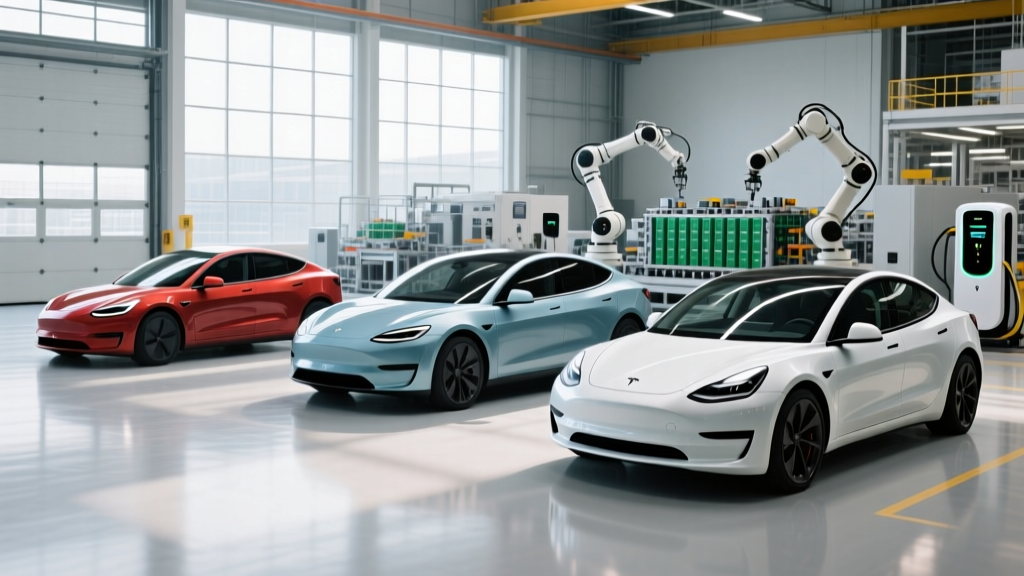
Tesla's production network has expanded dramatically since the Fremont, California plant opened in 2010. Here is where every Tesla vehicle sold in the U.S. is currently assembled:
| Factory | Location | Models Produced | Opened |
|---|---|---|---|
| Fremont Factory | Fremont, California | Model S, Model X, Model 3, Model Y | 2010 |
| Gigafactory Texas | Austin, Texas | Model Y, Cybertruck | 2022 |
| Gigafactory Shanghai | Shanghai, China | Model 3, Model Y (primarily export/non-U.S.) | 2019 |
| Gigafactory Berlin-Brandenburg | Grünheide, Germany | Model Y (European market) | 2022 |
| Gigafactory Nevada | Sparks, Nevada | Powertrain components, Semi (limited) | 2016 |
Why this matters for U.S. buyers: The Model Y you take delivery of in the U.S. was almost certainly built in Austin, Texas (or possibly Fremont). The Model 3 could originate from either Fremont or Shanghai depending on your region and delivery timing. Cybertruck is exclusively a Texas product. Understanding the origin helps you decode build variations — for example, Austin-built Model Y vehicles use the newer structural battery pack and 4680 cells, while Fremont-built examples may still use the traditional 2170-cell pack.
2026 Tesla Model 3: Range, Charging, and Value Breakdown
The refreshed Model 3 (internally dubbed "Highland") continues to anchor Tesla's volume sales. For 2026, it's offered in three trims with meaningful differences in battery chemistry and range.
| Spec | Model 3 RWD | Model 3 Long Range AWD | Model 3 Performance |
|---|---|---|---|
| EPA Range | 272 mi | 341 mi | 315 mi |
| Battery (usable) | ~57.5 kWh (LFP) | ~75 kWh (NMC) | ~75 kWh (NMC) |
| Drivetrain | RWD, single motor | AWD, dual motor | AWD, dual motor |
| Horsepower | 271 hp | 346 hp | 510 hp |
| 0-60 mph | 5.8 sec | 4.2 sec | 2.9 sec |
| Efficiency | 132 MPGe / 25 kWh/100mi | 134 MPGe / 25 kWh/100mi | 121 MPGe / 28 kWh/100mi |
| Max DC Charge Rate | 170 kW | 250 kW | 250 kW |
| 10-80% DC Time | ~28 min | ~22 min | ~22 min |
| Level 2 Rate | 11.5 kW (~37 mi/hr) | 11.5 kW (~44 mi/hr) | 11.5 kW (~44 mi/hr) |
| Base MSRP | $38,990 | $45,990 | $52,990 |
| Cargo (rear + frunk) | 23.0 cu ft + 3.1 cu ft | 23.0 cu ft + 3.1 cu ft | 23.0 cu ft + 3.1 cu ft |
Battery chemistry note: The RWD Model 3 uses a lithium iron phosphate (LFP) battery. LFP trades energy density for longevity and thermal stability — Tesla recommends charging LFP packs to 100% regularly for accurate state-of-charge calibration. The Long Range and Performance trims use nickel-manganese-cobalt (NMC) chemistry, which delivers more range per kilogram but benefits from daily charge limits around 80% to slow degradation.
2026 Tesla Model Y: The Family SUV Benchmark
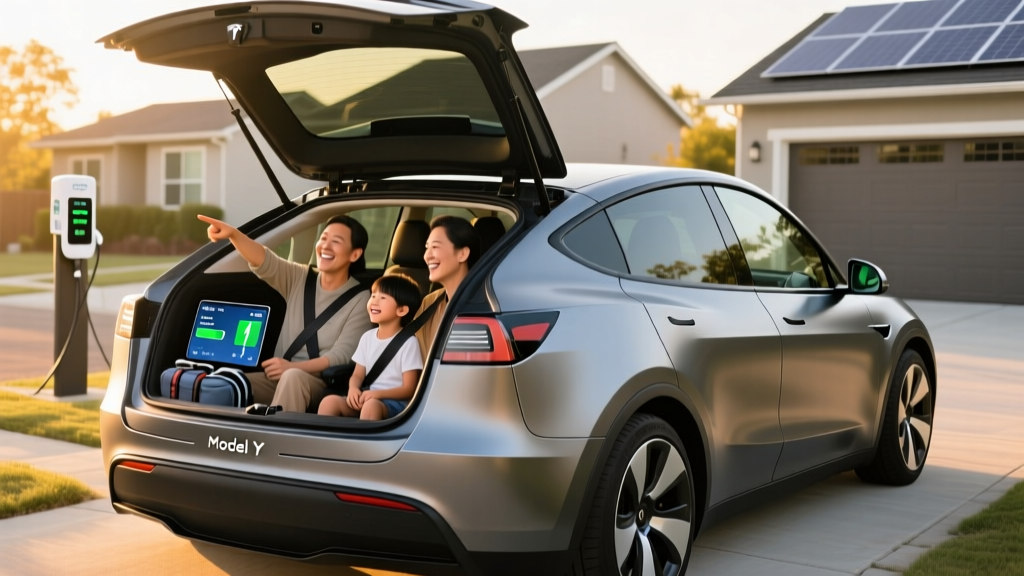
The Model Y remains the best-selling EV in the U.S. and is built primarily at Gigafactory Texas for the North American market. The 2026 refresh (codenamed "Juniper") brings updated styling, a quieter cabin, and slightly improved efficiency.
| Spec | Model Y RWD | Model Y Long Range AWD | Model Y Performance |
|---|---|---|---|
| EPA Range | 260 mi | 320 mi | 295 mi |
| Battery (usable) | ~57.5 kWh (LFP) | ~75 kWh (NMC) | ~75 kWh (NMC) |
| Drivetrain | RWD, single motor | AWD, dual motor | AWD, dual motor |
| Horsepower | 295 hp | 384 hp | 510 hp |
| 0-60 mph | 6.6 sec | 4.8 sec | 3.5 sec |
| Efficiency | 125 MPGe / 27 kWh/100mi | 122 MPGe / 28 kWh/100mi | 117 MPGe / 29 kWh/100mi |
| Max DC Charge Rate | 170 kW | 250 kW | 250 kW |
| 10-80% DC Time | ~28 min | ~22 min | ~22 min |
| Level 2 Rate | 11.5 kW (~33 mi/hr) | 11.5 kW (~40 mi/hr) | 11.5 kW (~40 mi/hr) |
| Base MSRP | $43,990 | $48,990 | $53,990 |
| Cargo (rear + frunk) | 30.2 cu ft + 4.1 cu ft | 30.2 cu ft + 4.1 cu ft | 30.2 cu ft + 4.1 cu ft |
| Rear Legroom | 40.5 inches | ||
Charging curve reality: The 250 kW peak charge rate on Long Range and Performance trims is not sustained. You'll see 250 kW only between roughly 10-25% state of charge, after which the curve tapers progressively. From 50-80%, the rate drops to around 100-120 kW. This is why the 10-80% time is ~22 minutes rather than the ~14 minutes a flat 250 kW would theoretically deliver.
4680 cells and the Texas build: Austin-produced Model Y vehicles increasingly use Tesla's 4680-format battery cells in a structural pack. This design integrates the battery into the vehicle chassis, reducing weight and parts count. Early 4680 packs had slightly lower energy density than the 2170 cells from Fremont, but 2026 iterations have largely closed that gap. The practical difference for buyers: Texas-built Model Ys may charge slightly differently on the curve, but EPA range ratings already account for the specific cell type.
Model S, Model X, and Cybertruck: Flagship and Specialty Builds
2026 Model S & Model X (Fremont, CA)
Both the Model S sedan and Model X SUV continue to be assembled at the original Fremont factory. These are low-volume, high-price flagship vehicles:
- Model S Long Range: 402 mi EPA, 670 hp, 0-60 in 3.1 sec, ~95 kWh NMC battery, 250 kW peak DC charge, 10-80% in ~25 min, MSRP $79,990
- Model S Plaid: 359 mi EPA, 1,020 hp, 0-60 in 1.99 sec, MSRP $94,990
- Model X Long Range: 335 mi EPA, 670 hp, 0-60 in 3.8 sec, ~95 kWh NMC, 250 kW peak DC, MSRP $84,990
- Model X Plaid: 311 mi EPA, 1,020 hp, 0-60 in 2.5 sec, MSRP $99,990
2026 Cybertruck (Austin, TX)
Cybertruck is built exclusively at Gigafactory Texas. Production ramped slowly through 2024-2025, and 2026 availability has finally stabilized.
- Cybertruck AWD: 340 mi EPA, 600 hp, 0-60 in 4.1 sec, ~123 kWh NMC, 250 kW peak DC, 10-80% in ~30 min, MSRP $79,990
- Cybertruck Cyberbeast: 320 mi EPA, 845 hp, 0-60 in 2.6 sec, MSRP $99,990
- Towing capacity: Up to 11,000 lbs (AWD/Cyberbeast)
- Bed length: 6 ft; total cargo (bed + vault): ~67 cu ft
Towing range reality: If you plan to tow near Cybertruck's 11,000-lb max, expect range to drop by 40-50%. That 340-mile EPA figure becomes roughly 170-200 miles when pulling a heavy trailer. This is consistent with all EV trucks, but it's critical for trip planning.
Federal Tax Credit Eligibility: What Qualifies in 2026?
The IRS §30D clean vehicle credit remains a key factor for Tesla buyers. Eligibility depends on MSRP caps, buyer income limits, and battery component/mineral sourcing requirements. Here's the 2026 breakdown:
| Model | Base MSRP | Under MSRP Cap? | Est. Credit (if eligible) | Effective Price |
|---|---|---|---|---|
| Model 3 RWD | $38,990 | Yes (sedan cap: $55,000) | Up to $7,500 | ~$31,490 |
| Model 3 Long Range | $45,990 | Yes | Up to $7,500 | ~$38,490 |
| Model Y RWD | $43,990 | Yes (SUV/truck cap: $80,000) | Up to $7,500 | ~$36,490 |
| Model Y Long Range | $48,990 | Yes | Up to $7,500 | ~$41,490 |
| Cybertruck AWD | $79,990 | Yes (truck cap: $80,000) | Varies by sourcing | ~$72,490+ |
| Model S / X | $79,990+ | Exceeds sedan cap (S qualifies as sedan) | Not eligible (Model S) | Full MSRP |
- MSRP cap: Sedans ≤ $55,000; SUVs, vans, trucks ≤ $80,000
- Buyer income cap (AGI): Single filers ≤ $150,000; Head of household ≤ $225,000; Joint filers ≤ $300,000
- Battery sourcing: Credit is split — $3,750 requires critical minerals from U.S. or FTA partners; $3,750 requires battery components manufactured in North America. Models with China-sourced components may lose one or both halves.
- Point-of-sale transfer: You can transfer the credit to the dealer at purchase for an immediate price reduction (rather than claiming on your tax return).
- Final assembly: Vehicle must undergo final assembly in North America — all U.S.-market Teslas qualify.
Critical sourcing nuance: The Model 3 RWD with its LFP battery has historically drawn cells from CATL (China), which can disqualify it from the critical-minerals half of the credit. Tesla has been working to source LFP from non-Chinese suppliers for the U.S. market. Always verify the specific credit amount on fueleconomy.gov before purchasing, as eligibility shifts with supply-chain changes. Consult a tax professional for your specific situation.
Driver Assistance, Tech, and Ownership Costs
Autopilot and FSD (Supervised): Every 2026 Tesla ships with basic Autopilot (traffic-aware cruise control and lane centering). Full Self-Driving (Supervised) remains a $8,000 add-on or $99/month subscription. To be clear: FSD is SAE Level 2 driver-assist, not autonomous driving. You must remain engaged, hands on the wheel, and eyes on the road at all times. Only Level 4 services like Waymo operate without driver supervision in geofenced areas.
Infotainment: Tesla's 15.4-inch center touchscreen (Model 3/Y) or 17-inch (Model S/X) remains the interface for everything — climate, navigation, media, and vehicle settings. There is no Apple CarPlay or Android Auto. The navigation system is excellent, with real-time Supercharger routing and preconditioning that warms the battery before you arrive at a fast charger, dramatically improving charge speed in cold weather.
Warranty:
- Basic vehicle: 4 years / 50,000 miles
- Battery & drive unit: 8 years / 100,000 miles (Model 3/Y RWD); 8 years / 120,000 miles (Long Range, Performance, Model S/X)
- Battery warranty guarantees ≥70% capacity retention during the warranty period
Pros, Cons, and Who Should Buy a Tesla in 2026
Pros
- Supercharger network: 20,000+ stalls in North America — still the most reliable DC fast-charging ecosystem
- Class-leading efficiency: Tesla's kWh/mile figures consistently beat competitors
- Over-the-air updates add features post-purchase
- Strong resale value relative to most EVs
- LFP battery option on base trims offers longer cycle life and 100% daily charging
- Extensive U.S. manufacturing (Austin, Fremont) supports supply-chain stability
Cons
- No Apple CarPlay / Android Auto — Tesla's ecosystem is closed
- Build quality inconsistency still surfaces (panel gaps, paint), though improving with newer factories
- Service center wait times remain long in many metro areas
- FSD is expensive and still requires full driver attention (Level 2)
- Model S and Model X are no longer tax-credit eligible due to MSRP classification
- LFP batteries (RWD trims) have lower range and worse cold-weather performance than NMC
- Choose Model 3 RWD if: You commute under 50 miles/day, have reliable home charging, and want the lowest entry price with LFP longevity. Best for single professionals and couples.
- Choose Model 3 Long Range if: You regularly drive 200+ miles on highways and need dual-motor AWD for weather. The NMC battery delivers real-world road-trip confidence.
- Choose Model Y Long Range if: You have kids, need 30+ cu ft of cargo space, and want the best all-around family EV. This is the default Tesla for most households.
- Choose Cybertruck if: You need truck utility (towing, bed cargo) and accept the range penalty when towing. It's a niche product, not a daily-driver replacement for most.
- Skip Model S/X if: You're budget-conscious. At $80K+, with no federal tax credit for the sedan, the value proposition is weak versus the Model 3 Performance or competitors like the Lucid Air.
Tesla vs. Key Competitors: Quick Comparison
| Attribute | Model Y LR AWD | Hyundai Ioniq 5 LR AWD | Ford Mustang Mach-E ER AWD |
|---|---|---|---|
| EPA Range | 320 mi | 290 mi | 290 mi |
| Max DC Charge | 250 kW | 240 kW (800V) | 150 kW |
| 10-80% Time | ~22 min | ~18 min | ~36 min |
| Cargo | 30.2 cu ft | 27.2 cu ft | 29.7 cu ft |
| Base MSRP | $48,990 | $50,250 | $48,995 |
| Built In | Austin, TX (USA) | Ulsan, South Korea / Ellabell, GA (USA) | Cuautitlán, Mexico |
The Ioniq 5's 800V architecture delivers a faster 10-80% charge despite a slightly lower peak kW — its charge curve sustains higher power longer. The Mach-E lags on charging speed. Tesla's Supercharger network remains the decisive advantage for road-trippers who want reliable plug-and-charge without adapter hassles (though NACS adoption by other brands is closing this gap rapidly in 2026).
Frequently Asked Questions
Where is the Tesla Model Y built for U.S. buyers?
The 2026 Model Y sold in the United States is primarily assembled at Gigafactory Texas in Austin. Some units may still originate from the Fremont, California factory. Check the VIN on your delivery paperwork — VINs starting with "7G2" indicate Austin production, while "5YJ" indicates Fremont.
What is the real-world range of the 2026 Tesla Model 3 Long Range?
EPA rates it at 341 miles. In real-world highway driving at 70-75 mph in mild weather, expect 280-300 miles. In cold weather (below freezing), plan for 230-260 miles. City driving with regenerative braking recovers more energy and can approach or even exceed the EPA figure.
How fast does a Tesla charge at home?
On a Level 2 home charger (typically a Tesla Wall Connector at 48 amps / 11.5 kW), a Model 3 or Model Y gains roughly 37-44 miles of range per hour. A full charge from 10% to 100% takes about 7-8 hours — easily accomplished overnight. Level 1 (standard 120V outlet) adds only 3-5 miles per hour and is practical only for low-mileage drivers or emergency trickle charging.
Does the Tesla Model 3 qualify for the $7,500 federal tax credit?
It depends. The Model 3 RWD (LFP battery) has historically had sourcing challenges with Chinese-mined critical minerals, potentially reducing the credit to $3,750 or zero. The Long Range and Performance trims with NMC batteries and North American-sourced components are more likely to qualify for the full $7,500 — but this changes as supply chains shift. Always verify on fueleconomy.gov before purchasing, and check your AGI against the §30D income caps.
Is the Tesla Model Y worth buying over the Hyundai Ioniq 5?
If road-trip charging reliability is your top priority, yes — the Supercharger network remains unmatched. If you value faster DC charging (the Ioniq 5's 800V system is excellent), Apple CarPlay support, or a more traditional dealership service experience, the Ioniq 5 is a strong alternative. Both qualify for the federal credit when eligibility requirements are met. The Model Y wins on range (320 vs 290 mi EPA) and cargo space; the Ioniq 5 wins on charge speed and interior design.
Are Tesla batteries reliable long-term?
Data from Tesla's fleet indicates average battery degradation of approximately 12-15% after 150,000 miles for NMC packs, and potentially less for LFP packs (which tolerate more charge cycles). The 8-year/100,000-120,000-mile warranty covers packs that fall below 70% capacity. Full battery replacement costs range from $12,000-$16,000 out of warranty, though most owners never need one.
Where is the Tesla Cybertruck manufactured?
Cybertruck is built exclusively at Gigafactory Texas in Austin. It has never been produced at any other Tesla facility.
Sources: EPA range and efficiency data from fueleconomy.gov; federal tax credit rules from IRS §30D guidance; vehicle specifications from Tesla's official U.S. configurator and press materials.