If you've ever looked at a Tesla window sticker and wondered where the vehicle actually rolled off the assembly line, you're not alone. The question where are Tesla automobiles made has grown more complex as the company expanded from a single California plant to a global manufacturing network spanning three continents. For US buyers, the answer matters for more than curiosity — it affects federal tax credit eligibility under IRS §30D, delivery timelines, and even which battery chemistry ends up in your driveway.
This guide maps every active Tesla factory producing vehicles in 2026, then zooms in on the US-built Model Y (Tesla's volume seller and most American-assembled vehicle) with a full spec review covering real-world range, charging speeds, pricing, and ownership economics.
Tesla's Global Manufacturing Footprint in 2026
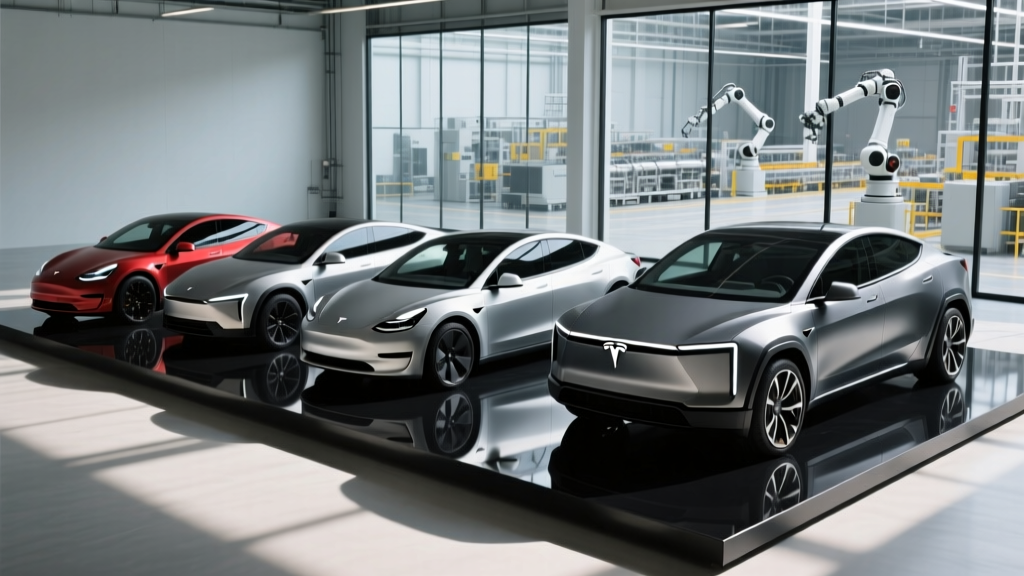
Tesla operates four primary vehicle assembly plants worldwide, each serving distinct regional markets and producing specific models. Understanding which factory builds which car helps explain differences in battery sourcing, trim availability, and delivery logistics.
| Factory | Location | Models Produced | Primary Market |
|---|---|---|---|
| Fremont Factory | Fremont, California | Model S, Model X, Model 3, Model Y | North America (West), Asia exports |
| Gigafactory Texas | Austin, Texas | Model Y, Cybertruck | North America (Central/East) |
| Gigafactory Shanghai | Shanghai, China | Model 3, Model Y | China, Europe, Asia-Pacific |
| Gigafactory Berlin-Brandenburg | Grünheide, Germany | Model Y | Europe |
The Fremont Factory remains Tesla's original large-scale plant, acquired from Toyota/GM in 2010 and continuously expanded. It handles the widest model variety, including the premium Model S sedan and Model X SUV. Gigafactory Texas (Giga Texas), which began limited production in 2022 and ramped through 2024–2025, is now the primary US hub for Model Y and the exclusive home of Cybertruck assembly. Gigafactory Shanghai continues as Tesla's highest-volume single facility globally, while Gigafactory Berlin supplies European-market Model Y vehicles with locally sourced components.
For US buyers, this means your Model Y likely came from either Fremont or Austin depending on your delivery region and trim, while a Model S or Model X was built in Fremont. Tesla does not offer a factory-choice option at order time — allocation is driven by logistics and inventory.
Why US Manufacturing Matters for Tax Credits
Under the current IRS §30D clean vehicle credit rules, where a Tesla is assembled is only the starting point. The full $7,500 federal credit requires meeting several criteria simultaneously:
- Final assembly in North America — all US-market Teslas qualify on this front
- MSRP caps — vans/SUVs/pickups ≤ $80,000; sedans ≤ $55,000
- Buyer income limits — AGI ≤ $300,000 (joint), $225,000 (head of household), $150,000 (single)
- Battery component and critical mineral sourcing — phased percentages that increase annually through 2032, requiring North American or free-trade-agreement partner sourcing
Because Tesla's US-built vehicles (Fremont and Austin) draw battery cells from multiple suppliers — including CATL LFP cells from China for Standard Range trims and Panasonic/NCA cells from Nevada for Long Range — the exact credit amount can vary by trim and model year. Always verify current eligibility on the IRS qualified vehicle list before purchase. The credit can now be transferred to the dealer at point of sale, reducing your out-of-pocket cost immediately rather than waiting for tax filing.
2026 Tesla Model Y Long Range AWD: US-Built Spec Review
The Model Y remains Tesla's best-selling vehicle globally and the most likely model a US buyer will encounter. Here's the full data profile for the 2026 Long Range All-Wheel Drive variant — the sweet-spot trim balancing range, performance, and price.
| EPA Estimated Range | 320 miles |
| Battery Capacity | ~78.1 kWh usable (NMC chemistry, 2170 cells) |
| Drivetrain | Dual-motor AWD |
| Horsepower | 384 hp combined |
| 0–60 mph | 4.8 seconds |
| Top Speed | 135 mph |
| Efficiency | 122 MPGe combined / 28 kWh per 100 miles |
| Max DC Fast Charge | 250 kW peak |
| 10–80% DC Fast Charge | ~25 minutes |
| Level 2 Home Charge Rate | 11.5 kW (~44 miles per hour) |
| Cargo Volume | 30.2 cu ft (rear seats up) / 72.1 cu ft (folded) |
| Rear Legroom | 40.5 inches |
| Base MSRP | $47,990 (before incentives) |
| Battery Warranty | 8 years / 120,000 miles (70% minimum retention) |
| Basic Vehicle Warranty | 4 years / 50,000 miles |
The EPA rates the 2026 Model Y Long Range at 320 miles. In real-world highway driving at 70–75 mph with climate control active, expect approximately 270–290 miles before needing to charge. In freezing temperatures (below 32°F), range can drop 20–30%, yielding roughly 220–255 miles. Tesla's heat pump (standard on all current Model Y trims) mitigates some cold-weather loss compared to older resistive-heating EVs, but physics still applies — plan road trips around 250-mile segments in winter conditions for a comfortable buffer.
Charging Speed and Infrastructure
Tesla's Supercharger network remains the most reliable public DC fast-charging ecosystem in North America, and the Model Y's 250 kW peak charge rate takes full advantage of V3 and V4 Supercharger stalls. However, peak rate is not sustained rate — the charge curve tapers significantly above 50% State of Charge (SoC), which is why the 10–80% time of ~25 minutes is the more useful metric.
| Charging Level | Power (kW) | Miles Added per Hour | Use Case |
|---|---|---|---|
| Level 1 (120V household) | ~1.4 kW | ~4–5 mi/hr | Emergency / overnight trickle |
| Level 2 (240V home wall connector) | 11.5 kW | ~44 mi/hr | Daily home charging (~7–8 hrs for full battery) |
| DC Fast Charge (Supercharger V3/V4) | Up to 250 kW peak | ~200+ mi in 15 min | Road trips, rapid top-ups |
For home charging, Tesla's Wall Connector installed on a 60-amp circuit delivers the full 11.5 kW (48 amps continuous). Expect a full charge from 10% to 100% in roughly 7.5 hours — ideal for overnight replenishment. Installation costs typically range from $800 to $2,500 depending on panel capacity and conduit run length; a panel upgrade to 200A can add $1,500–$3,500 if your home's service is insufficient.
With the 2025 industry-wide adoption of the NACS (North American Charging Standard) connector, the Model Y's native charge port is now the de facto standard. Non-Tesla EVs increasingly use NACS adapters or native NACS ports to access Tesla Superchargers, but Model Y owners benefit from seamless plug-and-charge integration with no adapter needed.
Tech, Driver Assistance, and Interior
The 2026 Model Y continues with Tesla's minimalist interior: a single 15.4-inch center touchscreen controls virtually all vehicle functions, including climate, mirrors, and glovebox release. There is no traditional instrument cluster — speed and navigation appear on the main display. Build quality has improved incrementally over earlier production years, with tighter panel gaps and revised interior materials on the latest "Juniper" refresh.
Tesla Autopilot comes standard and includes Traffic-Aware Cruise Control and Autosteer (lane centering). The optional Full Self-Driving (Supervised) package ($8,000 one-time or $99/month subscription as of early 2026) adds Navigate on Autopilot, Auto Lane Change, Autopark, Summon, and Traffic Light and Stop Sign Control.
Tesla's FSD (Supervised) is an SAE Level 2 driver-assistance system. The driver must remain fully attentive, keep hands on the steering wheel (or demonstrate engagement via the cabin camera), and be prepared to take over at any moment. It does not make the vehicle autonomous. Only Level 4 services like Waymo operate without a driver in the loop, and those are limited to geofenced urban areas. Do not purchase FSD expecting a self-driving car.
Notable interior drawbacks: the absence of physical buttons for climate and wipers frustrates some drivers, rear-seat headroom is tighter than competitors like the Hyundai Ioniq 5, and the panoramic glass roof can create significant cabin heat in summer (Tesla includes a removable shade).
Pricing, Tax Credits, and Ownership Cost
| Trim | Base MSRP | Est. Federal Credit (§30D) | Effective Price |
|---|---|---|---|
| Long Range AWD | $47,990 | Up to $7,500* | ~$40,490 |
| Performance AWD | $52,490 | Up to $7,500* | ~$44,990 |
*Federal credit eligibility depends on battery component and critical mineral sourcing requirements that phase in annually. Verify the specific VIN's qualification on the fueleconomy.gov credit lookup before purchase. Buyer income and MSRP caps also apply.
Over five years of ownership, the Model Y Long Range benefits from low fuel costs (electricity averages $0.14–$0.18/kWh nationally, yielding roughly $0.04–$0.05 per mile vs. $0.12–$0.15 per mile for a comparable gas SUV), no oil changes, and reduced brake wear thanks to regenerative braking. Insurance premiums tend to run 15–25% higher than comparable non-EV SUVs due to repair costs and parts pricing — budget $1,800–$2,600 annually depending on your state and driving record.
Depreciation on the Model Y has historically been steeper than Toyota or Honda competitors, with roughly 40–50% value retention after five years. However, Tesla's over-the-air updates and Supercharger network access provide long-term utility value that pure resale figures don't capture.
Pros and Cons
- Industry-leading Supercharger network access — reliable, fast, widespread
- 320-mile EPA range covers most commutes and road trips comfortably
- 250 kW DC fast charging with 10–80% in ~25 minutes
- Spacious cargo area (72.1 cu ft with seats folded) and practical hatchback design
- Continuous over-the-air updates add features post-purchase
- Strong performance: 0–60 in 4.8 seconds with dual-motor AWD traction
- Minimalist interior lacks physical controls — not for everyone
- FSD (Supervised) is expensive and still requires full driver attention
- Insurance costs above segment average
- Rear-seat comfort and headroom trail competitors like Ioniq 5 and Ford Mustang Mach-E
- Cold-weather range loss is significant without preconditioning discipline
- Build quality, while improved, still shows occasional inconsistencies
Who Should Buy the Tesla Model Y?
The Model Y is best suited for tech-comfortable commuters and small families who have access to home Level 2 charging and value Supercharger reliability for road trips. It excels as a daily driver for suburban professionals covering 30–80 miles per day and couples who take 2–4 road trips annually in the 200–500 mile range.
It is less ideal for buyers who prioritize tactile interior controls, need maximum rear-seat passenger comfort for adults, or live in areas without reliable home charging access (apartment dwellers without garage outlets). For towing, the Model Y is rated at 3,500 lbs — adequate for a small trailer but not competitive with truck-based EVs.
Consider competitors if: You want a more conventional interior (Hyundai Ioniq 5, Kia EV6), need hands-free highway driving on mapped routes (Ford Mustang Mach-E with BlueCruise, GM Equinox EV with Super Cruise), or prioritize ride comfort over performance (BMW iX).
Frequently Asked Questions
Where are Tesla automobiles made for the US market?
US-market Teslas are primarily built at the Fremont Factory in California (Model S, Model X, Model 3, and some Model Y) and Gigafactory Texas in Austin (Model Y and Cybertruck). Delivery allocation depends on your region and inventory availability — you cannot choose a specific factory at order time.
Does the Tesla Model Y qualify for the $7,500 federal tax credit?
The Model Y is assembled in North America and falls under the $80,000 SUV MSRP cap, making it potentially eligible. However, the full $7,500 credit depends on battery component and critical mineral sourcing requirements that tighten annually, plus buyer income limits ($300,000 joint / $150,000 single AGI). Check the IRS qualified vehicles list for the specific model year and trim.
What is the real-world highway range of the Model Y Long Range?
While the EPA rates it at 320 miles, sustained highway driving at 70–75 mph typically yields 270–290 miles. In freezing winter conditions, expect 220–255 miles. Preconditioning the battery before departure (automatic when navigation is set) helps recover some efficiency.
How long does it take to charge a Model Y at home?
On a Level 2 Tesla Wall Connector (11.5 kW), a near-empty battery charges fully in about 7.5 hours — easily overnight. On a standard 120V household outlet (Level 1), expect roughly 4–5 miles of range per hour, which is only practical for emergency use or very low daily mileage.
Is Tesla's Full Self-Driving actually autonomous?
No. FSD (Supervised) is an SAE Level 2 driver-assist system requiring continuous driver supervision. It handles highway lane-keeping, lane changes, and some city-street navigation, but you must remain alert and ready to intervene. It is not a Level 4 autonomous system like Waymo.
How does the Model Y compare to the Ford Mustang Mach-E?
The Model Y offers superior DC fast-charging infrastructure (Supercharger network), slightly longer EPA range, and more cargo space. The Mach-E provides a more traditional interior with physical controls, available hands-free BlueCruise on mapped highways, and a more engaging driving feel for enthusiasts. Both are strong choices — the decision often comes down to charging ecosystem preference vs. interior ergonomics.