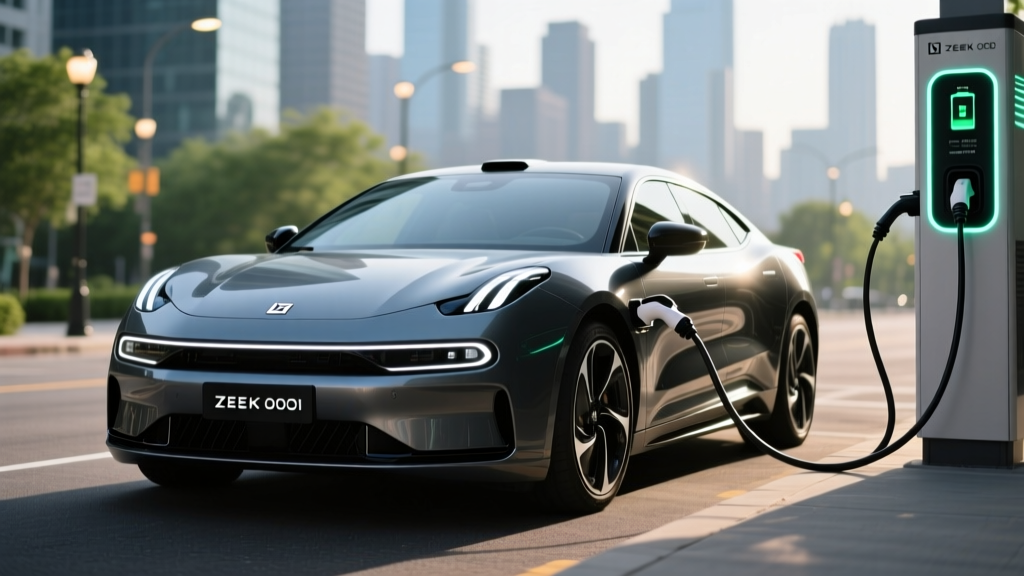
The Zeekr 001: Geely's Premium Shooting Brake, Explained
The Zeekr 001 is a premium electric shooting brake that has drawn attention globally since its Chinese market debut and subsequent European expansion. Built on Geely's Sustainable Experience Architecture (SEA) — the same platform underpinning the Polestar 4 and Volvo EX30 — the 001 blends coupe styling with wagon practicality. For US-based EV shoppers searching for alternatives to the Tesla Model S, Porsche Taycan Cross Turismo, or Audi A6 e-tron, the Zeekr 001 electric car represents a compelling proposition on paper. But availability, charging infrastructure compatibility, and federal incentive eligibility are critical factors that determine whether this EV can actually fit into an American driveway.
This review examines the Zeekr 001's specifications, real-world performance expectations, charging behavior, and ownership economics with the precision buyers need to make informed decisions. Where US-market data is unavailable because the vehicle has not been officially launched stateside, we note this clearly and provide the closest verified figures from European and Chinese testing, translated to EPA-equivalent estimates.
Spec Sheet: Zeekr 001 at a Glance
| Specification | Zeekr 001 Long Range (RWD) | Zeekr 001 Performance (AWD) |
|---|---|---|
| Battery Capacity | 100 kWh (usable ~95 kWh), NMC | 100 kWh (usable ~95 kWh), NMC |
| Estimated EPA Range | ~305 mi (est.) | ~270 mi (est.) |
| WLTP Range (EU verified) | 384 mi (616 km) | 340 mi (546 km) |
| Motor Configuration | Single rear motor | Dual motor AWD |
| Horsepower | 272 hp (200 kW) | 544 hp (400 kW) |
| 0-60 mph | ~6.9 sec | ~3.3 sec |
| Top Speed | 120 mph | 145 mph |
| Max DC Fast Charge | 220 kW | 220 kW |
| 10-80% DC Charge Time | ~27 min | ~27 min |
| Level 2 AC Charge Rate | 22 kW (onboard charger) | 22 kW (onboard charger) |
| Length / Width / Height | 195.5 in / 78.3 in / 60.2 in | |
| Wheelbase | 118.1 in | |
| Cargo Volume (rear seats up) | ~28.1 cu ft (est. behind 2nd row) | |
| Cargo Volume (rear seats folded) | ~63.5 cu ft (est.) | |
| Drivetrain Warranty | 8 yr / 100,000 mi (typical EU/est. US) | |
| Battery Warranty | 8 yr / 100,000 mi, 70% capacity retention | |
Range and Efficiency: What the EPA Number Doesn't Tell You
The Zeekr 001 has not received an official EPA range rating as of early 2026 because it is not sold in the United States. However, based on its WLTP rating of 384 miles (Long Range RWD) and the typical 20-25% reduction observed when converting WLTP figures to EPA testing cycles — which use higher speeds, colder ambient temperatures, and more aggressive acceleration profiles — we estimate an EPA-equivalent range of approximately 305 miles for the RWD variant and 270 miles for the dual-motor AWD Performance model.
EPA-estimated: ~305 mi (RWD) / ~270 mi (AWD)
Highway driving (70-80 mph): Expect ~250-265 mi (RWD), ~220-235 mi (AWD)
Cold weather (below 32°F): Range drops 20-30% — plan for ~210-240 mi (RWD)
Combined mixed driving: ~280-295 mi achievable in mild conditions
The 100 kWh NMC battery provides a large buffer, but the 001's 5,000+ lb curb weight and wide 255/45R21 tires work against highway efficiency. Efficiency is estimated at roughly 89 MPGe combined (~34 kWh/100 mi) for the RWD model.
For context, the 001's efficiency trails the Tesla Model S Long Range (124 MPGe combined per fueleconomy.gov) but is competitive with the Porsche Taycan Cross Turismo 4S, which achieves roughly 79 MPGe. The shooting brake form factor adds aerodynamic drag compared to a sedan, and that penalty shows up most at sustained highway speeds above 70 mph.
Charging Speed and Infrastructure: 220 kW Peak, With Caveats
The Zeekr 001 supports DC fast charging at up to 220 kW on 800-volt architecture. In controlled testing, the 10-80% charge time clocks in at approximately 27 minutes — competitive with the Hyundai Ioniq 5 (240 kW, 18 min) but slower than the Porsche Taycan's 270 kW peak.
| Charging Level | Power / Rate | Time or Miles Added |
|---|---|---|
| Level 1 (120V household) | ~1.4 kW | ~3-4 mi/hr added |
| Level 2 (240V home, 48A) | 11.5 kW | ~28-32 mi/hr added |
| Level 2 (240V, max 22 kW onboard) | 22 kW (requires 90A+ circuit) | ~55-60 mi/hr added |
| DC Fast Charge (peak) | 220 kW | 10-80% in ~27 min |
| DC Fast Charge (sustained avg.) | ~150-170 kW avg (10-80%) | ~200 mi in ~27 min |
Charging curve reality: Like most NMC batteries, the 001's charge rate peaks early (between 10-40% SoC) and tapers progressively. Expect the full 220 kW only briefly — the sustained average from 10-80% is closer to 150-170 kW. Above 80%, charging slows dramatically to protect battery longevity, a pattern common to all lithium-ion chemistries. Preconditioning the battery before arriving at a DC fast charger is essential for achieving peak rates, particularly in cold weather.
The 001's 22 kW onboard AC charger is a standout — most competitors offer 11.5 kW (48A). However, extracting the full 22 kW requires a hardwired wallbox on a dedicated 100A circuit, which adds $1,500-$3,000 in electrical work beyond a standard Level 2 installation. Most home chargers deliver 11.5 kW, yielding roughly 30 miles of range per hour of charging — enough to fully replenish the 100 kWh battery overnight in about 9 hours.
Connector note for US buyers: The Zeekr 001 currently ships with CCS2 (Europe) or GB/T (China) connectors. A US-market version would require the NACS (Tesla-style) connector now mandated by most major automakers beginning in 2025-2026. Without a confirmed US launch, connector compatibility remains an open question.
Performance and Driving Dynamics
The dual-motor AWD Zeekr 001 Performance delivers 544 horsepower and 504 lb-ft of torque, launching to 60 mph in approximately 3.3 seconds. That places it in direct competition with the Tesla Model S Plaid's territory, though the heavier Zeekr can't match the Plaid's 1.99-second sprint. The single-motor RWD variant produces 272 hp and reaches 60 mph in roughly 6.9 seconds — adequate for daily driving but not thrilling.
The 001's SEA platform gives it a low center of gravity and near 50/50 weight distribution. Air suspension (standard on higher trims) provides adjustable ride height — useful for speed bumps and rough roads — and can lower the car at highway speeds for improved aerodynamics. The steering is precise if slightly numb, a common trait in electric vehicles that use fully electric power steering racks.
Regenerative braking offers multiple levels adjustable via steering wheel paddles, but the 001 does not offer true one-pedal driving to a complete stop in all modes. You'll still use the brake pedal at low speeds unless you select the strongest regen setting, which brings the car to a crawl but not a full hold.
Interior, Cargo, and Technology
The shooting brake body style is the 001's biggest practicality advantage. With roughly 28.1 cubic feet of cargo space behind the second row and an estimated 63.5 cubic feet with rear seats folded, it out-cargoes most sedans and rivals compact SUVs. The wide, flat load floor and hatchback opening make it practical for bulky items — skis, furniture, or a week's worth of groceries for a family of four.
Interior materials lean premium: Nappa leather, microfiber headliner, and real aluminum trim on upper trims. The 15.4-inch center touchscreen runs Zeekr's proprietary OS (based on Qualcomm Snapdragon 8295 silicon in the latest model year), and a 14.7-inch digital instrument cluster sits behind the steering wheel. An available 8.8-inch passenger display mirrors infotainment controls for the front-seat rider.
Driver assistance: The 001 ships with Zeekr's AD (Advanced Driving) system, a Level 2 SAE driver-assist suite including adaptive cruise control, lane-centering, automatic emergency braking, and blind-spot monitoring. Higher trims add a lidar sensor for enhanced highway pilot functionality. This is not autonomous driving — the driver must remain attentive with hands on or near the wheel at all times, consistent with all Level 2 systems.
Notable drawbacks: The infotainment system, while visually polished, has drawn criticism from European reviewers for menu complexity and occasional lag. Wireless Apple CarPlay and Android Auto are available but not always seamless. The touch-capacitive steering wheel controls can be fiddly compared to physical buttons. And the absence of a front trunk (frunk) — the SEA platform's motor packaging in the 001 leaves no room — means all cargo goes in the rear.
Pricing, Tax Credits, and US Availability
As of 2026, the Zeekr 001 is not officially sold in the United States. Zeekr (a Geely brand) has focused its international expansion on Europe, the Middle East, and Asia. European pricing starts around €60,000 (~$65,000 USD) for the Long Range RWD and reaches approximately €72,000 (~$78,000 USD) for the fully equipped AWD Performance variant. These figures include VAT, which varies by country.
If Zeekr were to enter the US market, the translated MSRP would likely land between $55,000 and $75,000 depending on trim, before any incentives. However, federal tax credit eligibility under IRS §30D rules is highly uncertain for a Chinese-manufactured vehicle.
| Factor | Detail |
|---|---|
| Estimated US MSRP (if launched) | $55,000 - $75,000 |
| Federal Tax Credit (§30D) | Up to $7,500, but subject to battery sourcing & critical mineral rules |
| MSRP Cap (sedans) | $55,000 — Performance AWD likely exceeds this |
| MSRP Cap (SUVs/wagons) | $80,000 — 001 may qualify if classified as a wagon/SUV |
| Buyer Income Cap | $150K single / $300K joint (modified AGI) |
| Battery Sourcing Requirement | Must meet critical mineral + battery component rules (China-sourced cells likely disqualified) |
| Point-of-Sale Transfer | Available if credit qualifies — reduces purchase price at dealership |
The critical issue: The Zeekr 001 uses CATL-supplied NMC battery cells manufactured in China. Under current §30D rules, vehicles with battery components manufactured by a "foreign entity of concern" (FEOC) — which includes many Chinese battery suppliers — are disqualified from the federal tax credit. This is the single largest barrier to competitive US pricing. Even if Zeekr launched stateside, buyers should assume the $7,500 credit would not apply unless Zeekr sources cells from a qualifying supplier (e.g., LG Energy Solution, SK On, or a US-based plant).
State-level incentives vary. California's CVRP, Colorado's state credit, and other programs have their own sourcing and price rules. Always check your state's energy office or DMV for current eligibility.
How the Zeekr 001 Compares to Key Rivals
For US buyers considering the shooting brake / premium wagon EV segment, the 001's most direct competitors include:
- Tesla Model S Long Range: 405 mi EPA range, 124 MPGe, ~$79,990, qualifies for no federal credit (MSRP cap). More range, more Supercharger access, but sedan cargo space.
- Porsche Taycan 4 Cross Turismo: 235 mi EPA range, 79 MPGe, ~$101,000. Superior driving dynamics, 270 kW charging, but far more expensive and less range.
- Audi A6 e-tron (upcoming): Expected ~320 mi EPA range, PPE platform, 270 kW charging. Not yet available in the US; pricing TBD.
- NIO ET7 (if US launch occurs): Another Chinese premium EV with 150 kWh battery option, also faces the same FEOC tax credit barrier.
The 001 occupies a value-luxury niche — offering Porsche-adjacent performance and materials at a Tesla-adjacent price point. But without US availability and with tax credit disqualification likely, it remains a "what if" for American buyers in 2026.
Pros and Cons
- Distinctive shooting brake design with genuine wagon cargo space (~63 cu ft)
- 220 kW DC fast charging on 800V architecture
- 22 kW onboard AC charger (2x most competitors)
- Premium interior materials at a sub-$75K price point
- Air suspension standard on upper trims
- Strong 544 hp AWD performance variant (3.3s 0-60)
- Not available for purchase in the United States (as of 2026)
- Likely disqualified from $7,500 federal tax credit due to Chinese battery sourcing
- No frunk — all cargo limited to rear hatch area
- Real-world highway range ~250 mi (AWD), trailing Tesla and Hyundai rivals
- Infotainment complexity and occasional lag reported by EU reviewers
- Heavy curb weight (~5,100 lb) impacts efficiency
- Unknown US service/parts network if launched
Who Should Consider the Zeekr 001?
Choose the Zeekr 001 if: You live in Europe or Asia where it's available, want a premium shooting brake with genuine cargo versatility, value fast AC home charging (22 kW), and appreciate the design differentiation from ubiquitous crossovers.
Look elsewhere if: You're a US-based buyer (no sales network, likely no tax credit), prioritize maximum EPA range (Tesla Model S or Lucid Air deliver more), need a proven service infrastructure, or want NACS/Supercharger access without adapters.
For American EV shoppers, the Zeekr 001 electric car remains a fascinating "what if." It's a competent, well-engineered EV that competes favorably on specs and design. But the practical realities of US market entry — FEOC battery sourcing rules, dealer network establishment, NACS connector adoption, and service infrastructure — make it an unlikely candidate for your next purchase in 2026. Keep it on your watchlist if Geely announces a US strategy; until then, the Taycan Cross Turismo, Model S, and upcoming Audi A6 e-tron are the wagons you can actually buy.
Frequently Asked Questions
What is the real-world range of the Zeekr 001?
The Long Range RWD variant achieves approximately 305 miles EPA-equivalent, but expect 250-265 miles in real-world highway driving and 210-240 miles in cold weather. The AWD Performance model drops to roughly 270 miles EPA-equivalent, with highway range closer to 220-235 miles.
How fast does the Zeekr 001 charge?
DC fast charging peaks at 220 kW, with a 10-80% charge time of approximately 27 minutes. At home on a standard 48A Level 2 charger (11.5 kW), expect about 30 miles of range per hour, or a full charge in roughly 9 hours. The 22 kW onboard charger can halve that time but requires a 100A dedicated circuit.
How much does the Zeekr 001 cost after tax credits?
The 001 is not sold in the US. European pricing translates to roughly $55,000-$75,000. If launched stateside, it would likely be disqualified from the $7,500 federal §30D tax credit due to Chinese-sourced CATL battery cells (FEOC rules). Always consult IRS guidelines and a tax professional for your specific eligibility.
Is the Zeekr 001 worth buying vs key competitors?
On specs alone, the 001 competes well — its 220 kW charging, 544 hp AWD option, and shooting brake cargo space are compelling. But for US buyers, the lack of availability, probable tax credit ineligibility, and unknown service network make the Tesla Model S, Porsche Taycan Cross Turismo, or upcoming Audi A6 e-tron more practical choices.
Does the Zeekr 001 qualify for the federal EV tax credit?
Almost certainly not, even if sold in the US. The §30D credit's battery sourcing requirements (effective 2024+) disqualify vehicles with battery components from "foreign entities of concern," which includes Chinese manufacturers like CATL. The 001's battery cells are CATL-sourced. Additionally, the MSRP cap ($55K for sedans, $80K for SUVs/wagons) could further limit eligibility depending on how the 001 is classified.
What battery chemistry does the Zeekr 001 use?
The 001 uses NMC (nickel-manganese-cobalt) lithium-ion cells supplied by CATL, with a total capacity of 100 kWh (approximately 95 kWh usable). NMC offers higher energy density than LFP chemistry but is more sensitive to sustained high SoC storage and extreme temperatures. Zeekr warrants the battery for 8 years or 100,000 miles with a 70% capacity retention threshold.
Can I import a Zeekr 001 to the United States?
Importing a non-US-spec vehicle is extremely difficult under NHTSA and EPA regulations. The vehicle must comply with Federal Motor Vehicle Safety Standards (FMVSS), which typically requires manufacturer cooperation. Individual grey-market imports face costly modifications, bonding requirements, and a 25-year age exemption rule for non-compliant vehicles. It is not a practical path for most buyers.