Tesla's Global Manufacturing Footprint in 2026
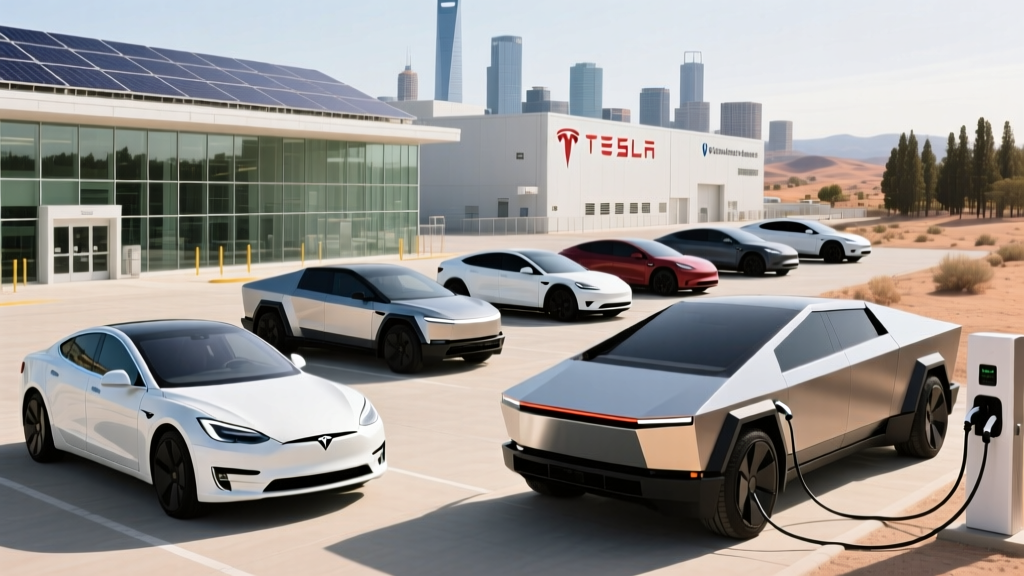
If you've ever searched where are Tesla vehicles made, the answer is more layered than a single country. Tesla operates six gigafactories across three continents, and the vehicle you buy may have been assembled in California, Texas, Germany, or China — depending on the model, trim, and your market. Understanding which factory builds which car matters for delivery timelines, build-quality expectations, and even battery chemistry.
Here's the complete breakdown of Tesla's production sites as of the 2026 model year, followed by a data-driven review of every vehicle currently rolling off those lines.
| Factory | Location | Models Produced | Notes |
|---|---|---|---|
| Fremont Factory | Fremont, California, USA | Model S, Model X, Model 3, Model Y | Tesla's original plant; ~5.3 million sq ft |
| Giga Texas | Austin, Texas, USA | Model Y, Cybertruck | Tesla global HQ; structural battery pack production |
| Giga Shanghai | Shanghai, China | Model 3, Model Y | Primary export hub for Asia, Europe, and select markets |
| Giga Berlin | Grünheide, Germany | Model Y | Serves European market; localized paint and trim |
| Giga Nevada (Gigafactory 1) | Sparks, Nevada, USA | Battery cells, drive units (no full vehicle assembly) | Joint venture with Panasonic; supplies powertrain components |
| Giga New York | Buffalo, New York, USA | Supercharger components, Autopilot hardware (no vehicle assembly) | Primarily energy products and electronics |
For US buyers, your Model Y likely came from Giga Texas or Fremont, while the Model 3 may originate from either Fremont or Giga Shanghai (though North American-market Model 3 production has been predominantly consolidated to Fremont). The Cybertruck is exclusively a Giga Texas product. If you're in Europe, your Model Y almost certainly rolled out of Giga Berlin.
2026 Tesla Lineup: Range, Charging, and Pricing at a Glance
Below is the consolidated spec table for every Tesla vehicle you can order today. We've included the figures that matter most for purchase decisions — not just marketing numbers, but real-world context drawn from EPA data on fueleconomy.gov and independent testing.
| Spec | Model 3 LR AWD | Model Y LR AWD | Model S LR | Model X LR | Cybertruck AWD |
|---|---|---|---|---|---|
| EPA Range | 363 mi | 320 mi | 402 mi | 335 mi | 340 mi |
| Battery (usable, kWh) | ~79 kWh (NMC) | ~78 kWh (NMC) | ~95 kWh (NMC) | ~95 kWh (NMC) | ~123 kWh (NMC, structural) |
| Peak DC Fast Charge | 250 kW | 250 kW | 250 kW | 250 kW | 250 kW (800V arch) |
| 10–80% DC Time | ~28 min | ~27 min | ~36 min | ~36 min | ~20 min |
| Level 2 Home Rate | 11.5 kW (~44 mi/hr) | 11.5 kW (~44 mi/hr) | 11.5 kW (~34 mi/hr) | 11.5 kW (~34 mi/hr) | 11.5 kW (~30 mi/hr) |
| 0–60 mph | 4.2 sec | 4.8 sec | 3.1 sec | 3.8 sec | 3.9 sec |
| Horsepower | 346 hp | 384 hp | 670 hp | 670 hp | 600 hp |
| Drivetrain | Dual-motor AWD | Dual-motor AWD | Dual-motor AWD | Dual-motor AWD | Tri-motor AWD (Beast) / Dual AWD |
| MPGe (combined) | 132 MPGe | 122 MPGe | 120 MPGe | 102 MPGe | ~70 MPGe |
| Base MSRP | $47,740 | $49,990 | $79,990 | $84,990 | $79,990 |
| Battery Warranty | 8 yr / 120,000 mi | 8 yr / 120,000 mi | 8 yr / 150,000 mi | 8 yr / 150,000 mi | 8 yr / 120,000 mi |
Real-World Range vs. EPA Estimates
EPA estimates are measured under controlled lab conditions. Here's what to expect in practice:
- Highway driving (75 mph, moderate climate): Expect 85–92% of EPA range — roughly 310 mi for a Model 3 LR, 275 mi for a Model Y LR.
- Cold weather (below 32°F / 0°C): Lithium-ion chemistry loses 15–30% range in freezing temps. A 363-mi Model 3 LR may deliver 250–290 mi in a Midwest winter. Tesla's heat pump (standard on all 2026 models) mitigates cabin-heating losses but can't fully offset cell-level chemistry limits.
- Cybertruck highway: The angular stainless-steel body creates significant aerodynamic drag. Expect ~260–280 mi on the highway despite the 340-mi EPA sticker — the worst real-world gap in Tesla's lineup.
Tesla's navigation system includes real-time range prediction that accounts for elevation, speed, and temperature — one of the most accurate in the industry. Preconditioning the battery (automatic when navigating to a Supercharger) warms the cells to optimize charge acceptance, which is critical for fast-charging speed in cold weather.
Charging Speed: DC Fast, Supercharger Network, and Home
Tesla's Supercharger network remains the gold standard for public DC fast charging in North America, with over 6,000 stations and 65,000+ connectors as of 2026. With the adoption of the NACS (North American Charging Standard) connector across the industry, Tesla's charging ecosystem has become even more strategically important.
| Level | Power | Typical Miles Added per Hour | Use Case |
|---|---|---|---|
| Level 1 (120V outlet) | ~1.4 kW | 3–5 mi/hr | Emergency/trickle only |
| Level 2 (240V home) | 11.5 kW | 30–44 mi/hr (varies by model) | Daily overnight charging |
| DC Fast (Supercharger V3) | Up to 250 kW | Up to ~1,000 mi/hr at peak | Road trips; 10–80% in 20–36 min |
| DC Fast (Supercharger V4) | Up to 350 kW (Cable for Cybertruck) | Faster for compatible vehicles | Currently limited rollout; Cybertruck benefits most |
Charging curve reality: Peak 250 kW is sustained only between roughly 10–40% state of charge. Above 60%, the rate tapers significantly — often below 60 kW past 80%. This is why Tesla quotes 10–80% times rather than 0–100%. For a Model Y Long Range, you'll add about 200 miles in the first 15 minutes, then the final 20% can take another 20+ minutes. Plan your road-trip stops accordingly: it's faster to charge to 80% and move on.
At home, a Tesla Wall Connector on a 60-amp circuit delivers 11.5 kW (48 amps continuous), adding roughly 44 miles of range per hour on a Model 3. An overnight 8-hour session restores ~350 miles — more than enough for any daily commute. Expect a professional installation to cost $500–$2,000 depending on your electrical panel's capacity and distance from the panel to the garage. A 200-amp panel upgrade, if needed, can add $1,500–$3,000.
Pricing, Tax Credits, and Total Cost
| Model / Trim | MSRP | §30D Credit Eligible? | Est. After Credit |
|---|---|---|---|
| Model 3 Long Range AWD | $47,740 | Yes — qualifies for up to $7,500 | ~$40,240 |
| Model 3 Performance | $54,990 | Yes — qualifies for up to $7,500 | ~$47,490 |
| Model Y Long Range AWD | $49,990 | Yes — qualifies for up to $7,500 | ~$42,490 |
| Model Y Performance | $53,990 | Yes — qualifies for up to $7,500 | ~$46,490 |
| Model S Long Range | $79,990 | No — exceeds $55,000 sedan MSRP cap | $79,990 |
| Model X Long Range | $84,990 | No — exceeds $80,000 SUV/truck cap for some configs | $84,990 |
| Cybertruck AWD | $79,990 | Likely yes (truck cap $80,000) — verify sourcing | ~$72,490 |
§30D tax credit rules (2026): Under the IRS clean vehicle credit rules, eligibility depends on three interlocking requirements:
- MSRP cap: Sedans must be ≤$55,000; SUVs, vans, and trucks ≤$80,000.
- Buyer income cap: Modified AGI ≤$150,000 (single), $225,000 (head of household), $300,000 (joint).
- Battery sourcing: Increasing percentages of critical minerals and battery components must be sourced from the US or FTA partners. This requirement tightens annually — some trims may qualify for only $3,750 (half credit) if they fail one of the two sourcing thresholds.
The credit can now be transferred to the dealer at point of sale, reducing your purchase price directly rather than waiting for a tax refund. Always verify current eligibility on the IRS website or with a tax professional before committing — sourcing rules shift as Tesla adjusts its supply chain.
The Model 3 and Model Y have consistently qualified for the full $7,500 credit due to Tesla's US-based battery manufacturing and North American mineral sourcing. The Model S and X, priced above the sedan cap, do not qualify. The Cybertruck sits near the $80,000 truck cap — verify trim pricing carefully, as adding options can push it over.
Performance, Tech, and What It's Like to Own
Every 2026 Tesla comes standard with Autopilot, Tesla's SAE Level 2 driver-assistance system. This includes adaptive cruise control, lane-keeping, and automatic lane changes on highways. Full Self-Driving (Supervised) remains an optional upgrade (~$8,000 or $99/month) and adds city-street navigation, traffic-light recognition, and parking assist — but it is emphatically not autonomous driving. The driver must remain attentive and hands-on (or eyes-on, depending on the camera-monitoring configuration) at all times.
Tesla Autopilot and FSD (Supervised) are Level 2 systems — the driver is always responsible. Only Level 4 services like Waymo operate without a human driver, and those are limited to geofenced urban areas. Never treat a Tesla as self-driving.
Infotainment and cabin tech: Tesla's minimalist interior centers on a 15.4-inch touchscreen (Model 3/Y) or a 17-inch screen (Model S/X) running Tesla's proprietary OS. There's no Apple CarPlay or Android Auto — Tesla's native navigation, media (Spotify, Apple Music), and gaming (Steam integration) are robust but require buy-in to Tesla's ecosystem. The Model 3 "Highland" refresh added ventilated seats, ambient lighting, rear-seat ventilation, and a rear touchscreen. The Model Y "Juniper" update (rolling into 2026 production) brings similar refinements.
Cargo and passenger space:
- Model 3: 23 cu ft trunk + rear frunk; rear legroom 35.2 in. Adequate for two adults comfortably; tight for three across.
- Model Y: 30 cu ft behind rear seats (76 cu ft folded); optional 7-seat layout (third row is child-sized only). Rear legroom 40.5 in. — genuinely family-friendly.
- Model S: 28 cu ft rear cargo + large frunk; 39.6 in. rear legroom. Premium sedan comfort with hatchback utility.
- Model X: Up to 88 cu ft cargo (5-seat config); falcon-wing doors ease car-seat loading. Available in 5, 6, or 7 seats.
- Cybertruck: 6.5-ft bed with motorized tonneau; ~3,500 lb payload; 11,000 lb towing. The frunk is spacious and lockable.
Notable drawbacks: Tesla's panel-gap consistency has improved (especially from Giga Berlin and Giga Texas) but still draws criticism versus legacy luxury brands. Service-center wait times in high-density EV markets can stretch to weeks for non-urgent bodywork. Insurance premiums run 15–30% higher than comparable gas vehicles due to repair costs and parts pricing. The lack of Apple CarPlay remains a deal-breaker for some buyers accustomed to phone projection.
Pros and Cons
- Best-in-class Supercharger network — unmatched reliability for road trips
- Class-leading efficiency (Model 3 at 132 MPGe / ~25 kWh/100mi)
- Over-the-air updates continuously add features post-purchase
- Strong §30D tax credit eligibility on Model 3 and Y
- Lowest cost-per-mile of any premium EV brand when home-charging
- Standard heat pump preserves winter range better than most competitors
- No Apple CarPlay / Android Auto
- Insurance premiums significantly above segment average
- Model S/X priced out of federal tax credit eligibility
- Cybertruck real-world highway range falls well short of EPA
- Service center capacity hasn't kept pace with fleet growth
- Minimalist interior not to every buyer's taste — no physical controls
Who Should Buy a Tesla — and Who Shouldn't?
- Choose Model 3 if: You want the most efficient, best-value premium electric sedan. Ideal for commuters covering 30–80 miles daily who can charge at home. The Long Range AWD at ~$40,240 after the tax credit is arguably the best deal in the EV market.
- Choose Model Y if: You need family-grade cargo space and optional third-row seating. It's the best-selling vehicle in the world for a reason — practical, efficient, and road-trip capable with the Supercharger network.
- Choose Model S if: You want 402 miles of range, 3.1-second 0–60 performance, and premium sedan comfort — and you don't need the $7,500 credit. It competes with the Lucid Air and Porsche Taycan on performance, though interior luxury falls short of the Germans.
- Choose Model X if: Falcon-wing doors and 7-seat flexibility are non-negotiable for your family. Otherwise, the Model Y offers 80% of the utility at 60% of the price.
- Choose Cybertruck if: You need a truck for towing (11,000 lb) or off-road use and want the range and performance of an EV. Accept that highway range is its weakest attribute.
- Look elsewhere if: You want Apple CarPlay, a traditional luxury interior, or live in an area with no home-charging option and limited Supercharger access.
Frequently Asked Questions
Where are Tesla vehicles made for the US market?
US-market Teslas are primarily assembled at the Fremont Factory in California (Model 3, Model Y, Model S, Model X) and Giga Texas in Austin (Model Y, Cybertruck). Some Model Y units for North America also come from Fremont. Battery cells are manufactured at Giga Nevada (Panasonic partnership) and increasingly at Giga Texas's in-house cell line.
Does it matter which Tesla factory my car was built in?
Build quality has converged across factories, but Giga Berlin and Giga Texas are Tesla's newest facilities with the latest production tooling — generally yielding tighter panel gaps and more consistent paint. Fremont-built cars benefit from the longest production experience. Giga Shanghai vehicles (primarily for non-US markets) are widely regarded as having excellent fit and finish.
What is the real-world range of the 2026 Model Y?
The Model Y Long Range AWD carries a 320-mile EPA estimate. In real-world highway driving at 75 mph, expect roughly 270–290 miles. In freezing temperatures, that can drop to 220–250 miles. Preconditioning and using seat heaters (instead of cabin air) can recover some of the cold-weather loss.
How fast does a Tesla charge at a Supercharger?
On a V3 Supercharger (250 kW peak), the Model 3 and Model Y charge from 10–80% in approximately 27–28 minutes. The Cybertruck, with its 800-volt architecture, can accept higher sustained rates on V4 stalls, achieving 10–80% in roughly 20 minutes. Above 80%, charging slows dramatically to protect battery health.
Does the 2026 Tesla Model 3 qualify for the $7,500 federal tax credit?
Yes — the Model 3 Long Range AWD ($47,740 MSRP) falls well under the $55,000 sedan cap and has historically met both critical-mineral and battery-component sourcing requirements for the full $7,500 credit under IRS §30D rules. Buyer income caps apply: ≤$150K single, ≤$300K joint. The credit can be transferred at point of sale to reduce your purchase price immediately. Always verify current eligibility before purchasing, as sourcing rules tighten annually.
Is a Tesla worth buying vs. competitors like the Hyundai Ioniq 5 or BMW i4?
Tesla's advantages are efficiency, the Supercharger network, and software. The Ioniq 5 offers faster 10–80% charging (~18 min at 350 kW), 800V architecture, and Apple CarPlay — but relies on third-party charging networks. The BMW i4 delivers a more traditional luxury interior and driving dynamics but sacrifices range and cargo versatility. For road-trip-heavy buyers who value charging infrastructure, Tesla remains the default. For those prioritizing interior quality and phone integration, competitors deserve a serious look.
What's the battery warranty on a 2026 Tesla?
The Model 3 and Model Y carry an 8-year/120,000-mile battery and drive unit warranty. The Model S and Model X extend that to 8 years/150,000 miles. Tesla warrants that the battery will retain at least 70% of its original capacity during the warranty period. Real-world degradation data from fleet studies shows most Tesla NMC batteries retain 88–92% capacity at 100,000 miles — well above the warranty threshold.