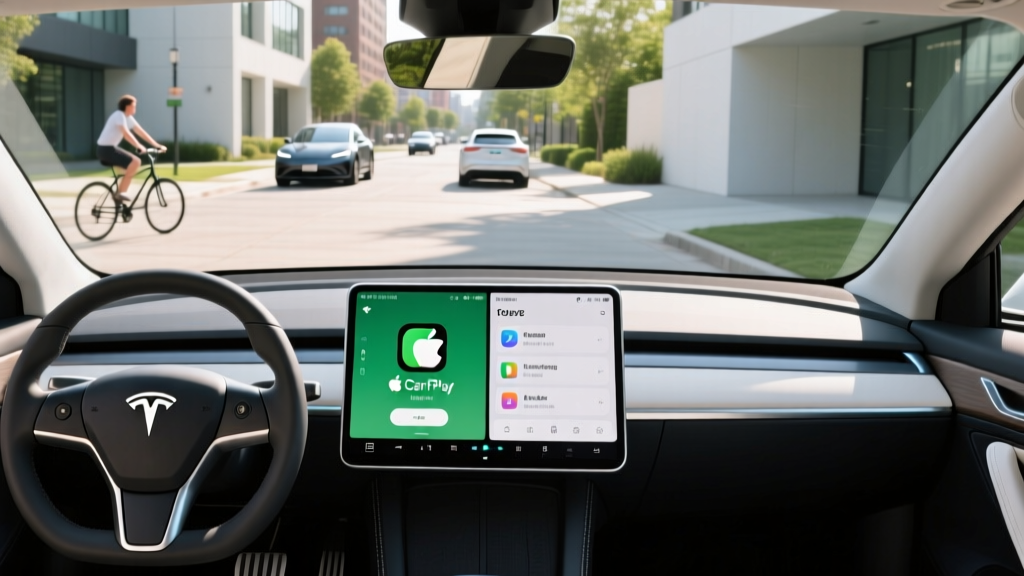
If you've ever sat in a Tesla and instinctively reached for your phone expecting Apple CarPlay to pop up on the center screen, you're not alone. The question "when is CarPlay coming to Tesla?" is one of the most persistent searches among EV shoppers — and the honest answer in 2026 remains: it isn't, and Tesla has given no indication it ever will.
Unlike nearly every other automaker — from Ford and Hyundai to Rivian and even legacy holdouts like Toyota — Tesla has built its entire infotainment ecosystem in-house and has consistently refused to integrate Apple CarPlay or Android Auto. CEO Elon Musk has stated publicly that Tesla's proprietary software is central to the vehicle experience, and as of the 2026 model year, that position hasn't budged.
But the absence of CarPlay doesn't mean Tesla's infotainment is lacking. To understand the full picture — and whether Tesla's walled garden is a dealbreaker or a non-issue — let's examine the 2026 Tesla Model 3 in depth, including what workarounds exist for CarPlay loyalists.
2026 Tesla Model 3: Quick Specs at a Glance
| Spec | Model 3 RWD | Model 3 Long Range AWD | Model 3 Performance |
|---|---|---|---|
| EPA Range | 272 mi | 363 mi | 315 mi |
| Battery (usable) | ~57.5 kWh (LFP) | ~75 kWh (NMC) | ~75 kWh (NMC) |
| Peak DC Fast Charge | 170 kW | 250 kW | 250 kW |
| 10–80% DCFC Time | ~28 min | ~25 min | ~25 min |
| Level 2 Home Charging | 11.5 kW (~37 mi/hr) | 11.5 kW (~37 mi/hr) | 11.5 kW (~37 mi/hr) |
| 0–60 mph | 5.8 sec | 4.2 sec | 2.9 sec |
| Horsepower | 271 hp | 346 hp | 510 hp |
| Drivetrain | RWD | Dual Motor AWD | Dual Motor AWD |
| Base MSRP | $38,990 | $44,990 | $50,990 |
| EPA Efficiency | 132 MPGe (25 kWh/100mi) | 134 MPGe (25 kWh/100mi) | 119 MPGe (28 kWh/100mi) |
| Battery Warranty | 8 yr / 100,000 mi | 8 yr / 120,000 mi | 8 yr / 120,000 mi |
Source: EPA fueleconomy.gov, Tesla.com specifications (2026 model year).
Real-World Range: What the EPA Number Doesn't Tell You
EPA Sticker: 363 miles (Long Range AWD)
Real-World Highway (70 mph, mild weather): ~290–320 miles
Real-World Highway (cold weather, 30°F): ~230–270 miles
City/Mixed Commuting: ~330–350 miles (regen braking recovers more energy at lower speeds)
The 2026 Model 3 Long Range AWD carries an EPA-estimated 363 miles of range — among the highest of any sedan in its price class. But as any experienced EV owner knows, the EPA sticker is an idealized composite. In real-world highway driving at 70 mph with climate control active, expect roughly 290 to 320 miles before you need to stop.
Cold weather is the bigger range killer. Tesla's heat pump (standard on all 2026 trims) significantly mitigates cabin-heating energy draw compared to resistive heaters, but battery chemistry itself slows in freezing temperatures. At 30°F, highway range drops roughly 20–30%, putting you in the 230–270 mile window. That's still enough for most daily driving, but it matters on road trips through mountain passes or northern winters.
The RWD trim's smaller LFP battery yields a 272-mile EPA rating. LFP (lithium iron phosphate) chemistry offers excellent longevity and can be charged to 100% regularly without degradation concerns — a meaningful daily-ownership advantage. However, LFP batteries lose proportionally more range in cold weather than NMC packs, so cold-climate RWD buyers should plan conservatively.
Charging Speed: DC Fast Charging and Home Setup
| Charging Level | Power / Rate | Miles Added per Hour | Notes |
|---|---|---|---|
| Level 1 (120V household) | ~1.4 kW | ~3–5 mi/hr | Emergency/trickle only |
| Level 2 (240V home, 48A) | 11.5 kW | ~37 mi/hr | Full overnight charge in 7–9 hours |
| DC Fast Charge (RWD) | Peak 170 kW | ~750 mi/hr (peak) | 10–80% in ~28 min |
| DC Fast Charge (LR/Perf) | Peak 250 kW | ~1,000 mi/hr (peak) | 10–80% in ~25 min |
Tesla's Supercharger network remains the gold standard for public DC fast charging — not just for peak speed but for reliability and plug-and-charge simplicity. The Long Range and Performance trims peak at 250 kW on V3 Superchargers, though sustained rates depend heavily on battery temperature and state of charge.
Charging curve reality: The advertised 250 kW peak is only sustained roughly between 10–30% SoC. Above 50%, the rate tapers progressively — dropping to ~100 kW around 60%, and below 50 kW above 80%. This is why Tesla (and all EV manufacturers) quote 10–80% times rather than 0–100%. That last 20% can take as long as the first 70%.
For home charging, a Level 2 wall connector at 48 amps delivers 11.5 kW, adding roughly 37 miles of range per hour. A full overnight session easily replenishes any daily commute. Tesla's Wall Connector costs $475, and professional installation typically runs $500–$2,000 depending on your electrical panel's capacity. If your panel needs an upgrade to 200A, add $1,500–$3,000.
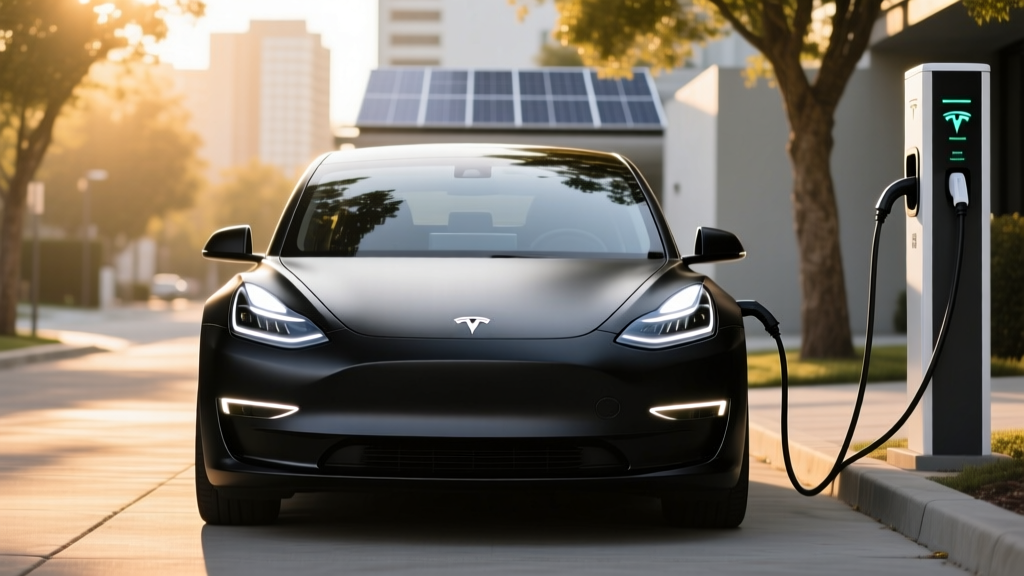
Tesla now ships all vehicles with a NACS (North American Charging Standard) port natively. Non-Tesla chargers with CCS connectors require an adapter, though Tesla sells a CCS adapter for $175.
Why Tesla Won't Add CarPlay — And What You Can Do About It
Tesla's refusal to adopt Apple CarPlay or Android Auto is rooted in its vertical integration philosophy. The company views its infotainment system — which controls everything from navigation and media to suspension settings, Sentry Mode cameras, and over-the-air software updates — as a core product differentiator, not a commodity screen to hand over to a phone OS.
From Tesla's perspective, CarPlay would:
- Fragment the UI, requiring drivers to toggle between Tesla's native interface and Apple's overlay
- Limit Tesla's ability to push OTA updates that add vehicle-integrated features
- Reduce the value of Tesla's built-in apps (Spotify, Apple Music, YouTube, Netflix, Arcade) and data collection
Workarounds for CarPlay loyalists in 2026:
- Bluetooth audio + phone navigation: Pair your iPhone for calls, messages, and audio streaming. Use Tesla's built-in navigation (powered by map data and integrated with the vehicle's battery preconditioning for Superchargers).
- Tesla's native app ecosystem: Spotify, Apple Music, Tidal, and podcasts are all built in. Navigation includes real-time traffic, Supercharger routing, and automatic battery preconditioning before arrival at a charger — a feature CarPlay cannot replicate.
- Third-party screen mirroring boxes: Some aftermarket devices claim to mirror CarPlay to the Tesla screen via the browser, but these are unsupported, unreliable, and may violate Tesla's terms of service. We don't recommend them.
The honest assessment: Tesla's built-in system is genuinely excellent for most tasks. Navigation with Supercharger integration, voice commands ("Hey, Tesla"), and the 15.4-inch touchscreen are responsive and well-designed. The gap versus CarPlay is mostly felt in familiarity — if you're deeply embedded in Apple Maps, Siri shortcuts, and CarPlay's simplified interface, the adjustment period is real.
Pricing, Trims, and Federal Tax Credit Eligibility
| Trim | Base MSRP | Destination | As-Tested (typical config) | §30D Credit Eligible? |
|---|---|---|---|---|
| Model 3 RWD | $38,990 | $1,390 | $40,380 | Yes (up to $7,500) |
| Model 3 Long Range AWD | $44,990 | $1,390 | $47,500–$49,000 | Yes (up to $7,500) |
| Model 3 Performance | $50,990 | $1,390 | $53,000–$55,000 | Yes (up to $7,500) |
All 2026 Model 3 trims fall under the IRS §30D MSRP cap of $55,000 for sedans. However, qualifying for the full $7,500 federal tax credit depends on several factors that change frequently:
- Buyer income cap: AGI ≤ $150,000 (single) / $225,000 (head of household) / $300,000 (joint)
- MSRP cap: ≤ $55,000 for sedans (all Model 3 trims qualify)
- Battery sourcing: Critical minerals and battery components must meet escalating domestic-content thresholds — verify current-year compliance at IRS.gov §30D
- Point-of-sale transfer: Eligible buyers can apply the credit at purchase, reducing the out-of-pocket price immediately
- One vehicle per 3 years: The credit is limited to one new EV purchase per eligible buyer every three years
Tax credit rules are subject to legislative change. Consult a tax professional and verify current eligibility on IRS.gov before purchasing.
With the full $7,500 credit applied at point of sale, a base Model 3 RWD effectively costs around $32,880 — making it one of the most affordable premium EVs on the market. The Long Range drops to roughly $38,880, which is competitive with mid-trim Hyundai Ioniq 6 and BMW i4 pricing after credits.
Performance, Interior, and Daily Ownership
The 2026 Model 3 Performance delivers a 2.9-second 0–60 mph time that embarrasses most sports cars, while the base RWD's 5.8 seconds is still brisker than most gas-powered compact sedans. Dual-motor AWD trims provide confident traction in rain and light snow, and the adaptive suspension on the Performance trim (new for the Highland refresh) noticeably improves ride quality over earlier Model 3 generations.
Interior dimensions:
- Front legroom: 42.7 inches
- Rear legroom: 35.2 inches
- Cargo volume: 23 cu ft (trunk) + 3.1 cu ft (frunk) = 26.1 cu ft total
- Seating: 5 passengers (though the rear middle seat is narrow)
The minimalist cabin centers on the 15.4-inch touchscreen, which handles virtually every vehicle function. There are no physical buttons for climate, mirrors, or glovebox — everything routes through the screen or voice commands. A secondary 8-inch rear touchscreen (added in the Highland redesign) gives rear passengers climate and media control, which is a meaningful upgrade.
Driver assistance: Tesla's Basic Autopilot (lane centering + adaptive cruise) is standard and competent. Full Self-Driving (Supervised) remains a $8,000 option or $99/month subscription. Despite the name, FSD is an SAE Level 2 system — it requires continuous driver supervision, hands-on or eyes-on monitoring, and is not autonomous driving. It handles many scenarios impressively but can make unpredictable decisions in construction zones, unmapped roads, or complex intersections.
Tesla Autopilot and FSD (Supervised) are SAE Level 2 driver-assistance systems. The driver must remain engaged, monitor the road, and be prepared to take over at any moment. This is not self-driving. Only Level 4 services (e.g., Waymo in designated zones) operate without a human driver.
Pros, Cons, and the CarPlay Verdict
- Best-in-class Supercharger network access
- Class-leading efficiency (25 kWh/100 mi on LR)
- Excellent OTA updates add features over time
- LFP battery option allows daily 100% charging
- Strong resale value relative to most EVs
- Integrated nav with battery preconditioning
- No Apple CarPlay or Android Auto — ever, likely
- Buttonless interior frustrates some drivers
- Insurance costs above segment average
- Rear seat is tighter than Ioniq 6 or BMW i4
- FSD (Supervised) is expensive and still Level 2
- Panel gaps and paint quality remain inconsistent
Who Should Buy the 2026 Tesla Model 3 (And Who Shouldn't)
Choose the Model 3 if:
- You value Supercharger network reliability above all else for road trips
- You're comfortable with a screen-centric interior and no CarPlay
- You want the best efficiency-to-price ratio in a premium EV sedan
- You charge primarily at home and want a proven, well-supported platform
- Performance matters (the Performance trim is genuinely thrilling)
Look elsewhere if:
- Apple CarPlay or Android Auto is a non-negotiable for you (consider the Hyundai Ioniq 6, BMW i4, or Polestar 2)
- You need maximum rear-seat space for adults (Ioniq 6 is roomier)
- You prefer physical buttons and knobs for climate/media
- You live in an area with limited Supercharger coverage and rely on third-party CCS networks
Frequently Asked Questions
When is CarPlay coming to Tesla?
As of 2026, Tesla has announced no plans to support Apple CarPlay or Android Auto. The company's proprietary infotainment system is deeply integrated with vehicle controls, navigation, and OTA updates, and Tesla views this as a competitive advantage. Industry analysts see no indication this will change.
Is Tesla's built-in navigation better than Apple Maps?
For EV-specific routing, yes. Tesla's navigation automatically routes through Superchargers, estimates arrival state-of-charge, and preconditions the battery before you arrive at a DC fast charger — optimizing charge speed. Apple Maps (even via CarPlay in other cars) cannot precondition a Tesla's battery. However, for general point-of-interest search and traffic visualization, Apple Maps and Google Maps have richer data.
What is the real-world range of the 2026 Model 3 Long Range?
The EPA rates it at 363 miles. In real-world highway driving at 70 mph in mild weather, expect 290–320 miles. In freezing temperatures, that drops to roughly 230–270 miles. City driving with regenerative braking recovers more energy, yielding closer to the EPA figure.
Does the 2026 Model 3 qualify for the $7,500 federal tax credit?
All trims are under the $55,000 MSRP cap for sedans. Eligibility depends on your adjusted gross income (≤$150K single / $300K joint), battery component and critical mineral sourcing requirements (which tighten annually), and the one-vehicle-per-three-years limit. Verify current rules at IRS.gov and consult a tax professional.
Is the Model 3 worth buying over the Hyundai Ioniq 6 or BMW i4?
The Model 3 wins on efficiency, Supercharger access, and software. The Ioniq 6 offers CarPlay, more rear legroom, and 800V ultra-fast charging (10–80% in ~18 min). The BMW i4 provides a more traditional luxury interior with CarPlay but at a higher price point. If CarPlay is essential, the Ioniq 6 or i4 are stronger choices. If charging infrastructure and efficiency are paramount, the Model 3 remains the benchmark.
How much does it cost to charge a Model 3 at home vs. Supercharger?
At the US average residential electricity rate of ~$0.16/kWh, a full 75 kWh charge (Long Range) costs about $12 — roughly $0.04 per mile. Supercharger pricing varies by location and time of day but averages $0.25–$0.35/kWh, or about $0.07–$0.10 per mile. Both are significantly cheaper than gasoline at current prices.