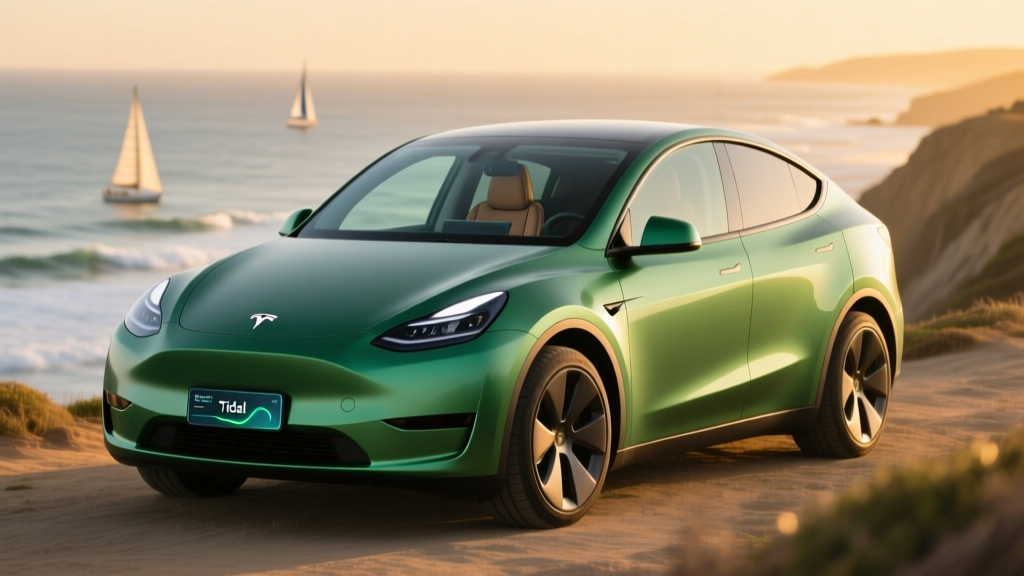
If you've been browsing Tesla's configurator or scanning EV forums lately, you've likely encountered the term "Tidal" and wondered what it means. The short answer: Tidal is the mid-tier trim designation Tesla introduced for the 2026 Model Y Juniper refresh, sitting between the base Standard Range and the Performance variant. It replaces what was previously known as the Long Range AWD in Tesla's naming convention and brings a suite of hardware and software upgrades that make it arguably the sweet spot in the Model Y lineup.
But a new name is only as good as the specs behind it. Below, we break down exactly what the 2026 Tesla Model Y Tidal delivers — range, charging speed, powertrain, pricing, tax-credit eligibility, and real-world ownership practicality — so you can decide whether it's the right EV for your garage.
2026 Tesla Model Y Tidal: Core Specifications
| Attribute | Value |
|---|---|
| EPA Estimated Range | 320 miles |
| Battery Capacity (Usable) | 78.1 kWh (NMC chemistry) |
| Drivetrain | Dual-Motor AWD |
| Horsepower | 384 hp (combined) |
| 0–60 mph | 4.8 seconds |
| Top Speed | 135 mph |
| Max DC Fast-Charge Rate | 250 kW (peak) |
| 10–80% DC Fast Charge | ~24 minutes |
| Level 2 Home Charge Rate | 11.5 kW (~44 mi/hr) |
| EPA Efficiency | 111 MPGe combined / 30 kWh/100 mi |
| Cargo Volume (rear seats up) | 30.2 cu ft |
| Cargo Volume (rear seats folded) | 72.1 cu ft |
| Rear Legroom | 41.6 inches |
| Base MSRP | $44,990 (before destination) |
| Destination Fee | $1,390 |
| Battery & Drive Unit Warranty | 8 years / 120,000 miles |
| Basic Vehicle Warranty | 4 years / 50,000 miles |
Real-World Range: What the EPA Sticker Doesn't Tell You
Real-World Highway (70 mph, moderate climate): ~275–290 miles
Real-World Cold Weather (below 32°F, highway): ~230–250 miles
City / Mixed Commuting (with regen): ~300–315 miles
The 320-mile EPA figure is competitive with rivals like the Hyundai Ioniq 5 Long Range AWD (305 miles EPA) and slightly behind the Kia EV6 GT-Line AWD (310 miles EPA). But EPA estimates assume a mix of city and highway driving under moderate temperatures.
In sustained highway driving at 70–75 mph, expect to lose roughly 10–15% off the sticker, landing around 275–290 miles before you need to find a Supercharger. In freezing temperatures, lithium-ion chemistry inherently loses efficiency — the Model Y Tidal's heat pump helps mitigate this compared to older EVs without one, but you should still budget a 20–30% reduction on the coldest days. For a 250-mile winter highway trip, plan a brief charging stop.
The Tidal's NMC (nickel manganese cobalt) battery pack prioritizes energy density, which is why it achieves 320 miles from a 78.1 kWh usable capacity. If you prioritize maximum cycle life and daily 100% charging over peak range, Tesla's Standard Range trim uses an LFP (lithium iron phosphate) pack that tolerates full charges better but delivers fewer total miles per charge.
Charging Speed: Supercharger Network Advantage
| Charge Level | Power / Voltage | Miles Added Per Hour | Notes |
|---|---|---|---|
| Level 1 (120V household) | ~1.4 kW | ~5 mi/hr | Emergency/trickle only |
| Level 2 (240V home) | 11.5 kW | ~44 mi/hr | Full charge in ~7 hours |
| DC Fast Charge (V3 Supercharger) | 250 kW peak | ~162 mi in 15 min | 10–80% in ~24 min |
| DC Fast Charge (V4 Supercharger) | Up to 250 kW | Similar to V3 | Wider cable, CCS adapter not needed |
| Third-Party DC (Electrify America, etc.) | Up to 250 kW | Varies by station | NACS native; no adapter required at new NACS stations |
Tesla's 250 kW peak charge rate isn't the highest in the segment — the Hyundai Ioniq 5 and Kia EV6 can peak at 350 kW on 800V architecture — but Tesla compensates with two critical advantages:
- Supercharger network reliability. As of early 2026, Tesla operates over 6,500 Supercharger stations in North America. Uptime and plug-and-charge convenience remain industry-leading.
- Battery preconditioning. When you navigate to a Supercharger, the Model Y Tidal automatically warms the battery pack to its optimal charging temperature before you arrive. This means you hit peak charge rate faster and sustain it longer, reducing real-world charging time compared to EVs without active preconditioning.
Charge curve reality check: The 250 kW figure is a peak, not a sustained rate. Expect to see 250 kW between roughly 10–30% state of charge (SoC), tapering to ~150 kW by 50% SoC and ~75 kW by 75% SoC. This is normal lithium-ion behavior — no EV sustains peak rate across the full curve. The 10–80% time of approximately 24 minutes reflects this taper and is competitive for a 400V-class architecture.
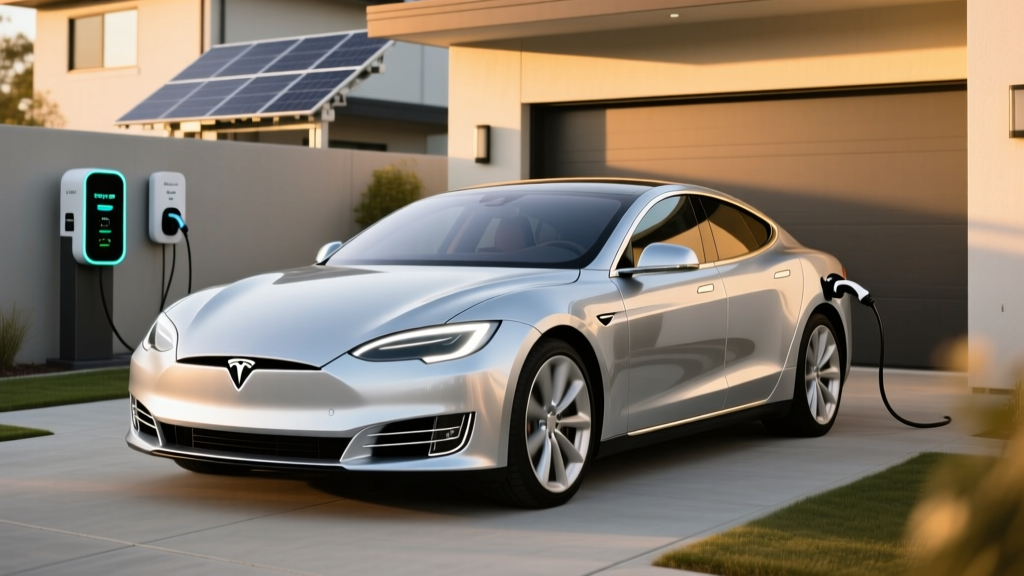
For home charging, the Tidal's onboard charger accepts up to 11.5 kW on a 48-amp Level 2 circuit (hardwired, 60-amp breaker). A full overnight charge from 10% to 100% takes roughly 7 hours. If your home has a 200-amp electrical panel with spare capacity, installation typically runs $500–$1,500 for a Tesla Wall Connector. Older homes with 100-amp panels may require a $2,000–$4,000 panel upgrade — consult a licensed electrician for a site assessment.
Performance, Ride, and the Juniper Platform Upgrades
The Tidal's dual-motor AWD powertrain produces 384 combined horsepower and rockets the Model Y from 0–60 mph in 4.8 seconds. That's brisk for a family crossover and meaningfully quicker than the single-motor Standard Range (6.6 seconds).
The Juniper refresh brought substantive ride-quality improvements over the pre-2025 Model Y:
- Acoustic glass on all four doors and thicker windshield laminates reduce cabin noise by several decibels at highway speed.
- Retuned suspension with frequency-selective dampers smooths out sharp impacts without sacrificing the composed cornering feel.
- Ambient lighting and ventilated front seats are now standard on the Tidal trim (previously optional or unavailable).
- Rear-seat touchscreen (8-inch display) lets rear passengers control climate, media, and entertainment — a welcome addition for family road trips.
Driver Assistance: Autopilot and FSD (Supervised)
The driver must remain engaged, hands on or near the wheel, and eyes on the road at all times. Autopilot and FSD (Supervised) are not self-driving systems. Only Level 4 robotaxi services like Waymo operate without a human driver.
Every Model Y Tidal ships with Basic Autopilot (adaptive cruise control + lane centering). Tesla's optional Full Self-Driving (Supervised) package ($8,000 one-time or $99/month as of 2026) adds automatic lane changes, traffic-light and stop-sign recognition, and enhanced navigate-on-autopilot. FSD has improved considerably, but it remains a Level 2 system requiring constant driver supervision. For hands-free highway driving on mapped roads, GM's Super Cruise and Ford's BlueCruise remain strong competitors with clearer operational design domains.
Pricing, Trims, and Federal Tax Credit Eligibility
| Trim | Base MSRP | With Destination | Est. After §30D Credit* |
|---|---|---|---|
| Standard Range (RWD, LFP) | $36,490 | $37,880 | ~$30,380 |
| Tidal (AWD, NMC) | $44,990 | $46,380 | ~$38,880 |
| Performance (AWD, NMC) | $51,490 | $52,880 | ~$45,380 |
*Estimated after maximum $7,500 federal tax credit. Actual eligibility depends on buyer income, battery sourcing, and point-of-sale transfer rules. See checklist below.
Federal EV Tax Credit (§30D) Eligibility Checklist
- MSRP Cap: Vehicle MSRP must not exceed $80,000 for SUVs/crossovers — all Model Y trims qualify.
- Buyer Income Cap: Modified adjusted gross income (MAGI) must not exceed $150,000 (single), $225,000 (head of household), or $300,000 (married filing jointly).
- Battery Sourcing: At least 60% of battery component value must be manufactured or assembled in North America (2026 threshold). Tesla's Austin-built packs meet this requirement for the Tidal trim.
- Critical Minerals: At least 60% of critical mineral value must be sourced from the U.S. or a free-trade-agreement country (2026 threshold). Tesla has been progressively qualifying, but confirm current status at purchase.
- Point-of-Sale Transfer: As of 2024+, you can transfer the credit to the dealer at purchase, reducing your out-of-pocket cost immediately — you don't have to wait until tax filing. Confirm with Tesla at delivery.
For the most current rules, consult the IRS Clean Vehicle Credits page. Tax professionals can verify your specific eligibility based on income and filing status.
Who Should Buy the Model Y Tidal — and Who Shouldn't?
- You want a 300+ mile real-world range with AWD for all-season confidence.
- You value the Supercharger network for road-trip convenience.
- You need family-friendly cargo space (30.2 cu ft rear seats up, 72.1 cu ft folded).
- You prefer over-the-air software updates that continuously add features.
- Your daily commute is under 80 miles round-trip, and you can charge at home.
- You want the absolute fastest DC charging (Ioniq 5/EV6 at 350 kW on 800V).
- You prefer physical buttons and traditional instrument clusters (Tesla is minimalist/screen-centric).
- You want a true hands-free highway driving system (GM Super Cruise, Ford BlueCruise).
- You need a truck bed or more than 72 cu ft of cargo (consider the Rivian R1S or Ford F-150 Lightning).
- You cannot install home charging and your area lacks reliable public DC infrastructure.
Model Y Tidal vs. Key Competitors
| Spec | Tesla Model Y Tidal | Hyundai Ioniq 5 Long Range AWD | Kia EV6 GT-Line AWD |
|---|---|---|---|
| EPA Range | 320 mi | 305 mi | 310 mi |
| Battery (Usable) | 78.1 kWh (NMC) | 84.0 kWh (NMC) | 77.4 kWh (NMC) |
| Max DC Charge | 250 kW | 350 kW (800V) | 350 kW (800V) |
| 10–80% DC Time | ~24 min | ~18 min | ~18 min |
| 0–60 mph | 4.8 sec | 5.1 sec | 4.5 sec |
| Base MSRP (AWD) | $44,990 | $49,850 | $51,900 |
| Charging Network | Supercharger (native NACS) | NACS adapter / third-party | NACS adapter / third-party |
The Ioniq 5 and EV6 charge faster thanks to their 800V architecture, and both offer more conventional interiors with physical controls. But the Model Y Tidal undercuts them on price by $4,000–$7,000 while delivering more EPA range and access to the Supercharger network without adapters. For buyers who prioritize value and charging-infrastructure ease, the Tidal makes a compelling case.
Biggest Pros and Cons
- Class-leading 320-mile EPA range at a competitive price point
- Supercharger network — the most reliable and extensive DC fast-charging network in North America
- Spacious cabin with 72.1 cu ft max cargo; rear touchscreen adds family utility
- Juniper refresh brings quieter cabin, better ride quality, ventilated seats standard
- Strong efficiency at 111 MPGe combined — low cost per mile
- OTA updates continuously improve vehicle over ownership
- Qualifies for up to $7,500 federal tax credit (subject to buyer eligibility)
- 250 kW peak charge rate trails 800V competitors (Ioniq 5/EV6 at 350 kW)
- Screen-centric interior with no physical climate or volume controls
- FSD (Supervised) remains Level 2 — requires full driver attention despite the name
- No Apple CarPlay or Android Auto — Tesla's proprietary infotainment only
- Insurance premiums tend to run 15–25% higher than comparable ICE crossovers
- NMC chemistry means Tesla recommends daily charge to 80% (not 100%) for longevity
Frequently Asked Questions
What does "Tidal" mean in Tesla's lineup?
Tidal is the mid-tier trim name Tesla introduced for the 2026 Model Y Juniper refresh. It replaces the previous "Long Range AWD" badge and denotes the dual-motor, all-wheel-drive configuration with the NMC battery pack and 320-mile EPA range.
What is the real-world range of the Model Y Tidal?
Expect approximately 275–290 miles on highway-heavy trips at moderate temperatures, and 230–250 miles in freezing weather. City and mixed driving with regenerative braking can yield 300–315 miles. The EPA sticker reads 320 miles.
How fast does the Model Y Tidal charge at home and on the road?
On a 48-amp Level 2 home charger, it adds roughly 44 miles per hour (11.5 kW), reaching a full charge overnight in about 7 hours. On a V3 or V4 Supercharger, it peaks at 250 kW and charges from 10–80% in approximately 24 minutes.
Does the 2026 Model Y Tidal qualify for the $7,500 federal tax credit?
It meets the MSRP cap ($80,000 for SUVs) and Tesla's Austin-built battery packs satisfy the North American manufacturing requirement. However, eligibility also depends on your income (MAGI caps apply) and the critical-minerals sourcing threshold at time of purchase. Confirm current qualification on irs.gov or with a tax professional.
Is the Model Y Tidal worth buying over the Ioniq 5 or EV6?
If Supercharger access, lower MSRP, and longer EPA range are your priorities, yes. If you want faster 350 kW DC charging, physical interior controls, or a more conventional cabin layout, test-drive the Hyundai and Kia before deciding.
What's the battery warranty on the Model Y Tidal?
Tesla covers the battery and drive units for 8 years or 120,000 miles (whichever comes first), with a guaranteed minimum 70% capacity retention over that period. The basic vehicle warranty is 4 years / 50,000 miles.
Can the Model Y Tidal tow?
Yes. When equipped with the optional tow package, the Model Y Tidal is rated for up to 3,500 pounds — sufficient for a small utility trailer, a pair of dirt bikes, or a lightweight camper. Towing will reduce range by approximately 30–40%.
Sources: fueleconomy.gov (EPA), IRS Clean Vehicle Credits, Tesla official specifications.