Quick Answer: Should You Buy the Ford Capri EV?
The Ford Capri EV is a European-market electric crossover coupe built on Volkswagen's MEB platform, offering up to 390 miles of WLTP range (~325 miles EPA-equivalent) from a 77 kWh usable NMC battery. It DC fast-charges at up to 135 kW (10–80% in roughly 26 minutes). Starting around €48,000 (~$52,000 USD), it targets style-conscious buyers who want a sportier alternative to the VW ID.4 or Tesla Model Y. However, Ford has not announced U.S. availability, and the Capri currently lacks eligibility for the U.S. federal §30D tax credit. If you're outside Europe or need DC charging above 200 kW for frequent road trips, competitors like the Hyundai Ioniq 5 or Tesla Model Y remain stronger picks.
What Is the Ford Capri EV?
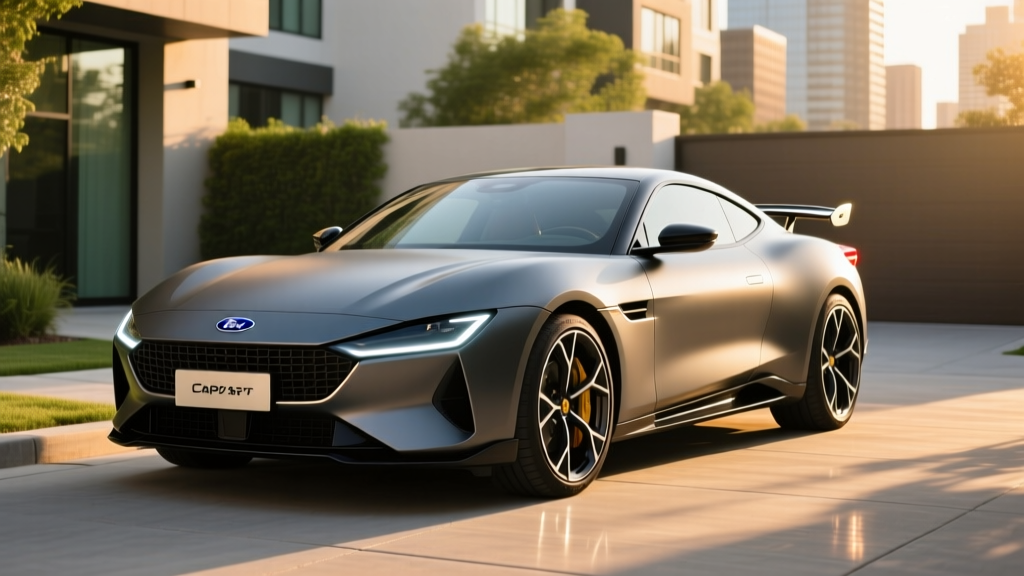
The Ford Capri EV is a battery-electric five-door crossover coupe that revives Ford's iconic 1970s–80s nameplate for the electric era. Launched for the European market in mid-2024 and entering its second model year for 2026, the Capri shares its underpinnings — Volkswagen Group's MEB platform — with the Ford Explorer EV and VW ID.5. It's built at Ford's Cologne Electrification Center in Germany.
Unlike the boxier Explorer EV, the Capri leans into a sloping roofline and sport-tuned suspension to differentiate itself from mainstream electric crossovers. Ford positions it against the Tesla Model Y, Renault Scenic E-Tech, and Peugeot e-3008.
Range, Battery & Charging: The Numbers That Matter
The Capri EV comes in two battery configurations. Here's the spec breakdown buyers need:
| Specification | Standard Range | Extended Range |
|---|---|---|
| Battery (usable) | 52 kWh (LFP) | 77 kWh (NMC) |
| WLTP Range | ~255 mi (410 km) | ~390 mi (627 km) |
| Est. EPA-Equivalent Range | ~210 mi | ~325 mi |
| Motor | RWD, 282 hp | RWD, 282 hp / AWD, 335 hp |
| 0–62 mph (0–100 km/h) | ~6.4 sec | ~5.3 sec (RWD) |
| Max DC Charge Rate | ~125 kW | ~135 kW |
| 10–80% DC Charge Time | ~24 min | ~26 min |
| AC Level 2 Charge | 11 kW (7.5 hr full) | 11 kW (8.5 hr full) |
| Connector (Europe) | CCS2 (Type 2 + DC pins) | |
Real-World Range Reality Check
WLTP ratings are optimistic compared to U.S. EPA testing. For the Extended Range model's 390-mile WLTP figure, expect roughly 325 miles EPA-equivalent in mixed driving. In real-world conditions:
- Highway driving (70 mph / 113 km/h): ~280–295 miles
- Cold weather (below 32°F / 0°C): ~240–265 miles (20–25% reduction typical for NMC without aggressive heat-pump preconditioning)
- City / moderate climate: ~310–330 miles
The Standard Range model's LFP battery is more resilient in cold weather and tolerates frequent 100% charging without degradation concerns — a practical advantage for daily commuters who charge at home.
Charging Curve: What 135 kW Actually Means
The Capri's peak DC charge rate of 135 kW is a ceiling, not a sustained average. Expect the charging curve to hold near peak from roughly 10% to 40% State of Charge (SoC), then taper progressively. From 80% to 100%, charging slows dramatically to protect battery health — adding the final 20% can take as long as the 10–80% session. For road-trip efficiency, plan stops around the 10–80% window.
Compared to the Hyundai Ioniq 5's 800V architecture (240 kW peak, 10–80% in ~18 minutes) or the Tesla Model Y's ~250 kW capability, the Capri's charging speed is adequate but not class-leading. If you regularly drive routes with limited charger availability, this 8-minute difference per stop adds up.
EV vs. Gas vs. Hybrid: How the Capri Compares
European buyers cross-shopping the Capri often compare it against the Ford Kuga PHEV (plug-in hybrid) or a conventional gas crossover like the VW Tiguan. Here's a data-driven comparison:
| Metric | Ford Capri EV (Extended Range) | Ford Kuga PHEV | VW Tiguan 2.0 TSI (Gas) |
|---|---|---|---|
| Powertrain | BEV (77 kWh) | PHEV (14.4 kWh + 2.5L) | ICE (2.0L turbo) |
| Electric-Only Range | ~325 mi (full battery) | ~38 mi (WLTP) | N/A |
| Fuel / Energy Cost (per 100 mi) | ~€5.50 (home charging, €0.30/kWh) | ~€7.00 (mixed EV + gas) | ~€14.50 (gas at €1.85/L) |
| CO₂ Emissions (tailpipe) | 0 g/km | ~22 g/km (WLTP weighted) | ~155 g/km |
| Maintenance (annual est.) | ~€250 | ~€500 | ~€600 |
| Base Price (Europe) | ~€55,000 | ~€44,000 | ~€39,000 |
The Capri's per-mile energy cost is roughly 60% lower than the gas Tiguan when charging at home at European residential electricity rates. Public DC fast charging at €0.55–0.70/kWh narrows that gap, pushing the Capri's per-100-mile cost to roughly €8.50–10.80 — still cheaper than gas but not dramatically so.
The Kuga PHEV is a strong middle ground if you lack reliable home charging and take frequent long trips. But if you can charge at home and drive under 200 miles daily, the Capri's running-cost advantage compounds to €1,200–1,800/year in fuel savings over the Tiguan.
Total Cost of Ownership: 5-Year Breakdown
Purchase price is only part of the equation. Here's a realistic 5-year / 60,000-mile ownership cost projection for the Capri EV Extended Range, compared to the gas Tiguan:
| Cost Category (5 Years) | Ford Capri EV | VW Tiguan (Gas) |
|---|---|---|
| Purchase Price | €55,000 | €39,000 |
| Government Incentives | –€4,500 (varies by country) | €0 |
| Fuel / Electricity | €3,300 (home charging) | €8,700 |
| Maintenance | €1,250 | €3,000 |
| Insurance (avg.) | €6,500 | €5,200 |
| Estimated Depreciation | €22,000 (40%) | €17,500 (45%) |
| 5-Year Total Cost | ~€61,550 | ~€58,400 |
| Cost Per Mile | ~€1.03 | ~€0.97 |
The Capri's higher purchase price and insurance premiums (EV insurance averages 15–20% higher in Europe due to battery replacement costs and specialized repair requirements) mean the 5-year total cost is slightly higher than the Tiguan. However, the gap narrows significantly with higher annual mileage, cheaper off-peak electricity tariffs, or stronger local incentives. Beyond year 5, the Capri's lower maintenance burden — no oil changes, fewer brake replacements thanks to regenerative braking, no transmission service — begins to shift the balance.
Note: U.S. readers — the Capri is not currently sold in North America. For U.S. federal tax credit rules under IRS §30D, eligibility requires meeting MSRP caps ($55,000 for SUVs), buyer income limits, and critical-mineral/battery-sourcing requirements. The Capri's European build and battery sourcing would likely not qualify even if imported.
Real-World Ownership: What First-Time EV Buyers Must Know
Home Charging Access Is the Deciding Factor
The Capri's economics depend heavily on home charging. At a European residential rate of €0.25–0.35/kWh, a full 77 kWh charge costs roughly €19–27 — delivering ~325 real-world miles. That's equivalent to paying €0.06–0.08 per mile.
Without home charging, reliance on public DC fast charging (€0.55–0.70/kWh) pushes costs to €0.13–0.17 per mile, erasing most of the fuel-cost advantage over gas. Before purchasing, confirm:
- Your residence allows Level 2 wallbox installation (landlord/HOA approval)
- Your electrical panel can support a dedicated 32A / 7.4–11 kW circuit (a licensed electrician should verify)
- Typical installation cost: €1,200–2,500 including the wallbox unit and labor
Cold Weather and Range Planning
The Capri's NMC Extended Range battery will lose 20–25% of its range in sustained sub-freezing temperatures. Ford includes a heat pump (standard on most trims), which mitigates cabin-heating energy draw but doesn't fully eliminate cold-weather range loss. If you live in northern Europe or mountainous regions, plan for ~240–265 miles of real winter range and precondition the battery via the FordPass app before fast-charging stops.
Insurance and Depreciation
EV insurance premiums remain elevated across the industry. The Capri's battery replacement cost (estimated €12,000–18,000 out of warranty) factors into actuarial pricing. Shop quotes before committing — premiums vary by 20–30% between insurers for the same EV model.
Ford provides an 8-year / 100,000-mile (160,000 km) battery warranty guaranteeing at least 70% capacity retention. This is industry-standard and aligns with VW, Tesla, and Hyundai coverage.
Common Misconceptions About the Capri EV
| Myth | Fact |
|---|---|
| "It's just a rebadged VW ID.5" | The Capri shares the MEB platform but has unique Ford body panels, interior design, suspension tuning, and software. Driving dynamics differ noticeably. |
| "390-mile range means I'll always get 390 miles" | WLTP is optimistic. Real-world mixed driving yields ~325 miles; highway or cold-weather driving drops it further to 240–295 miles. |
| "I can charge at any U.S. Supercharger" | The Capri uses CCS2 (European standard). It is not sold in the U.S. and has no NACS compatibility. U.S. Tesla Superchargers with Magic Dock adapters serve CCS1 vehicles, not CCS2. |
| "Fast charging to 100% is fine" | DC fast charging above 80% is slow and stresses NMC cells. Charge to 80% for daily use and 100% only before long trips. LFP Standard Range models tolerate 100% better. |
| "The battery will need replacing in 5 years" | Modern NMC batteries typically retain 85–90% capacity after 100,000 miles. The 8-year warranty backs this. Premature failure is rare. |
Decision Framework: Is the Ford Capri EV Right for You?
Choose the Ford Capri EV If:
- You live in Europe and want a stylish electric crossover with 300+ real-world miles of range
- You have reliable home or workplace Level 2 charging
- You value a sport-tuned ride and coupe-like design over maximum cargo space
- Your daily commute is under 150 miles round-trip
- You want to avoid diesel/gas congestion charges in European low-emission zones
Look Elsewhere If:
- You need U.S. market availability or §30D tax credit eligibility (consider the Tesla Model Y, Ford Mustang Mach-E, or Hyundai Ioniq 5)
- You frequently drive 400+ mile trips and need sub-20-minute DC fast charging (the Ioniq 5 or Ioniq 6's 800V architecture is significantly faster)
- Maximum cargo volume is a priority — the sloping roofline sacrifices rear headroom and cargo space vs. the Ford Explorer EV or Skoda Enyaq
- You lack any access to home or workplace charging — a PHEV like the Ford Kuga PHEV or Toyota RAV4 Prime is more practical
Ford Capri EV FAQ
Is the Ford Capri EV available in the United States?
No. As of 2026, Ford has not announced plans to sell the Capri EV in North America. It is built in Cologne, Germany, exclusively for European markets. U.S. buyers seeking a similar Ford EV should look at the Mustang Mach-E or the three-row Explorer EV (if it arrives stateside).
What is the real-world range of the Ford Capri EV?
The Extended Range model's WLTP rating is 390 miles, but real-world mixed driving delivers approximately 325 miles. Highway driving at sustained speeds drops this to ~280–295 miles, and cold weather (below freezing) can reduce range to ~240–265 miles. The Standard Range LFP model delivers roughly 210 miles real-world.
How fast does the Capri EV charge?
The Extended Range model peaks at 135 kW DC, charging from 10–80% in approximately 26 minutes under optimal conditions (preconditioned battery, warm ambient temperature). Level 2 AC charging at 11 kW takes about 8.5 hours for a full charge — suitable for overnight home charging.
Does the Capri EV qualify for any tax credits?
In Europe, incentives vary by country — Germany's environmental bonus ended in 2023, but France's ecological bonus (up to €4,000, income-dependent) and various regional incentives may apply. The Capri does not qualify for the U.S. federal §30D tax credit as it is not sold in the U.S. Consult your local tax authority or a tax professional for current eligibility. See IRS.gov for U.S. rules.
What battery chemistry does the Capri EV use?
The Extended Range model uses an NMC (nickel manganese cobalt) battery, which offers higher energy density but benefits from daily charging limits of 80–90% to maximize longevity. The Standard Range model uses an LFP (lithium iron phosphate) battery — heavier but more durable, with tolerance for regular 100% charging and better cold-weather performance.
How does the Capri EV compare to the Tesla Model Y?
The Model Y (Long Range AWD) offers ~310 EPA miles, ~250 kW DC fast charging, and access to the Supercharger network — advantages for road-trip charging speed and infrastructure. The Capri counters with a more distinctive design, a quieter interior, and Ford's European dealer/service network. On price, they're closely matched in Europe, though the Model Y's manufacturing efficiency has led to aggressive price cuts that the Capri hasn't matched.
What is the warranty coverage?
Ford provides a 3-year / 60,000-mile vehicle warranty and an 8-year / 100,000-mile (160,000 km) battery warranty with a 70% capacity retention threshold. If the battery falls below 70% of original capacity within the warranty period, Ford will repair or replace it. This aligns with Ford's European EV warranty standards.