What Is Dojo Tesla's AI Supercomputer, and Why It Matters for EV Owners
If you've searched for "what is Dojo Tesla" you've likely encountered a tangle of announcements, delays, and Elon Musk tweets. Here's the precise answer: Dojo is Tesla's custom-built supercomputer designed specifically to train the neural networks that power Full Self-Driving (FSD) Supervised, Tesla's Level 2 driver-assistance system. It is not a car, not a battery technology, and not a consumer product you can buy. It is infrastructure — and understanding it matters because Dojo's progress directly affects how quickly Tesla's EVs get smarter, safer, and more capable over the air.
In this guide, we'll unpack what Dojo actually is, where the project stands in 2026, how it connects to the Tesla vehicles you can buy today (Model 3, Model Y, Cybertruck, and the refreshed Model S/X), and what it realistically means for your next EV purchase decision.
Dojo's Architecture: D1 Chips, Training Tiles, and Exaflop-Scale Compute
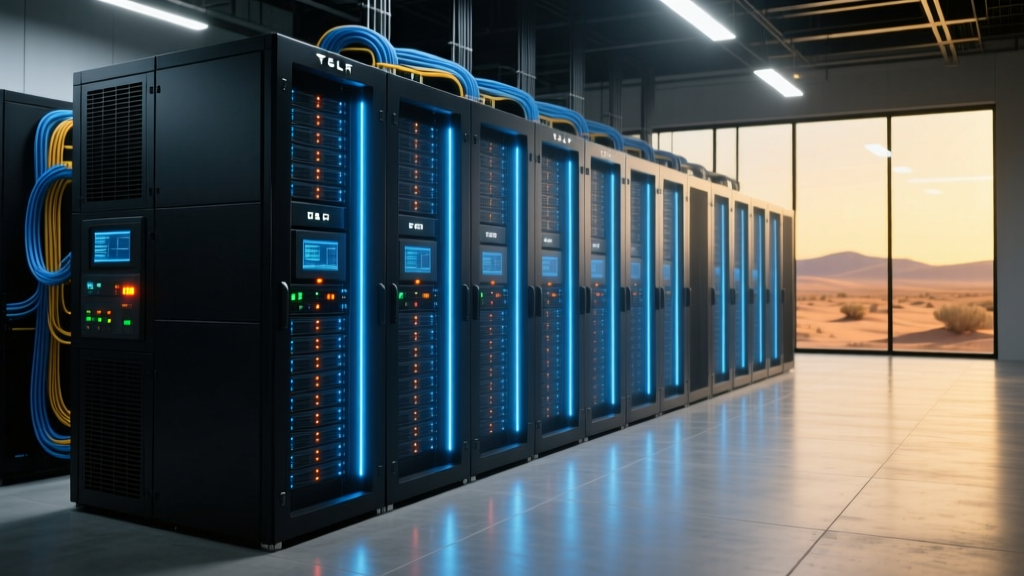
Traditional supercomputers rely on off-the-shelf GPUs (like NVIDIA's H100). Tesla took a different path, designing a custom processor called the D1 chip, fabricated on TSMC's 7nm node. The D1 is optimized for the specific math operations neural network training demands — primarily matrix multiplication and video data ingestion from Tesla's fleet of cameras.
The building blocks stack as follows:
| Component | Specification |
|---|---|
| D1 Chip | ~362 TFLOPS (BF16), 50 billion transistors, 7nm TSMC |
| Training Tile | 25 D1 chips integrated on a single package |
| ExaPod | 120 training tiles, ~1.15 exaflops of BF16 compute |
| Planned Scale (Palo Alto) | 7 ExaPods (announced target, subject to revision) |
| Primary Workload | FSD neural net training from fleet video data |
The key advantage Tesla claims is bandwidth. By integrating 25 D1 chips into a single training tile with a custom interconnect fabric, Dojo avoids the data-transfer bottlenecks that plague multi-GPU clusters. For FSD training — which ingests millions of hours of driving video — this matters enormously.
Dojo's 2026 Status: What's Actually Running vs. What Was Promised
Tesla unveiled Dojo at AI Day in August 2021, with Musk projecting a fully operational exascale system by 2024. The reality has been more complex. By early 2025, Tesla had operational D1-based tiles running in its Palo Alto data center, but the project has faced well-documented challenges: thermal management at tile scale, yield issues with the custom packaging, and competition from Tesla's own decision to purchase over 50,000 NVIDIA H100 GPUs for training.
As of 2026, here's what we can confirm:
- Dojo is operational at limited scale — multiple ExaPods are running FSD training workloads in Palo Alto.
- Tesla has not abandoned Dojo, but the company has diversified its compute strategy, using both Dojo and NVIDIA GPU clusters in parallel.
- Morgan Stanley estimated Dojo could add up to $500 billion in enterprise value to Tesla if it achieves full scale and is offered as a cloud service — but this remains speculative.
- Dojo does not affect the hardware in your Tesla today. Current Tesla vehicles (Model 3 Highland, Model Y Juniper, Cybertruck) use the HW4/AI4 computer for on-device inference. Dojo trains the models that get pushed to cars via OTA updates.
How Dojo Connects to the Tesla EVs You Can Buy Today
While Dojo itself isn't a vehicle, it's relevant to EV buyers because it shapes the intelligence of Tesla's current lineup. Here's how Dojo-trained FSD integrates with Tesla's 2026 vehicle range:
| Model | EPA Range | Battery (kWh / Chemistry) | 0-60 mph | Base MSRP | FSD HW |
|---|---|---|---|---|---|
| Model 3 Long Range AWD | 363 mi | ~79 kWh / NMC | 4.2s | $47,740 | HW4 |
| Model 3 RWD | 272 mi | ~60 kWh / LFP | 5.8s | $38,990 | HW4 |
| Model Y Long Range AWD | 320 mi | ~79 kWh / NMC | 4.8s | $44,990 | HW4 |
| Cybertruck AWD | 340 mi | ~123 kWh / NMC | 4.1s | $79,990 | HW4 |
| Model S Long Range | 402 mi | ~100 kWh / NMC | 3.1s | $79,990 | HW4 |
Sources: fueleconomy.gov, Tesla Owner's Manual
FSD Pricing, Tax Credits, and What You Actually Pay
Tesla's FSD (Supervised) capability is the primary consumer-facing output of Dojo's training work. Here's how the economics break down:
| Item | Cost | Notes |
|---|---|---|
| FSD (Supervised) Purchase | $8,000 | One-time, transferable to new Tesla |
| FSD Monthly Subscription | $99/mo | Cancel anytime |
| Model 3 RWD Base MSRP | $38,990 | Before destination, options |
| Federal §30D Tax Credit (max) | Up to $7,500 | See eligibility rules below |
- MSRP Cap: Sedans (Model 3, Model S) must be under $55,000; SUVs/trucks (Model Y, Cybertruck) under $80,000 to qualify.
- Buyer Income Cap: Modified AGI must not exceed $150,000 (single), $225,000 (head of household), or $300,000 (joint filers).
- Battery Sourcing: Critical minerals and battery components must meet phased-in domestic/free-trade-partner sourcing percentages per IRS rules. Tesla's Fremont and Austin-built vehicles have generally qualified, but supply-chain changes can shift eligibility month to month.
- Point-of-Sale Transfer: As of 2024+, the credit can be transferred to the dealer at purchase, reducing your out-of-pocket cost immediately rather than waiting for tax filing.
Always verify current eligibility on IRS.gov before purchasing. Rules change and vary by VIN and delivery date.
Dojo vs. NVIDIA: Why Tesla Hedged Its Bet
Tesla's decision to purchase tens of thousands of NVIDIA H100 GPUs alongside Dojo development reveals a pragmatic reality: building a custom supercomputer at exascale is extraordinarily difficult. NVIDIA's CUDA ecosystem, mature software stack, and proven reliability make it the safe choice for training at scale today.
Dojo's theoretical advantages — higher bandwidth for video workloads, lower cost per exaflop at scale, and vertical integration — only materialize if Tesla can solve the engineering challenges of tile-level thermal management and software compilation. In 2026, Tesla runs both systems in parallel, assigning specific FSD training workloads to whichever platform handles them most efficiently.
For EV buyers, this means FSD improvements will continue regardless of whether Dojo achieves its full promised scale. The training happens; the platform is a detail.
Charging, Efficiency, and Ownership: The Practical Side of Tesla EVs
Dojo trains the AI, but the car you drive home still needs to charge efficiently and fit your life. Here are the ownership fundamentals for Tesla's core lineup:
| Charging Level | Model 3 LR (NMC) | Model 3 RWD (LFP) | Model Y LR |
|---|---|---|---|
| Level 1 (120V / 12A) | ~3-4 mi/hr | ~3-4 mi/hr | ~3-4 mi/hr |
| Level 2 (240V / 48A) | ~44 mi/hr (11.5 kW) | ~33 mi/hr (8.5 kW) | ~44 mi/hr (11.5 kW) |
| DC Fast Charge (Peak) | 250 kW (V3 Supercharger) | 170 kW | 250 kW |
| 10-80% DCFC Time | ~25-28 min | ~30-35 min | ~25-28 min |
Charging curve reality: Tesla's peak 250 kW rate applies only between roughly 10-30% State of Charge. Above 50%, the rate tapers significantly — you'll see ~100 kW around 60% and ~50 kW near 80%. This is why 10-80% times are the meaningful metric, not peak kW alone.
Efficiency (MPGe): Model 3 LR achieves 132 MPGe combined (~25 kWh/100mi), making it one of the most efficient EVs on the market. Model Y LR rates at 122 MPGe combined. These figures come from fueleconomy.gov.
Warranty: All Tesla vehicles include a 4-year/50,000-mile basic warranty and an 8-year/120,000-mile (Model 3/Y) or 8-year/150,000-mile (Model S/X) battery and drive unit warranty. Tesla guarantees the battery will retain at least 70% of its original capacity during the warranty period.
Pros
- Class-leading Supercharger network (20,000+ stalls in North America)
- Best-in-class efficiency and real-world range delivery
- OTA updates continuously improve the vehicle post-purchase
- FSD improvements driven by Dojo training arrive wirelessly
- Strong resale value relative to most EV competitors
- LFP option (Model 3 RWD) allows daily 100% charging without degradation concern
Cons
- FSD ($8,000 or $99/mo) remains Level 2 — not self-driving
- Build quality inconsistency still reported vs. legacy automakers
- Minimal physical controls — everything routes through the touchscreen
- No Apple CarPlay or Android Auto support
- Insurance costs 20-40% higher than comparable gas vehicles
- Cybertruck and Model S/X do not qualify for §30D credit (MSRP cap)
Who Should Buy a Tesla (and Who Should Look Elsewhere)
Choose Tesla if:
- You want access to the most reliable, extensive DC fast-charging network in North America (Supercharger).
- You value continuous OTA software improvements and are interested in FSD's trajectory (understanding it remains Level 2).
- You prioritize efficiency and real-world range delivery over luxury materials.
- You charge primarily at home and want a straightforward Level 2 setup.
Look at competitors (Hyundai Ioniq 5/6, BMW i4, Ford Mustang Mach-E, Chevrolet Equinox EV) if:
- You prefer physical buttons, traditional gauge clusters, or Apple CarPlay/Android Auto.
- You want NACS charging access without buying a Tesla (most major brands adopt NACS in 2025-2026).
- Build quality consistency and dealer service infrastructure matter more to you than software innovation.
- You need a vehicle under $35,000 — Tesla's cheapest option starts near $39,000.
Frequently Asked Questions
What is Dojo Tesla used for?
Dojo is Tesla's custom AI supercomputer used to train the neural networks that power Full Self-Driving (Supervised). It processes millions of hours of video data collected from Tesla's fleet to improve object detection, path planning, and driving behavior prediction. It is not a feature in your car — it's a cloud-based training system.
Is Dojo a chip inside Tesla vehicles?
No. Dojo's D1 chips are housed in Tesla's data center in Palo Alto, California. The chip inside current Tesla vehicles is called HW4 (or AI4), which runs inference — executing the neural networks that Dojo trains. Dojo trains the models; HW4 runs them in the car.
Does Dojo make Tesla FSD self-driving?
No. FSD (Supervised) remains a SAE Level 2 driver-assistance system. The driver must remain fully engaged, monitor the road, and be prepared to take over at any moment. Dojo improves FSD's capability, but Tesla has not achieved Level 3 or higher, and no consumer Tesla vehicle is self-driving. Only robotaxi services like Waymo (Level 4) operate without a driver.
Which Tesla models benefit from Dojo-trained FSD?
All current Tesla vehicles equipped with HW4 hardware — including Model 3 (Highland refresh), Model Y (Juniper refresh), Cybertruck, and updated Model S/X — can run FSD (Supervised) with models trained on Dojo. Older vehicles with HW3 hardware receive FSD updates but may not support future capabilities that require HW4's increased compute.
How much does FSD cost, and is it worth it?
FSD (Supervised) costs $8,000 as a one-time purchase or $99/month as a subscription. Whether it's worth it depends on your use case. For daily commuters on highways, FSD reduces fatigue significantly. However, it is not autonomous — you must remain attentive. Many owners find the $99/month subscription a lower-risk way to evaluate the feature before committing to the full purchase. FSD is not eligible for any federal tax credit as a standalone software purchase.
Does Tesla still qualify for the $7,500 federal EV tax credit?
It depends on the model, your income, and battery sourcing at time of delivery. Model 3 RWD and Long Range (MSRP under $55,000 sedan cap) and Model Y (under $80,000 SUV cap) have generally qualified, subject to buyer income limits ($150K single / $300K joint) and critical-mineral sourcing rules. Model S and Cybertruck exceed the MSRP cap and do not qualify. Always check IRS.gov for current eligibility before purchasing.
What is the real-world range of a Tesla Model 3 Long Range?
The EPA rates the Model 3 Long Range AWD at 363 miles. In real-world highway driving at 70+ mph, expect approximately 300-320 miles. In cold weather (below freezing), range can drop to 250-280 miles even with Tesla's heat pump. City driving with regenerative braking often matches or exceeds the EPA estimate.
How fast does a Tesla Model 3 charge at home?
Using a Tesla Wall Connector on a 60-amp circuit (48A continuous), the Model 3 Long Range adds approximately 44 miles of range per hour (11.5 kW). A full charge from 10% to 100% takes roughly 7-8 hours overnight. The LFP-equipped Model 3 RWD charges at a slower rate (~33 mi/hr) due to its smaller battery and lower onboard charger acceptance.
This article was last updated for the 2026 model year. Tesla's Dojo project status, FSD capabilities, pricing, and tax credit eligibility are subject to change. Always verify with Tesla and the IRS before making a purchase decision.