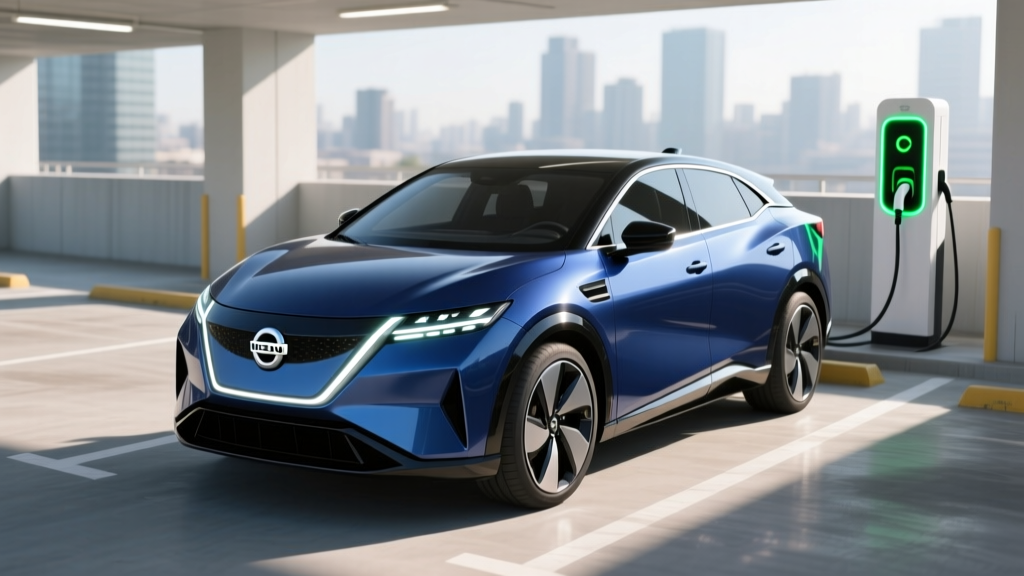
The 2026 Nissan Ariya sits in one of the most competitive segments in the EV market — the compact electric crossover. With an EPA-estimated range of up to 304 miles, a starting MSRP around $39,770, and aggressive manufacturer incentives, it has become a frequent target for lease shoppers hunting for value. But a low monthly payment only tells part of the story. To understand whether Nissan Ariya EV lease deals actually save you money, you need a full picture of the 5-year total cost of ownership: fuel, insurance, maintenance, depreciation, and the shifting landscape of federal and state incentives.
This guide dissects the real economics of leasing or buying a 2026 Ariya, using concrete numbers from the EPA, IRS, and Nissan's own spec sheets. We'll compare it against a similarly priced gas crossover so you can see exactly where the Ariya wins — and where it costs you more.
2026 Nissan Ariya: Key Specs at a Glance
Before we get into costs, here are the numbers that define the 2026 Ariya. Nissan offers the Ariya in several trims with two battery sizes and the choice of front-wheel drive (FWD) or all-wheel drive (eAWD).
| Spec | Engage+ FWD | Venture+ FWD | Evolve+ eAWD | Platinum+ eAWD |
|---|---|---|---|---|
| Base MSRP | $39,770 | $45,770 | $52,170 | $57,370 |
| Battery (usable) | 63 kWh (LFP) | 87 kWh (NMC) | 87 kWh (NMC) | 87 kWh (NMC) |
| EPA Range | 216 mi | 304 mi | 272 mi | 267 mi |
| Real-World Range (est.) | ~180 mi | ~255 mi | ~230 mi | ~225 mi |
| Horsepower | 214 hp | 238 hp | 389 hp | 389 hp |
| 0–60 mph | 7.5 sec | 7.2 sec | 4.8 sec | 4.8 sec |
| Max DC Fast Charge | 100 kW | 130 kW | 130 kW | 130 kW |
| 10–80% DCFC Time | ~35 min | ~40 min | ~40 min | ~40 min |
| Level 2 (240V) Rate | 7.2 kW | 7.2 kW | 7.2 kW | 7.2 kW |
| MPGe (combined) | 105 MPGe | 97 MPGe | 92 MPGe | 89 MPGe |
| Battery Warranty | 8 years / 100,000 miles (capacity retention ≥ 66%) | |||
The 5-Year Total Cost of Ownership: Ariya vs. Gas Crossover
Let's model five years and 60,000 miles of ownership for the 2026 Nissan Ariya Venture+ FWD (MSRP $45,770) against a comparably equipped 2026 Toyota RAV4 LE AWD (MSRP ~$31,500, EPA 30 MPG combined). This is where Nissan Ariya EV lease deals either shine or falter — the monthly payment is just the entry point.
| Cost Category | 2026 Ariya Venture+ FWD | 2026 RAV4 LE AWD (Gas) |
|---|---|---|
| Purchase Price (MSRP) | $45,770 | $31,500 |
| Federal Tax Credit (§30D) | –$3,750 to –$7,500* | $0 |
| Effective Purchase Price | $38,270–$42,020 | $31,500 |
| Fuel / Charging (60k mi) | $3,060 | $6,600 |
| Insurance (5 years) | $9,600 | $7,200 |
| Maintenance (5 years) | $1,200 | $3,500 |
| Depreciation (est.) | $22,000 | $13,000 |
| Total 5-Year Cost | $52,130–$55,880 | $48,800 |
*Federal tax credit eligibility depends on battery sourcing, buyer income, and MSRP caps — see the tax credit section below.
The Ariya's higher purchase price and steeper depreciation offset much of the fuel and maintenance savings. Over five years, the gap narrows to roughly $3,300–$7,000 in the Ariya's disfavor, depending on tax-credit eligibility. However, if you lease, the calculus changes — Nissan often subsidizes lease deals through Nissan Motor Acceptance Corporation (NMAC), and the leasing company (lessor) claims the tax credit, frequently passing it through as a capitalized-cost reduction.
Federal Tax Credit: Do You Qualify Under §30D?
The federal EV tax credit under IRS §30D can reduce your effective Ariya price by up to $7,500, but qualification is not automatic. The credit splits into two halves — $3,750 for critical-minerals sourcing and $3,750 for battery-component sourcing — and each has its own phase-in thresholds that tighten annually.
- MSRP Cap: The Ariya must have an MSRP ≤ $80,000 (SUVs/vans). All current Ariya trims qualify.
- Buyer Income Cap (MAGI): ≤ $150,000 single / ≤ $225,000 head of household / ≤ $300,000 joint filers.
- Critical Minerals Requirement: A specified percentage of critical minerals must be sourced from the U.S. or FTA partners. This threshold increases yearly — consult the IRS for 2026 percentages.
- Battery Components Requirement: A specified percentage of battery components must be manufactured or assembled in North America. This threshold also tightens annually.
- Point-of-Sale Transfer: Since 2024, buyers may transfer the credit to the dealer at purchase, reducing the sale price directly rather than waiting for a tax refund. This is optional — you can still claim it on your tax return.
- Final Assembly: Vehicle must undergo final assembly in North America. The Ariya is assembled in Japan, which may affect eligibility — verify on the DOE Alternative Fuels Data Center.
Critical detail for Ariya shoppers: Because the Ariya is manufactured in Tochigi, Japan, it does not meet the North American final-assembly requirement for the purchase credit under §30D. However, leased vehicles fall under a different provision (§45W commercial clean vehicle credit), where the leasing company — not the consumer — claims the credit. Many Nissan dealerships pass this savings through as a lease capital-cost reduction, effectively giving you the $7,500 benefit without the sourcing and assembly restrictions that apply to purchases. This is precisely why Nissan Ariya EV lease deals can be significantly more attractive than purchase scenarios.
Charging vs. Gas: Cost Per Mile in Real Dollars
The Ariya's efficiency advantage over a gas crossover is substantial, but the savings depend heavily on where and how you charge.
| Scenario | Ariya Venture+ FWD | RAV4 LE AWD (30 MPG) |
|---|---|---|
| Home charging (Level 2, $0.14/kWh avg) | $0.043/mi | — |
| Public DCFC ($0.40/kWh avg) | $0.123/mi | — |
| Gasoline ($3.30/gal) | — | $0.110/mi |
| 60,000-mile total (80% home / 20% DCFC) | $3,060 | $6,600 |
The Ariya Venture+ consumes roughly 31 kWh per 100 miles (per EPA data). At a national-average residential electricity rate of $0.14/kWh, that works out to about 4.3 cents per mile. Even with 20% of your charging done on public DC fast chargers at higher rates, your blended cost stays well below $0.06/mile.
The RAV4 at 30 MPG combined and $3.30/gallon costs $0.11/mile — roughly double the Ariya's blended charging cost. Over 60,000 miles, that's a $3,540 fuel savings for the Ariya. The savings widen further if you have access to free workplace charging, solar-powered home charging, or utility off-peak rates below $0.10/kWh.
Maintenance Savings: Where the Ariya Keeps Paying Back
EVs eliminate several routine maintenance items that gas vehicles require. The Ariya's electric powertrain has far fewer moving parts than an internal-combustion engine, and regenerative braking significantly reduces brake-pad wear.
| Service Item | Ariya EV | RAV4 Gas |
|---|---|---|
| Oil Changes | $0 | $900 (10 changes @ $90) |
| Transmission Fluid | $0 | $150 |
| Brake Pads (front + rear) | $0–$200 (regen extends life) | $600–$900 |
| Cabin Air Filter | $150 (3 replacements) | $150 (3 replacements) |
| Tire Rotation | $300 | $300 |
| Coolant / Spark Plugs | $0 | $400 |
| Tire Replacement (1 set) | $800 (EVs wear tires faster) | $700 |
| Wiper Blades, Misc. | $150 | $200 |
| Total Estimated | $1,200–$1,400 | $3,400–$3,700 |
One caveat: EVs tend to wear through tires faster than gas cars due to instant torque and heavier curb weight (the Ariya Venture+ weighs ~4,700 lbs). Budget for one set of replacement tires during a 60,000-mile ownership period. Even with that, the Ariya saves roughly $2,000–$2,300 on maintenance over five years.
Insurance Costs: The Uncomfortable Truth
Insurance is where the Ariya costs more than its gas counterpart, and this is a line item many EV shoppers overlook. Based on national averages, expect to pay $1,800–$2,100 per year for full-coverage insurance on a 2026 Ariya, compared to $1,300–$1,550 for a RAV4. Over five years, that's an additional $2,000–$2,800.
Why are EVs more expensive to insure? Three factors:
- Higher repair costs: EV battery packs and power electronics are expensive to replace after a collision. Even minor damage near the battery enclosure can trigger a total-loss declaration by insurers following safety protocols.
- Higher vehicle value: The Ariya's MSRP is $14,000+ more than a base RAV4, which directly increases comprehensive and collision premiums.
- Specialized labor: EV repairs require high-voltage-certified technicians, and fewer shops have this capability, driving up labor rates.
Shop quotes from multiple insurers before committing. Some carriers — like Progressive, State Farm, and Tesla Insurance (where available) — offer EV-specific discounts that can narrow the gap by 5–10%.
Depreciation and Resale Value: What to Expect
Depreciation is typically the single largest cost of vehicle ownership, and EVs have historically depreciated faster than comparable gas vehicles. The Ariya is no exception.
Industry data from sources like Kelley Blue Book and iSeeCars shows that mainstream EVs have been losing 45–55% of their value over three years, compared to 35–40% for popular gas crossovers. For the Ariya Venture+ at $45,770 MSRP, expect a 5-year retained value of roughly $20,000–$24,000, representing depreciation of approximately $22,000–$26,000.
Several factors drive this:
- Rapid EV price competition: New models from Tesla, Hyundai, Kia, and Chinese manufacturers (where available) continually pressure used-EV prices downward.
- Battery health uncertainty: Used-EV buyers discount for potential battery degradation, even though Nissan's 8-year/100,000-mile battery warranty (with a 66% capacity retention threshold) provides meaningful coverage.
- Tax-credit resets: When new-EV tax credits reduce effective purchase prices, used-EV values adjust downward to remain competitive.
- Technology obsolescence: Charging speeds, range, and infotainment systems improve rapidly, making older EVs feel dated faster than older gas cars.
Leasing advantage: If depreciation concerns you, leasing transfers that risk to the lessor. With a typical 36-month Ariya lease, you're only responsible for the depreciation during the lease term (as defined by the money factor and residual value), and Nissan's lease subsidies often set residuals favorably. This is a major reason Nissan Ariya EV lease deals tend to offer better effective value than purchase scenarios.
State, Local, and Utility Incentives
Beyond the federal credit, many Ariya buyers can stack additional incentives:
- State rebates: States like California (CVRP, up to $2,000 for income-qualified buyers), Colorado (up to $5,000 point-of-sale rebate), and Massachusetts (MOR-EV, up to $3,500) offer direct purchase or lease rebates. Some states offer no EV incentive at all.
- Utility rebates: Many electric utilities offer $250–$1,000 rebates for purchasing an EV and/or installing a Level 2 home charger. Examples include PG&E, ConEdison, and Xcel Energy programs.
- HOV lane access: Several states (CA, CO, FL, GA, MD, and others) grant solo HOV-lane access to EVs — a significant time savings for commuters that doesn't show up in a cost spreadsheet but has real value.
- Reduced registration fees: Some states waive or reduce EV registration fees; others actually charge higher fees to compensate for lost gas-tax revenue. Check your state's DMV.
When incentives stack — for example, a $7,500 lease passthrough + $2,000 state rebate + $500 utility rebate — the effective price of an Ariya Venture+ can drop below $36,000, dramatically improving the ownership math.
Lease vs. Buy: Which Is Smarter for the Ariya?
Given the Ariya's specific economics, leasing often wins on paper for most buyers. Here's a decision framework:
- You want to capture the $7,500 commercial credit via the lessor (bypassing the North American assembly restriction that blocks the purchase credit).
- You prefer predictable monthly payments and don't want depreciation risk.
- You drive fewer than 12,000–15,000 miles per year (standard lease mileage limits).
- You want to upgrade to newer EV technology every 3 years.
- NMAC is offering subsidized money factors or loyalty cash.
- You drive more than 15,000 miles per year (lease overage penalties of $0.15–$0.25/mi add up fast).
- You plan to keep the vehicle 7+ years, where long-term fuel and maintenance savings overcome the higher upfront cost.
- You qualify for the full purchase credit (if assembly rules change or a US-built Ariya variant becomes available).
- You want to modify the vehicle or don't want wear-and-tear scrutiny at turn-in.
- You have home solar and can drive your effective fuel cost near zero.
Frequently Asked Questions
How much does it really cost to own a Nissan Ariya over 5 years?
Based on our analysis of the 2026 Ariya Venture+ FWD, expect a total 5-year cost of ownership between $52,000 and $56,000, depending on your federal tax-credit eligibility. This includes purchase price (net of incentives), charging, insurance, maintenance, and depreciation. A comparable gas crossover costs roughly $49,000 over the same period, making the Ariya slightly more expensive on a pure-cost basis — though the gap narrows or reverses with generous state incentives, cheap home electricity, or stacked lease subsidies.
Do I qualify for the federal EV tax credit on the Nissan Ariya?
For a purchase, likely not — the Ariya is assembled in Japan, which fails the North American final-assembly requirement under §30D. For a lease, the leasing company can claim the commercial clean vehicle credit (§45W), which does not have the same assembly restriction. Most Nissan dealers pass this savings through as a capitalized-cost reduction on the lease. Always verify current rules on IRS.gov and confirm with your dealer.
How much do I save on fuel and maintenance with the Ariya?
Over 60,000 miles, you'll save approximately $3,540 on fuel (assuming 80% home charging at $0.14/kWh) and roughly $2,100 on maintenance compared to a 30-MPG gas crossover. Combined savings of about $5,600 over five years. If you have access to free or very cheap electricity, fuel savings can exceed $5,000.
Are EVs more expensive to insure than gas cars?
Yes, typically 20–40% more expensive for equivalent coverage. The Ariya's higher MSRP, expensive battery components, and specialized repair requirements all contribute. Budget $1,800–$2,100 per year for full coverage, and shop multiple insurers for EV-specific discounts.
How well does the Nissan Ariya hold its value?
Like most mainstream EVs, the Ariya depreciates faster than popular gas crossovers. Expect roughly 48–55% depreciation over five years, retaining approximately $20,000–$24,000 of its $45,770 MSRP. Leasing insulates you from this risk, as the residual value is locked in at signing. If you buy, plan to keep the Ariya well past the 5-year mark to amortize the depreciation hit.
What's the real-world range of the Ariya, and does it match the EPA sticker?
The Venture+ FWD carries an EPA rating of 304 miles. In real-world mixed driving at highway speeds, expect approximately 255 miles. In cold weather (below 32°F), range can drop to 210–220 miles due to reduced battery efficiency and cabin-heating demands. The eAWD trims, with their lower EPA ratings of 267–272 miles, see similar proportional reductions. Preconditioning the battery while plugged in — using the Ariya's climate-scheduling feature — can mitigate some cold-weather loss and improve DC fast-charging speeds.