What Does Rivian Mean? The Brand Behind the Adventure EV
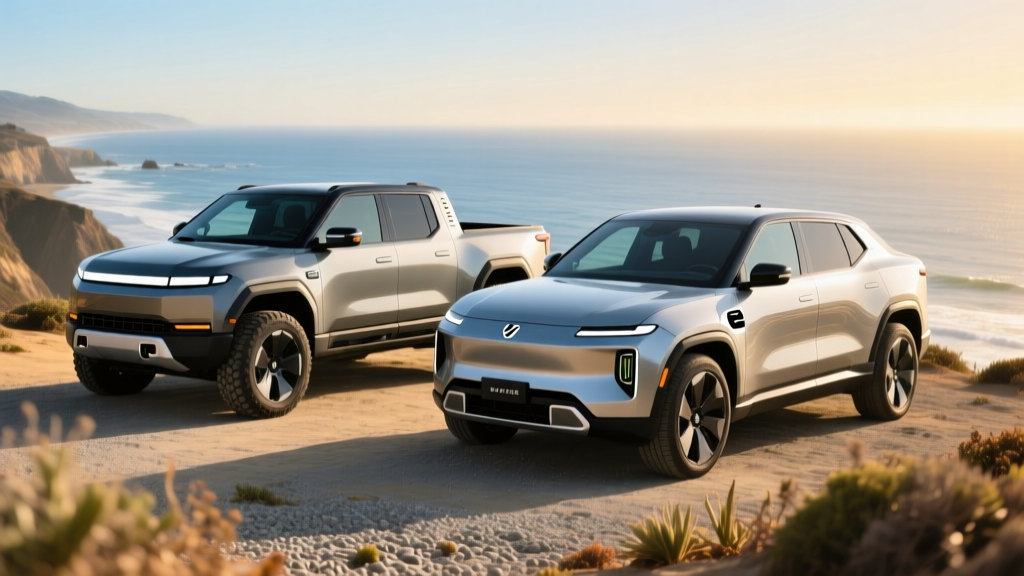
If you've been researching electric vehicles, you've likely asked: what does Rivian mean — both as a name and as a player in the EV space? The name "Rivian" was coined by founder RJ Scaringe, derived from the word "riviera" and evoking a sense of flowing movement and outdoor exploration. But beyond the name, Rivian has come to represent a specific philosophy in the electric vehicle market: rugged, adventure-capable EVs that don't sacrifice daily-driver practicality.
Founded in 2009 (originally as Mainstream Motors, later renamed Avera Motors, and finally Rivian Automotive in 2011), the company is headquartered in Irvine, California, with manufacturing in Normal, Illinois. Rivian went public in November 2021 and has since delivered over 150,000 vehicles. For 2026, Rivian's lineup centers on the R1T (a four-door electric pickup) and the R1S (a three-row electric SUV), both riding on the company's second-generation "Gen 2" platform introduced for the 2025 model year.
This review breaks down everything a prospective buyer needs: real-world range, charging speed, pricing after tax credits, and whether a Rivian makes sense versus the competition.
2026 Rivian R1T and R1S: Core Specifications at a Glance
Rivian offers both the R1T and R1S across multiple battery and drivetrain configurations. Below are the key specifications for the most popular 2026 trims. Note that Rivian's Gen 2 platform uses in-house-developed drive units and offers Standard, Large, and Max battery packs.
| Spec | R1T Dual-Motor (Large Pack) | R1T Tri-Motor (Max Pack) | R1S Dual-Motor (Large Pack) | R1S Tri-Motor (Max Pack) |
|---|---|---|---|---|
| EPA Range | ~342 miles | ~420 miles | ~330 miles | ~410 miles |
| Battery (usable) | ~109 kWh (NMC) | ~141 kWh (NMC) | ~109 kWh (NMC) | ~141 kWh (NMC) |
| Horsepower | 533 hp | 850 hp | 533 hp | 850 hp |
| 0–60 mph | 4.5 sec | 2.9 sec | 4.6 sec | 3.0 sec |
| Drivetrain | Dual-Motor AWD | Tri-Motor AWD | Dual-Motor AWD | Tri-Motor AWD |
| Max DC Fast Charge | 220 kW | 220 kW | 220 kW | 220 kW |
| 10–80% DC Charge | ~27 min | ~38 min | ~27 min | ~38 min |
| Level 2 Home Charge | 11.5 kW (~25 mi/hr) | 11.5 kW (~25 mi/hr) | 11.5 kW (~25 mi/hr) | 11.5 kW (~25 mi/hr) |
| Towing Capacity | 11,000 lbs | 11,000 lbs | 7,700 lbs | 7,700 lbs |
| MPGe (combined) | 73 MPGe | 65 MPGe | 74 MPGe | 66 MPGe |
| Base MSRP | $71,700 | $101,700 | $77,700 | $107,700 |
Sources: Rivian R1T specs, fueleconomy.gov. Specs reflect 2025/2026 Gen 2 models. Confirm exact figures at time of purchase.
Real-World Range: What the EPA Number Doesn't Tell You
EPA sticker: 342 miles (R1T Dual-Motor Large Pack)
Expect in real-world highway driving (70–80 mph): ~270–295 miles
Cold weather (below 32°F): ~240–270 miles depending on cabin heat use and terrain
Max Pack highway expectation: ~330–360 miles real-world
Rivian's EPA range figures are competitive, but the boxy, truck-like aerodynamics of both the R1T and R1S mean highway efficiency drops noticeably compared to sleeker sedans like the Lucid Air or Tesla Model S. In our experience and consistent with third-party testing, expect a 15–20% reduction from EPA estimates during sustained 75+ mph highway driving.
Cold weather compounds this. The R1T and R1S use a heat pump for cabin heating (standard on Gen 2 models), which mitigates some range loss compared to resistive heaters. However, battery chemistry still suffers in sub-freezing temperatures. If you regularly drive in cold climates, budget for 25–30% range reduction in winter.
For the Max Pack variants, the larger 141 kWh battery provides a meaningful buffer. Even with a 20% highway penalty, you're still looking at 330+ real-world miles — enough for most road trips with a single charging stop.
The R1T and R1S use NMC (nickel manganese cobalt) lithium-ion cells. NMC chemistry offers higher energy density than LFP (lithium iron phosphate), which is why Rivian can pack up to 141 kWh into the Max configuration. The trade-off: NMC batteries generally prefer not to sit at 100% state of charge for extended periods. Rivian recommends daily charging to 80–90% and reserving 100% for road trips.
Charging Speed: DC Fast Charging and Home Level 2
Charging speed is where Rivian's Gen 2 platform shows improvement over the original Gen 1 vehicles, though it still trails the fastest-charging competitors like the Hyundai Ioniq 5 (which peaks at 350 kW on 800V architecture).
| Charging Level | Power / Rate | What You Get |
|---|---|---|
| Level 1 (120V household) | ~1.4 kW | ~3 miles per hour — emergency/trickle only |
| Level 2 (240V home, 48A) | 11.5 kW | ~25 miles per hour — full overnight charge in 10–13 hours |
| DC Fast Charge (peak) | 220 kW | 10–80% in ~27 min (Large Pack), ~38 min (Max Pack) |
| DC Fast Charge (sustained avg.) | ~150–170 kW | Average rate over 10–80% session; peak tapers above 70% SoC |
Key charging insight: Rivian's 220 kW peak rate is only sustained briefly (typically between 15–40% state of charge). Above 70% SoC, the charge curve tapers significantly — this is standard behavior for NMC cells to protect battery health. On a road trip, plan your stops around the 10–80% window for the fastest sessions. Charging from 80–100% on DC fast charging can add 15–20 minutes.
At home, a 48-amp Level 2 charger (requiring a 60-amp circuit) is the practical minimum for daily ownership. Rivian sells its own Wall Charger rated at 11.5 kW. Installation costs vary widely: expect $800–$2,500 for a straightforward install, or $3,000–$5,000+ if your electrical panel needs an upgrade to 200 amps. Always get a quote from a licensed electrician before committing.
Rivian vehicles use the NACS (North American Charging Standard) connector as of the Gen 2 platform, granting native access to Tesla's Supercharger network — currently the largest and most reliable DC fast-charging network in the US. This is a significant ownership advantage over CCS-equipped vehicles that still rely on Electrify America or EVgo for highway charging.
Pricing, Trims, and Federal Tax Credit Eligibility
Rivian positions the R1T and R1S as premium adventure vehicles, and the pricing reflects that. Here's how the 2026 lineup breaks down:
| Model / Configuration | Base MSRP | As-Tested (typical) | §30D Federal Credit Eligible? |
|---|---|---|---|
| R1T Dual-Motor Standard Pack | $69,900 | $72,000–$76,000 | Yes (under $80K truck cap) |
| R1T Dual-Motor Large Pack | $71,700 | $75,000–$82,000 | Yes (if under $80K MSRP cap) |
| R1T Tri-Motor Max Pack | $101,700 | $108,000–$118,000 | No (exceeds $80K MSRP cap) |
| R1S Dual-Motor Standard Pack | $75,900 | $79,000–$84,000 | Yes (under $80K SUV cap) |
| R1S Dual-Motor Large Pack | $77,700 | $82,000–$88,000 | Yes (if under $80K MSRP cap) |
| R1S Tri-Motor Max Pack | $107,700 | $114,000–$125,000 | No (exceeds $80K MSRP cap) |
Federal tax credit rules (IRS §30D) — key caveats for Rivian buyers:
- MSRP cap: Pickup trucks (R1T) must have an MSRP ≤ $80,000. SUVs (R1S) must have an MSRP ≤ $80,000. This means the Standard and Large Pack Dual-Motor trims may qualify, but Tri-Motor and Max Pack configurations do not.
- Income cap: Buyer AGI must not exceed $150,000 (single), $225,000 (head of household), or $300,000 (joint).
- Battery sourcing: The vehicle must meet critical mineral and battery component sourcing requirements that tighten annually. Rivian manufactures in Illinois, but battery cell sourcing must meet current-year thresholds. Check the latest eligibility on IRS.gov before purchasing.
- Point-of-sale transfer: As of 2024, eligible buyers can transfer the credit to the dealer at purchase, reducing the sale price by up to $7,500 upfront rather than waiting for a tax refund.
Always consult a tax professional and verify current-year eligibility on IRS.gov §30D. Rules change and individual circumstances vary.
Performance, Interior Space, and Standout Tech
Rivian's performance credentials are genuinely impressive, especially in Tri-Motor guise. The R1T Tri-Motor's 850 hp and 2.9-second 0–60 time make it one of the quickest pickup trucks ever sold, rivaling supercars from a decade ago. The Dual-Motor's 533 hp and ~4.5-second sprint is more than adequate for any real-world scenario.
Cargo and passenger space:
- R1T bed: 4.5 feet long (54.7 inches), with a lockable tonneau cover available. The Gear Tunnel (an enclosed pass-through storage compartment behind the rear seats) adds ~11 cu ft of secure storage — a Rivian-exclusive feature.
- R1T frunk (front trunk): ~11 cu ft, drainable and lockable — useful for wet gear or groceries.
- R1S cargo: ~20 cu ft behind the third row, ~58 cu ft behind the second row, ~105 cu ft with both rear rows folded.
- Rear legroom (R1T/R1S): ~38 inches — adequate for adults on longer trips.
Standout tech features:
- Rivian Adventure Network: Rivian has built its own destination-charging network at trailheads, ski resorts, and national parks — a unique ownership perk.
- Driver+ (Level 2 ADAS): Rivian's driver-assistance system includes adaptive cruise, lane centering, and automatic lane changes on highways. This is an SAE Level 2 system — the driver must remain engaged and hands-on or eyes-on at all times. It is not self-driving.
- Over-the-air updates: Rivian regularly pushes software updates that add features, improve efficiency, and refine the driving experience.
- Camp Kitchen & Gear Guard: Available accessory slide-out kitchen for the R1T Gear Tunnel, plus a cable-lock system for bed cargo.
- 15.6-inch center touchscreen with a custom Rivian OS — clean interface, though some users note the lack of Apple CarPlay/Android Auto (Rivian uses its own native navigation and media apps).
Notable drawbacks:
- No Apple CarPlay or Android Auto — a dealbreaker for some buyers who prefer phone-mirrored interfaces.
- Service center network is still expanding. Depending on your location, the nearest Rivian Service Center may be 100+ miles away. Mobile service vans handle many issues, but major repairs require a center visit.
- Efficiency (MPGe) trails lighter, more aerodynamic EVs. The R1T Dual-Motor at 73 MPGe consumes more energy per mile than a Tesla Model Y or Hyundai Ioniq 5.
- Panel gaps and interior fit-and-finish have improved on Gen 2 but still draw occasional owner complaints versus legacy luxury brands.
Pros, Cons, and Who the Rivian R1T/R1S Is For
- Genuine off-road capability with 14+ inches of ground clearance (adjustable air suspension)
- Class-leading frunk and Gear Tunnel storage
- NACS connector = native Tesla Supercharger access
- Tri-Motor performance is extraordinary for a truck/SUV
- Rivian Adventure Network for destination charging
- Strong OTA update cadence adding real features
- 11,000-lb towing (R1T) is practical for boats and campers
- No Apple CarPlay / Android Auto
- Highway efficiency drops due to boxy aero (expect 15–20% below EPA)
- Service center coverage still limited in rural areas
- Max Pack / Tri-Motor trims exceed tax credit MSRP cap
- Premium pricing — well-equipped models cross $90K+
- No third-row option on R1T (SUV-only for 7-passenger needs)
Who should buy a Rivian?
- Outdoor enthusiasts and campers: The Gear Tunnel, frunk, available Camp Kitchen, and Adventure Network charging make Rivian uniquely suited for overlanding, skiing, and national park trips.
- Truck buyers who tow: 11,000-lb capacity handles most recreational trailers. Note that towing cuts range roughly in half — plan charging stops accordingly.
- Families needing space (R1S): Three rows and ample cargo make the R1S a viable electric alternative to the Toyota Grand Highlander or Kia Telluride — at a premium price.
- Tech-forward buyers: If you value OTA updates, a clean native software interface, and don't need CarPlay, Rivian's tech stack is among the best outside Tesla.
Who should look elsewhere?
- Budget-conscious buyers: Even the base R1T starts near $70K. Consider the Ford F-150 Lightning or Chevy Silverado EV for more affordable electric truck options.
- Efficiency maximizers: If MPGe and cost-per-mile matter most, a Hyundai Ioniq 5, Tesla Model Y, or Chevy Equinox EV will cost significantly less to fuel.
- Apple CarPlay loyalists: Rivian's refusal to support phone mirroring is a hard no for some.
Rivian vs. Key Competitors: Is It Worth Buying?
Rivian doesn't have a direct one-to-one rival, but buyers cross-shop it against several vehicles:
| Attribute | Rivian R1T (Dual-Motor) | Ford F-150 Lightning | Tesla Cybertruck | Chevy Silverado EV |
|---|---|---|---|---|
| EPA Range | 342 mi | 230–320 mi | 318–340 mi | 390–440 mi |
| Base MSRP | $69,900 | $54,995 | $79,990 | $59,900 |
| 0–60 mph | 4.5 sec | ~4.0 sec (Ext. Range) | 2.6 sec (Cyberbeast) | ~4.5 sec |
| Towing | 11,000 lbs | 10,000 lbs | 11,000 lbs | 10,000 lbs |
| Charging Connector | NACS | CCS (adapter for NACS) | NACS | CCS (adapter for NACS) |
| Unique Feature | Gear Tunnel + Adventure Network | Pro Power Onboard (V2H capable) | Stainless exoskeleton, vault bed | Midgate pass-through |
The Rivian R1T wins on premium build feel, off-road suspension articulation, and the integrated Adventure Network. The F-150 Lightning wins on price and dealer service accessibility. The Cybertruck wins on raw acceleration and polarizing design. The Silverado EV wins on maximum range and value pricing.
Choose Rivian if: You prioritize off-road capability, premium adventure features, native Supercharger access, and don't mind paying a premium.
Choose F-150 Lightning if: You want a more affordable electric truck with widespread Ford dealer service and don't need extreme off-road chops.
Choose Cybertruck if: You want the quickest acceleration, 48V architecture, and are comfortable with Tesla's build-quality variability.
Choose Silverado EV if: Maximum range and GM's Ultium platform value are your top priorities.
Frequently Asked Questions
What is the real-world range of the Rivian R1T?
The R1T Dual-Motor Large Pack carries an EPA rating of ~342 miles. In real-world highway driving at 70–80 mph, expect approximately 270–295 miles. In cold weather (below freezing), plan for 240–270 miles. The Max Pack variant extends real-world highway range to roughly 330–360 miles.
How fast does the Rivian R1T charge at home and on the road?
At home on a 240V Level 2 charger (11.5 kW), the R1T gains about 25 miles of range per hour, fully charging overnight in 10–13 hours. On DC fast chargers, it peaks at 220 kW and charges from 10–80% in roughly 27 minutes (Large Pack) or 38 minutes (Max Pack). The sustained average rate is closer to 150–170 kW due to taper above 70% SoC.
Does the Rivian R1T or R1S qualify for the $7,500 federal EV tax credit?
It depends on the trim. Dual-Motor Standard and Large Pack configurations with an MSRP at or below $80,000 may qualify, provided the buyer meets IRS income caps ($150K single / $300K joint) and the vehicle meets current-year battery-sourcing requirements. Tri-Motor and Max Pack trims exceed the $80,000 MSRP cap and are not eligible. Always verify on IRS.gov before purchasing.
What does Rivian's warranty cover?
Rivian provides a 5-year/60,000-mile bumper-to-bumper limited warranty and an 8-year/175,000-mile battery and drive unit warranty. The battery warranty guarantees the pack will retain at least 70% of its original capacity during the warranty period. This battery warranty is competitive with industry standards (most manufacturers offer 8-year/100,000-mile), and Rivian's 175,000-mile threshold is notably generous.
Can the Rivian R1T tow a travel trailer?
Yes — the R1T is rated to tow up to 11,000 lbs. However, towing significantly reduces range. Expect roughly a 40–50% reduction in real-world range when towing a loaded trailer at highway speeds. A 342-mile EPA-rated R1T may deliver only 170–200 miles while towing. Plan charging stops carefully and precondition the battery before fast-charging sessions.
Is Rivian's Driver+ system self-driving?
No. Rivian Driver+ is an SAE Level 2 driver-assistance system. It provides adaptive cruise control, lane centering, and automated lane changes on supported highways, but the driver must remain attentive and ready to take over at all times. It is not autonomous driving. Only Level 4 systems (like Waymo's robotaxi service) operate without a human driver.
What does Rivian mean as a company — is it financially stable?
Rivian is a publicly traded company (NASDAQ: RIVN) and as of 2025–2026 has delivered over 150,000 vehicles. The company has significant backing, including a commercial van partnership with Amazon (which holds a stake in Rivian). While no startup is without financial risk, Rivian's production volume, revenue trajectory, and partnerships position it as one of the more established EV startups alongside Tesla. Buyers should monitor quarterly earnings and production reports for ongoing viability signals.