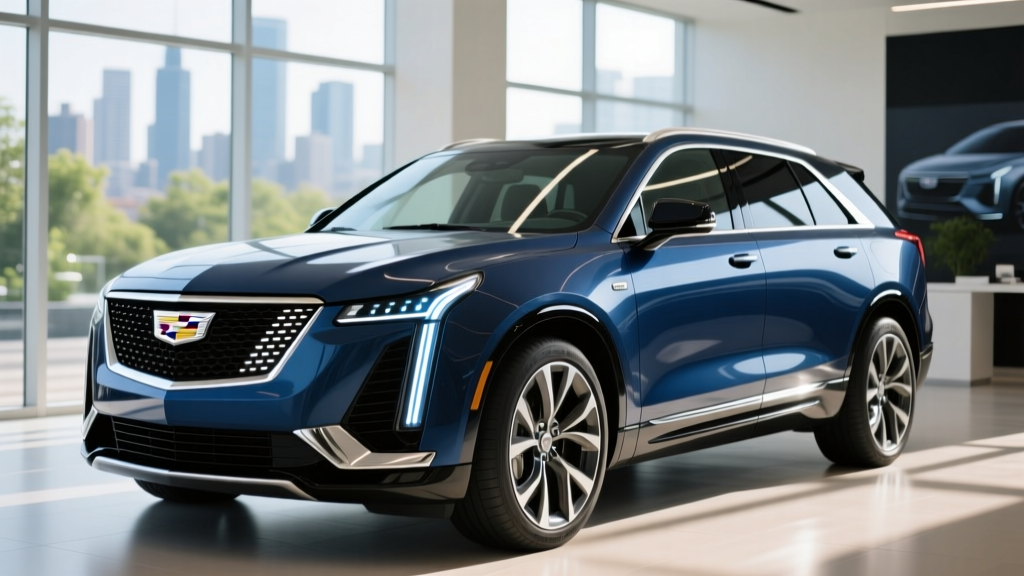
Quick Answer: Is the 2026 Cadillac Escalade IQ Right for You?
The 2026 Cadillac Escalade IQ is a full-size luxury electric SUV built on GM's Ultium platform with an EPA-estimated range of approximately 460 miles, a massive ~200 kWh usable battery, and peak DC fast charging up to 350 kW (10–80% in roughly 20 minutes on a capable charger). Starting MSRP hovers around $130,000 before incentives. It replaces the gas V-8 Escalade for buyers ready to commit to electric, but real-world range drops to ~350–380 miles at sustained highway speeds and further in cold climates. You'll need a Level 2 home charger (240V, 60–80A circuit) to make daily ownership practical, and federal §30D tax credit eligibility is unlikely due to MSRP and income caps. This SUV is best for luxury buyers with reliable home charging who want maximum range and zero tailpipe emissions without sacrificing three-row space.
Range, Battery, and What You'll Actually Get
The Escalade IQ uses GM's Ultium battery architecture with a dual-layer, 24-module pack yielding approximately 200 kWh of usable capacity — one of the largest battery packs in any production passenger vehicle. Cadillac targets an EPA-estimated 460 miles of range on the base configuration, which is exceptional for a vehicle of this mass (estimated curb weight over 8,500 lbs).
Real-World Range Expectations
EPA Estimate: ~460 miles
Highway (70–80 mph sustained): ~350–380 miles
Cold weather (below 32°F): ~300–340 miles
Combined real-world daily driving: ~370–410 miles
Massive battery packs lose more absolute range in cold weather due to cabin heating demands and increased battery resistance. Expect a 20–25% reduction in freezing temperatures unless you precondition the battery while plugged in. At highway speeds above 75 mph, aerodynamic drag on a vehicle this large reduces efficiency significantly compared to the EPA's mixed-drive cycle.
The battery chemistry uses GM's Ultium NMC (nickel manganese cobalt) formulation optimized for energy density rather than the LFP chemistry found in some standard-range EVs. NMC provides the energy density needed to hit 460 miles but requires more careful thermal management and typically shows 10–15% degradation over 150,000 miles. GM covers the battery with an 8-year/100,000-mile warranty guaranteeing at least 70% capacity retention, per Cadillac's official Escalade IQ specifications.
| Specification | Value |
|---|---|
| EPA Range (est.) | ~460 miles |
| Battery Capacity (usable) | ~200 kWh |
| Battery Chemistry | NMC (Ultium) |
| Peak DC Fast Charge | ~350 kW |
| 10–80% DC Charge Time | ~20 minutes (at 350 kW peak) |
| Level 2 AC Charge Rate | ~19.2 kW (80A) |
| Level 2 Full Charge Time | ~11–12 hours |
| Horsepower | ~750 hp (dual motor AWD) |
| 0–60 mph | ~4.0 seconds (est.) |
| Battery Warranty | 8 yr / 100,000 mi |
| Starting MSRP | ~$130,000 |
Charging the Escalade IQ: Home and Public Infrastructure
With a ~200 kWh battery, charging logistics are the single most important ownership factor. A standard 120V Level 1 outlet adds roughly 3–4 miles of range per hour — meaning a full charge would take over 50 hours. Level 1 is not viable as a primary charging strategy for this vehicle.
| Level | Power | Miles Added per Hour | 0–100% Time | Best Use Case |
|---|---|---|---|---|
| Level 1 (120V) | ~1.4 kW | ~3–4 mi/hr | ~55+ hours | Emergency/trickle only |
| Level 2 (240V, 48A) | ~11.5 kW | ~28 mi/hr | ~18 hours | Overnight (partial refill) |
| Level 2 (240V, 80A) | ~19.2 kW | ~47 mi/hr | ~11 hours | Recommended home setup |
| DC Fast (350 kW peak) | Up to 350 kW | N/A | 10–80% in ~20 min | Road trips |
Home charging installation: To support the Escalade IQ's 19.2 kW onboard charger, you'll need a dedicated 100A circuit with a hardwired Level 2 EVSE (Electric Vehicle Supply Equipment). Most homes will require an electrical panel upgrade to 200A or higher service. Expect total installation costs between $2,500 and $6,000 depending on panel condition, wiring distance, and local permit fees. A licensed electrician should evaluate your panel before purchase.
DC fast charging reality check: While the Escalade IQ supports up to 350 kW peak charging, that rate is not sustained across the full session. The charge curve typically peaks between 10–40% state of charge, then tapers progressively. Expect 10–80% in roughly 20 minutes at a capable 350 kW station (like newer Electrify America or EVgo stalls), but 80–100% will add another 25–30 minutes due to tapering. For road trips, plan stops around the 10–80% window for maximum efficiency.
The Escalade IQ uses the NACS (North American Charging Standard) connector, giving it native access to Tesla Supercharger stations via GM's integration — a major advantage for long-distance travel as the Supercharger network remains the most reliable public DC infrastructure in the U.S.
Escalade IQ vs. Gas Escalade: Cost and Ownership Comparison
How does the electric Escalade IQ stack up against the internal-combustion Escalade with its 6.2L V-8 or the 3.0L Duramax diesel? The differences go well beyond the powertrain.
| Factor | Escalade IQ (EV) | Escalade 6.2L V-8 (Gas) |
|---|---|---|
| Starting MSRP | ~$130,000 | ~$82,000 |
| EPA Efficiency | ~62 MPGe (est.) | ~16 MPG combined |
| Cost per mile (energy) | ~$0.06–0.10 (home charging) | ~$0.22–0.28 (gas at $3.50/gal) |
| Annual fuel/energy (15K mi) | ~$900–$1,500 | ~$3,300–$4,200 |
| Annual maintenance (est.) | ~$300–$500 | ~$800–$1,200 |
| 5-year energy cost (15K mi/yr) | ~$4,500–$7,500 | ~$16,500–$21,000 |
| 5-year maintenance cost | ~$1,500–$2,500 | ~$4,000–$6,000 |
| 5-year total operating cost | ~$6,000–$10,000 | ~$20,500–$27,000 |
The math is clear on operating costs: the Escalade IQ saves roughly $12,000–$17,000 over five years in energy and maintenance alone. However, the $48,000+ price premium means those savings don't fully offset the higher purchase price within a typical ownership cycle. The IQ is not a cost-savings play — it's a technology, refinement, and emissions-reduction decision.
Insurance premiums for the Escalade IQ will likely run 15–25% higher than the gas Escalade due to the higher MSRP, specialized repair requirements for the battery and power electronics, and limited collision-repair network familiarity with the Ultium platform. Budget $3,500–$5,000 annually for comprehensive coverage depending on your location and driving record.
Federal Tax Credits and Incentives: What You Can Actually Claim
The IRS §30D federal EV tax credit offers up to $7,500 for qualifying new electric vehicles, but the Escalade IQ faces multiple eligibility hurdles:
- MSRP Cap: SUVs must have an MSRP at or below $80,000 to qualify. The Escalade IQ's ~$130,000 starting price disqualifies it entirely.
- Buyer Income Cap: Modified adjusted gross income must not exceed $300,000 (joint filers), $225,000 (head of household), or $150,000 (individual). Even if the MSRP qualified, many Escalade buyers exceed these thresholds.
- Battery Sourcing Requirements: Critical minerals and battery components must meet phased-in domestic/free-trade sourcing percentages. GM's Ultium platform has made progress here, but the MSRP cap is the binding constraint.
- Point-of-Sale Transfer: For qualifying vehicles, the credit can be applied at purchase rather than at tax filing — but this is moot for the IQ.
Bottom line: The 2026 Escalade IQ does not qualify for the federal §30D tax credit due to its MSRP exceeding the $80,000 SUV cap. Some states offer additional incentives (California's CVRP, for example, has its own income and price caps), but most state programs also exclude vehicles in this price range. Consult a tax professional and check fueleconomy.gov for the latest eligibility details.
Real-World Ownership: What First-Time EV Buyers Must Know
If you're transitioning from a gas Escalade or any large ICE vehicle, the daily ownership experience changes in meaningful ways:
Home charging is non-negotiable. With a 200 kWh battery, relying solely on public charging is expensive ($0.30–$0.50/kWh at DC fast stations = $60–$100 per session) and time-consuming. If you cannot install a Level 2 charger at home — due to apartment living, older electrical panels, or landlord restrictions — the Escalade IQ is not a practical choice.
Cold weather hits big batteries hard. In sub-freezing climates, expect 20–25% range loss. That 460-mile EPA figure becomes roughly 345 miles. Always precondition the battery while plugged in to minimize loss and improve charging speed. The IQ's heat pump system helps, but physics is physics — heating a cabin this large draws significant energy.
Road trips require planning. Even with 350 kW peak charging and NACS/Supercharger access, a vehicle consuming ~2.0–2.2 kWh/mile at highway speeds will need charging stops every 300–350 miles in real-world conditions. Plan 20-minute stops at reliable DC stations. Apps like A Better Routeplanner (ABRP) can model your specific routes with elevation, temperature, and speed variables.
Maintenance is simpler but not zero. EVs eliminate oil changes, spark plugs, transmission fluid, and exhaust system repairs. You'll still need tire rotations (EVs are harder on tires due to instant torque and heavy weight), cabin air filter replacements, brake fluid checks, and windshield washer fluid. Regenerative braking significantly extends brake pad life — expect 100,000+ miles on original rotors in normal driving.
Common Escalade IQ Misconceptions
| Myth | Fact |
|---|---|
| "It charges as fast as filling a gas tank." | Even at 350 kW peak, 10–80% takes ~20 minutes. A gas fill-up takes 5 minutes. Plan accordingly for road trips. |
| "The battery will need replacement in 5 years." | NMC Ultium batteries are engineered for 200,000+ mile lifespans with 10–15% degradation over 150K miles. GM warranties 70% capacity for 8 years/100K miles. |
| "I'll save money vs. the gas Escalade." | You'll save on operating costs (~$2,500–$3,500/year), but the $48,000+ price premium means total cost of ownership is higher for at least the first 10+ years. |
| "It qualifies for the $7,500 federal tax credit." | The MSRP cap for SUVs is $80,000. The Escalade IQ starts at ~$130,000 and does not qualify. |
| "I can charge on a regular 120V outlet." | Level 1 adds ~3 miles/hour. A full charge of the 200 kWh pack would take 55+ hours. You need a 240V Level 2 installation. |
Decision Framework: Should You Buy the 2026 Escalade IQ?
Choose the Escalade IQ if:
- You have a garage or driveway where a 240V/80A Level 2 charger can be installed
- Your daily driving is under 200 miles round-trip (covers ~95% of American commutes)
- You want zero tailpipe emissions and the quietest, smoothest full-size SUV experience available
- You road-trip 2–4 times per year and can plan 20-minute DC charging stops
- The ~$130,000+ price tag fits your budget without relying on tax credits
- You value having the latest EV technology, 460 miles of range, and NACS Supercharger access
Choose the gas Escalade (or wait) if:
- You live in an apartment or cannot install Level 2 home charging
- You regularly tow heavy loads over long distances (towing drastically reduces EV range — expect 40–50% reduction)
- You frequently drive in extreme cold (below 0°F) where range loss compounds
- You need to minimize upfront cost — the gas Escalade starts ~$48,000 lower
- You drive in areas with sparse DC fast-charging infrastructure (rural routes, remote regions)
- You plan to keep the vehicle 3 years or less, where operating savings can't offset the premium
Frequently Asked Questions
What is the real-world range of the 2026 Cadillac Escalade IQ?
The EPA estimates approximately 460 miles. In real-world highway driving at 70–80 mph, expect 350–380 miles. In freezing temperatures, plan for 300–340 miles. The massive 200 kWh battery provides a large buffer, but aerodynamic drag on a vehicle this size is significant at speed.
How long does it take to charge the Escalade IQ at home?
With a 19.2 kW (80A) Level 2 charger, a full 0–100% charge takes approximately 11 hours. Most owners will plug in nightly and add 150–250 miles of range in 4–6 hours, which covers daily needs. A panel upgrade to 200A service may be required.
Does the Escalade IQ qualify for any tax credits?
No. The IRS §30D federal tax credit caps SUV MSRP at $80,000. The Escalade IQ starts at approximately $130,000, making it ineligible. Most state incentive programs also have price caps that exclude the IQ. Always verify current rules at irs.gov and with a tax professional.
Can the Escalade IQ use Tesla Superchargers?
Yes. GM has adopted the NACS connector for its EV lineup, and the Escalade IQ has native access to Tesla's Supercharger network without an adapter. This significantly improves road-trip charging reliability compared to CCS-only vehicles.
How does the Escalade IQ compare to the Rivian R1S or Tesla Model X?
The Escalade IQ is substantially larger, heavier, and more expensive than the Rivian R1S (starting ~$79,900, ~352-mile range) and the Tesla Model X (starting ~$81,630, ~335-mile range). It competes more directly with ultra-luxury three-row SUVs in the $130K+ segment. The IQ offers far more range than either competitor but at a significant weight and price penalty.
What happens if the battery needs replacement out of warranty?
A full Ultium battery pack replacement for a 200 kWh system would likely cost $25,000–$40,000 based on current Ultium module pricing. However, individual module replacement (rather than the full pack) is possible and significantly cheaper. Battery degradation data from GM's Ultium fleet suggests most packs will retain 80%+ capacity at 150,000 miles, making full replacement rare within normal ownership periods.
Is the Escalade IQ good for towing?
Cadillac has not released official towing capacity figures for the IQ as of this writing. However, EV towing typically reduces range by 40–50% due to the extreme energy demands of pulling a heavy trailer. If you regularly tow 5,000+ lbs over long distances, the gas or diesel Escalade remains the more practical choice until real-world towing data is published.