What Car Is a Rivian? Understanding the Brand and Its Lineup
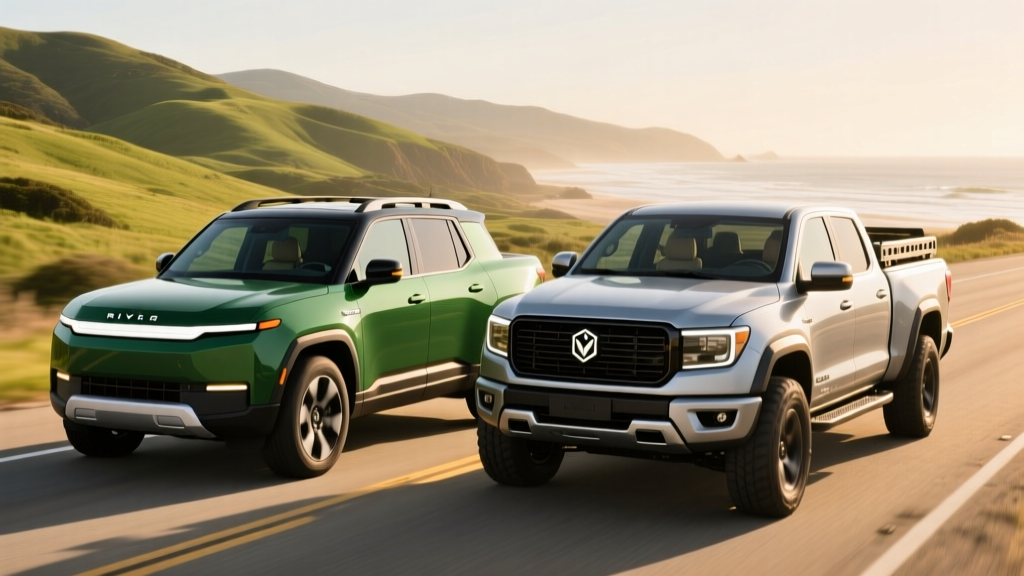
If you've been searching for an answer to "what car is a Rivian," the short version is this: Rivian is an American electric-vehicle manufacturer founded in 2009 that produces two consumer vehicles — the R1S (a three-row electric SUV) and the R1T (a four-door electric pickup truck). Both ride on Rivian's proprietary skateboard platform, share battery and powertrain architecture, and target the adventure-oriented buyer who needs genuine off-road capability, substantial cargo space, and enough range for multi-state road trips.
Rivian also produces the EDV (Electric Delivery Van) exclusively for Amazon, but for private buyers, the R1S and R1T are the models that matter. For the 2026 model year, both vehicles are built on Rivian's updated Gen 2 platform featuring in-house-developed motors, a 400-volt electrical architecture, and available NACS (North American Charging Standard) ports for direct Tesla Supercharger access.
2026 Rivian R1S and R1T: Core Specifications at a Glance
| Specification | R1S (SUV) | R1T (Truck) |
|---|---|---|
| EPA Range (Standard Pack) | 270 miles | 270 miles |
| EPA Range (Max Pack) | 410 miles | 420 miles |
| Battery Capacity (Standard) | 92 kWh usable (NMC) | 92 kWh usable (NMC) |
| Battery Capacity (Max Pack) | 141 kWh usable (NMC) | 141 kWh usable (NMC) |
| Drivetrain | Dual-Motor AWD / Tri-Motor AWD | Dual-Motor AWD / Tri-Motor AWD |
| Horsepower (Dual-Motor) | 533 hp | 533 hp |
| Horsepower (Tri-Motor) | 850 hp | 850 hp |
| 0-60 mph (Dual-Motor) | 4.5 sec | 4.5 sec |
| 0-60 mph (Tri-Motor) | 2.9 sec | 3.0 sec |
| Max DC Fast Charge | 220 kW (peak) | 220 kW (peak) |
| 10-80% DC Charge Time | ~30 min | ~30 min |
| Level 2 Home Charging | 11.5 kW (~25 mi/hr) | 11.5 kW (~25 mi/hr) |
| MPGe (Dual-Motor Std) | 73 MPGe combined | 70 MPGe combined |
| Towing Capacity | 7,700 lbs | 11,000 lbs |
| Base MSRP | $75,900 | $69,900 |
Source: fueleconomy.gov and Rivian official specifications. Specs reflect 2026 model year Dual-Motor Standard Pack trims unless otherwise noted.
Real-World Range: What the EPA Sticker Doesn't Tell You
EPA Estimate: 270 miles (Standard Pack) / 410 miles (Max Pack R1S) / 420 miles (Max Pack R1T)
Expect in practice: Highway driving at 70-75 mph reduces range by roughly 10-15% versus EPA combined figures. Plan for ~230-245 highway miles on the Standard Pack and ~350-370 on the Max Pack in moderate temperatures. In cold weather (below 30°F), expect an additional 20-30% reduction due to cabin heating demands and reduced battery chemistry efficiency — bringing the Standard Pack down to approximately 180-200 miles of usable highway range in winter conditions.
Rivian's EPA numbers are competitive within the electric truck and large-SUV segment, but physics works against vehicles this size. The R1S and R1T carry substantial curb weight (over 6,800 lbs for the R1S and 7,000+ lbs for the R1T), and their boxy profiles create aerodynamic drag that compounds at highway speeds. If your driving is primarily suburban or city-based where regenerative braking recaptures energy frequently, you'll find real-world range closer to the EPA sticker. Sustained Interstate driving, mountain passes, or towing will pull those numbers down considerably.
The Max Pack's 141 kWh battery is one of the largest in any production EV. That sheer capacity provides a buffer against range loss — even with a 30% cold-weather penalty, 290+ miles is still achievable. But the tradeoff is weight and charge time, which we cover below.
Charging Speed: DC Fast Charging and Home Setup
| Charge Level | Power / Rate | Miles Added per Hour | Notes |
|---|---|---|---|
| Level 1 (120V household) | ~1.4 kW | ~3 mi/hr | Emergency/trickle only; impractical for daily use |
| Level 2 (240V home) | 11.5 kW (48A) | ~25 mi/hr | Full charge overnight (~10-12 hrs from 10% for Standard Pack) |
| DC Fast Charge (peak) | 220 kW | ~140 mi in 20 min (peak) | 10-80% in ~30 min; tapers significantly above 80% |
Rivian's 400-volt architecture caps peak DC charging at approximately 220 kW. That's respectable but not class-leading — Hyundai's E-GMP platform and GM's Ultium-based vehicles on 800V architectures can peak above 300 kW. In practice, Rivian's charge curve holds strong through the 20-60% state of charge window, then tapers progressively. Charging from 80-100% on DC fast charging is painfully slow (plan 20+ additional minutes), so road-trip strategy should focus on 10-80% hops.
With a NACS port now standard on 2026 models, Rivian owners gain direct access to Tesla's Supercharger network — the most reliable and extensive DC fast-charging network in the U.S. — without an adapter. This is a significant practical advantage over CCS-only vehicles, where Electrify America and third-party networks still suffer from inconsistent uptime.
For home Level 2 charging, Rivian's onboard charger accepts up to 11.5 kW (48 amps). You'll need a 60-amp dedicated circuit installed by a licensed electrician. Expect installation costs between $800-$2,500 depending on panel proximity and whether your home's electrical panel needs an upgrade to 200A service. A full overnight charge on Level 2 replenishes the Standard Pack in roughly 10 hours and the Max Pack in approximately 14-15 hours.
Performance, Drivetrain, and What It's Like to Drive
Every Rivian R1S and R1T comes with all-wheel drive as standard. The Dual-Motor configuration uses one motor per axle producing a combined 533 horsepower and 610 lb-ft of torque — enough for a 4.5-second 0-60 mph time that feels genuinely quick in a vehicle weighing over three tons. The available Tri-Motor setup (one front, two rear) pushes output to 850 horsepower and drops 0-60 to under 3 seconds, putting it in supercar territory despite the mass.
Rivian's air suspension provides up to 14.4 inches of ground clearance in Off-Road mode and can lower the vehicle for highway efficiency or ease of entry. The R1T's gear tunnel — a lockable, full-width pass-through storage compartment behind the cab — is a genuinely innovative feature that neither traditional trucks nor SUVs offer. The R1S offers three rows of seating for up to seven passengers, with 104.8 cubic feet of total cargo volume behind the front seats (second and third rows folded).
The R1T provides a 4.5-foot bed (extending to over 6 feet with the gear guard deployed) and a front trunk (frunk) with 11 cubic feet of lockable storage. Towing capacity reaches 11,000 lbs for the R1T — though be aware that towing at or near max capacity will cut your range by 40-50%.
Pricing, Trims, and Federal Tax Credit Eligibility
| Model / Trim | Base MSRP | Federal Credit (§30D) | Effective Price (est.) |
|---|---|---|---|
| R1T Dual-Motor Standard | $69,900 | $0 (exceeds MSRP cap) | $69,900 |
| R1T Dual-Motor Max Pack | $85,900 | $0 (exceeds MSRP cap) | $85,900 |
| R1S Dual-Motor Standard | $75,900 | $0 (exceeds MSRP cap) | $75,900 |
| R1S Dual-Motor Max Pack | $91,900 | $0 (exceeds MSRP cap) | $91,900 |
| R1T Tri-Motor | $99,900 | $0 (exceeds MSRP cap) | $99,900 |
Source: IRS §30D Clean Vehicle Credit guidelines. Tax credit rules are subject to change. Consult a tax professional for eligibility.
Here's the critical tax credit detail many buyers miss: under current IRS §30D rules, the federal clean vehicle credit caps eligible trucks (including the R1T) at an $80,000 MSRP limit and SUVs (including the R1S) at an $80,000 MSRP limit. Because nearly every 2026 Rivian configuration exceeds $80,000 once destination and common options are factored in, most new Rivians do not qualify for the $7,500 federal tax credit. Some base R1T Dual-Motor configurations starting at $69,900 may technically fall under the cap, but once you add destination charges ($1,800) and any packages or upgrades, you'll quickly cross $80,000.
Additionally, §30D imposes buyer income caps ($150,000 single / $300,000 joint filers for modified AGI) and battery critical-mineral sourcing requirements. The point-of-sale transfer option allows eligible buyers to apply the credit as a down-payment reduction at the dealer, but only if the vehicle itself qualifies. Check the latest IRS guidance and confirm with your tax advisor before relying on the credit in your purchase math.
For buyers who can access it, the used EV credit (IRC §25E) offers up to $4,000 on pre-owned Rivians priced at or below $25,000 — though as of 2026, very few used Rivians have depreciated to that threshold. State and local incentives (Colorado, California, and others) may offer additional rebates; check your state's energy office for current programs.
Warranty, Battery Longevity, and Ownership Costs
Rivian provides the following warranty coverage for 2026 models:
- Battery Pack: 8 years / 175,000 miles (whichever comes first), with a capacity retention threshold of 70%
- Powertrain (motors, power electronics): 8 years / 175,000 miles
- Limited Vehicle Warranty: 5 years / 60,000 miles bumper-to-bumper
- Corrosion Perforation: 5 years / unlimited miles
The 175,000-mile battery warranty is among the most generous in the segment — Tesla's Model X battery warranty covers 8 years / 150,000 miles by comparison. Rivian's NMC (nickel manganese cobalt) battery chemistry offers high energy density, which is why the Max Pack can achieve 410+ EPA miles, but NMC cells typically degrade slightly faster than LFP (lithium iron phosphate) chemistry over thousands of charge cycles. Based on current data from early-production Rivians (2022-2024), battery degradation appears moderate — most owners report 5-8% capacity loss over the first 50,000 miles, which is consistent with industry norms for NMC packs.
Ownership costs to budget for beyond the purchase price: insurance premiums for Rivians run 15-25% higher than comparable ICE trucks and SUVs, driven by repair costs and parts availability. Home charger installation (if needed) adds $800-$2,500 one-time. Electricity costs for charging vary by region but average $0.14-$0.18/kWh at home, making a full Standard Pack charge roughly $13-$17 — dramatically cheaper than $80-$100+ for a tank of gas in an equivalent truck.
Tech, Driver Assistance, and Interior Highlights
Rivian's infotainment runs on a custom 15.6-inch center touchscreen with native navigation, streaming apps, and over-the-air (OTA) update capability. The system is responsive and well-designed, though it lacks Apple CarPlay and Android Auto — a deliberate choice by Rivian to control the full software experience. Wireless phone charging, a 10.2-inch digital driver display, and a premium Rivian Elevation audio system (available with 18+ speakers) round out the tech suite.
Driver assistance comes via Rivian's Driver+ system, which includes adaptive cruise control, lane-centering assist, automatic emergency braking, blind-spot monitoring, and highway assist. This is a SAE Level 2 system — it provides steering and speed assistance on divided highways, but the driver must remain fully engaged with hands on the wheel and eyes on the road. It is not autonomous or "self-driving." Rivian has signaled future enhanced autonomy features via OTA, but as of 2026, Driver+ remains a competent Level 2 competitor to systems like Ford BlueCruise and GM Super Cruise, though it does not yet offer true hands-free operation on mapped highways the way those competitors do.
Notable interior strengths include the R1T's gear tunnel, the R1S's genuinely usable third row (34.3 inches of legroom), vegan leather upholstery as standard, and abundant hard-point mounting options for accessories. Drawbacks include the absence of CarPlay/Android Auto, limited service center density in rural areas (Rivian uses a mix of its own service centers and mobile service vans), and a ride quality that can feel firm over rough pavement due to the vehicle's mass and 20-22-inch wheel options.
Who Should Buy a Rivian — and Who Should Look Elsewhere?
Strengths
- Class-leading off-road capability with air suspension and quad-motor torque vectoring
- Max Pack offers 410+ EPA miles — among the longest-range EVs available
- NACS port provides direct Tesla Supercharger access
- R1T gear tunnel and frunk offer innovative storage no competitor matches
- 11,000-lb towing capacity (R1T) is genuine truck utility
- OTA updates continuously add features post-purchase
- 8-year/175,000-mile battery warranty exceeds most competitors
Drawbacks
- Most configurations exceed the $80K MSRP cap for the federal tax credit
- 220 kW peak DC charging is slower than 800V competitors (Hyundai, Kia, GM)
- No Apple CarPlay or Android Auto support
- Service center network is still limited outside major metro areas
- Insurance premiums run 15-25% above comparable ICE vehicles
- Heavy curb weight accelerates tire wear (expect 25,000-35,000 mi on OEM tires)
- Towing near max capacity cuts range by 40-50%
Buy the Rivian R1S if: You need a three-row electric SUV with real off-road credentials, you frequently drive in areas where ground clearance matters, and you value the Max Pack's 410-mile range for road trips into charging-sparse regions.
Buy the Rivian R1T if: You want an electric truck that can genuinely tow, haul, and off-road while serving as a daily driver, and the gear tunnel's unique storage solves a problem no other truck addresses.
Look elsewhere if: You need the absolute fastest DC charging (consider Hyundai Ioniq 5 or Chevrolet Silverado EV on 800V), you rely on Apple CarPlay, you need a sub-$50,000 EV with tax credit eligibility, or you live far from a Rivian service center and cannot tolerate mobile-service-only repair logistics.
Frequently Asked Questions
What car is a Rivian, exactly?
Rivian makes two consumer vehicles: the R1S (a three-row electric SUV starting at $75,900) and the R1T (a four-door electric pickup truck starting at $69,900). Both share a skateboard EV platform with dual-motor or tri-motor AWD powertrains and battery options ranging from 92 kWh to 141 kWh. Rivian also makes delivery vans for Amazon, but those are not available to consumers.
What is the real-world range of a Rivian?
The EPA rates the Standard Pack at 270 miles and the Max Pack at 410-420 miles depending on model. In real-world highway driving at 70-75 mph, expect roughly 230-245 miles (Standard) and 350-370 miles (Max). Cold weather below 30°F can reduce those figures by an additional 20-30%.
How fast does a Rivian charge?
On DC fast charging, Rivian peaks at approximately 220 kW, achieving a 10-80% charge in roughly 30 minutes. On a Level 2 home charger (11.5 kW / 48A), you'll add about 25 miles of range per hour, fully charging the Standard Pack overnight in about 10 hours.
Does the Rivian qualify for the $7,500 federal EV tax credit?
Most 2026 Rivian configurations do not qualify for the full $7,500 federal §30D credit because they exceed the $80,000 MSRP cap once options and destination charges are included. A base R1T Dual-Motor at $69,900 MSRP may technically fall under the cap, but any added options push it over. Buyer income limits ($150K single / $300K joint) and battery sourcing rules also apply. Always verify current IRS §30D eligibility before purchasing.
Is a Rivian worth it versus a Tesla Model X or Ford F-150 Lightning?
The R1S offers more off-road capability and ground clearance than the Model X, plus a usable third row the Model X lacks. The R1T provides more innovative storage (gear tunnel, larger frunk) than the F-150 Lightning, though the Lightning typically costs $10,000-$15,000 less and may qualify for the federal tax credit. If off-road performance and unique utility are priorities, Rivian earns its premium. If budget and tax-credit eligibility dominate, the Lightning or a three-row Hyundai Ioniq 9 may be more practical.
What battery chemistry does Rivian use?
Rivian uses NMC (nickel manganese cobalt) lithium-ion cells in both the Standard and Max battery packs. NMC offers higher energy density than LFP (lithium iron phosphate), enabling the Max Pack's 410+ mile range, but NMC typically degrades slightly faster over thousands of cycles. Rivian's 8-year/175,000-mile battery warranty with a 70% capacity retention threshold provides substantial long-term protection.
Can I charge a Rivian at Tesla Superchargers?
Yes. 2026 Rivian models come equipped with a NACS (North American Charging Standard) port, providing direct access to Tesla's Supercharger network without an adapter. This is one of Rivian's strongest practical advantages for road-trip charging.