What Are EVs? The Short Answer
An electric vehicle (EV) — specifically a battery electric vehicle (BEV) — replaces the internal combustion engine with one or more electric motors powered by a rechargeable lithium-ion or lithium iron phosphate (LFP) battery pack. You plug it in to charge instead of pumping gas. As of 2026, mainstream EVs deliver 220–380 miles of EPA-estimated range, charge from 10–80% in 18–35 minutes on DC fast chargers, and cost roughly $0.04–$0.12 per mile to fuel at home depending on your electricity rate. They produce zero tailpipe emissions, require no oil changes, and qualify for up to $7,500 in federal tax credits if you, the vehicle, and its battery sourcing meet IRS §30D requirements.
How EVs Actually Work: Battery, Motor, and Energy Flow
At the core of every EV is a battery pack measured in kilowatt-hours (kWh) — the unit of energy capacity. Think of kWh like the size of a gas tank. A 2026 Hyundai Ioniq 5 carries an 84 kWh usable battery; a Chevrolet Equinox EV holds about 85 kWh. That energy powers one or two electric motors (single-motor for front- or rear-wheel drive, dual-motor for all-wheel drive) that deliver instant torque without needing a multi-speed transmission.
When you lift off the accelerator, the motor reverses into a generator, sending energy back into the battery — this is regenerative braking, and it's why many EVs enable one-pedal driving in city traffic.
EV efficiency is measured in miles per kWh or kWh per 100 miles, the EV equivalent of MPG. A highly efficient model like the 2026 Tesla Model 3 Long Range achieves roughly 26 kWh/100 mi (about 3.8 mi/kWh), while a heavier electric truck might consume 48–52 kWh/100 mi.
EV vs Gas vs Hybrid: The Numbers Side by Side
The most common question first-time buyers ask: how does an EV actually stack up against a gas car or a hybrid? Here's a data-driven comparison using representative 2026 models — the Tesla Model 3 Long Range (BEV), Toyota Camry LE (gas), and Toyota Prius Prime SE (PHEV).
| Metric | Tesla Model 3 LR (BEV) | Toyota Camry LE (Gas) | Toyota Prius Prime SE (PHEV) |
|---|---|---|---|
| Powertrain | Dual-motor AWD, 82 kWh NMC | 2.5L 4-cyl, 203 hp | 2.0L PHEV, 220 hp combined |
| EPA Range / MPG | 341 mi / 132 MPGe | 32 MPG combined | 44 mi electric + 52 MPG gas |
| Base MSRP | $47,740 | $28,400 | $33,445 |
| Fuel/Energy Cost per Mile | ~$0.04 (home) / ~$0.12 (DCFC) | ~$0.11 ($3.40/gal) | ~$0.04 (electric) / ~$0.11 (gas) |
| Annual Fuel Cost (12k mi) | ~$480–$1,440 | ~$1,320 | ~$520–$1,100 (mixed) |
| 5-Year Maintenance Est. | ~$1,800 | ~$3,400 | ~$2,900 |
| Federal Tax Credit (max) | Up to $7,500 (§30D) | $0 | Up to $7,500 (§30D) |
Sources: fueleconomy.gov, manufacturer MSRP data. Fuel cost assumes $3.40/gal gasoline and $0.14/kWh national avg electricity. Actual costs vary by region and driving pattern.
The critical insight: EVs have higher upfront MSRPs but significantly lower per-mile energy and maintenance costs. The break-even point versus a gas car typically arrives within 3–5 years for drivers covering 12,000+ miles annually with home charging access. PHEVs like the Prius Prime split the difference — ideal for drivers who want electric commuting (44 miles covers most daily trips) but need gas-engine flexibility for longer road trips.
Real Costs of EV Ownership: Purchase, Charging, Insurance, and Maintenance
Sticker price is only the start. Here's a realistic 5-year cost breakdown for a mid-range EV priced around $45,000 versus a comparable $30,000 gas sedan, assuming 12,000 miles/year and home Level 2 charging at $0.14/kWh.
| Cost Category (5 Years) | Mid-Range EV ($45k MSRP) | Gas Sedan ($30k MSRP) |
|---|---|---|
| Purchase Price (after $7,500 credit) | $37,500 | $30,000 |
| Home Level 2 Charger Install | $800–$1,800 | $0 |
| Energy/Fuel (60,000 mi total) | $2,520 (home) / $7,200 (DCFC-heavy) | $6,600 |
| Maintenance | ~$1,800 | ~$3,400 |
| Insurance (avg) | ~$9,500 | ~$7,200 |
| Estimated Depreciation | ~$16,000 | ~$12,500 |
| Total 5-Year Cost (home charging) | ~$68,120–$69,120 | ~$59,700 |
Key takeaways from this breakdown:
- The federal tax credit narrows the purchase gap substantially — but not every buyer or vehicle qualifies. IRS §30D requires buyer income below $150k (single) / $300k (joint), vehicle MSRP under $55k (cars) or $80k (SUVs/trucks), and battery critical-mineral and component sourcing thresholds that tighten annually. Always verify current-year rules at IRS.gov or consult a tax professional.
- Home charging is the economic linchpin. If you rely exclusively on DC fast charging at $0.35–$0.50/kWh, your energy cost can exceed gasoline. Home charging at off-peak utility rates is where the savings materialize.
- Insurance runs 15–25% higher on EVs due to repair complexity and parts cost. Get quotes before purchasing — the premium difference can erase fuel savings on lower-mileage drivers.
- Maintenance savings are real: no oil changes, no spark plugs, no transmission fluid, and regenerative braking extends pad life to 80,000–120,000+ miles in typical driving.
Charging in the Real World: What First-Time Buyers Must Understand
Charging is where EV ownership either clicks or frustrates. There are three levels, and confusing kW (power, or how fast energy flows) with kWh (energy, or battery capacity) is the most common beginner mistake. A 150 kW charger doesn't deliver 150 kWh — it delivers energy at a rate of 150 kilowatts, which fills a 75 kWh battery in roughly 30 minutes under ideal conditions (real-world charge curves taper above 80% SoC, adding time).
| Charging Level | Power (kW) | Typical Miles Added/Hour | Use Case |
|---|---|---|---|
| Level 1 (120V outlet) | 1.0–1.4 kW | 3–5 miles | Overnight top-ups, low-mileage drivers |
| Level 2 (240V home/public) | 7.2–19.2 kW | 25–60 miles | Daily home charging, workplace, destinations |
| DC Fast Charge | 50–350 kW | 150–800+ miles (peak rate) | Road trips, highway corridors |
Real-world charging nuance: A vehicle advertising a "250 kW peak charge rate" will only sustain that peak for a narrow window (typically 10–30% State of Charge). Above 80%, the battery management system dramatically slows charging to protect cell health. A 10–80% session on a 2026 Hyundai Ioniq 5 at a 350 kW charger takes approximately 18 minutes; that same session to 100% would take 40+ minutes. Plan road-trip stops around 10–80% charges.
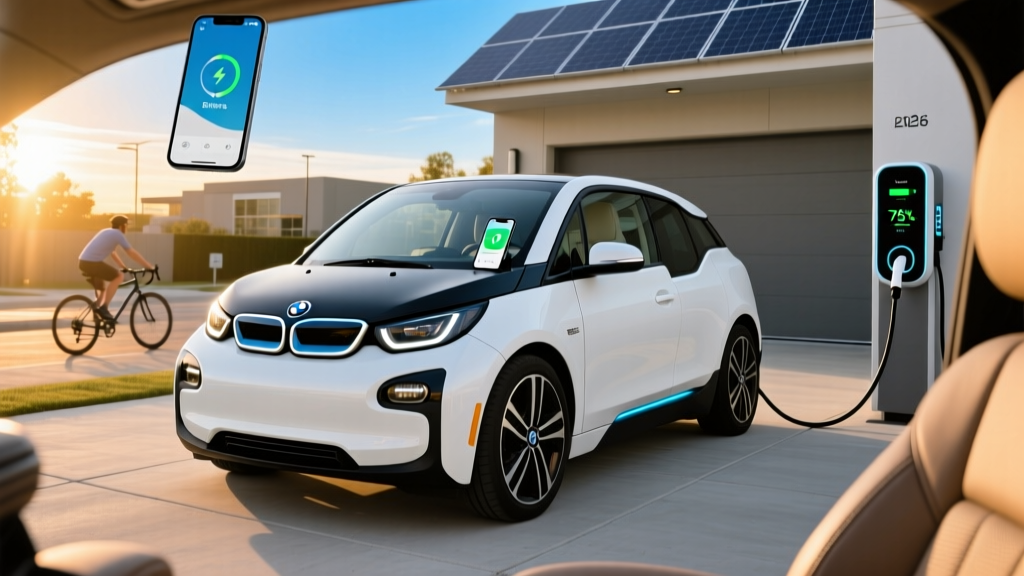
Home charging access is the single biggest ownership variable. If you have a garage or driveway with a 240V outlet (or can install one), an EV integrates seamlessly — you wake up "full" every morning. If you live in an apartment without charging infrastructure or rely entirely on public chargers, ownership is still viable but less convenient and more expensive. Check your local public charging network coverage on apps like PlugShare or ChargePoint before buying.
Common EV Misconceptions: Myths vs Facts
| Myth | Fact |
|---|---|
| "EV batteries need replacing every few years" | Federal law mandates battery warranties of 8 years / 100,000 miles minimum (10 years in CARB states). Modern NMC and LFP packs are engineered for 1,500–3,000+ charge cycles. Real-world data shows most packs retain 85–92% capacity at 100k miles. Replacement cost, if ever needed, runs $8,000–$18,000 depending on pack size. |
| "EVs don't work in cold weather" | EVs lose 15–30% of EPA range in sub-freezing temperatures due to battery chemistry and cabin heating demands. A 300-mile EV may deliver 210–255 real-world winter miles. Preconditioning the battery while plugged in mitigates this, and heat-pump equipped models (standard on many 2026 EVs) reduce cabin-heating energy draw by 40–60%. |
| "The electrical grid can't handle EVs" | Most EV charging happens overnight during off-peak demand. A single EV charging at 7.2 kW draws about the same as an electric clothes dryer. Grid strain becomes a concern only at neighborhood scale with many simultaneous unmanaged chargers — utilities are deploying managed-charging programs and time-of-use rates to address this. |
| "EVs are worse for the environment because of battery mining" | Lifecycle analyses from Argonne National Laboratory and the ICCT consistently show EVs produce fewer total CO₂-equivalent emissions than gas cars over their lifetime, even accounting for battery manufacturing, across all U.S. grid mixes. The advantage grows as grids add renewables. |
| "You can't take an EV on a road trip" | The U.S. now has 50,000+ public DC fast chargers. Tesla's Supercharger network (now open to NACS-equipped non-Tesla EVs) and Electrify America's CCS corridors cover major interstate routes. With 18–30 minute charge stops, a 600-mile trip adds roughly 45–60 minutes total. Rural corridors in the Mountain West remain sparse — plan accordingly. |
What First-Time EV Buyers Should Know Before Signing
If you've never owned an EV, these practical points will save you money and frustration:
- Test-charge before you buy. Visit a DC fast charger near your home or commute route. Experience the plug-in process, the app activation, and the actual charge speed. This demystifies public charging.
- Get a home electrical assessment early. A licensed electrician can tell you whether your panel supports a Level 2 charger (most 200-amp panels do) or whether a panel upgrade ($1,500–$3,500) is needed. Some 2026 EVs now ship with a portable Level 2 cord that plugs into a NEMA 14-50 outlet — potentially avoiding hardwired installation.
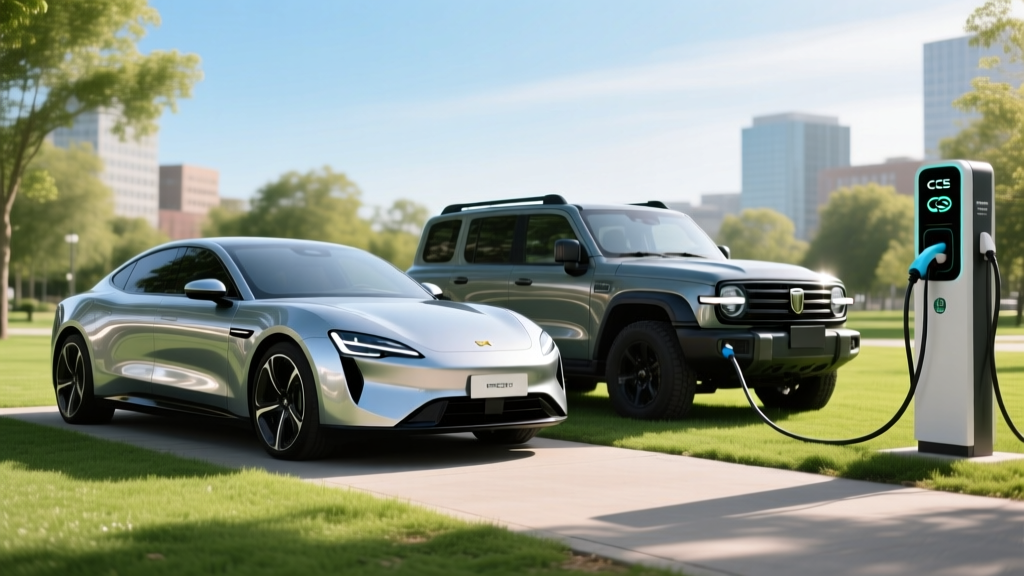
- Understand the connector landscape. As of 2026, Tesla's NACS (North American Charging Standard) has been adopted by Ford, GM, Rivian, Hyundai, Kia, BMW, and most major automakers. CCS1 remains on some legacy models and public chargers. CHAdeMO is effectively discontinued for new vehicles. Confirm your prospective EV's connector and its compatibility with your preferred charging networks.
- Budget for a Level 2 home charger. Equipment costs $300–$700 for a quality 40–48 amp unit (ChargePoint Home Flex, Wallbox Pulsar Plus, or Tesla Wall Connector). Professional installation runs $500–$1,500 for straightforward setups. Total: $800–$2,200 before any utility rebates.
- Check your state and local incentives. Beyond the federal §30D credit, many states offer additional rebates ($1,000–$5,000), HOV lane access, reduced utility rates for EV charging, and charger installation rebates. These vary by jurisdiction — check your state energy office and utility provider.
Decision Framework: Is an EV, PHEV, or Gas Car Right for You?
Choose a Battery EV (BEV) If:
- You have reliable home or workplace Level 2 charging access
- Your daily driving is under 200 miles (covers 95%+ of U.S. drivers)
- You drive 12,000+ miles/year — the per-mile savings compound
- You want minimal maintenance and zero tailpipe emissions
- You can absorb the higher upfront cost or qualify for the §30D credit
Choose a Plug-In Hybrid (PHEV) If:
- You want electric-only commuting (25–50 miles covers most daily trips) but need gas-engine range for frequent road trips
- You lack reliable public fast-charging infrastructure in your area
- You live in an apartment without charging and can only install a standard 120V outlet for slow overnight charging
- You want to reduce fuel consumption without any range compromise
Stick With a Gas Vehicle (or HEV) If:
- You have zero home charging access and your area has sparse public charging
- You regularly tow heavy loads (trailers, boats) over long distances — EV towing cuts range 30–50%
- Your annual mileage is under 8,000 miles — the fuel-cost savings won't offset the higher purchase price within a reasonable timeframe
- You operate in extreme cold (consistently below –10°F) where range loss and charging slowdowns are most severe
Frequently Asked Questions
How long do EV batteries last?
Modern EV battery packs are designed to outlast the vehicle. Federal warranty requirements mandate coverage for at least 8 years or 100,000 miles against capacity loss below 70%. Real-world fleet data from Tesla, Hyundai, and others shows average degradation of 8–12% over the first 100,000 miles, after which the curve flattens. LFP chemistry batteries (used in base-model Tesla Model 3/Y and some Ford models) tolerate daily 100% charging and may exhibit even slower degradation over high cycle counts.
Do EVs save money compared to gas cars?
Yes — but the timeline depends on your mileage, charging setup, and whether you qualify for incentives. A driver covering 15,000 miles/year with home charging at $0.12/kWh saves roughly $800–$1,200/year in fuel versus a 28 MPG gas car. Add $300–$500/year in maintenance savings. The break-even versus a $15,000 cheaper gas car typically arrives in years 4–6. High-mileage drivers and those in states with additional rebates break even faster.
What happens if I run out of charge on the road?
The same thing that happens if you run out of gas: you stop and need assistance. However, modern EVs provide detailed range estimation, low-battery warnings, and built-in navigation to the nearest charger. Roadside assistance services (including AAA) now offer mobile charging or flatbed towing to the nearest station. Range prediction in 2026 models factors in elevation, temperature, and driving speed — making unexpected depletion rare if you monitor your gauge.
Can I charge an EV from a regular household outlet?
Yes — this is Level 1 charging, using a standard 120V household outlet. It delivers approximately 1.0–1.4 kW, adding 3–5 miles of range per hour. For a driver covering 30–40 miles daily, an overnight 10-hour charge adds 30–50 miles, which may suffice. However, for drivers covering more distance or wanting faster turnaround, a 240V Level 2 installation is strongly recommended.
Are EVs safe in a crash?
EVs undergo the same NHTSA and IIHS crash testing as gas vehicles, and many earn top ratings. The battery pack's low, rigid placement gives EVs a low center of gravity (reducing rollover risk) and adds structural mass. High-voltage systems automatically disconnect upon airbag deployment. Fire risk from battery thermal events is statistically lower than gasoline fire risk per vehicle-mile, though battery fires require specialized firefighting approaches.