Quick Verdict: The 2018 BMW i3 in 2026
The 2018 BMW i3 occupies a strange space in the used EV market. It's a carbon-fiber-reinforced plastic (CFRP) city car with a 94 Ah battery that BMW rated at 114 miles of EPA range — a figure that feels quaint next to today's 300-mile mainstream EVs. But dismiss it at your peril. For urban commuters with home charging, the i3's lightweight construction, tight turning circle, and premium interior materials deliver an experience no Chevrolet Bolt or Nissan Leaf can match. The question in 2026 is whether its limited range and 50 kW DC fast-charging ceiling are dealbreakers — or perfectly acceptable trade-offs for the right buyer.
Real-World Expectation: 90–105 miles highway at 70 mph; 75–90 miles in sub-40°F winter conditions; 110–120 miles in mild city driving with regen.
2018 BMW i3 Specifications at a Glance
| Spec | BEV (Pure Electric) | REx (Range Extender) |
|---|---|---|
| EPA Range | 114 miles | 114 mi electric + 66 mi gas (180 mi total) |
| Battery Capacity | 33.2 kWh gross / ~27.2 kWh usable | 33.2 kWh gross / ~27.2 kWh usable |
| Battery Chemistry | NMC (Samsung SDI cells) | NMC (Samsung SDI cells) |
| Motor Output | 170 hp / 184 lb-ft torque | 170 hp / 184 lb-ft torque |
| 0–60 mph | 7.2 seconds | 7.9 seconds |
| Drivetrain | Rear-wheel drive (single motor) | Rear-wheel drive + 647cc 2-cyl gas engine |
| DC Fast Charge (max) | 50 kW (CCS) | 50 kW (CCS) |
| 10–80% DC Charge | ~39 minutes | ~39 minutes |
| Level 2 Charge Rate | 7.7 kW (adds ~25 mi/hr) | 7.7 kW (adds ~25 mi/hr) |
| EPA Efficiency | 118 MPGe (29 kWh/100 mi) | 111 MPGe (combined) |
| Cargo Volume | 15.1 cu ft (rear seats up) | 15.1 cu ft |
| Rear Legroom | 31.9 inches | 31.9 inches |
| Original MSRP (base) | $45,350 | $49,300 |
| Battery Warranty | 8 years / 100,000 miles | 8 years / 100,000 miles |
Sources: EPA / fueleconomy.gov, BMW USA press archives.
Battery, Range, and the 94 Ah Reality
The 2018 model year was significant for the i3 because it carried over the 94 Ah (amp-hour) battery introduced in 2017, replacing the original 60 Ah pack. The 33.2 kWh gross capacity yields roughly 27.2 kWh of usable energy — BMW reserves a substantial top and bottom buffer to protect long-term battery health. That buffer strategy has paid off: real-world fueleconomy.gov data and owner reports show many 2018 i3s retaining 88–93% State of Health (SoH) at 80,000+ miles.
The NMC (nickel-manganese-cobalt) chemistry from Samsung SDI was state-of-the-art for its time. It offers higher energy density than LFP (lithium iron phosphate) packs found in some modern budget EVs, but it's more sensitive to sustained high-State-of-Charge storage. If you're buying a used 2018 i3 in 2026, request a battery health readout from a BMW dealer or use the hidden iDrive service menu to check the Ah value directly — a healthy pack should still read above 85 Ah.
Cold-weather impact is real. Without a standard heat pump (BMW offered a resistive cabin heater), winter range drops 20–30% in sub-freezing temperatures. Plan for 75–90 miles of usable range on a cold January commute. The battery does have a thermal management system (liquid cooling/heating), which helps preserve longevity but doesn't fully offset cabin-heating energy draw.
Charging Speeds: 50 kW Ceiling and What It Means
This is where the 2018 i3 shows its age most clearly. The 50 kW DC fast-charging maximum — via the CCS1 connector — was competitive in 2018 but is now outpaced by vehicles charging at 150–350 kW. Here's the practical breakdown:
| Charging Level | Power (kW) | Speed (mi/hr added) | Time (10–80%) |
|---|---|---|---|
| Level 1 (120V household) | ~1.4 kW | ~5 mi/hr | ~19 hours |
| Level 2 (240V, 32A) | 7.7 kW | ~25 mi/hr | ~3.5 hours |
| DC Fast Charge (CCS) | 50 kW peak | ~150 mi/hr (at peak) | ~39 minutes |
The DC fast-charging curve tapers significantly above 80% State of Charge (SoC). You'll see 50 kW sustained from roughly 10% to 65%, after which the rate drops to protect the cells. A 10–80% session takes approximately 39 minutes at a properly functioning 50 kW charger — not terrible for a city runabout, but you won't be road-tripping cross-country efficiently.
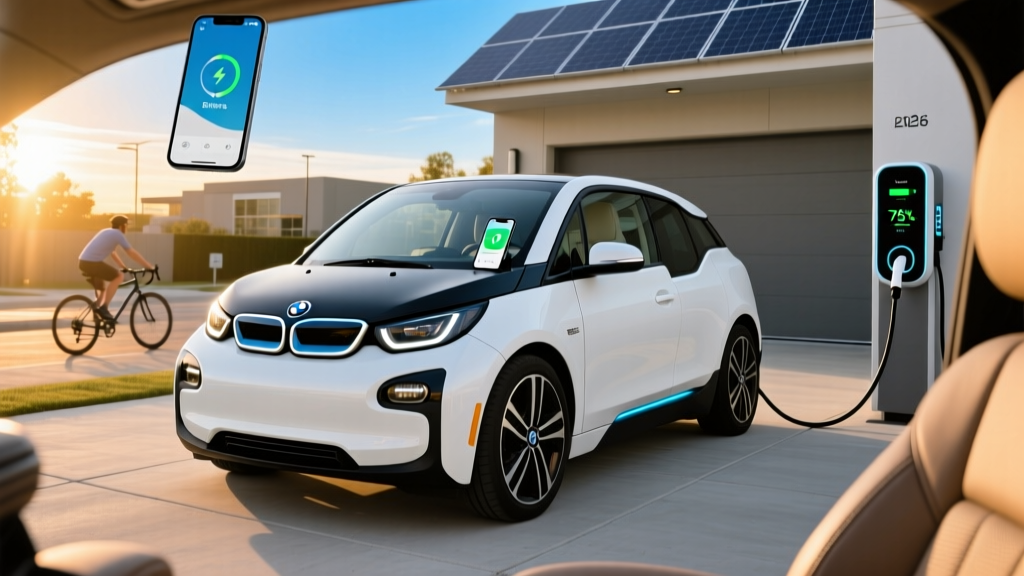
For home charging, the 7.7 kW onboard charger is adequate. Plug in at 7 PM with 20% remaining, and you'll wake up to a full battery by 5 AM. Most 2018 i3 owners charge exclusively at home or at workplace Level 2 stations, making the 50 kW DC limit largely irrelevant for daily use.
Driving Dynamics and Performance
The i3's 170 hp electric motor and 184 lb-ft of instant torque push the roughly 2,800-lb BEV to 60 mph in 7.2 seconds. That's not sports-car territory, but the low curb weight (thanks to the aluminum chassis and CFRP passenger cell) makes the i3 feel far quicker around town than the numbers suggest. Throttle response is immediate, and the single-speed transmission delivers seamless acceleration.
Where the i3 truly shines is urban agility. The 32.8-foot turning circle is tighter than a MINI Cooper's, the skinny 155/70R19 tires minimize rolling resistance while still providing surprising grip, and the one-pedal driving mode — with aggressive regenerative braking — means you rarely touch the friction brakes in city traffic.
The REx model adds a 647cc two-cylinder BMW motorcycle engine that acts as a generator. It doesn't drive the wheels directly; it maintains battery SoC once it drops to roughly 6.5%. The engine is audible under hard acceleration and adds about 180 lbs over the rear axle, slightly dulling the handling. But for drivers who occasionally need 180+ miles of total range without charging, it's a pragmatic safety net.
Interior, Tech, and Practicality
Step inside and the i3 feels like nothing else on the road — even in 2026. The dashboard is crafted from open-pore eucalyptus wood or recycled kenaf fiber, the seats use wool-blend or olive-leaf-tanned leather, and the freestanding 6.5-inch iDrive display (10.25-inch with the Technology + Driving Assistant package) still looks modern.
Notable tech features:
- iDrive 5.0 with navigation, Apple CarPlay (wired), and BMW ConnectedDrive
- DC fast-charge preconditioning (battery warms/cool for optimal charging)
- Available Driving Assistant Plus: adaptive cruise control, lane-keeping assist, traffic jam assist (SAE Level 2 — driver supervision required at all times)
- Regenerative braking adjustable via driving mode (Comfort, Eco Pro, Eco Pro+)
Practicality drawbacks:
- Rear-hinged "coach doors" require the front door to open first — awkward in tight parking spots
- 31.9 inches of rear legroom is tight for adults on longer trips
- 15.1 cu ft of cargo space shrinks to 8.5 cu ft with rear seats folded (seats don't fold flat)
- No spare tire — run-flat tires only, with BMW roadside assistance
- Frunk is tiny (~2.0 cu ft) and houses the 12V battery and charging cable
Pricing, Tax Credits, and Used Market Value
The 2018 BMW i3 is no longer eligible for the federal §30D new clean vehicle credit — that incentive applies only to new vehicles. However, buyers purchasing from a licensed dealer may qualify for the Used Clean Vehicle Credit (IRC §25E), which provides up to $4,000 or 30% of the sale price (whichever is lower).
| Item | Details |
|---|---|
| Original MSRP (BEV base) | $45,350 |
| Original MSRP (REx base) | $49,300 |
| Typical 2026 Used Price | $14,000–$21,000 (depending on mileage, condition, REx vs BEV) |
| Max Used EV Credit (§25E) | $4,000 (or 30% of sale price) |
| Income Cap (§25E) | $75,000 single / $112,500 head of household / $150,000 joint |
| Dealer Sale Required? | Yes — private-party sales do not qualify |
| Prior Owner History | Must have been sold previously to qualify as "used" |
Source: IRS §25E Used Clean Vehicle Credit guidelines. Verify eligibility with a tax professional before purchase.
At a $17,000 used price with the $4,000 credit applied, your effective cost drops to roughly $13,000 — extraordinary value for a carbon-fiber BMW with premium materials and a proven electric drivetrain.
Pros and Cons
- Unique CFRP construction — lightweight, rigid, corrosion-resistant
- Tight turning circle and one-pedal driving excel in city traffic
- Premium, sustainable interior materials that age beautifully
- Strong battery SoH retention thanks to large buffer strategy
- Up to $4,000 used EV tax credit (§25E) dramatically lowers cost
- Low running costs: ~$0.04/mile on average residential electricity
- 114-mile EPA range limits highway and road-trip usability
- 50 kW DC fast-charging is slow by 2026 standards
- Rear coach doors and tight back seat reduce practicality
- No heat pump — significant winter range loss (20–30%)
- Run-flat tires are expensive to replace and limit ride comfort
- BMW has discontinued the i3 — long-term parts availability uncertain
Who Should Buy the 2018 BMW i3?
Choose the 2018 i3 if: You're a single person or couple with a sub-40-mile daily commute, access to home Level 2 charging, and a second vehicle for road trips. You value unique design, premium materials, and urban agility over range and cargo space.
Look elsewhere if: You need 200+ miles of range, regularly carry rear-seat passengers, take frequent road trips, or live in a cold climate without a garage. Consider a used Chevrolet Bolt EV (238-mile range, ~$15,000 used) or a used Tesla Model 3 (Standard Range Plus, ~240-mile range, ~$20,000 used) for more versatility.
Frequently Asked Questions
What is the real-world range of the 2018 BMW i3?
EPA-rated at 114 miles, but expect 90–105 miles on the highway at 70 mph, 110–120 miles in mild city driving with regenerative braking, and 75–90 miles in sub-40°F winter weather. The REx model extends total range to approximately 180 miles with its gasoline generator.
How fast does the 2018 BMW i3 charge?
On a 50 kW DC fast charger, the i3 charges from 10–80% in approximately 39 minutes. On a 240V Level 2 home charger (7.7 kW), a full charge takes about 3.5 hours and adds roughly 25 miles of range per hour. Level 1 (120V) trickle charging adds about 5 miles per hour.
Does the 2018 BMW i3 qualify for any tax credits in 2026?
Not the $7,500 new-vehicle credit — but it may qualify for the federal Used Clean Vehicle Credit (§25E) of up to $4,000 when purchased from a licensed dealer. Income caps apply: $75,000 for single filers, $150,000 for joint filers. The credit cannot exceed 30% of the sale price. Consult a tax professional and review IRS guidelines before purchasing.
Is the 2018 BMW i3 worth buying vs. competitors?
Against a used Nissan Leaf (107–151 miles depending on battery), the i3 offers a more premium interior and better build quality but similar range. Against a used Chevrolet Bolt EV (238 miles), the Bolt wins on range and cargo space but can't match the i3's urban driving feel or materials. The i3 is worth buying if your commute is short and you prioritize driving experience over maximum range.
How long will the 2018 i3 battery last?
BMW warranties the battery for 8 years or 100,000 miles against defects and capacity loss below a defined threshold. As of 2026, many 8-year-old i3 packs still retain 88–93% of original capacity thanks to BMW's conservative buffer strategy. A replacement battery (if needed outside warranty) costs approximately $12,000–$16,000 installed at a BMW dealer — though third-party refurbishment options are emerging at lower cost.
Can I road-trip in the 2018 BMW i3?
Technically yes, but it requires planning. With a 114-mile range and 39-minute DC fast-charge stops, a 300-mile trip means two charging stops and roughly 90 minutes of added travel time. The REx model makes longer trips more feasible but adds fuel cost and maintenance complexity. Most i3 owners use it as a commuter and keep a second vehicle for road trips.