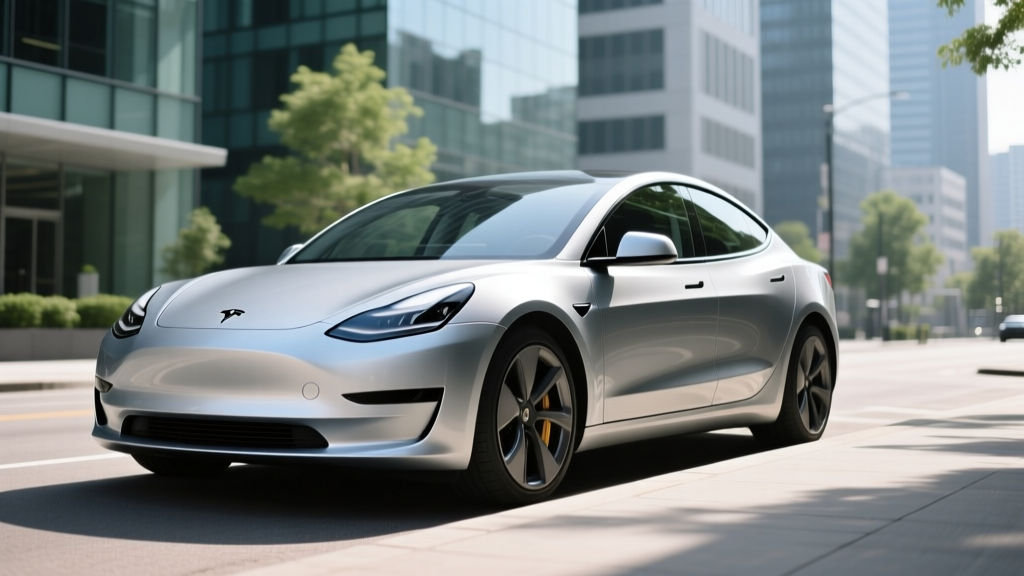
When shoppers search for the weight of the Tesla Model 3, they're usually trying to answer a bigger question: how does mass affect range, efficiency, tire wear, and driving feel in one of America's best-selling electric sedans? The 2026 Tesla Model 3 — now in its second-generation "Highland" refresh — is lighter and more refined than the original, but it still carries the heaviest component in any EV: the battery pack.
Below, we break down exact curb weight figures by trim, explain where that mass comes from, and show how weight interacts with the Model 3's EPA range, charging speed, performance, and ownership costs. If you're cross-shopping the Model 3 against the Hyundai Ioniq 6 or BMW i4, understanding weight is one of the most revealing spec comparisons you can make.
Tesla Model 3 Curb Weight by Trim (2026)
Tesla does not publish official curb weights on its consumer spec sheets, but EPA filings and independent weigh-ins give us reliable numbers. Here's how the current 2026 lineup breaks down:
| Trim | Drivetrain | Battery Chemistry | Approx. Curb Weight | EPA Range |
|---|---|---|---|---|
| Model 3 RWD (Base) | Rear-Wheel Drive | LFP (~60 kWh usable) | ~3,862 lbs (1,752 kg) | 272 mi |
| Model 3 Long Range RWD | Rear-Wheel Drive | NMC (~79 kWh usable) | ~3,938 lbs (1,786 kg) | 363 mi |
| Model 3 Long Range AWD | Dual Motor AWD | NMC (~79 kWh usable) | ~4,034 lbs (1,830 kg) | 346 mi |
| Model 3 Performance | Dual Motor AWD | NMC (~79 kWh usable) | ~4,065 lbs (1,844 kg) | 315 mi |
For context, the pre-refresh (2017–2023) Model 3 Long Range AWD weighed roughly 4,034 lbs — nearly identical to today's version, but the Highland update improved structural rigidity, sound deadening, and suspension tuning, so the driving feel differs even at the same mass. The base RWD is the lightest in the lineup, thanks to its smaller LFP pack and single-motor layout.
Where Does the Weight Come From?
In any battery-electric vehicle, the traction battery is the single heaviest component. For the Model 3 Long Range AWD, the NMC (nickel-manganese-cobalt) pack weighs approximately 1,050–1,100 lbs (475–500 kg) — roughly 27% of the car's total mass. The base RWD's smaller LFP (lithium iron phosphate) pack is lighter at around 880–920 lbs, but LFP cells are inherently denser per cell, so you get less energy capacity for the weight trade-off.
Beyond the battery, weight contributors include:
- Dual motors (AWD trims): The front induction motor adds roughly 70–90 lbs versus the single-motor RWD.
- Glass roof: The Model 3's full panoramic glass panel is heavier than a steel roof but lowers the center of gravity.
- Structural battery pack: Tesla integrates the pack as a stressed member, reducing the need for additional frame bracing.
- Thermal management: The octovalve heat-pump system, coolant loops, and refrigerant lines add mass but enable faster DC charging and cold-weather range retention.
The result is a sedan with a very low center of gravity — approximately 18 inches off the ground — which is why the Model 3 handles more like a sports sedan than a 4,000-lb vehicle should.
How Weight Affects Real-World Range and Efficiency
The EPA rates the 2026 Model 3 Long Range AWD at 346 miles. In real-world mixed driving at 70 mph highway speeds, expect 290–310 miles. In cold weather (below 30°F), range can drop to 240–270 miles due to cabin heating demand and increased battery resistance, even with the heat pump.
Weight directly affects energy consumption, measured in watt-hours per mile (Wh/mi) or the EPA's MPGe metric. Here's how the trims compare on efficiency:
| Trim | MPGe (Combined) | kWh/100 mi | Wh/mi |
|---|---|---|---|
| RWD (Base) | 132 MPGe | 25 | ~250 |
| Long Range RWD | 134 MPGe | 25 | ~247 |
| Long Range AWD | 125 MPGe | 27 | ~269 |
| Performance | 113 MPGe | 30 | ~298 |
The Long Range RWD is the efficiency champion — it pairs the larger NMC pack with a single rear motor, avoiding the weight and drivetrain losses of the front motor. Adding AWD costs about 100 lbs and roughly 22 Wh/mi in consumption. The Performance trim's stickier tires, track-tuned suspension, and more aggressive power delivery push consumption higher still.
For comparison, the Hyundai Ioniq 6 SE RWD (curb weight ~3,935 lbs) achieves 140 MPGe combined and an EPA range of 361 miles — slightly lighter and more aerodynamic (Cd 0.21 vs. the Model 3's Cd 0.219), which shows how even small mass and drag differences compound over 300+ miles.
Charging Speed: Does Weight Matter at the Plug?
Weight doesn't directly affect charging speed — that's determined by battery chemistry, thermal management, and the pack's C-rate (charge rate relative to capacity). But the Model 3's different batteries charge at meaningfully different speeds:
| Trim | Max DC Fast Charge | 10–80% Time | Level 2 (240V / 48A) | Level 2 Miles/Hr |
|---|---|---|---|---|
| RWD (LFP) | 170 kW peak | ~25 min | 11.5 kW | ~37 mi/hr |
| Long Range / Performance (NMC) | 250 kW peak | ~18 min | 11.5 kW | ~44 mi/hr |
The NMC trims accept up to 250 kW at a Tesla V3 Supercharger, sustaining roughly 200+ kW up to 50% state of charge before tapering. The LFP pack in the base RWD peaks lower and tapers earlier, adding roughly 7 minutes to a 10–80% session. For home Level 2 charging on a Wall Connector at 48 amps, every trim gains enough range overnight for any daily commute — weight is irrelevant here since you're charging over 6–8 hours.
Preconditioning matters: If you navigate to a Supercharger using the car's built-in navigation, the Model 3 automatically warms the battery to optimal charging temperature. Skipping this step (e.g., arriving at a non-navigated charger in cold weather) can cut peak charge rates by 30–50%.
Performance: 0–60 Times and How Mass Feels on the Road
| Trim | 0–60 mph | Horsepower | Torque (lb-ft) | Top Speed |
|---|---|---|---|---|
| RWD (Base) | 5.8 sec | 271 hp | 317 | 125 mph |
| Long Range RWD | 4.9 sec | 346 hp | 389 | 125 mph |
| Long Range AWD | 4.2 sec | 440 hp | 450 | 125 mph |
| Performance | 2.9 sec | 510 hp | 546 | 163 mph |
Despite weighing over 4,000 lbs in AWD form, the Model 3 Performance hits 60 mph in 2.9 seconds — supercar territory. Electric motors deliver peak torque at 0 RPM, so the sensation is instantaneous shove rather than a building crescendo. The heavy battery actually helps launch grip, pressing the rear tires into the pavement.
Where weight becomes noticeable is in transitions: quick lane changes, tight autocross-style corners, and braking distances. The Performance trim's larger brakes and adaptive dampers manage the mass well, but you'll feel the inertia more than in a ~3,300-lb BMW i4 eDrive35. On highways, the Model 3 is planted and quiet — the Highland refresh added acoustic glass and improved insulation, making it one of the quietest cabins in its price class.
Pricing, Tax Credits, and Total Cost
| Trim | Base MSRP | §30D Credit Eligible? | Effective Price (est.) |
|---|---|---|---|
| RWD | $38,990 | Up to $7,500* | ~$31,490 |
| Long Range RWD | $42,490 | Up to $7,500* | ~$34,990 |
| Long Range AWD | $47,490 | Up to $7,500* | ~$39,990 |
| Performance | $52,990 | Up to $7,500* | ~$45,490 |
*Federal tax credit eligibility under IRS §30D depends on buyer income caps ($150K single / $300K joint AGI), vehicle MSRP caps ($55,000 for sedans), and battery critical-mineral and component sourcing requirements that tighten annually. The credit can now be transferred to the dealer at point of sale as an instant discount. Always verify current eligibility on the IRS website or with a tax professional before purchasing.
All Model 3 trims fall under the $55,000 sedan MSRP cap. The Performance trim at $52,990 qualifies on price, but adding paint, wheels, or FSD (Supervised) can push the transaction price above the cap — at which point the credit is lost entirely. This is a critical ordering consideration.
Interior, Cargo, and Daily Practicality
The Model 3's cabin is minimalist by design — a single 15.4-inch touchscreen controls nearly everything, including glovebox release and mirror adjustment. The Highland refresh added ventilated front seats, ambient lighting, rear-seat ventilation, and a rear touchscreen for passengers.
| Measurement | Value |
|---|---|
| Front Headroom | 40.3 in |
| Rear Headroom | 37.8 in |
| Front Legroom | 42.7 in |
| Rear Legroom | 35.2 in |
| Trunk (rear) | 21.0 cu ft |
| Frunk (front trunk) | 3.1 cu ft |
| Total Cargo | 24.1 cu ft |
Rear legroom is tight compared to the Hyundai Ioniq 6 (37.7 in rear) or the BMW i4 (which is a liftback). Tall passengers over 6'0" will find the sloping roofline limits headroom. The trunk is a conventional sedan shape — no hatchback — so loading bulky items like a large dog crate or furniture is harder than in the Model Y.
Warranty, Safety, and Driver Assistance
Tesla's warranty structure is straightforward:
- Basic Vehicle: 4 years / 50,000 miles
- Battery & Drive Unit (RWD): 8 years / 100,000 miles, minimum 70% capacity retention
- Battery & Drive Unit (Long Range / Performance): 8 years / 120,000 miles, minimum 70% capacity retention
The Model 3 earned a 5-star overall NHTSA rating and is an IIHS Top Safety Pick+ when equipped with acceptable headlights. Tesla's Autopilot is standard; Full Self-Driving (Supervised) is a $8,000 option or $99/month subscription.
Both Autopilot and FSD (Supervised) are SAE Level 2 driver-assistance systems. You must keep your hands on the wheel and eyes on the road at all times. Tesla's cabin camera monitors engagement. True driverless operation (SAE Level 4) is currently limited to geofenced robotaxi services like Waymo.
Who Should Buy the Tesla Model 3?
- You want access to the Tesla Supercharger network (the most reliable DC fast-charging network in the US)
- You value over-the-air updates that meaningfully add features over time
- You want a compact executive sedan with sports-car acceleration (Performance trim)
- You can charge at home and commute under 60 miles round-trip
- You want the highest resale value in the EV sedan segment
- You regularly carry rear-seat adults over 6'0" (Ioniq 6 or BMW i4 offer more room)
- You need hatchback cargo flexibility (consider the Model Y or Polestar 2)
- You prefer physical buttons and traditional gauge clusters
- You live in an area with limited Supercharger coverage and need CCS compatibility (the Model 3 now ships with a NACS port; adapters exist but add friction)
- You want Apple CarPlay / Android Auto — Tesla does not support either
Pros and Cons at a Glance
Pros
- Class-leading efficiency (134 MPGe LR RWD)
- Supercharger network access — no adapter needed
- 250 kW peak DC charging (NMC trims)
- 2.9-sec 0–60 in Performance trim
- Excellent OTA update track record
- Low center of gravity; composed handling
- Strong resale value
Cons
- Tight rear seat for tall passengers
- No Apple CarPlay / Android Auto
- Minimalist interior not for everyone
- Sedan trunk (no hatchback) limits cargo
- LFP base model charges slower (170 kW peak)
- FSD (Supervised) expensive and still Level 2
- Insurance costs above segment average
Frequently Asked Questions
What is the real-world range of the Tesla Model 3?
The EPA rates the Long Range AWD at 346 miles. In real-world highway driving at 70 mph and 65°F, expect 290–310 miles. In winter (below 30°F), plan for 240–270 miles. The base RWD's EPA rating is 272 miles; expect ~230 real-world in mixed conditions.
How fast does the Model 3 charge?
NMC trims (Long Range, Performance) peak at 250 kW on a V3 Supercharger, reaching 10–80% in roughly 18 minutes. The LFP base RWD peaks at 170 kW, taking ~25 minutes for 10–80%. At home on a 48A Level 2 Wall Connector, all trims fully charge overnight in 7–9 hours.
How much does the Model 3 cost after tax credits?
The base RWD starts at $38,990 MSRP. If you qualify for the full $7,500 federal credit under IRS §30D (income caps, MSRP caps, and battery sourcing rules apply), the effective price drops to ~$31,490. State incentives may reduce it further. Verify eligibility at irs.gov before ordering.
Is the Tesla Model 3 worth buying vs. competitors?
The Model 3's advantages are the Supercharger network, efficiency, performance-per-dollar, and software. The Hyundai Ioniq 6 offers more rear space and slightly better efficiency. The BMW i4 provides a more traditional luxury interior and CarPlay. The Polestar 2 is a hatchback. If Supercharger access and Tesla's software ecosystem matter to you, the Model 3 remains the segment benchmark.
Does the Tesla Model 3 qualify for the federal EV tax credit?
Yes — all 2026 Model 3 trims fall under the $55,000 sedan MSRP cap for §30D eligibility. However, buyer income must not exceed $150K (single) or $300K (joint), and battery sourcing requirements must be met. The credit can be applied as a point-of-sale discount. Always confirm current-year rules before purchase.
Does the Model 3's weight affect tire wear?
Yes. At 3,862–4,065 lbs, the Model 3 is heavier than comparable gas sedans, and EVs tend to wear tires 20–30% faster due to instant torque and mass. Expect 25,000–35,000 miles from the stock Michelin Pilot Sport or Hankook iON EV tires, depending on driving style. Rotating every 6,250 miles is critical.
Sources: EPA Fueleconomy.gov, Tesla.com Model 3, IRS §30D Clean Vehicle Credits, NHTSA.