The Lucid Bankruptcy Question: Why Buyers Are Searching
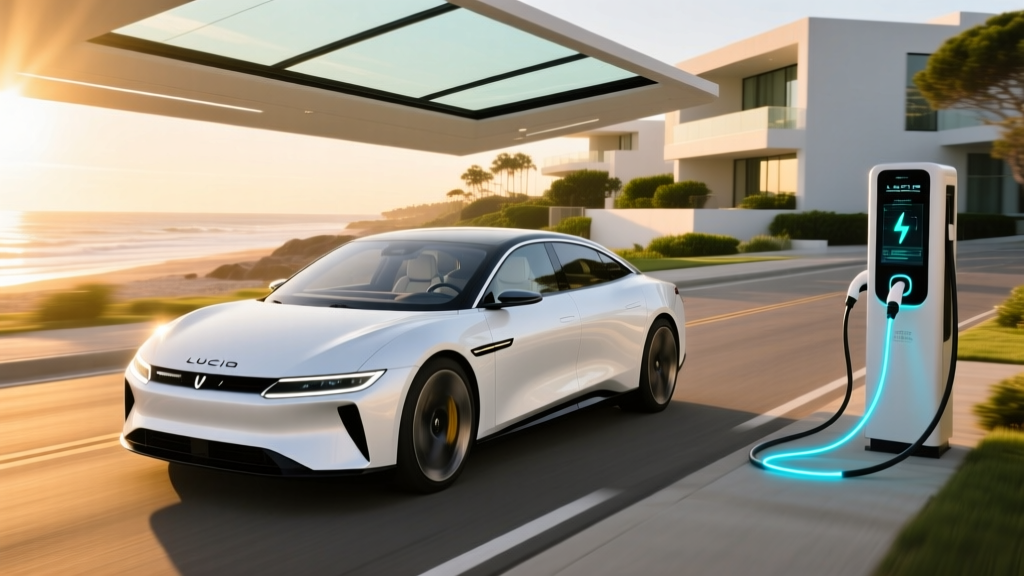
If you've been researching the Lucid Air, you've likely encountered the phrase lucid bankruptcy in forums, comment sections, or financial headlines. The concern isn't baseless: Lucid Motors has burned through billions in capital, faced production delays, and watched competitors like Tesla and Hyundai/Kia capture market share with more affordable EVs. As of early 2026, Lucid continues operations and is delivering vehicles, but the company's financial trajectory raises legitimate questions for prospective buyers.
This review addresses the Lucid Air on its engineering merits — range, charging, performance, and tech — while also confronting the ownership risks that come from buying a vehicle made by a company with an uncertain long-term future. If you're weighing a $70,000+ EV purchase, you deserve both the spec sheet and the financial context.
Lucid Air 2026: Core Specifications
| Specification | Air Pure (RWD) | Air Touring (AWD) | Air Grand Touring (AWD) |
|---|---|---|---|
| EPA Range | 419 mi | 425 mi | 516 mi |
| Battery (usable) | 88 kWh (NMC) | 112 kWh (NMC) | 112 kWh (NMC) |
| Horsepower | 430 hp | 620 hp | 819 hp |
| 0–60 mph | 5.0 sec | 3.4 sec | 3.0 sec |
| Drivetrain | RWD (single motor) | AWD (dual motor) | AWD (dual motor) |
| Max DC Fast Charge | 200 kW | 250 kW | 300 kW |
| 10–80% DCFC Time | ~28 min | ~22 min | ~20 min |
| Level 2 Home Charging | 19.2 kW (up to 80 mi/hr) | 19.2 kW | 19.2 kW |
| MPGe (combined) | 140 MPGe | 131 MPGe | 131 MPGe |
| Efficiency | 24 kWh/100 mi | 26 kWh/100 mi | 26 kWh/100 mi |
| Cargo Volume | 32 cu ft (trunk + frunk) | 32 cu ft | 32 cu ft |
| Rear Legroom | 40.9 in | 40.9 in | 40.9 in |
| Base MSRP | $69,900 | $87,400 | $125,600 |
Source: fueleconomy.gov, Lucid Motors official specifications (2026 model year).
Range and Efficiency: The Lucid Air's Strongest Argument
EPA 516 mi (Grand Touring) — Expect ~420–450 mi in mixed driving at moderate temperatures. Highway-only at 75+ mph: ~380–410 mi. Cold weather (below 32°F): ~340–380 mi, depending on cabin heating and preconditioning use. The Air Pure (EPA 419 mi) delivers ~340–360 mi highway, ~280–310 mi in deep cold.
The Lucid Air Grand Touring's 516-mile EPA range remains the highest of any production EV sold in the U.S. as of 2026. This isn't just a large battery — the Air's 900-volt electrical architecture and in-house-developed motors deliver efficiency figures (24–26 kWh/100 mi) that rival smaller, lighter EVs. For context, the Tesla Model S Long Range achieves ~402 EPA miles with a similar battery size.
Lucid's NMC (nickel-manganese-cobalt) battery chemistry prioritizes energy density over the LFP (lithium iron phosphate) chemistry found in some Tesla and BYD models. The trade-off: NMC offers more range per kilogram but typically degrades slightly faster over very high cycle counts. That said, Lucid's thermal management system is robust, and real-world degradation data from 2022–2023 Air owners shows minimal capacity loss at 30,000–50,000 miles.
Charging: 900V Architecture, But Infrastructure Matters
| Charging Level | Power (kW) | Miles Added per Hour | Notes |
|---|---|---|---|
| Level 1 (120V household) | ~1.4 kW | ~4–5 mi/hr | Emergency/trickle only |
| Level 2 (240V home/public) | Up to 19.2 kW | Up to 80 mi/hr | Requires 100A circuit; most homes install 48A (11.5 kW, ~48 mi/hr) |
| DC Fast Charge (Grand Touring) | Peak 300 kW | ~300 mi in ~20 min (10–80%) | Requires 350 kW-capable station; tapers above 80% |
| DC Fast Charge (Touring) | Peak 250 kW | 10–80% in ~22 min | Widely compatible with Electrify America, EVgo 250 kW stalls |
Lucid's 900V architecture enables some of the fastest DC charging in the industry — but only if you can find a 350 kW-capable charger. Most Electrify America and EVgo stations in 2026 max out at 150–250 kW, meaning Grand Touring owners rarely see the full 300 kW peak. Expect real-world DC fast charging to average 180–220 kW on a 250 kW stall, with a pronounced taper above 80% state of charge.
Home charging is where the Air excels: its 19.2 kW onboard charger is the most powerful in any consumer EV, capable of adding up to 80 miles of range per hour. However, achieving this requires a dedicated 100-amp circuit and hardwired EVSE — most residential installations use a 60-amp circuit delivering 48 amps (11.5 kW), which still adds roughly 48 miles per hour and fully replenishes even the 112 kWh pack overnight.
Performance and Driving Dynamics
The Air Grand Touring's 3.0-second 0–60 mph time places it in supercar territory, but the more impressive figure is its sustained performance: Lucid's liquid-cooled motors resist thermal derating better than many competitors during repeated hard launches or extended high-speed driving.
Ride quality is firm but controlled — the Air prioritizes handling precision over the floaty comfort of a Mercedes EQS. Air suspension is standard on Touring and Grand Touring trims, with adaptive damping that adjusts to road conditions. The Pure trim uses conventional steel springs, which are competent but less refined over broken pavement.
Regenerative braking is adjustable but lacks a true one-pedal-driving mode that brings the car to a complete stop without brake-pedal input — a notable omission for drivers accustomed to Tesla or Hyundai's one-pedal implementations.
Tax Credit, Pricing, and the Financial Reality
| Trim | Base MSRP | §30D Federal Credit | Effective Price (if eligible) | Credit Eligibility Notes |
|---|---|---|---|---|
| Air Pure | $69,900 | $0 | $69,900 | Exceeds $55,000 sedan MSRP cap |
| Air Touring | $87,400 | $0 | $87,400 | Exceeds $55,000 sedan MSRP cap |
| Air Grand Touring | $125,600 | $0 | $125,600 | Exceeds $55,000 sedan MSRP cap |
No Lucid Air trim qualifies for the $7,500 federal EV tax credit under IRS §30D rules. The credit caps sedan eligibility at $55,000 MSRP — and even the base Air Pure starts at $69,900. Additionally, buyer income limits ($150,000 single / $300,000 joint MAGI) and battery critical-mineral sourcing requirements further restrict eligibility for many luxury EVs. See IRS §30D guidelines for full details.
Some buyers may qualify for state-level incentives (California's CVRP, Colorado's state credit, etc.), but these vary by jurisdiction and income — consult your state's energy office or a tax professional for specifics.
Addressing the Lucid Bankruptcy Concern Directly
As of early 2026, Lucid Motors is not in bankruptcy. The company continues manufacturing at its Casa Grande, Arizona facility and has announced plans for the Gravity SUV and future mid-size platform. However, the concerns driving "lucid bankruptcy" searches are real:
- Cash burn: Lucid has reported billions in cumulative losses since 2021, relying on capital raises and its majority stakeholder (Saudi Arabia's Public Investment Fund) for liquidity.
- Production volume: Lucid's annual deliveries remain in the low thousands — far below Tesla, Hyundai/Kia, or Ford's EV volumes, limiting economies of scale.
- Service network: Lucid operates ~30 service centers nationwide (as of 2026), supplemented by mobile service. Owners in rural areas or smaller metros may face multi-day wait times or need to ship vehicles long distances for warranty work.
- Parts availability: Low-volume production means collision parts, replacement body panels, and specialized components can take weeks to source — a real concern for daily drivers.
What this means for buyers: If Lucid were to cease operations or restructure, your vehicle wouldn't stop working — but warranty coverage, software updates, proprietary parts, and resale value would all be at risk. This is the same calculus early Tesla buyers faced pre-2020, though Tesla's volume and Supercharger network provided a cushion Lucid doesn't yet offer.
Pros, Cons, and Who Should Buy
- Best-in-class EPA range (516 mi Grand Touring)
- Exceptional efficiency (24–26 kWh/100 mi)
- Fastest Level 2 onboard charging (19.2 kW)
- Spacious rear seat (40.9 in legroom) and large trunk/frunk
- Refined ride quality with air suspension (Touring/GT)
- Quiet, well-insulated cabin at highway speeds
- No federal tax credit eligibility (MSRP too high)
- Limited service center network (~30 locations)
- Company financial uncertainty (cash burn, low volume)
- Infotainment learning curve; no Apple CarPlay/Android Auto
- Regen doesn't bring car to full stop (no true one-pedal)
- 300 kW DCFC requires rare 350 kW stations for full speed
Who the Lucid Air suits best: Range-maximizing road trippers, efficiency-conscious buyers who want luxury without SUV bulk, and early adopters comfortable with startup risk. If you drive 300+ miles regularly, live near a Lucid service center, and can absorb the financial risk of a low-volume automaker, the Air's engineering is genuinely class-leading.
Who should look elsewhere: Buyers who prioritize service convenience, need guaranteed long-term support, or want federal tax credit savings. The BMW i5, Mercedes EQE, and Tesla Model S offer more established dealer/service networks, though none match the Air's range.
Warranty and Long-Term Support
Lucid provides an 8-year/100,000-mile battery and powertrain warranty, with a capacity retention threshold of 70% — meaning Lucid will repair or replace the battery if it degrades below 70% of original capacity within that period. The basic vehicle warranty is 4 years/50,000 miles.
These terms are competitive with Tesla, Hyundai, and BMW. However, warranty coverage is only as reliable as the company backing it — if Lucid's financial situation deteriorates, honoring multi-year warranty obligations becomes uncertain. This is the core risk that "lucid bankruptcy" searches reflect: not that the car is flawed, but that the company may not exist to support it long-term.
Frequently Asked Questions
Is Lucid Motors going bankrupt in 2026?
As of early 2026, Lucid is operational and delivering vehicles. The company has significant backing from Saudi Arabia's PIF, but continues to report large financial losses. Bankruptcy is not imminent, but the risk is non-zero — and buyers should factor this into their decision.
Does the Lucid Air qualify for any tax credits?
No. All Air trims exceed the $55,000 MSRP cap for sedans under the federal §30D credit. State incentives may apply depending on your location and income — check with your state energy office.
How does the Lucid Air compare to the Tesla Model S?
The Air Grand Touring offers more EPA range (516 vs. ~402 mi) and faster Level 2 charging (19.2 kW vs. 11.5 kW), but Tesla's Supercharger network, service infrastructure, and proven long-term support are significant advantages. The Model S also qualifies for no federal credit at current pricing.
What happens to my Lucid if the company goes under?
Your car will still drive, and third-party shops can handle basic maintenance. However, proprietary software updates, warranty coverage, and specialized parts (body panels, battery modules, custom components) would become difficult or impossible to source. Resale value would likely drop sharply.
Is the Lucid Air reliable?
Lucid's 2022–2025 model years have shown typical early-production issues (software glitches, minor fit/finish inconsistencies) but no widespread powertrain or battery failures. Long-term reliability data beyond 5 years is not yet available.
Should I wait for the Lucid Gravity SUV instead?
The Gravity (announced for late 2025/2026 production) targets the three-row SUV segment with 440+ miles of range. If you need SUV practicality, it may be worth considering — but the same financial-risk caveats apply.