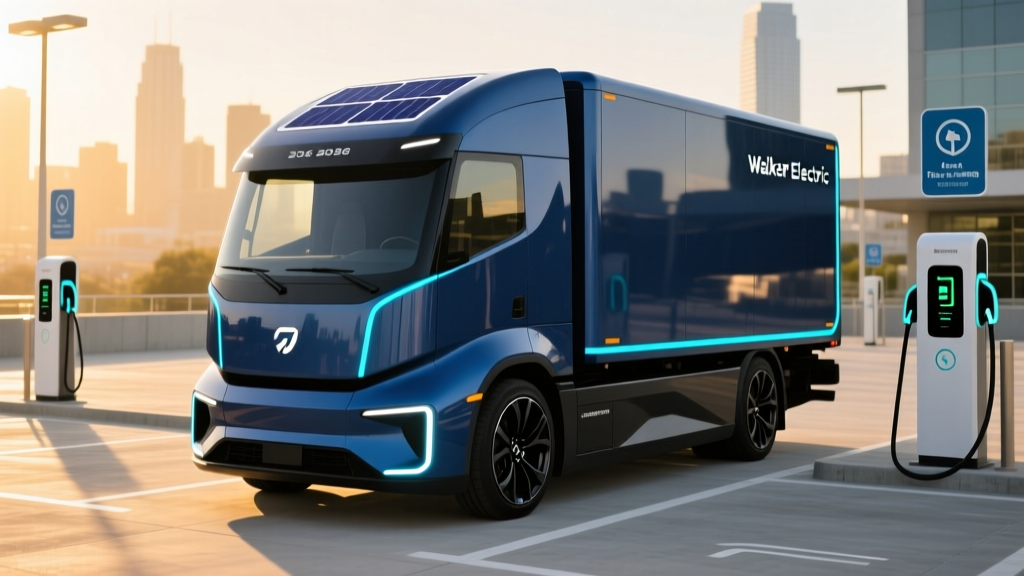
If you've been searching for a Walker Electric Truck to buy in 2026, here's what you need to know right away: there is currently no production electric pickup sold under the "Walker" brand in the U.S. market. The name most commonly surfaces in connection with Walker Vehicles, a British manufacturer known for electric commercial chassis and low-speed delivery vehicles, and with aftermarket EV-conversion shops that use the "Walker" nameplate for custom builds. No Walker-branded consumer electric pickup (comparable to the Ford F-150 Lightning, Rivian R1T, or Chevrolet Silverado EV) is available from a major OEM or through U.S. dealerships as of early 2026.
This guide breaks down what the Walker Electric Truck actually is, what your real alternatives are in the 2026 electric pickup segment, and exactly what it costs to own one of those alternatives — with hard numbers on range, charging, and total cost of ownership.
Quick Verdict: Walker Electric Truck
Is there a Walker Electric Truck you can buy in the U.S.? No. Walker Vehicles (UK) produces electric commercial chassis, not consumer pickups. If you're looking for a 2026 electric pickup, the closest competitors are the Ford F-150 Lightning (~$52,000), Rivian R1T (~$70,000), Chevrolet Silverado EV (~$50,000), and Tesla Cybertruck (~$60,000). This guide covers what you should actually consider.
What Is the Walker Electric Truck — and What It Isn't
Walker Vehicles, based in the United Kingdom, has a long history in electric commercial transportation. Their current product line centers on electric chassis platforms designed for last-mile delivery, refuse collection, and municipal fleet applications. These are not consumer-grade pickup trucks. They are purpose-built commercial platforms typically sold B2B to fleet operators and local governments.
The confusion around a "Walker Electric Truck" in the U.S. market typically stems from three sources:
- Walker Vehicles' commercial electric chassis — sometimes referred to colloquially as "electric trucks" in trade press, but these are Class 2-4 commercial vehicles, not pickups.
- Aftermarket EV conversions — some custom shops have used the Walker name or Walker-sourced components in one-off electric pickup conversions.
- Misattribution — the name occasionally gets mixed up with other electric truck startups or concepts in social media posts.
If you're a U.S. consumer looking for an electric pickup for personal use, Walker Vehicles is not in your consideration set. Let's look at what is.
The Real 2026 Electric Pickup Alternatives: Spec Comparison
Since the Walker Electric Truck isn't a buyable consumer product in the U.S., here's how the actual 2026 electric pickup lineup stacks up on the specs that matter most: EPA range, battery capacity, charging speed, towing, and price.
| Spec | Ford F-150 Lightning (Extended Range) | Rivian R1T (Dual-Motor Max) | Chevrolet Silverado EV (4WT/Extended Range) | Tesla Cybertruck (AWD) |
|---|---|---|---|---|
| EPA Range | ~320 mi | ~352 mi | ~380 mi (est.) | ~340 mi |
| Battery (usable, kWh) | ~131 kWh (NMC) | ~141 kWh (NMC) | ~200 kWh (NMC, est.) | ~123 kWh (NMC) |
| Peak DC Fast Charge | ~150 kW | ~220 kW | ~350 kW | ~250 kW |
| 10–80% Charge Time | ~41 min | ~27 min | ~20 min | ~23 min |
| Horsepower | 580 hp | 665 hp | ~510 hp (4WT) | 600 hp |
| 0–60 mph | ~3.8 sec | ~3.5 sec | ~4.5 sec | ~4.1 sec |
| Max Towing | 10,000 lbs | 11,000 lbs | 10,000 lbs | 11,000 lbs |
| Starting MSRP | ~$52,000 | ~$70,000 | ~$50,000 (fleet/commercial) | ~$60,000 |
| Battery/Powertrain Warranty | 8 yr / 100,000 mi | 8 yr / 175,000 mi | 8 yr / 100,000 mi | 8 yr / 120,000 mi |
Sources: fueleconomy.gov, manufacturer spec pages. Figures reflect latest available 2025–2026 model-year data. Silverado EV consumer trim availability and final EPA numbers may vary.
Real-World Range Reality Check
EPA range numbers are tested under controlled conditions. In real-world driving, expect:
- Highway cruising (70+ mph): 15–25% less than EPA. A 320-mile F-150 Lightning may deliver ~240–270 miles at sustained highway speed.
- Cold weather (below 32°F): 20–30% range reduction is typical for NMC packs without preconditioning. That same 320-mile truck could drop to ~225–255 miles in freezing temps.
- Towing: Expect 40–50% range loss when towing near max capacity. A 320-mile truck towing 8,000 lbs may only achieve ~160–190 miles.
Plan charging stops around worst-case range, not the EPA sticker.
EV Pickup vs. Gas Pickup: Cost & Efficiency Breakdown
For buyers cross-shopping an electric pickup against a traditional gas truck like the Ford F-150 (gas) or Ram 1500, the economics are more nuanced than "EVs are cheaper to run." Here's a data-driven comparison using the F-150 Lightning vs. a comparably equipped gas F-150 (3.5L EcoBoost, 4WD).
| Category | F-150 Lightning (EV) | F-150 Gas (3.5L EcoBoost 4WD) |
|---|---|---|
| MSRP (comparable trim) | ~$65,000 | ~$58,000 |
| Federal Tax Credit (§30D) | Up to $7,500 (see eligibility below) | $0 |
| Effective Purchase Price | ~$57,500 | ~$58,000 |
| Fuel/Energy Cost (15,000 mi/yr) | ~$750/yr (home charging at $0.14/kWh) | ~$2,250/yr (18 MPG avg, $3.60/gal) |
| 5-Year Fuel/Energy Total | ~$3,750 | ~$11,250 |
| Maintenance (5 yr) | ~$1,500 (no oil, fewer brake jobs w/ regen) | ~$3,500 (oil changes, transmission fluid, brakes) |
| Insurance (avg annual) | ~$2,400/yr (EV premium ~15–20% higher) | ~$2,000/yr |
| 5-Year Insurance Total | ~$12,000 | ~$10,000 |
| Estimated 5-Year Total Cost | ~$73,250 | ~$82,750 |
Net 5-year savings with the EV: approximately $9,500, assuming home charging, eligibility for the full federal credit, and 15,000 miles/year. However, this flips if you rely entirely on DC fast charging (which can cost $0.35–$0.50/kWh at networks like Electrify America) or if you don't qualify for the tax credit.
Federal Tax Credit Eligibility: §30D Rules for 2026
The federal EV tax credit under IRS §30D offers up to $7,500 for qualifying new electric vehicles, but eligibility is not guaranteed. Here's the 2026 checklist:
- MSRP Cap: Trucks/vans/SUVs must have an MSRP of $80,000 or less. This eliminates the Rivian R1T in most trims and higher-end Cybertruck configurations.
- Buyer Income Limits: Modified AGI must not exceed $300,000 (joint), $225,000 (head of household), or $150,000 (single).
- Battery Component Sourcing: A percentage of battery components must be manufactured or assembled in North America (threshold increases annually). This has disqualified several models in prior years.
- Critical Minerals: A percentage of critical minerals must be sourced from the U.S. or free-trade-agreement partners.
- Point-of-Sale Transfer: As of 2024, you can transfer the credit to the dealer at purchase for an immediate price reduction — you don't have to wait until tax filing.
Always verify current eligibility on the fueleconomy.gov credit lookup tool before purchasing, as qualifying models and trims can change mid-year based on supply-chain shifts.
Charging an Electric Pickup: What You Need to Know
Electric pickups have some of the largest battery packs on the road — 120–200+ kWh — which means charging logistics are different from a sedan or crossover. Here's the breakdown by charging level:
| Level | Power (kW) | Miles Added per Hour | 0–100% Time | Where |
|---|---|---|---|---|
| Level 1 (120V outlet) | ~1.4 kW | ~3–4 mi/hr | ~90+ hours | Any standard outlet |
| Level 2 (240V home) | ~11.5 kW (48A) | ~25–30 mi/hr | ~12–14 hours | Home garage (requires electrician) |
| DC Fast Charge | 150–350 kW (peak) | ~200–600 mi/hr (peak) | 10–80% in 20–41 min | Public stations (EA, Tesla, EVgo) |
Key insight: With a 131+ kWh pack, Level 1 charging is essentially useless for daily replenishment — you'd add only ~30 miles overnight. A Level 2 home charger is non-negotiable for practical electric pickup ownership. Budget $500–$2,000 for a quality Level 2 EVSE (like a ChargePoint Home Flex or Emporia Vue) plus $800–$3,000 for professional installation by a licensed electrician, depending on whether your electrical panel needs an upgrade to support a 60A circuit.
DC fast charging caveat: Peak charge rates (e.g., 250 kW) are sustained only briefly, typically between 10–30% State of Charge (SoC). The charge curve tapers significantly above 50%, and especially above 80%. A truck advertising "250 kW peak" may average only ~100–120 kW across a full 10–80% session. Always look at 10–80% charge time, not peak kW, for a realistic comparison.
Real-World Ownership: Who Should (and Shouldn't) Buy an Electric Pickup
Electric pickups are not universally the right choice. Here's a practical decision framework based on your driving patterns and circumstances:
Choose an Electric Pickup If:
- You have home charging access (garage or driveway with 240V capability) and drive under 200 miles/day.
- You want instant torque for towing short distances (under 150 miles round-trip) and value the quiet, vibration-free drivetrain.
- You use your truck primarily for commuting, job-site visits, or suburban errands where you can charge overnight.
- You qualify for the §30D tax credit and your effective purchase price approaches that of a gas equivalent.
- You live in a region with mild winters or have a garage where you can precondition the battery.
Stick With Gas or Consider a PHEV If:
- You regularly tow heavy loads over 200+ miles — range drops 40–50% when towing, making DC fast-charge stops frequent and frustrating.
- You live in an apartment or lack home charging and your area has sparse public DC fast-charging infrastructure.
- You frequently drive in extreme cold (sub-zero Fahrenheit) where range loss compounds with towing and highway speeds.
- Your budget is tight and you can't absorb the higher insurance premiums (~15–25% more) typical of electric pickups.
- You need a truck for rural or off-grid work far from charging stations and can't afford to be stranded.
Common Misconceptions About Electric Pickups
| Myth | Fact |
|---|---|
| "Electric trucks can't tow." | They can — the F-150 Lightning tows up to 10,000 lbs and the R1T up to 11,000 lbs. The issue isn't capability, it's range while towing: expect 160–200 miles with a heavy trailer. |
| "The battery will need replacing in 5 years." | NMC batteries in liquid-cooled packs typically retain 85–90% capacity at 100,000 miles. All major OEMs warrant the battery for 8 years / 100,000+ miles at 70% capacity retention minimum. Full replacements cost $15,000–$25,000 but are rarely needed within the warranty period. |
| "Charging takes too long for road trips." | A 10–80% DC fast charge takes 20–40 minutes depending on the truck and charger. Plan stops around meal and rest breaks. The real issue is charger reliability — non-Tesla networks still have 10–20% downtime at some stations. |
| "You save money no matter what." | Savings depend on your electricity rate, whether you charge at home, tax-credit eligibility, and insurance costs. If you pay $0.45/kWh at public chargers exclusively, your "fuel" cost can exceed that of a gas truck. |
| "Electric trucks are bad in cold weather." | Range drops 20–30% in freezing temps — significant but manageable with preconditioning and route planning. Heat pumps (standard on most 2026 models) mitigate cabin-heating energy draw. Garage storage helps substantially. |
Frequently Asked Questions
Is there a Walker Electric Truck I can buy in the U.S.?
No. Walker Vehicles is a UK-based manufacturer of electric commercial chassis for fleet applications. They do not sell a consumer electric pickup truck in the United States. The closest U.S.-market alternatives in 2026 are the Ford F-150 Lightning, Rivian R1T, Chevrolet Silverado EV, and Tesla Cybertruck.
What is the most affordable electric pickup available in 2026?
The Ford F-150 Lightning starts around $52,000 (Pro trim, standard range) and the Chevrolet Silverado EV fleet/commercial trims start around $50,000. After the potential $7,500 federal tax credit, effective pricing can dip into the mid-$40,000s — competitive with well-equipped gas half-ton pickups.
How much does it cost to charge an electric pickup at home?
At the U.S. average residential rate of ~$0.14/kWh, fully charging a 131 kWh F-150 Lightning from 10% to 100% costs roughly $16.50 — for about 290 real-world miles. That's equivalent to about $0.057/mile in energy cost, compared to ~$0.15/mile for a gas F-150 getting 18 MPG at $3.60/gallon.
Do electric pickups qualify for the $7,500 federal tax credit?
Some do, but eligibility depends on the truck's MSRP (must be ≤$80,000 for trucks/SUVs), your income (≤$300,000 joint / $150,000 single), and battery-component and critical-mineral sourcing requirements. The Ford F-150 Lightning has qualified for the full credit in recent model years. Always check the latest status at fueleconomy.gov and consult a tax professional.
Can I install a Level 2 charger in my garage myself?
While some plug-in Level 2 EVSEs (NEMA 14-50) can be installed by a homeowner, most jurisdictions require a licensed electrician for hardwired 48A+ installations, and a permit/inspection is typically required. Budget $800–$3,000 for professional installation, potentially more if your electrical panel needs a 200A upgrade ($1,500–$3,500 additional). Always defer final specifications to a licensed electrician.
What happens if the battery degrades significantly?
All major EV pickups carry an 8-year / 100,000+ mile battery warranty guaranteeing at least 70% capacity retention. Real-world data from earlier EVs suggests NMC packs in liquid-cooled systems retain 85–92% at 100,000 miles under normal use. Out-of-warranty replacement costs range from $15,000 to $25,000 depending on the pack, but catastrophic failure within the first decade is uncommon.