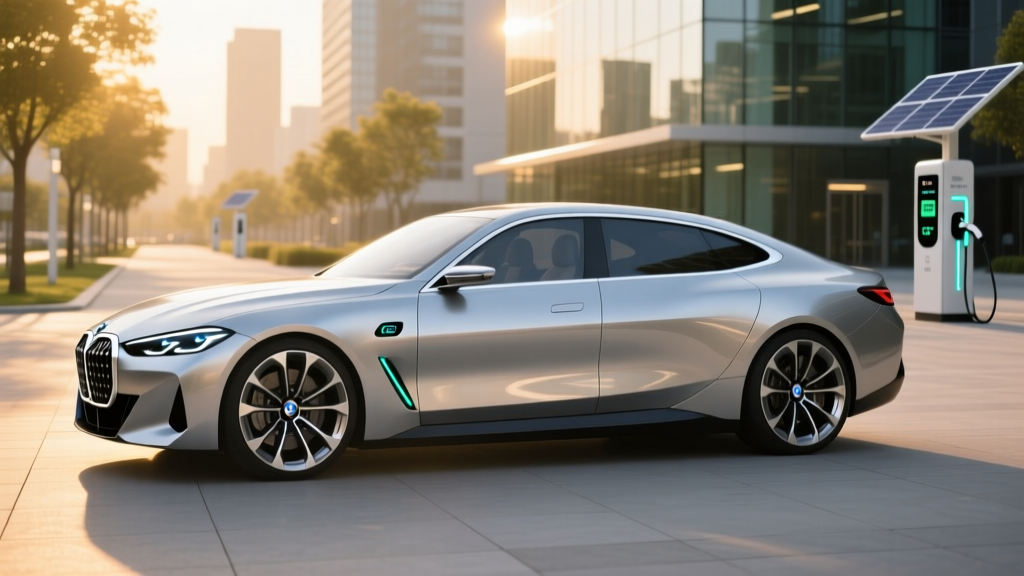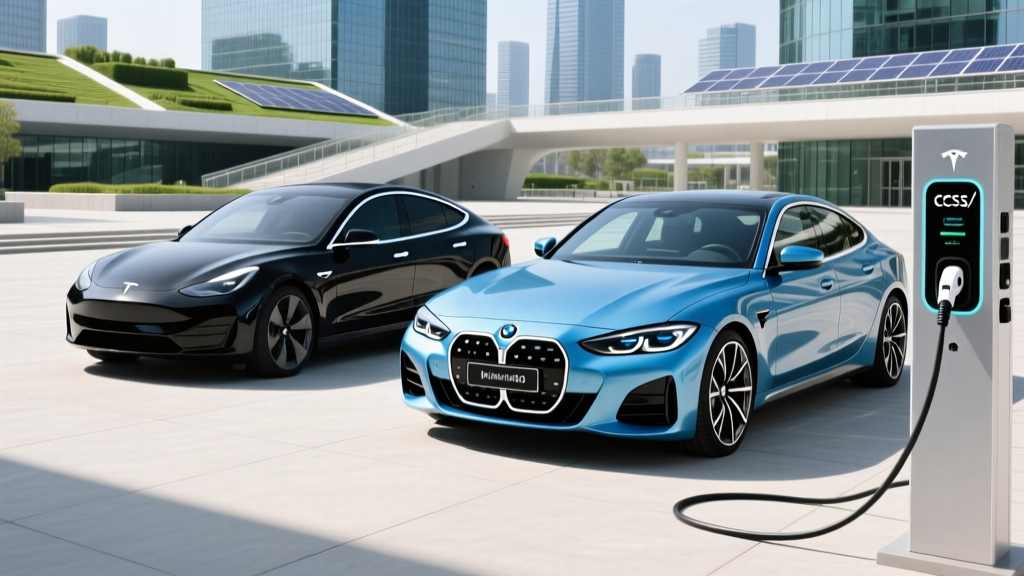
When luxury EV sedan buyers search for Tesla BMW comparisons, they are almost always cross-shopping two specific vehicles: the Tesla Model 3 and the BMW i4. Both are premium, performance-oriented electric sedans in the $45,000–$65,000 range, but they approach electrification from fundamentally different philosophies. Tesla offers minimalist efficiency, best-in-class Supercharger access, and a vertically integrated software stack. BMW delivers traditional luxury build quality, analog-driving feel, and dealer-supported service infrastructure.
This review profiles both vehicles head-to-head using 2026 model-year specifications, EPA data, and real-world ownership variables including charging curves, cold-weather range loss, and federal tax credit eligibility under IRS §30D rules.
Head-to-Head Specification Table
| Specification | 2026 Tesla Model 3 Long Range AWD | 2026 BMW i4 xDrive40 |
|---|---|---|
| EPA Range | 341 miles | 282 miles |
| Battery Capacity (usable) | 75 kWh (NMC) | 80.7 kWh (NMC) |
| Drivetrain | Dual-Motor AWD | Dual-Motor AWD |
| Horsepower | 346 hp | 396 hp |
| 0–60 mph | 4.2 seconds | 4.5 seconds |
| Peak DC Fast Charge | 250 kW | 205 kW |
| 10–80% DCFC Time | ~25 minutes | ~31 minutes |
| Level 2 Home Charge | 11.5 kW (~44 mi/hr) | 11 kW (~33 mi/hr) |
| Efficiency (MPGe combined) | 131 MPGe | 100 MPGe |
| Efficiency (kWh/100 mi) | 25 kWh/100 mi | 34 kWh/100 mi |
| Cargo Volume | 23 cu ft (trunk + frunk) | 13 cu ft (liftback, no frunk) |
| Rear Legroom | 35.3 inches | 34.5 inches |
| Base MSRP | $47,740 | $57,900 |
| Battery/Powertrain Warranty | 8 yr / 120,000 mi | 8 yr / 100,000 mi |
Sources: fueleconomy.gov, Tesla Model 3 specs, BMW i4 specs.
Real-World Range: What the EPA Sticker Doesn't Tell You
Tesla Model 3 Long Range: EPA 341 mi. Expect ~290–310 mi in real-world highway driving (70–80 mph). In cold weather (below 32°F), plan for 240–270 mi due to cabin heating demands and increased battery resistance.
BMW i4 xDrive40: EPA 282 mi. Expect ~245–260 mi on highway trips. Cold-weather range drops to approximately 195–220 mi.
The Model 3's efficiency advantage is significant. Tesla's heat pump, aerodynamic drag coefficient of 0.219, and lighter curb weight (~4,034 lbs vs. the i4's ~4,682 lbs) combine to extract more miles per kWh. The i4, based on BMW's CLAR platform shared with the 4 Series Gran Coupe, carries more mass and prioritizes driving dynamics over aero optimization.
For road-trippers who regularly drive 250+ miles between stops, the Model 3's 59-mile EPA advantage translates to fewer charging stops and shorter overall trip times. For daily commuters covering under 80 miles round-trip, both vehicles offer more than adequate range, and the gap matters less.
Charging Speed & Infrastructure
| Charging Level | Tesla Model 3 LR | BMW i4 xDrive40 |
|---|---|---|
| Level 1 (120V, 12A) | ~1.4 kW (~4 mi/hr) | ~1.4 kW (~3 mi/hr) |
| Level 2 (240V, 48A) | 11.5 kW (~44 mi/hr) | 11 kW (~33 mi/hr) |
| DC Fast Charge (peak) | 250 kW (CCS via adapter / NACS native) | 205 kW (CCS1) |
| 10–80% DCFC Time | ~25 minutes | ~31 minutes |
| Charging Network Access | Tesla Supercharger (native) + growing NACS network | CCS networks (Electrify America, EVgo, ChargePoint) |
Understanding kW vs. kWh: kW (kilowatts) measures charging power—how fast energy flows into the battery. kWh (kilowatt-hours) measures battery capacity—how much total energy it stores. A 250 kW charger delivers energy faster than a 205 kW charger, but neither vehicle sustains peak rate for the entire session.
Charging curve reality: Both vehicles hit peak charge rate only between roughly 10–30% State of Charge (SoC). Above 50%, rates taper significantly. The Model 3 typically holds ~170 kW through 40% SoC before stepping down, while the i4 tapers more gradually from its 205 kW peak. This is why 10–80% times are a better comparison metric than peak kW alone.
Preconditioning matters: Both vehicles precondition the battery when a DC fast charger is set as a navigation destination. The Tesla system warms the pack more aggressively, enabling faster initial charge rates in cold weather. Skipping preconditioning can add 5–10 minutes to a fast-charge session.
Network advantage: Tesla's Supercharger network remains the most reliable DC fast-charging ecosystem in the U.S., with over 25,000 stalls and consistent uptime. The i4 relies on third-party CCS networks (Electrify America, EVgo), which have improved but still show higher downtime rates in independent surveys. BMW owners can also access Tesla Superchargers using a CCS-to-NACS adapter as Tesla opens its network, though at non-Tesla pricing.
Performance, Drivetrain & Driving Dynamics
The i4 xDrive40 produces 396 hp and 435 lb-ft of torque, edging the Model 3 Long Range's 346 hp. Yet the Tesla hits 60 mph 0.3 seconds quicker (4.2 vs. 4.5 seconds), thanks to its lighter weight and instant dual-motor torque delivery without the i4's simulated gear-shift programming.
Where the BMW fights back is chassis feel. The i4 inherits the 4 Series Gran Coupe's multi-link rear suspension, near-50/50 weight distribution, and hydraulic steering that delivers genuine road feedback. The Model 3's electrically assisted steering is precise but numb by comparison. On a canyon road, the i4 feels like a sports sedan that happens to be electric; the Model 3 feels like an efficient EV that happens to be quick.
Both vehicles include Level 2 driver-assistance systems. Tesla's Autopilot (standard) and available FSD (Supervised) offer lane-centering, adaptive cruise, and automatic lane changes—but the driver must remain engaged at all times. BMW's Driving Assistant Professional provides similar Level 2 functionality with more conservative calibration. Neither system is self-driving. SAE Level 4 autonomy (no driver required) is only available in limited robotaxi services like Waymo—not in any consumer vehicle.
Pricing, Tax Credits & Total Cost
| Cost Factor | Tesla Model 3 LR AWD | BMW i4 xDrive40 |
|---|---|---|
| Base MSRP (incl. destination) | $47,740 | $57,900 |
| Typical As-Tested Price | $49,240 (w/ paint, no FSD) | $63,500 (w/ Premium, Driving Asst Pro) |
| Federal §30D Tax Credit (max) | Up to $7,500 | Up to $7,500 |
| Effective Price After Max Credit | ~$40,240 | ~$50,400 |
| Est. 5-Year Charging Cost* | ~$3,100 | ~$4,200 |
| Est. 5-Year Insurance | ~$9,500 | ~$8,800 |
*Based on 12,000 mi/yr, $0.14/kWh home charging average, and 20% DC fast charging at $0.35/kWh.
Federal tax credit eligibility (IRS §30D): Both vehicles may qualify for up to $7,500, but eligibility depends on several conditions that change annually. Key 2026 requirements include:
- MSRP cap: Sedans must be under $55,000 MSRP. The Model 3 LR qualifies at $47,740. The i4 xDrive40 at $57,900 exceeds the sedan cap—only the i4 eDrive35 (if MSRP falls under $55K) may qualify.
- Buyer income cap: AGI must not exceed $150,000 (single) / $300,000 (joint).
- Battery sourcing: Critical minerals and battery components must meet increasing domestic-content thresholds per IRS guidelines. Verify current-year compliance before purchase.
- Point-of-sale transfer: Eligible buyers can apply the credit as a down-payment reduction at the dealer rather than waiting for a tax refund.
Consult a tax professional and verify current eligibility at irs.gov before relying on credit amounts for purchase decisions.
Interior, Tech & Practicality
The interiors reveal the sharpest philosophical divide. The Model 3 offers a single 15.4-inch touchscreen controlling virtually all vehicle functions—no instrument cluster, no physical climate controls, no stalks (turn signals are steering-wheel buttons in the refreshed model). It is ruthlessly minimalist. Build quality has improved significantly with the Highland refresh: acoustic glass, ventilated front seats, ambient lighting, and a rear passenger screen.
The i4 wraps its electric powertrain in a familiar BMW cabin: a curved display (12.3-inch cluster + 14.9-inch infotainment), physical climate buttons, a traditional gear selector, and optional Vernasca leather. BMW's iDrive 8.5 is feature-rich but menu-heavy. Apple CarPlay and Android Auto are wireless and standard. The Model 3 does not support either—Tesla's native infotainment is the only option.
Cargo practicality: The Model 3's 23 cu ft (trunk + 3.1 cu ft frunk) beats the i4's 13 cu ft liftback with no front trunk. The Tesla's rear trunk opening is narrower, however, limiting bulk loading. The i4's hatchback-style liftback is more practical for large items despite the lower total volume.
Pros, Cons & Verdict
- Best-in-class efficiency (131 MPGe combined)
- Supercharger network reliability
- Fastest DC charging in segment (250 kW, ~25 min 10–80%)
- Lower base price with tax credit eligibility
- OTA software updates add features over time
- Frunk adds cargo flexibility
- Minimalist interior not for everyone
- No Apple CarPlay / Android Auto
- Turn-signal buttons on steering wheel require adaptation
- Service center availability limited in rural areas
- FSD (Supervised) remains expensive and Level 2 only
- Superior ride quality and steering feel
- Traditional luxury interior with physical controls
- Apple CarPlay / Android Auto standard
- Established dealer network for service
- More horsepower (396 hp xDrive40)
- Quiet cabin with premium materials
- Significantly higher MSRP; xDrive40 exceeds tax-credit MSRP cap
- Lower efficiency (100 MPGe) means higher charging costs
- Slower DC charging (205 kW peak, ~31 min 10–80%)
- No front trunk (frunk)
- Less real-world range than Model 3 by ~50+ miles
Choose the Tesla Model 3 if: You prioritize maximum range, lowest cost per mile, fastest charging, and road-trip readiness. Ideal for high-mileage commuters, tech-forward buyers who prefer minimalist design, and anyone who values Supercharger reliability for frequent long-distance travel.
Choose the BMW i4 if: You want a traditional luxury sedan experience with superior ride quality, physical controls, Apple CarPlay, and dealer-supported service. Best for buyers transitioning from a BMW 3/4 Series who want electrification without sacrificing driving engagement or cabin familiarity.
Frequently Asked Questions
What is the real-world range of the Tesla Model 3 vs BMW i4?
The Model 3 Long Range delivers an EPA-rated 341 miles but expect 290–310 miles in mixed highway driving and 240–270 miles in cold weather. The BMW i4 xDrive40 is EPA-rated at 282 miles with real-world highway range of approximately 245–260 miles, dropping to 195–220 miles in freezing temperatures.
How fast do these EVs charge at home and on the road?
On a DC fast charger, the Model 3 peaks at 250 kW and reaches 10–80% in about 25 minutes. The i4 peaks at 205 kW with a 10–80% time of roughly 31 minutes. At home on a Level 2 (240V) charger, the Model 3 adds about 44 miles per hour of charging, while the i4 adds approximately 33 miles per hour.
Does the BMW i4 qualify for the $7,500 federal EV tax credit?
It depends on trim. The i4 xDrive40's $57,900 MSRP exceeds the IRS §30D sedan cap of $55,000, making it ineligible. A lower-priced i4 eDrive35 trim may qualify if its MSRP falls under the cap and battery sourcing requirements are met. The Model 3 Long Range at $47,740 qualifies on MSRP grounds. Always verify current-year rules at irs.gov and consult a tax professional.
Is the Tesla Model 3 or BMW i4 better for road trips?
The Model 3 wins for road trips due to its 59-mile range advantage, faster charging, and access to the Supercharger network. On a 500-mile trip, the Model 3 typically requires one fewer charging stop and 10–15 fewer minutes of total charging time compared to the i4.
Which EV is more expensive to own over five years?
The BMW i4 costs more to purchase and charge due to its higher MSRP and lower efficiency. However, BMW insurance premiums tend to be slightly lower than Tesla's. Over five years and 60,000 miles, the Model 3's total cost of ownership is approximately $8,000–$12,000 lower than the i4 xDrive40, driven primarily by the purchase price gap and charging cost difference.