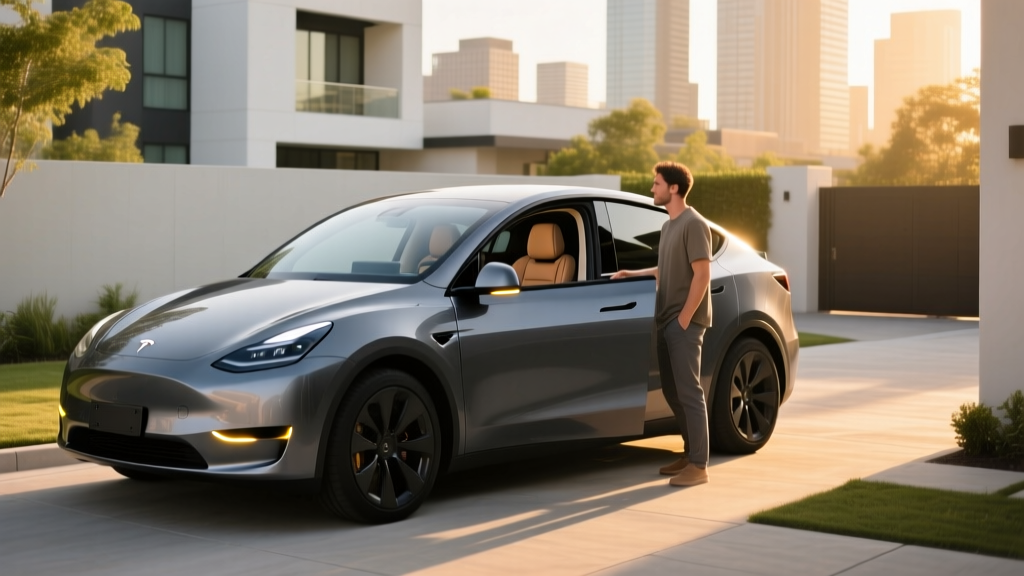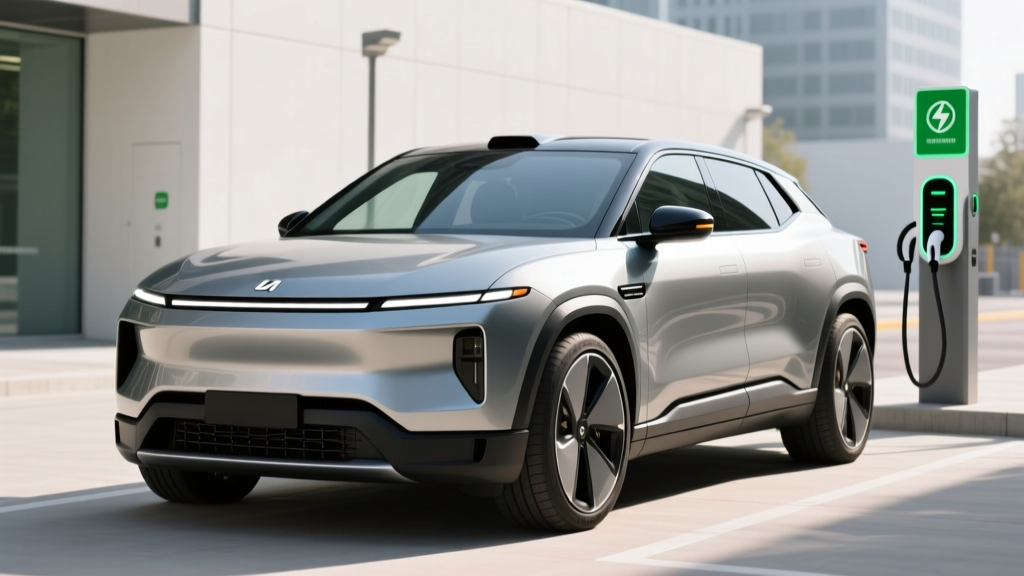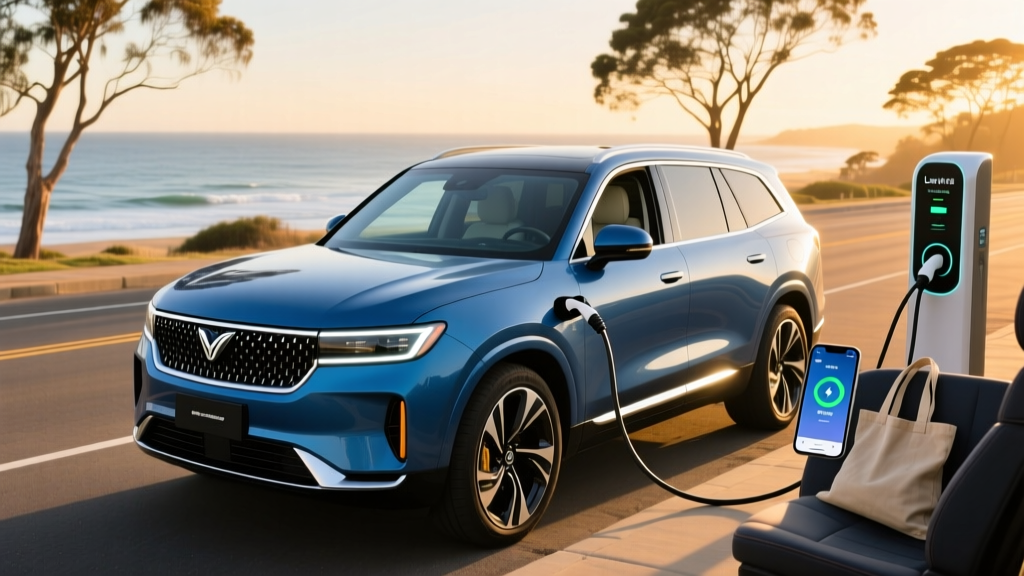
The Wagoneer S is Jeep parent Stellantis's first luxury electric SUV built on the dedicated STLA Large platform, and it arrives with bold numbers: 600 horsepower, a sub-4-second 0-60 time, and an EPA-estimated range that positions it squarely against the BMW iX, Mercedes EQE SUV, and Tesla Model X. But spec sheets only tell half the story. After examining the drivetrain, charging architecture, interior packaging, and federal incentive eligibility, here is what prospective buyers actually need to know before signing a lease or purchase agreement.
Quick Verdict: Who Should Consider the Wagoneer S EV?
The Wagoneer S targets luxury-SUV buyers who want American-brand heritage, serious straight-line performance, and a premium tech-forward cabin — without stepping into six-figure European territory. It works best for:
- Daily commuters with home Level 2 charging who want a quiet, fast, one-pedal-drive experience
- Families needing two rows of spacious seating and modern driver-assist tech
- Road trippers willing to plan around the CCS/NACS charging network transition
It is not ideal for three-row family hauling (no third row), heavy towing (rated modestly for its class), or buyers in rural charging deserts who cannot install home charging.
Range and Efficiency: EPA Sticker vs. Real-World Expectations
Real-World Expectation: ~330-360 miles on mixed highway driving at 70-75 mph; expect ~280-310 miles in sustained sub-30°F cold weather with cabin heating. City/regenerative driving can match or slightly exceed the EPA figure.
The Wagoneer S Launch Edition pairs a 100.5 kWh usable battery (NMC lithium-ion chemistry) with an estimated efficiency of roughly 97 MPGe combined, or about 35 kWh per 100 miles. That efficiency figure is competitive with the BMW iX xDrive50 but trails the more aerodynamically optimized Tesla Model X.
Why the gap between EPA and real-world? The Wagoneer S is a tall, broad SUV with a frontal area that creates meaningful aerodynamic drag at highway speeds. Cold weather compounds this: NMC chemistry loses roughly 15-25% of available capacity in freezing temperatures, and cabin heating draws 3-5 kW continuously. The heat pump included on the Wagoneer S mitigates some of this loss, but physics is physics — plan for ~70-80% of sticker range in January in Minneapolis.
| Spec | Value |
|---|---|
| EPA Range | 400 miles (est.) |
| Battery (usable) | 100.5 kWh, NMC |
| Efficiency | ~97 MPGe / ~35 kWh/100 mi |
| Peak DC Fast Charge | ~200 kW |
| 10-80% DC Charge Time | ~28 minutes |
| Level 2 Home Charge | 11.5 kW (~27 mi/hr) |
| Horsepower | 600 hp |
| 0-60 mph | 3.4 seconds |
| Drivetrain | Dual-motor AWD |
| Base MSRP (Launch Ed.) | $65,995 |
| Cargo Volume (behind 2nd row) | ~30 cu ft |
| Battery Warranty | 8 yr / 100,000 mi |
Charging Speed: DC Fast, Level 2, and the Charge Curve Reality
Charging speed determines road-trip viability more than range does. The Wagoneer S supports a peak DC fast-charge rate of approximately 200 kW via CCS1 connector (with NACS adapter compatibility for Tesla Supercharger access as Stellantis transitions the fleet). Here is what that means in practice:
| Level | Power | Speed | Use Case |
|---|---|---|---|
| Level 1 (120V) | ~1.4 kW | ~3-4 mi/hr | Emergency/top-off only |
| Level 2 (240V home) | 11.5 kW | ~27 mi/hr | Overnight full charge (~9-10 hrs) |
| DC Fast Charge | Up to 200 kW peak | 10-80% in ~28 min | Road-trip stops |
Charge curve reality check: The 200 kW peak occurs between roughly 10-40% State of Charge (SoC). Above 50%, the rate tapers to ~130 kW, and above 80% it drops sharply to ~50 kW or less to protect the NMC cells. This is normal behavior for all lithium-ion packs, but it means that charging from 80-100% on a road trip is painfully slow — plan to charge to 80% and drive, rather than topping off completely.
For home charging, the 11.5 kW onboard charger is competitive. On a 48-amp Level 2 circuit (hardwired, requiring a 60-amp breaker), you will add roughly 27 miles of range per hour, or refill the entire 100.5 kWh pack in about 9-10 hours. Most owners who plug in nightly will never need DC fast charging for daily use.
Performance and Drivetrain: 600 HP Dual-Motor AWD
The Wagoneer S Launch Edition delivers 600 horsepower and an estimated 600 lb-ft of torque through a dual-motor all-wheel-drive system. The result: a 3.4-second 0-60 mph time, making it one of the quickest SUVs at any price point — faster than a BMW X5 M Competition and rivaling the Tesla Model X Plaid in straight-line punch (though the Model X Plaid's 2.5-second time remains in a different league).
The AWD system is fully electric — there is no mechanical connection between axles. The front and rear motors are managed by software that can shift torque distribution in milliseconds. Jeep has tuned the traction control for light off-pavement use (snow, gravel, wet grass), but this is not a Wrangler. Ground clearance and approach/departure angles are tuned for on-road comfort, not rock crawling.
Driving dynamics benefit from the STLA Large platform's low center of gravity (battery pack mounted under the floor). Expect composed body control, though the ~5,500-pound curb weight is noticeable during aggressive cornering. Regenerative braking offers multiple levels, including a true one-pedal-driving mode that can bring the vehicle to a complete stop without touching the brake pedal.
Interior, Tech, and Cargo: What You Get for the Money
The Wagoneer S cabin represents a significant step up from the Grand Cherokee L in material quality and screen real estate:
- Infotainment: 12.3-inch digital instrument cluster, 12.3-inch passenger display, and a central 12.3-inch (or available larger) touchscreen running Uconnect 5 EV with native EV route planning, preconditioning scheduling, and charging-station locator
- Audio: Available 19-speaker McIntosh premium sound system — a standout in the luxury-EV segment
- Seating: Two rows, seating for five. Front legroom is generous (~41 inches); rear legroom is competitive at ~39 inches
- Cargo: Approximately 30 cubic feet behind the second row, expanding to ~65 cu ft with rear seats folded. A modest front trunk (frunk) adds ~2 cu ft for charging cables or small items
- Driver Assistance: Standard Active Driving Assist (SAE Level 2 — hands-on-wheel supervised), with available hands-free highway driving on mapped roads. This is not autonomous driving; the driver must remain engaged at all times
- No third-row option — families needing 7+ seats must look elsewhere (Rivian R1S, Kia EV9)
- Towing capacity limited to ~3,500 lbs — modest for a luxury SUV in this price range
- Stellantis's public DC charging network reliability (via Free2Move/ChargePoint partnerships) has historically trailed Tesla's Supercharger network in uptime
- Touchscreen-heavy climate controls may frustrate traditional Jeep/Wagoneer buyers accustomed to physical buttons
Pricing, Trims, and Federal Tax Credit Eligibility
The 2026 Wagoneer S launches in a single, well-equipped Launch Edition trim before additional variants are expected later in the model year:
| Item | Amount |
|---|---|
| Base MSRP (Launch Edition) | $65,995 |
| Destination Charge | ~$2,095 |
| As-Tested (with options) | $68,000-$72,000 |
| Federal Tax Credit (§30D) | Up to $7,500 (see eligibility below) |
| Effective Price After Credit | ~$58,495+ (if eligible) |
Federal tax credit eligibility (IRS §30D) is not automatic. Per current IRS rules, buyers must meet all of the following:
- MSRP Cap: SUVs must have an MSRP at or below $80,000 — the Wagoneer S Launch Edition qualifies
- Buyer Income Cap: Modified AGI must not exceed $150,000 (single), $225,000 (head of household), or $300,000 (joint filers)
- Battery Sourcing: Critical minerals and battery components must meet phased-in percentages from US/free-trade-agreement sources — verify current-year compliance with the dealer, as Stellantis supply chains evolve
- Point-of-Sale Transfer: Eligible buyers can transfer the credit to the dealer at purchase, reducing the purchase price by up to $7,500 at the point of sale rather than waiting for a tax return
Always confirm eligibility with a tax professional and check the latest fueleconomy.gov listings before purchasing, as battery-sourcing compliance can change mid-year.
How It Compares: Wagoneer S vs. Key Rivals
| Spec | Wagoneer S | BMW iX xDrive50 | Tesla Model X LR | Mercedes EQE 350+ SUV |
|---|---|---|---|---|
| EPA Range | ~400 mi | ~324 mi | ~335 mi | ~305 mi |
| Horsepower | 600 hp | 516 hp | 670 hp | 288 hp |
| 0-60 mph | 3.4 sec | 4.4 sec | 3.8 sec | 6.2 sec |
| Peak DC Charge | ~200 kW | ~200 kW | ~250 kW | ~170 kW |
| Starting MSRP | $65,995 | $87,250 | $79,990 | $77,900 |
| Federal Credit | Up to $7,500* | Varies | Up to $7,500* | Varies |
*Eligibility depends on income, MSRP cap, and battery-sourcing rules. Verify at IRS.gov.
The Wagoneer S's strongest competitive advantage is price-to-performance. It undercuts the BMW iX by over $20,000 while offering more range and quicker acceleration. The Tesla Model X offers falcon-wing doors, optional third row, and Supercharger network access, but at a higher starting price and with Tesla's polarizing interior minimalism. The Mercedes EQE SUV prioritizes ride comfort and cabin quietness but sacrifices performance.
Warranty and Long-Term Ownership
Stellantis provides a competitive warranty package for the Wagoneer S:
- Battery/Powertrain: 8 years / 100,000 miles (whichever comes first), covering capacity loss below ~70% State of Health
- Bumper-to-Bumper: 3 years / 36,000 miles
- Roadside Assistance: 5 years / 60,000 miles
For NMC battery longevity, best practices include: charging to 80% for daily use (using the vehicle's charge-limit setting), avoiding repeated DC fast charging when Level 2 is available, and preconditioning the battery before fast charging (the Wagoneer S does this automatically when you navigate to a charger). Expect typical NMC degradation of roughly 10-15% over the first 100,000 miles based on industry data from similar platforms.
Pros and Cons
✓ Pros
- 400-mile EPA range is class-leading at this price
- 600 hp / 3.4-sec 0-60 provides genuine supercar-rivaling acceleration
- Premium McIntosh audio is a standout luxury feature
- Under $66k base undercuts European rivals by $15-25k
- Federal tax credit eligible (subject to sourcing/income rules)
- Heat pump included for cold-weather efficiency
✗ Cons
- No third-row seat — limits family versatility
- 3,500-lb towing capacity is low for the segment
- 200 kW peak DC charging trails Hyundai/Kia's 800V architecture (~240 kW)
- Stellantis charging-network reliability still maturing vs. Tesla Superchargers
- Touchscreen-dominant interior may alienate button-preferring buyers
- Real-world highway range drops significantly in cold weather
Frequently Asked Questions
What is the real-world range of the Wagoneer S EV?
Expect approximately 330-360 miles on a mix of highway and city driving in moderate temperatures. Sustained 75-mph highway driving in summer yields ~340 miles. In sub-30°F winter conditions with cabin heat, plan for 280-310 miles. The EPA's 400-mile figure is achievable in mild-weather city driving with heavy regenerative braking use.
How fast does the Wagoneer S charge?
On a DC fast charger, it peaks at ~200 kW and charges from 10-80% in approximately 28 minutes. At home on a 240V Level 2 charger (11.5 kW), it adds about 27 miles of range per hour, fully recharging overnight in 9-10 hours. Level 1 (120V) is emergency-only at ~3-4 miles per hour.
Does the Wagoneer S qualify for the $7,500 federal EV tax credit?
The Launch Edition's $65,995 MSRP falls under the $80,000 SUV cap, making it potentially eligible. However, buyers must also meet income limits ($150k single / $300k joint) and the vehicle must satisfy battery critical-mineral and component sourcing requirements that change annually. Verify current eligibility on fueleconomy.gov and consult a tax professional before relying on the credit.
Is the Wagoneer S worth buying over the BMW iX or Tesla Model X?
If you prioritize value (price-to-range-to-performance), the Wagoneer S is compelling — it delivers more range and acceleration than the iX at $20,000+ less. Choose the Model X if you need a third row, Supercharger network access, or over-the-air software updates with the longest track record. Choose the iX if you prioritize cabin material quality and brand cachet. The Wagoneer S is the smartest buy for buyers who want luxury-EV performance without luxury-EV pricing.
Can the Wagoneer S use Tesla Superchargers?
Stellantis has committed to NACS adapter compatibility, allowing CCS-equipped vehicles to access the Tesla Supercharger network (V3 and V4 stalls). Confirm adapter availability and included-vs-purchased status with your dealer at time of purchase, as rollout timelines vary.
How does the Wagoneer S handle in snow and light off-road conditions?
The dual-motor AWD system provides excellent traction in snow and on gravel, with selectable drive modes for low-grip surfaces. However, ground clearance is tuned for on-road use (~6.5 inches estimated), and this is not a body-on-frame off-roader. For serious trail use, a Wrangler 4xe remains the better choice.