Washington State has long been one of the most EV-friendly states in the country, thanks to cheap hydropower, a strong environmental ethos, and a growing charging network. But when buyers search for a "WA state EV tax credit," they often discover a confusing reality: Washington's incentive landscape has shifted dramatically in recent years. The state's standalone EV purchase rebate program wound down, leaving most of the financial heavy lifting to the federal IRS §30D clean vehicle credit, utility rebates, and indirect benefits like HOV lane access and sales tax exemptions on certain electric vehicles.
This guide breaks down every incentive available to Washington EV buyers in 2026, then runs the hard numbers on what owning an EV actually costs over five years — including the line items that catch new owners off guard, like higher insurance premiums and steeper early depreciation.
Washington State EV Incentives: What's Available in 2026
Unlike states such as California or Colorado that offer direct state purchase rebates, Washington does not currently operate a standalone point-of-sale EV purchase tax credit for new vehicles. However, Washington EV buyers can stack several meaningful incentives:
Federal IRS §30D Clean Vehicle Credit: Up to $7,500, transferable at point of sale (applies nationwide, including WA). Detailed eligibility below.
Washington Sales/Use Tax Exemption (Expired): Washington's previous sales tax exemption on EVs (up to $30,000 MSRP) expired and is no longer available for new purchases in 2026. Always confirm with the WA Department of Revenue for legislative updates.
Utility Rebates (Varies by Provider): Seattle City Light, Puget Sound Energy, and Avista periodically offer rebates for home Level 2 charger installation (typically $200–$500) and off-peak charging credits. Check your local utility.
HOV Lane Access: Washington grants qualifying EVs access to HOV lanes with a single occupant through the state's Clean Vehicle program — a significant commute perk in the I-5 and I-90 corridors.
Used EV Credit (§25E): Up to $4,000 for qualifying used EV purchases, subject to income caps and vehicle price limits ($25,000 max sale price).
The bottom line: the single largest incentive for a Washington EV buyer in 2026 is the federal §30D credit. Everything else is supplementary. Let's unpack exactly who qualifies.
Federal §30D Tax Credit: Eligibility Rules for Washington Buyers
The IRS §30D New Clean Vehicle Credit provides up to $7,500 for qualifying new EVs and plug-in hybrids. Since January 2024, buyers can transfer this credit to the dealer at point of sale, reducing the purchase price directly rather than waiting for a tax refund. But eligibility is not automatic — it hinges on income caps, vehicle MSRP caps, and battery-component/critical-mineral sourcing rules that tighten each year.
- Adjusted Gross Income Caps: $150,000 (single filer), $225,000 (head of household), $300,000 (married filing jointly)
- MSRP Caps: $80,000 for vans, SUVs, and pickup trucks; $55,000 for sedans and other passenger cars
- Battery Sourcing (2026): Increasing percentages of battery components must be manufactured or assembled in North America, and critical minerals must be sourced from the U.S. or free-trade-agreement countries
- Foreign Entity of Concern (FEOC) Restriction: Vehicles with battery components from a FEOC (e.g., certain Chinese manufacturers) are disqualified — this restriction expanded in 2025 to include critical minerals
- Vehicle Assembly: Final assembly must occur in North America
- Transfer Election: You can transfer the credit to the dealer at sale, but you must still file IRS Form 8936 and meet income requirements — if your income exceeds the cap, you owe the credit back
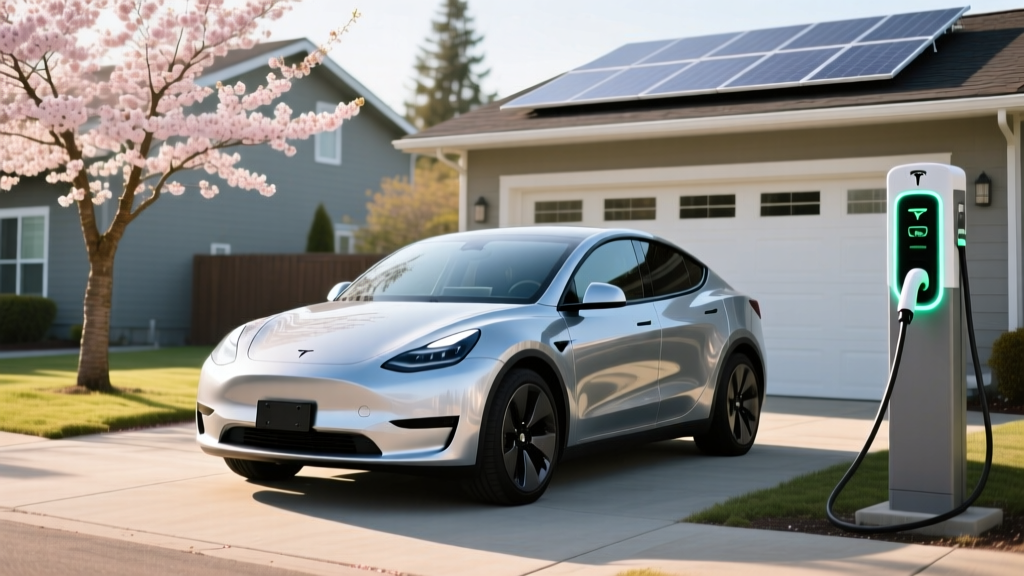
For Washington buyers eyeing popular models: the Tesla Model Y Long Range (MSRP ~$44,990) and Ford F-150 Lightning XLT (MSRP ~$54,995) have generally qualified for the full $7,500 in recent years due to North American battery sourcing. The Hyundai Ioniq 5, assembled in Georgia with updated U.S. battery supply chains, also qualifies. Always verify current eligibility on the IRS's official New Clean Vehicle Credit page and the DOE's qualified vehicle list, as sourcing rules shift throughout the year.
The Real 5-Year Cost of Owning an EV in Washington
Incentives lower the entry price, but ownership economics depend on what you spend over time. Below is a realistic five-year total cost of ownership (TCO) comparison for a popular EV — the Tesla Model Y Long Range AWD — versus a comparable gas-powered compact SUV (Toyota RAV4 AWD) driven 12,000 miles per year in Washington State.
| Category | Tesla Model Y LR AWD | Toyota RAV4 AWD (Gas) |
|---|---|---|
| Base MSRP | $44,990 | $33,500 |
| Federal Tax Credit (§30D) | −$7,500 | $0 |
| Effective Purchase Price | $37,490 | $33,500 |
| Depreciation (5 yr, est.) | $20,500 (~55%) | $12,000 (~36%) |
| Fuel/Energy (60k mi) | $2,880 (electricity) | $7,200 (gasoline) |
| Maintenance (5 yr) | $1,200 | $3,500 |
| Insurance (5 yr avg) | $9,500 ($1,900/yr) | $6,750 ($1,350/yr) |
| Estimated 5-Year TCO | ~$71,570 | ~$62,950 |
Assumptions: WA average residential electricity at $0.12/kWh; Model Y efficiency at 28 kWh/100 mi (EPA combined); gas at $3.80/gal; RAV4 combined MPG at 30; 85% home charging. Insurance figures are averages — individual quotes vary significantly. Depreciation estimates reflect current EV resale trends.
The Model Y narrows the gap substantially after the tax credit and fuel/maintenance savings, but higher insurance and steeper depreciation prevent it from beating the RAV4 on pure TCO over five years in this scenario. The math shifts favorably if gas prices rise, if you drive more than 12,000 miles/year, or if you hold the vehicle longer (where EV maintenance savings compound).
Charging vs Gas: The Per-Mile Cost Math
Washington's electricity rates are among the lowest in the nation, averaging roughly $0.12/kWh for residential customers — a major advantage over states like California ($0.30+/kWh). Here's how the per-mile fuel cost breaks down:
| Metric | Tesla Model Y LR | Toyota RAV4 AWD |
|---|---|---|
| Energy Consumption | 28 kWh/100 mi (EPA) | 30 MPG combined |
| Energy Cost | $0.12/kWh (home) | $3.80/gallon |
| Cost Per Mile (Home Charging) | $0.034/mi | $0.127/mi |
| Cost Per Mile (DC Fast Charging, ~$0.40/kWh) | $0.112/mi | $0.127/mi |
| Annual Fuel Cost (12k mi, 85% home) | ~$576 | ~$1,520 |
At home on Washington's cheap hydropower, the Model Y costs roughly $0.034 per mile to "fuel" — about a quarter of the RAV4's gasoline cost. Even at public DC fast chargers (typically $0.35–$0.48/kWh in the Pacific Northwest), EV charging stays competitive with gasoline. Over 60,000 miles, the fuel savings total approximately $4,320.
The caveat: if you rely exclusively on public DC fast charging (no home access), the per-mile cost nearly triples and the savings advantage narrows considerably. Home Level 2 charging is where the economics really work.
Maintenance Savings: Where EVs Quietly Win
EVs have far fewer moving parts than internal combustion vehicles — no engine, no transmission, no exhaust system, no spark plugs, no timing belts. The maintenance savings are real but often overstated. Here's a realistic breakdown:
| Service Item | EV (Model Y) | Gas SUV (RAV4) |
|---|---|---|
| Oil Changes | $0 (none needed) | $600–$800 (every 5k–10k mi) |
| Brake Pads/Rotors | $0–$200 (regen extends life 2–3x) | $600–$1,000 |
| Coolant/Fluids | $100–$200 | $300–$500 |
| Tire Rotation/Replacement | $800–$1,200 (EVs wear tires faster due to weight/torque) | $600–$900 |
| Cabin Air Filter | $100–$150 | $100–$150 |
| Transmission/Engine Service | $0 | $400–$800 |
| 5-Year Total (est.) | $1,000–$1,550 | $2,600–$4,150 |
The biggest maintenance advantage for EVs is brake longevity. Regenerative braking handles most deceleration, meaning brake pads often last 80,000–120,000+ miles. The one area where EVs cost more is tires — the extra weight (a Model Y weighs ~4,400 lbs vs ~3,600 lbs for a RAV4) and instant torque wear through rubber faster. Budget for tire replacement every 30,000–40,000 miles on an EV versus 40,000–50,000 on a comparable gas vehicle.
Insurance Reality: The Cost EV Buyers Underestimate
This is where EV ownership economics take a hit that most pre-purchase calculators gloss over. EVs are typically 15–30% more expensive to insure than comparable gas vehicles. Several factors drive this:
- Higher repair costs: EV battery packs and specialized components are expensive to replace after collisions. Even minor accidents can total a battery if structural integrity is compromised.
- Higher vehicle values: Insurers factor in replacement cost; EVs generally have higher MSRPs than equivalent gas models.
- Specialized labor: Fewer body shops are certified to repair high-voltage systems, driving up labor rates.
- Parts availability: Some EV-specific parts have longer lead times, extending rental-car claims.
For the Tesla Model Y in Washington, expect annual premiums averaging $1,700–$2,200 for a driver with a clean record, versus $1,200–$1,500 for a RAV4. That's roughly $400–$700 more per year, or $2,000–$3,500 over five years. Always get quotes from your insurer before purchasing — some companies (like GEICO and Progressive) have narrowed the EV insurance gap, while others still price EVs at a steep premium.
Depreciation and Resale Value: The Moving Target
EV depreciation has been volatile. In 2023–2024, aggressive price cuts by Tesla and a flood of off-lease EVs hit resale values hard. Some models lost 50–60% of their value in the first two years. By 2026, the market has stabilized somewhat, but EVs still generally depreciate faster than comparable gas vehicles for several reasons:
- Battery degradation concerns: Even if unfounded for most modern packs, buyer perception of battery risk suppresses used-EV prices.
- Rapid technology cycles: Newer EVs with longer range and faster charging make older models feel dated quickly.
- Tax credit resets: When a new buyer gets $7,500 off a new EV, the used market must price down to compete.
- Fleet/lease saturation: High lease volumes mean steady supply of 3-year-old used EVs hitting the market.
Current five-year depreciation estimates for popular EVs sit around 50–60% of purchase price, versus 35–45% for high-demand gas SUVs like the RAV4. The Tesla Model Y has historically held value better than most EVs (closer to 50–55% depreciation at five years), while sedans like the Chevrolet Bolt or Nissan Leaf can see 60%+ drops.
If depreciation is your primary concern, consider a used EV instead — the first owner absorbs the steepest depreciation hit, and you may qualify for the §25E used-EV credit (up to $4,000) on top.
Washington-Specific Ownership Advantages
Beyond incentives, Washington offers structural advantages for EV ownership that improve the total cost picture:
- Cheap, clean electricity: Washington's grid is ~90% hydroelectric, meaning your EV runs on some of the lowest-cost and lowest-carbon electricity in the country. At $0.12/kWh, your per-mile cost is roughly half of what a California EV owner pays.
- Mild climate (western WA): The Puget Sound region's moderate temperatures are favorable for battery longevity. Extreme cold and extreme heat accelerate degradation — Washington avoids both for most of the year.
- Expanding charging infrastructure: The I-5 corridor from Bellingham to Vancouver is well-served by Electrify America, Tesla Superchargers, and EVgo stations. Rural eastern Washington remains a charging desert in spots — plan road trips accordingly.
- No state income tax: Washington's lack of state income tax means the federal §30D credit is the primary purchase incentive without state tax interactions complicating the math.
Frequently Asked Questions
Does Washington State have its own EV tax credit in 2026?
Washington does not currently offer a standalone state purchase tax credit or rebate for new EVs. The state's previous sales tax exemption on EVs expired. Washington buyers rely primarily on the federal §30D credit (up to $7,500), utility rebates for home charging equipment, and non-monetary perks like HOV lane access. Legislative sessions can introduce new incentives, so check the WA Department of Commerce for updates.
How much does it really cost to own an EV over 5 years in Washington?
For a Tesla Model Y Long Range driven 12,000 miles/year in WA, expect a five-year total cost of ownership around $70,000–$75,000 including purchase price (after the $7,500 federal credit), electricity, insurance, maintenance, and depreciation. A comparable gas SUV (Toyota RAV4 AWD) comes in around $60,000–$65,000 over the same period. The EV's fuel and maintenance savings (~$6,000 combined) partially offset its higher insurance (~$2,750 more) and steeper depreciation (~$8,500 more).
Do I qualify for the $7,500 federal EV tax credit?
Eligibility depends on three factors: your adjusted gross income (must be under $150k single / $300k joint), the vehicle's MSRP (under $80k for SUVs/trucks, $55k for sedans), and whether the vehicle's battery meets North American sourcing requirements for components and critical minerals. The vehicle must also be assembled in North America. Check the IRS §30D page and the DOE's qualified vehicle list before purchasing.
How much do I save on fuel and maintenance with an EV?
In Washington, with electricity at $0.12/kWh and gasoline at ~$3.80/gallon, an efficient EV like the Model Y saves roughly $950/year on fuel versus a 30-MPG gas SUV (assuming 12,000 miles/year and 85% home charging). Maintenance savings add another $300–$500/year (no oil changes, longer brake life). Combined, expect $1,200–$1,500 in annual savings on fuel and maintenance, totaling $6,000–$7,500 over five years.
Are EVs more expensive to insure?
Yes, typically 15–30% more expensive than comparable gas vehicles. Higher repair costs, specialized labor, and elevated vehicle values drive the premium difference. For a Tesla Model Y in Washington, budget $1,700–$2,200/year versus $1,200–$1,500/year for a RAV4. Get quotes before buying — the gap varies significantly between insurers.
How well do EVs hold their value?
EVs generally depreciate faster than gas vehicles, losing 50–60% of value over five years versus 35–45% for popular gas SUVs. Battery degradation perception, rapid tech improvements, and new-vehicle tax credits pressure used-EV prices. The Tesla Model Y and Ford F-150 Lightning hold value better than average for EVs. Buying used lets you skip the steepest depreciation years.
Washington remains one of the best states to own an EV — not because of a generous state tax credit, but because cheap hydropower, mild weather, and strong federal incentives combine to make the ownership math work. Run your own numbers with your specific utility rate, commute distance, and insurance quotes, and the path to electrification (or the case for waiting) becomes clear.