Quick Answer: The 2026 VW Jetta Electric Status
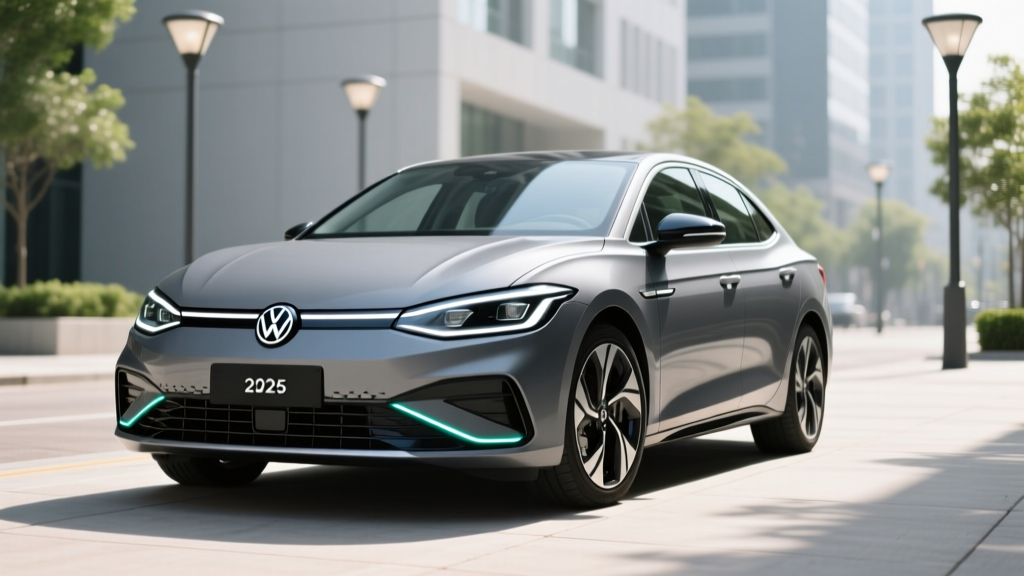
As of early 2026, Volkswagen has not announced a production Jetta Electric (battery-electric sedan) for the U.S. market. The nameplate "Jetta" remains sold exclusively as a gasoline-powered compact sedan in North America. VW's U.S. EV lineup currently consists of the ID.4 (compact SUV) and the ID.7 (midsize sedan, launched for the 2025 model year). Buyers searching for a "Jetta Electric" are likely thinking of either the VW ID.7 (VW's electric sedan alternative) or the gasoline Jetta and wondering about electrification.
Below, we break down what VW actually offers, how the ID.7 compares to the gas Jetta on cost and ownership, and what a first-time EV buyer should know before making the switch.
Why There Is No Jetta Electric in 2026
Volkswagen's global electrification strategy under the ID. family uses dedicated EV architecture (MEB platform) with new nameplates rather than converting legacy ICE nameplates. The Jetta, built on the MQB platform, continues as a gas-only model for the U.S. market. In China, VW has sold electric Jetta-adjacent models (like the ID.3 and localized EV sedans), but these are not part of VW's North American product plan.
The closest U.S.-market equivalent to an "electric Jetta" is the VW ID.7, a midsize electric sedan positioned above the compact ID.4. For buyers who want a VW sedan with a plug, the ID.7 is the answer.
VW ID.7 vs Gas Jetta: Spec-by-Spec Comparison
Since the ID.7 is the de facto electric sedan in VW's U.S. lineup, here is how it stacks up against the current gasoline Jetta across the metrics that matter to buyers.
| Spec | 2026 VW ID.7 Pro S | 2026 VW Jetta SE (Gas) |
|---|---|---|
| Powertrain | Single-motor RWD, 86 kWh usable (NMC) | 1.5L turbo I4, 158 hp |
| Horsepower | 282 hp | 158 hp |
| 0–60 mph | ~6.5 sec | ~8.1 sec |
| EPA Range / MPG | ~340 mi (EPA est.) | 30 city / 40 hwy / 34 combined MPG |
| MPGe (combined) | ~110 MPGe | N/A |
| Max DC Fast Charge | 200 kW (peak), 10–80% in ~26 min | N/A (gas fill ~3 min) |
| Level 2 Charge Rate | 11 kW (~36 mi/hr added) | N/A |
| Battery / Fuel Tank | 86 kWh usable, NMC chemistry | 13.2 gal fuel tank |
| Cargo Volume | ~17.7 cu ft (trunk) | 14.1 cu ft (trunk) |
| Starting MSRP | ~$52,995 | ~$24,995 |
| Battery / Powertrain Warranty | 8 yr / 100,000 mi (70% capacity retention) | 4 yr / 50,000 mi (powertrain: 6 yr / 70,000 mi) |
Sources: fueleconomy.gov (EPA data), VW ID.7 official specs.
Real-World Range Expectations: ID.7
The ID.7's EPA-estimated ~340 miles assumes a mix of city and highway driving at moderate temperatures. In real-world conditions:
- Highway-only at 75 mph: Expect ~280–300 miles.
- Cold weather (below 32°F): Range can drop 20–30%, yielding ~240–270 miles without preconditioning.
- With heat pump and preconditioning: Cold-weather loss is reduced to ~15%.
The ID.7 includes a heat pump in the U.S. Pro S trim, which helps preserve range in winter. Always precondition the battery while plugged in before a cold-weather drive to maximize efficiency.
Ownership Cost Breakdown: EV Sedan vs Gas Jetta
The sticker price gap between the ID.7 and the gas Jetta is roughly $28,000. But the total cost of ownership (TCO) over five years tells a more nuanced story when you factor in fuel, maintenance, insurance, and incentives.
| 5-Year Cost Factor | VW ID.7 Pro S | VW Jetta SE (Gas) |
|---|---|---|
| Purchase Price (MSRP) | $52,995 | $24,995 |
| Federal Tax Credit (§30D) | Up to $7,500 (see eligibility below) | $0 |
| Effective Purchase Price | ~$45,495 | $24,995 |
| Fuel / Charging (60,000 mi) | ~$3,300 (home charging at $0.14/kWh avg) | ~$6,350 (34 MPG at $3.60/gal avg) |
| Maintenance (5 yr / 60k mi) | ~$1,200 (cabin filter, wipers, tire rotation, brake fluid) | ~$3,800 (oil changes, filters, spark plugs, brake pads, transmission fluid) |
| Insurance (5 yr avg) | ~$9,500 (EVs typically 15–25% higher premiums) | ~$7,500 |
| Depreciation (est. 5 yr) | ~$22,000 | ~$11,000 |
| Estimated 5-Year Total Cost | ~$81,495 | ~$53,645 |
Fuel cost assumptions: U.S. average electricity rate $0.14/kWh (EIA), average gasoline $3.60/gal (EIA). Insurance estimates based on industry averages; actual premiums vary by driver and state. Depreciation estimates from Kelley Blue Book and industry data. Always verify current fuel prices and your personal insurance quote.
Federal Tax Credit Eligibility (§30D)
The ID.7's eligibility for the full $7,500 federal tax credit under IRS §30D rules depends on several factors that change frequently:
- MSRP cap: Sedans must be under $55,000 MSRP to qualify. The ID.7 Pro S at ~$52,995 meets this cap; higher trims may not.
- Buyer income limits: AGI must not exceed $150,000 (single), $225,000 (head of household), or $300,000 (joint filing).
- Battery sourcing: Critical minerals and battery components must meet escalating domestic-content thresholds. VW has been working to localize supply chains, but eligibility can shift by model year.
- Point-of-sale transfer: As of 2024+, buyers can transfer the credit to the dealer for an upfront price reduction rather than waiting to claim it on their tax return.
Important: Tax credit rules are subject to legislative change. Always confirm current eligibility on irs.gov and consult a tax professional before purchasing.
Charging the ID.7: What First-Time EV Buyers Must Know
Charging is the single biggest adjustment for buyers moving from a gas car. Here is a realistic breakdown of what ID.7 ownership looks like.
| Charging Level | Power (kW) | Miles Added per Hour | Typical Use Case |
|---|---|---|---|
| Level 1 (120V household outlet) | ~1.4 kW | ~4–5 mi/hr | Overnight trickle; emergency top-up |
| Level 2 (240V home charger) | Up to 11 kW | ~36 mi/hr | Daily home charging; full charge in ~8–9 hours |
| DC Fast Charging | Up to 200 kW (peak) | ~200+ mi in 15 min (10–50%) | Road trips; rapid top-ups |
Understanding kW vs kWh
This is the most common confusion for first-time EV buyers:
- kW (kilowatts) = power, or the rate at which energy flows. Think of it like water pressure in a hose. A 200 kW charger delivers energy faster than a 50 kW charger.
- kWh (kilowatt-hours) = energy, or the total amount stored. Think of it like gallons in a tank. The ID.7's battery holds 86 kWh of usable energy.
A 200 kW charger does not deliver 200 kW continuously. The charge curve tapers as the battery fills — peak speed occurs between ~10–50% state of charge, then drops significantly above 80% to protect battery health. A "10–80% in 26 minutes" claim reflects this curve, not a sustained peak rate.
Home Charging Installation
Most EV owners do 80%+ of their charging at home. A Level 2 home charger (240V, 32–48 amp) requires professional installation.
| Item | Estimated Cost |
|---|---|
| Level 2 charger hardware (e.g., ChargePoint Home Flex, Emporia Vue) | $400–$700 |
| Electrician labor (240V/50A circuit run, ~30–50 ft) | $800–$2,500 |
| Electrical permit | $50–$200 |
| Panel upgrade (if needed, 100A → 200A) | $1,500–$3,500 |
| Total (typical install, no panel upgrade) | $1,250–$3,400 |
| Total (with panel upgrade) | $2,750–$6,900 |
Final installation cost depends on your home's electrical panel capacity, distance from panel to charger location, and local code requirements. Always get a quote from a licensed electrician before purchasing equipment.
Connector note: For the 2026 model year, the ID.7 uses the CCS1 connector for DC fast charging. VW has announced a transition to the NACS (Tesla-style) connector for future models, but 2026 ID.7 vehicles still ship with CCS1. You can use a CCS-to-NACS adapter at Tesla Superchargers where supported; check VW's official compatibility guidance.
Common EV Misconceptions: Myth vs Fact
First-time EV buyers often encounter misleading claims — both pro and anti-EV. Here are the facts with data.
| Myth | Fact |
|---|---|
| "EV batteries need replacing every 5 years." | Modern NMC batteries degrade ~1.5–2.5% per year. The ID.7 is warranted for 70% capacity retention at 8 years/100,000 miles. Most EV batteries outlast the vehicle. (VW warranty info) |
| "EVs are worse in the cold." | Range drops 20–30% in sub-freezing temps, but EVs start reliably (no cold-cranking amps), and preconditioning while plugged in mitigates most range loss. A heat pump (standard on ID.7 Pro S) helps significantly. |
| "Charging takes forever." | Home Level 2 charging adds ~36 miles per hour — plug in at night, wake up full. DC fast charging adds 10–80% in ~26 minutes. For 90%+ of daily driving (under 40 miles), overnight home charging means you never visit a gas station. |
| "EVs cost more to insure." | True — typically 15–25% higher premiums due to higher repair costs and vehicle value. Budget $300–$500/year more than an equivalent gas car. |
| "The grid can't handle EVs." | Most EV charging happens overnight during off-peak hours. A single EV adds roughly the same load as a central AC unit. Grid strain is a local, not national, issue and is managed with time-of-use rates. |
Decision Framework: Should You Buy an ID.7, a Gas Jetta, or Wait?
Choose the VW ID.7 (electric sedan) if:
- You have access to home Level 2 charging (garage or driveway with a 240V circuit).
- You drive 30–80 miles per day and want to eliminate gas station visits for daily commuting.
- You qualify for the §30D tax credit (income and MSRP caps met), bringing the effective price closer to ~$45,500.
- You value a quiet, smooth, high-torque driving experience and lower maintenance costs.
- You take road trips 2–4 times per year and are comfortable planning DC fast-charging stops (the ID.7's 340-mi range and 200 kW peak charge rate make this manageable).
Choose the gas VW Jetta if:
- You live in an apartment or lack reliable home/workplace charging access.
- Your budget is firmly under $30,000 and you need a new car now.
- You regularly drive in extreme cold (-10°F or below) and take long trips where charging infrastructure is sparse.
- You want the lowest possible upfront cost and don't mind $100–$130/month in fuel.
Wait and reconsider if:
- You want a true compact electric sedan at a Jetta-like price point ($25,000–$35,000). VW has not announced such a vehicle for the U.S. market, but competitors like the upcoming next-gen Chevrolet Bolt and Hyundai Ioniq 6 refresh may fill this gap by 2027.
- You are unsure about tax credit stability. Legislative changes could alter §30D eligibility, making the purchase decision significantly different in either direction.
What First-Time EV Buyers Should Know Before Switching
If you are moving from a gas Jetta (or any ICE vehicle) to an EV for the first time, here are the practical realities that spec sheets don't capture:
- Home charging is non-negotiable for most owners. Public charging works for road trips, but daily convenience depends on plugging in at home. If you cannot install a Level 2 charger, an EV will feel like a burden rather than an upgrade.
- Plan road trips around chargers, not gas stations. Apps like PlugShare, A Better Routeplanner, and the VW in-dash navigation will route you through DC fast chargers. Expect to add 20–30 minutes per stop on a 300+ mile trip.
- Tires wear faster on EVs. The ID.7's instant torque and heavier curb weight (~4,700 lbs vs the Jetta's ~3,000 lbs) accelerate tire wear. Budget for replacement tires every 30,000–40,000 miles instead of 50,000+.
- Regenerative braking changes how you drive. The ID.7 offers adjustable regen levels. In the highest setting, you can drive almost entirely with the accelerator pedal ("one-pedal driving"), reducing brake wear dramatically. Brake pads on EVs often last 100,000+ miles.
- Insurance is higher — shop before you buy. Get a quote for the exact VIN before signing. Some insurers offer EV discounts; others surcharge significantly.
FAQ: VW Jetta Electric Questions
Will VW ever make a Jetta Electric?
VW has not announced a battery-electric Jetta for any market as of 2026. The company's U.S. EV strategy centers on the ID. family (ID.4, ID.7, and future models). A compact electric sedan under the Jetta nameplate is possible in the 2028+ timeframe but remains speculative.
What is the cheapest VW electric car available in 2026?
The VW ID.4 starts at approximately $39,995 for the Standard Range trim. After a potential $7,500 federal tax credit (subject to §30D eligibility), the effective price can drop to ~$32,495 — making it the most affordable new VW EV in the U.S.
How does the ID.7 compare to a Tesla Model 3?
The ID.7 (~340 mi range, $52,995) competes directly with the Tesla Model 3 Long Range (~363 mi, ~$48,990). The Model 3 charges faster on Tesla's Supercharger network and uses the NACS connector natively. The ID.7 offers a more traditional sedan interior layout and VW's dealer service network. Both are strong choices; the decision often comes down to charging network preference and interior ergonomics.
Is the ID.7 eligible for the $7,500 federal tax credit?
Eligibility depends on your income, the specific trim's MSRP (must be under $55,000 for sedans), and battery component/critical mineral sourcing requirements. The ID.7 Pro S at ~$52,995 clears the MSRP cap, but sourcing requirements change by model year. Confirm on irs.gov before purchasing.
How much does it cost to charge the ID.7 at home?
A full charge from 0–100% on the 86 kWh battery at the U.S. average rate of $0.14/kWh costs approximately $12.04. In practice, most owners charge from ~20% to ~80% daily, costing about $7.25 per session. Over 12,000 miles of annual driving, expect roughly $500–$700 per year in home electricity costs.
Does the ID.7 have self-driving capabilities?
No. The ID.7 includes VW's IQ.DRIVE suite, which is a Level 2 driver-assistance system per SAE classification. It provides adaptive cruise control, lane-keeping assist, and semi-automated lane changes. The driver must remain fully attentive with hands on or near the wheel at all times. This is not autonomous or self-driving — only Level 4 services like Waymo operate without a driver.