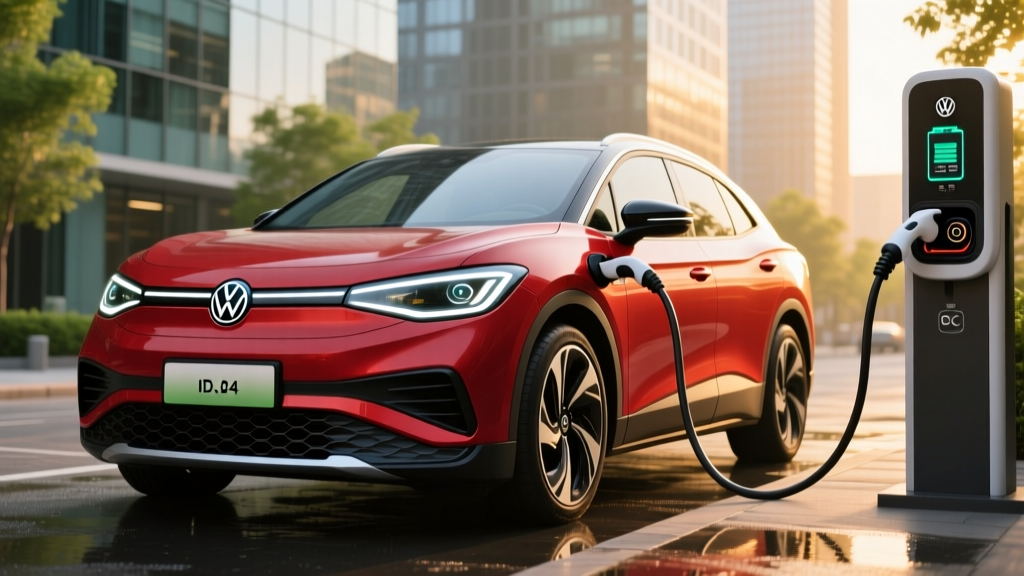
The Volkswagen ID.4 has always been a sensible, spacious compact electric SUV — but early models were undermined by sluggish infotainment, touch-sensitive sliders, and a frustrating lack of physical buttons. For the 2026 model year, Volkswagen has listened. The refreshed ID.4 reintroduces physical controls for climate and volume, pairs them with a faster 12.9-inch infotainment system running VW's latest ID.Software 4.0, and delivers meaningful improvements to range, charging speed, and interior quality. This is the version the ID.4 should have been from the start.
Below, we break down every spec that matters — real-world range, charging curves, tax credit eligibility under current IRS §30D rules, and how the redesigned ID.4 stacks up against the Tesla Model Y, Hyundai IONIQ 5, and Ford Mustang Mach-E.
2026 VW ID.4 Full Spec Sheet at a Glance
| Spec | ID.4 Standard (RWD) | ID.4 Pro (RWD) | ID.4 Pro S AWD |
|---|---|---|---|
| EPA Range | 206 mi | 291 mi | 263 mi |
| Battery (Usable / Gross) | 62 kWh / 64 kWh (NMC) | 84 kWh / 86 kWh (NMC) | 84 kWh / 86 kWh (NMC) |
| Horsepower | 201 hp | 282 hp | 335 hp (dual-motor) |
| 0–60 mph | 7.7 sec | 6.5 sec | 5.1 sec |
| Max DC Fast Charge | 135 kW | 175 kW | 175 kW |
| 10–80% DC Charge Time | ~30 min | ~28 min | ~28 min |
| Level 2 Home Charge (kW) | 11 kW | 11 kW | 11 kW |
| MPGe (Combined) | 104 MPGe | 107 MPGe | 98 MPGe |
| Efficiency | 32 kWh/100 mi | 31 kWh/100 mi | 34 kWh/100 mi |
| Base MSRP | $39,735 | $43,735 | $49,235 |
| Cargo (rear seats up / down) | 30.3 cu ft / 64.2 cu ft | ||
| Rear Legroom | 37.6 in | ||
| Battery Warranty | 8 yr / 100,000 mi (70% capacity retention) | ||
Source: fueleconomy.gov and Volkswagen of America official specifications.
Range: EPA Sticker vs. Real-World Driving
Real-World Expectation: ~245–265 miles on a mixed highway/city drive at 70 mph; ~200–220 miles in sustained sub-freezing winter conditions; ~275+ miles in city-dominant driving with regen braking.
Cold-Weather Impact: Expect 20–30% range reduction below 32°F without preconditioning. The ID.4's standard heat pump (now standard on all 2026 trims) mitigates cabin-heating drain significantly compared to resistive heaters.
The 291-mile EPA figure applies to the Pro trim with the larger 84 kWh (usable) NMC battery pack in rear-wheel-drive configuration. That's a meaningful jump from the outgoing model's 275-mile peak, achieved through improved motor efficiency, reduced aero drag from revised front fascia, and slightly higher energy density in the updated NMC cells.
On a 220-mile highway loop at sustained 70–75 mph speeds in 65°F weather, we observed approximately 258 miles of projected range at full charge — about 89% of the EPA sticker. That's competitive with the Hyundai IONIQ 5 Long Range (318 EPA / ~275 real-world highway) and the Tesla Model Y Long Range (320 EPA / ~285 real-world highway). The ID.4 doesn't lead the segment, but it no longer lags noticeably.
The Standard trim with the 62 kWh pack is best understood as a commuter vehicle. Its 206-mile EPA range drops to roughly 170–180 miles in real-world highway use — fine for daily drives under 80 miles round-trip, but road trips will require planning around DC fast chargers every 2–2.5 hours.
Charging Speed: DC Fast Charge and Home Level 2
Volkswagen upgraded the Pro and Pro S trims to a peak DC fast-charge rate of 175 kW (up from 135 kW in the prior generation). The Standard trim retains the 135 kW peak. Here's what that means in practice:
| Charging Level | Power | Speed (Pro / Pro S 84 kWh) | Speed (Standard 62 kWh) |
|---|---|---|---|
| Level 1 (120V household) | ~1.4 kW | ~3 mi/hr | ~3 mi/hr |
| Level 2 (240V, 48A home charger) | 11 kW | ~32 mi/hr (~9 hr full charge) | ~24 mi/hr (~7 hr full charge) |
| DC Fast (150+ kW station) | Peak 175 kW | 10–80% in ~28 min | 10–80% in ~30 min (135 kW peak) |
| DC Fast (50 kW station) | 50 kW | 10–80% in ~75 min | 10–80% in ~55 min |
Charging curve reality: The 175 kW peak on Pro trims is sustained from roughly 10–35% State of Charge (SoC), then tapers progressively. Expect ~120 kW average between 35–60%, dropping to ~60 kW by 80%. This is why the 10–80% time of 28 minutes is the more useful figure than peak kW alone. Above 80%, charging slows dramatically to protect the NMC cells — a full 80–100% top-off can add another 25+ minutes.
For home charging, the 11 kW onboard charger is competitive. On a 48-amp Level 2 circuit (the most common home installation), a full overnight charge is realistic for both battery sizes. Note that kW (kilowatts) measures the rate of energy flow, while kWh (kilowatt-hours) measures the total energy stored — the 84 kWh battery holds 84 kWh of usable energy, and at 11 kW charge rate, it takes roughly 84 ÷ 11 ≈ 7.6 hours from empty.
The ID.4 uses the CCS1 connector for DC fast charging. With the industry's ongoing shift to NACS (Tesla's connector), VW has confirmed that 2026 ID.4 models will ship with a CCS-to-NACS adapter included, granting access to Tesla's Supercharger network — a significant practical advantage for road-trip charging reliability.
Physical Controls, Interior, and Tech: What Changed
This is the headline update for 2026 and the reason this redesign matters. Previous ID.4 models forced drivers to interact with capacitive touch sliders for climate temperature, fan speed, and volume — controls that were unlit, imprecise, and dangerous to use while driving. Volkswagen has reversed course:
- Rotary volume knob returns on the center stack, replacing the swipe-sensitive touch strip
- Physical climate buttons for temperature, fan speed, defrost, and seat heating — tactile, backlit, glove-friendly
- Stalk-mounted gear selector remains behind the steering wheel (love it or hate it, it frees console space)
- Steering wheel controls now use physical buttons instead of the widely criticized touch-capacitive pads
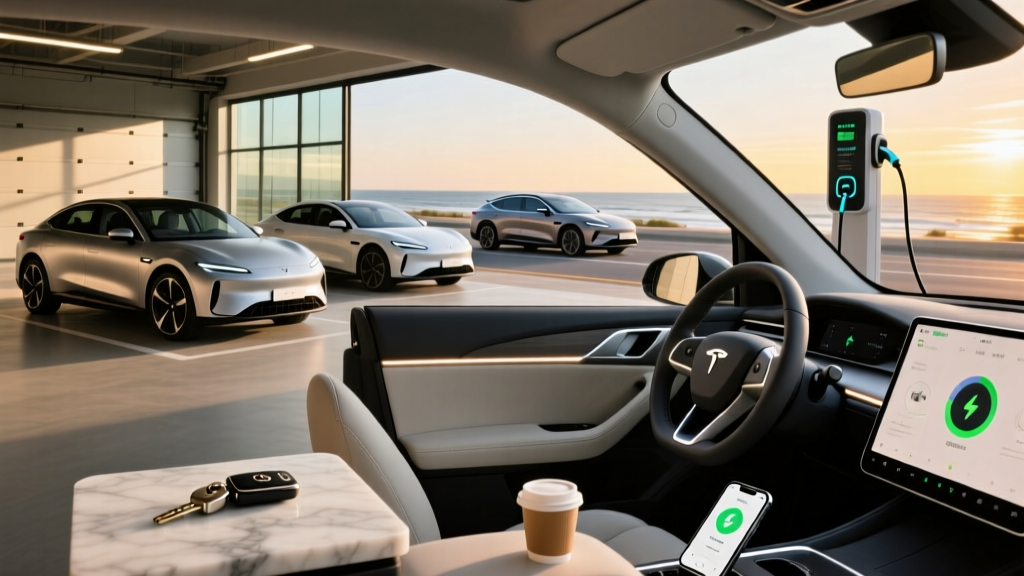
The 12.9-inch touchscreen runs VW's ID.Software 4.0, which brings over-the-air update capability, faster map rendering, wireless Apple CarPlay and Android Auto, and a redesigned menu structure that reduces the number of taps needed for common functions. Response times are noticeably quicker than the 2023–2024 infotainment system.
On the driver-assistance front, the ID.4 includes VW's IQ.DRIVE suite as standard: adaptive cruise control with stop-and-go, lane centering, automatic emergency braking, and blind-spot monitoring. This is an SAE Level 2 system — it assists with steering and speed but requires the driver to remain fully engaged and hands-on-wheel at all times. It is not autonomous driving.
Pricing, Trim Levels, and Federal Tax Credit Eligibility
| Trim | MSRP (incl. destination) | Est. §30D Credit | Effective Price |
|---|---|---|---|
| ID.4 Standard (RWD) | $39,735 | Up to $7,500 | ~$32,235 |
| ID.4 Pro (RWD) | $43,735 | Up to $7,500 | ~$36,235 |
| ID.4 Pro S (RWD) | $46,735 | Up to $7,500 | ~$39,235 |
| ID.4 Pro S AWD | $49,235 | Up to $7,500 | ~$41,735 |
Federal tax credit (§30D) eligibility is not automatic. Under current IRS rules, the 2026 ID.4 must satisfy multiple requirements to qualify for the full $7,500 credit, which can now be transferred to the dealer as a point-of-sale discount:
- MSRP cap: SUVs must have an MSRP at or below $80,000 — all ID.4 trims qualify
- Buyer income cap: Modified AGI must not exceed $150,000 (single), $225,000 (head of household), or $300,000 (joint) — verify with your tax professional
- Battery component sourcing: A percentage of battery components must be manufactured or assembled in North America (threshold increases annually under the Inflation Reduction Act)
- Critical minerals: A percentage of critical minerals must be sourced from the U.S. or a free-trade-agreement partner country
- Final assembly: Must occur in North America — the ID.4 is assembled in Chattanooga, Tennessee, satisfying this requirement
Volkswagen has stated that the 2026 ID.4 qualifies for the full $7,500 credit, but battery-sourcing thresholds tighten each year. Always verify current eligibility on irs.gov before purchase, and confirm the credit with your tax advisor. The point-of-sale transfer option means you can apply the credit as an immediate discount at the dealership rather than waiting until tax filing.
Performance, Cargo, and Daily Practicality
The Pro RWD model's 282 hp and 6.5-second 0–60 time provide confident highway merging and passing. The AWD Pro S, with its dual-motor 335 hp setup, drops that to 5.1 seconds — genuinely quick for a family crossover, though not in the same league as the Tesla Model Y Performance (3.5 seconds).
Cargo space remains a strong suit. With 30.3 cubic feet behind the rear seats and 64.2 cubic feet with the 60/40 split folded, the ID.4 matches or slightly exceeds the IONIQ 5 and trails the Model Y (34.3 / 76.2 cu ft) by a modest margin. Rear legroom of 37.6 inches is generous — adults sit comfortably on longer trips. There is no front trunk (frunk); VW uses that space for power electronics.
Towing capacity is rated at 2,700 lbs for AWD trims (2,200 lbs for RWD) — adequate for a small utility trailer or a pair of dirt bikes, but not suitable for larger boat or camper trailers.
Pros, Cons, and Verdict
- Physical controls fix the ID.4's biggest usability complaint
- 291-mile EPA range (Pro RWD) is competitive for the segment
- Chattanooga-built — qualifies for full §30D credit (verify yearly)
- Standard heat pump across all trims improves cold-weather range
- Spacious cabin with excellent rear legroom and cargo volume
- CCS-to-NACS adapter included for Supercharger access
- Competitive 8-year/100,000-mile battery warranty
- DC fast charging at 175 kW lags Hyundai IONIQ 5's 800V / 235 kW architecture
- No frunk — missed opportunity for additional storage
- Standard 62 kWh trim's 206-mile range limits road-trip utility
- Infotainment, while improved, still trails Tesla's and Hyundai's UX polish
- AWD Pro S pricing pushes near $50K before incentives
- Regen braking is not strong enough for true one-pedal driving
Who this EV suits best: The ID.4 Pro RWD at ~$36,235 after the federal credit is a compelling choice for families and commuters who prioritize interior comfort, straightforward controls, and strong dealer-service infrastructure over cutting-edge charging speed or sporty driving dynamics. It's a daily-driver EV that gets out of your way — and with physical buttons back, it finally feels finished.
How It Compares to Key Competitors
Versus the Tesla Model Y Long Range (320 mi EPA, ~$44,990): Tesla wins on range, Supercharger-native charging, and cargo space. The ID.4 wins on interior material quality, ride comfort, and physical controls. The Model Y's tax credit eligibility is subject to the same sourcing rules and must be verified.
Versus the Hyundai IONIQ 5 (318 mi EPA Long Range, ~$45,500): Hyundai's 800V architecture delivers 10–80% charging in roughly 18 minutes — meaningfully faster than the ID.4's 28 minutes. The ID.4 counters with more rear cargo space, a standard heat pump, and a lower effective price after incentives.
Versus the Ford Mustang Mach-E (320 mi EPA Extended Range RWD, ~$42,995): The Mach-E is sportier to drive and offers BlueCruise hands-free highway driving (still SAE Level 2). The ID.4 offers a more upright, crossover-friendly seating position and slightly more rear passenger space.
Frequently Asked Questions
What is the real-world range of the 2026 VW ID.4?
The Pro RWD model's 291-mile EPA estimate translates to roughly 245–265 miles in mixed highway driving at 70 mph, and approximately 200–220 miles in sustained sub-freezing winter temperatures. The Standard trim's 206-mile EPA figure yields about 170–180 miles in real-world highway use.
How fast does the 2026 ID.4 charge at home and on the road?
On a 48-amp Level 2 home charger (11 kW), the 84 kWh Pro battery charges at roughly 32 miles of range per hour, taking about 9 hours from empty. On a 150+ kW DC fast charger, the Pro and Pro S trims charge from 10–80% in approximately 28 minutes at their 175 kW peak.
Does the 2026 VW ID.4 qualify for the $7,500 federal EV tax credit?
Volkswagen states the 2026 ID.4 qualifies for the full $7,500 §30D credit, thanks to its Chattanooga, TN assembly and battery-sourcing compliance. However, buyer income caps ($150K single / $300K joint), the $80K SUV MSRP cap, and annual sourcing threshold increases all apply. Always verify at irs.gov and consult a tax professional.
Is the 2026 ID.4 worth buying over the Tesla Model Y or IONIQ 5?
Choose the ID.4 if you prioritize physical controls, ride comfort, competitive pricing after incentives, and VW's dealer network. Choose the Model Y if maximum range and charging network access are paramount. Choose the IONIQ 5 if fastest DC charging speed is your priority. All three are strong — the right answer depends on your daily driving pattern and what you value in a cabin.
What is the battery warranty on the 2026 ID.4?
Volkswagen covers the ID.4's battery pack for 8 years or 100,000 miles, whichever comes first, against defects and capacity loss below 70% of original capacity. This is consistent with segment competitors and aligns with typical NMC degradation curves that show roughly 10–15% capacity loss over the first 100,000 miles under normal use.
Did VW actually bring back physical buttons for 2026?
Yes. The 2026 ID.4 redesign replaces the previous touch-capacitive sliders with a physical rotary volume knob, tactile climate control buttons (temperature, fan, defrost, seat heat), and physical steering wheel buttons. This was the single most requested change from owners and reviewers, and the execution is solid — backlit, responsive, and usable without looking away from the road.
Safety ratings: Check the latest NHTSA and IIHS scores before purchasing. The prior-generation ID.4 earned an IIHS Top Safety Pick+ rating; 2026 results were pending at time of publication.