The Short Answer on the Bollinger Motors Electric Truck
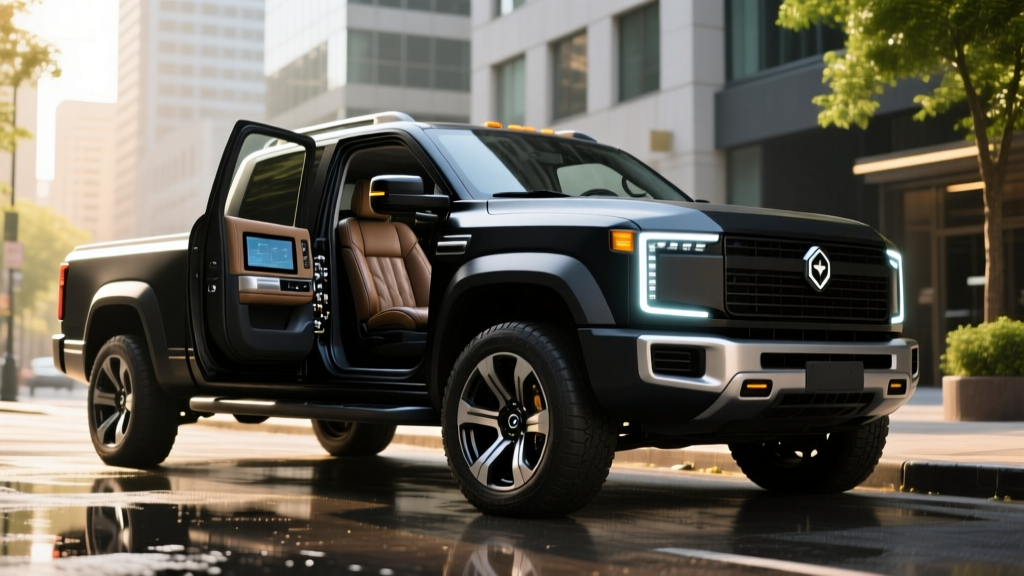
The Bollinger B4 electric truck is a Class 3/4 commercial work vehicle — not a consumer lifestyle pickup like the Ford F-150 Lightning or Rivian R1T. Bollinger Motors pivoted from its original B1/B2 prototypes to focus on fleet-oriented electric trucks built for last-mile delivery and vocational use. As of early 2026, the B4 remains in limited production with fleet deliveries prioritized. If you're an individual buyer shopping for a daily-driver electric truck, the B4 is not aimed at you. If you operate a commercial fleet, the B4 offers a purpose-built electric platform with an estimated 150–200 mile range, 500+ volt architecture, and upfitting flexibility — but availability, service infrastructure, and pricing require direct manufacturer engagement.
What Is the Bollinger B4 Electric Truck?
Bollinger Motors, founded in 2016 and based in Michigan, initially gained attention with the rugged B1 SUV and B2 pickup concepts. However, the company restructured its strategy, shifting toward the commercial market. The Bollinger B4 is the result: a cab-chassis electric truck designed for upfitting into box trucks, utility beds, dump bodies, and other vocational configurations.
Key specifications (preliminary/announced — confirm with Bollinger for final production figures):
- Vehicle Class: Class 3/4 (GVWR 15,000–20,000 lbs)
- Battery: Estimated 150–200 kWh usable capacity, NMC chemistry
- Estimated Range: 150–200 miles depending on body configuration and payload
- Architecture: 500V+ platform
- DC Fast Charging: CCS compatible; estimated peak rate ~150 kW
- Level 2 Charging: J1772 AC charging for depot overnight charging
- Payload Capacity: Up to ~5,000 lbs (varies by upfit)
- Towing: Limited by Class 3/4 configuration; consult Bollinger for rated capacity
Because the B4 targets commercial fleets, it is not listed on fueleconomy.gov the way consumer vehicles are. Efficiency figures (MPGe, kWh/100mi) are published by Bollinger directly and vary significantly based on the installed body and duty cycle.
Pricing and Availability: What Fleet Buyers Actually Pay
The Bollinger B4 is not sold through traditional dealerships. Fleet operators work directly with Bollinger's sales team, and pricing depends on configuration, battery size, and volume commitments.
| Cost Factor | Estimated Range | Notes |
|---|---|---|
| Base Cab-Chassis (B4) | $120,000–$160,000+ | Varies by battery pack and GVWR |
| Upfit/Body (box, utility, dump) | $15,000–$60,000+ | Third-party upfitter costs |
| Depot Level 2 Charger (per stall) | $3,000–$7,000 | Equipment + electrician, assumes panel capacity |
| DC Fast Charger (shared depot) | $40,000–$100,000+ | Optional; many fleets rely on overnight L2 |
| Commercial EV Tax Credit (§45W) | Up to $40,000 | Per IRS §45W; subject to MSRP caps and sourcing rules |
Critical tax credit note: The consumer §30D credit (up to $7,500) does not apply here. Commercial fleet buyers may qualify for the §45W Commercial Clean Vehicle Credit, which offers up to $40,000 for qualifying vehicles above 14,000 lbs GVWR. Eligibility depends on battery component sourcing, critical mineral requirements, and your business's tax liability. Consult a tax professional — rules are current for 2026 but subject to legislative change.
Bollinger B4 vs. Gas/Diesel Work Trucks: Operating Cost Breakdown
The real value proposition for the Bollinger electric truck is total cost of ownership over a 5- to 8-year fleet lifecycle. Here's how a typical Class 4 diesel work truck compares to the B4 in a vocational duty cycle (approximately 80 miles/day, 5 days/week, 250 days/year):
| Metric | Bollinger B4 (Electric) | Class 4 Diesel Work Truck |
|---|---|---|
| Estimated Purchase Price | $135,000–$175,000 (before credit) | $65,000–$85,000 |
| Federal Tax Credit | Up to $40,000 (§45W) | None |
| Effective Purchase Price | $95,000–$135,000 | $65,000–$85,000 |
| Annual Fuel/Energy Cost | $2,400–$3,600 (at $0.12–$0.18/kWh, depot charging) | $8,500–$12,000 (diesel at ~$4.00/gal, ~8 MPG) |
| Annual Maintenance | $800–$1,500 (no oil, filters, DEF, fewer brakes) | $3,000–$5,000 (oil, filters, DEF, DPF, brakes) |
| 5-Year Energy/Fuel Cost | $12,000–$18,000 | $42,500–$60,000 |
| 5-Year Maintenance Cost | $4,000–$7,500 | $15,000–$25,000 |
| 5-Year Total Operating Cost | $16,000–$25,500 | $57,500–$85,000 |
The B4's higher upfront cost is offset substantially by fuel and maintenance savings over time. For a fleet running 20,000 miles/year per truck, the operating cost breakeven typically occurs within 3–4 years — before factoring in potential state incentives (such as California's HVIP or New York's Truck Voucher Incentive Program), which can further reduce purchase cost by $20,000–$60,000+ depending on jurisdiction.
Real-World Ownership Considerations for Fleet Operators
Before committing to the Bollinger B4 or any Class 3/4 electric truck, fleet managers need to assess several practical factors:
Depot Charging Infrastructure
The B4 is designed for depot-based overnight Level 2 charging. A 200 kWh battery charging at 19.2 kW (80A, 240V) requires approximately 10–11 hours for a full charge — well-suited to overnight turnaround. However, your depot electrical panel must support the aggregate load. If you're deploying 5 trucks each pulling 19.2 kW simultaneously, that's 96 kW of continuous draw — most commercial panels will require an upgrade. Budget $10,000–$50,000+ for panel upgrades and trenching, depending on your site.
Route and Duty Cycle Fit
The B4's estimated 150–200 mile range works for predictable, depot-return routes under 120 miles/day with a margin for HVAC, payload, and detours. Cold-weather range loss of 20–35% is real — a truck rated for 180 miles in mild conditions may deliver 120–140 miles at 20°F. If your routes exceed 150 miles or involve significant highway driving at sustained 65+ mph speeds, the B4 may not be the right fit without mid-day DC fast charging.
Service and Parts Network
Unlike Ford, GM, or Ram commercial trucks with nationwide dealer service networks, Bollinger's service infrastructure is limited. Fleet operators should confirm warranty terms, spare parts availability, and authorized service center proximity before ordering. This is a common pain point with commercial EV startups — downtime without local service support can negate all fuel savings.
Insurance Costs
Commercial EV insurance premiums tend to run 15–30% higher than equivalent diesel trucks, driven by higher vehicle replacement costs and specialized repair requirements. Get quotes from your commercial fleet insurer before finalizing a purchase decision.
Common Misconceptions About Bollinger and Commercial EVs
| Myth | Fact |
|---|---|
| "The Bollinger B4 is a consumer pickup truck." | The B4 is a commercial cab-chassis truck for fleet/vocational use. Bollinger does not sell direct to individual consumers through dealerships. |
| "Electric trucks can't handle cold weather." | Range reduction of 20–35% in sub-freezing temps is real, but depot-based fleets with predictable routes can plan around it. Battery preconditioning and thermal management mitigate the impact. |
| "Charging a commercial truck takes all day." | Overnight Level 2 charging (10–11 hours for a full charge) aligns with fleet depot schedules. DC fast charging at ~150 kW can add 80% in roughly 60–80 minutes for mid-day top-ups. |
| "The $7,500 tax credit applies to the B4." | The consumer §30D credit has MSRP and vehicle-type caps. The B4 qualifies under the commercial §45W credit (up to $40,000), which has different eligibility rules. |
| "Electric trucks have the same maintenance as diesel." | No oil changes, no DEF fluid, no DPF filters, no transmission fluid. Regenerative braking extends brake life significantly. Maintenance costs drop 50–70%. |
Decision Framework: Is the Bollinger B4 Right for Your Fleet?
Choose the Bollinger B4 if:
- You operate a commercial fleet with predictable, depot-return routes under 120 miles/day
- You have (or can install) depot Level 2 charging infrastructure
- Your trucks operate in urban/suburban environments where zero tailpipe emissions matter for regulatory compliance or ESG goals
- You plan to hold vehicles 5+ years to capture total cost of ownership savings
- You qualify for the §45W commercial credit and/or state fleet incentives
Look elsewhere (Ford E-Transit, BrightDrop Zevo, Lightning eMotors, or diesel) if:
- Your routes regularly exceed 150 miles/day or involve sustained highway speeds
- You need a nationwide dealer service network for rapid turnaround
- You're an individual buyer looking for a consumer electric pickup (consider F-150 Lightning, Rivian R1T, Chevrolet Silverado EV)
- You cannot install depot charging and lack access to compatible public DC fast chargers along your routes
- You need immediate high-volume availability — Bollinger's production scale is limited compared to legacy OEMs
What Should a First-Time Commercial EV Buyer Know?
If this is your fleet's first electric truck, here's what matters most:
- Start with a pilot. Order 1–2 units before committing to a full fleet transition. Validate range, charging logistics, and driver acceptance on real routes.
- Engage your utility early. Depot charging upgrades can take 6–18 months for utility-side infrastructure (new transformer, service lateral). Contact your utility's EV programs team before ordering trucks.
- Understand kW vs. kWh. kW is the rate of charging (like water flow from a hose). kWh is the battery capacity (like the size of the tank). A 200 kWh battery charged at 19.2 kW takes roughly 10.4 hours from empty.
- Train drivers on regenerative braking. One-pedal driving and regen settings change how a truck decelerates. Proper training improves efficiency and reduces brake wear.
- Track real-world efficiency. Don't rely solely on manufacturer range claims. Log actual kWh/mile on your routes across seasons to build accurate operational models.
Frequently Asked Questions
Can I buy a Bollinger electric truck as an individual consumer?
Not through standard channels. The B4 is a commercial fleet product sold direct to businesses. Individual consumers looking for an electric pickup should evaluate the Ford F-150 Lightning (EPA range up to 320 miles, starting ~$55,000), Rivian R1T (EPA range up to 410 miles with Max Pack, starting ~$73,000), or Chevrolet Silverado EV (EPA range up to 450 miles, starting ~$57,000 for WT trim).
What is the real-world range of the Bollinger B4?
Bollinger has published estimated ranges of 150–200 miles depending on configuration. Real-world range will vary based on payload, upfit body aerodynamics, ambient temperature, and driving speed. Expect 20–35% range reduction in sustained sub-freezing weather and 10–15% reduction at sustained highway speeds above 65 mph. For a 180-mile rated truck, plan conservatively for 120–140 miles in winter conditions.
How long does it take to charge the B4?
On a Level 2 depot charger at 19.2 kW (80A/240V), a depleted 200 kWh battery requires approximately 10–11 hours — designed for overnight turnaround. On a DC fast charger at the estimated peak rate of ~150 kW, a 10–80% charge would take roughly 60–80 minutes, though the charge curve tapers significantly above 80% SoC to protect battery longevity.
Does the B4 qualify for any federal tax credits?
The consumer §30D credit does not apply. However, the IRS §45W Commercial Clean Vehicle Credit may provide up to $40,000 for qualifying vehicles above 14,000 lbs GVWR. Eligibility depends on battery sourcing requirements and your business's tax situation. Always consult a tax professional for your specific case.
What is the battery warranty?
Bollinger has not publicly detailed a standardized battery warranty comparable to consumer EV mandates (typically 8 years/100,000 miles). Fleet buyers should negotiate warranty terms directly as part of their purchase agreement, including capacity retention thresholds (e.g., 70% SoH at X miles/years) and replacement cost guarantees.
How does the B4 compare to the Ford E-Transit or other electric commercial vehicles?
The Ford E-Transit is a Class 2/3 electric cargo van (EPA range ~126 miles, starting ~$45,000) — a different form factor aimed at lighter delivery routes. The B4 is a heavier Class 3/4 cab-chassis designed for more demanding vocational upfits. They serve different use cases. For lighter delivery needs, the E-Transit or BrightDrop Zevo 600 may be more practical. For heavier GVWR and custom upfitting, the B4 occupies a niche with fewer electric competitors.